

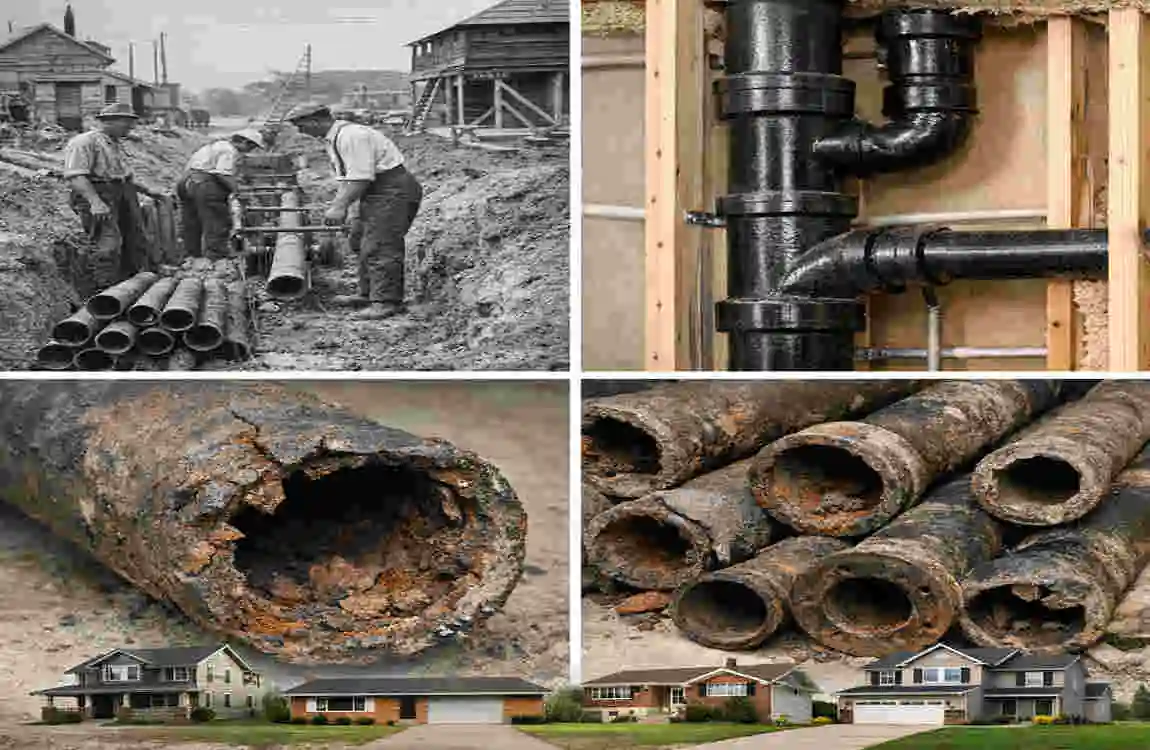
If you live in an older house, there is a good chance you will come across cast-iron plumbing somewhere in the system. For many decades, builders used it because it was strong, quiet, and dependable for drain and waste lines.
So, when were homes built with cast iron plumbing? In simple terms, cast iron plumbing was widely used in residential construction from the late 1800s through much of the 20th century, especially for drain, waste, and vent systems. The exact timing depends on the country, region, and local building practices.
Many homeowners still find original cast iron pipes in basements, crawl spaces, sewer lines, and main drain stacks. Some of these systems still work well. Others may be showing their age.
When Were Homes Built With Cast Iron Plumbing?
A Short History of Cast Iron in Homes
Cast iron became a popular plumbing material as cities grew and homes needed stronger drainage systems. It was especially useful for drain, waste, and vent pipes, where strength mattered more than flexibility.
By the late 1800s, cast iron was becoming more common in urban plumbing. By the early 1900s, it was widely used in many residential buildings. It remained common through much of the mid-1900s, especially for underground and vertical drainage lines.
By the late 1900s, newer materials like PVC began replacing cast iron in many new homes. Still, many older homes kept their original cast-iron pipes, especially if the plumbing was still working.
Simple Timeline of Cast Iron Plumbing Use
- Late 1800s: Increasing use in city plumbing systems
- Early 1900s: Widely used in residential construction
- Mid-1900s: Still common for drain and sewer lines
- Late 1900s onward: PVC and other modern materials became more common
Why the Exact Age Varies
There is no single year when all homes stopped using cast iron. Some areas switched earlier. Others kept using it longer.
Local building codes, supply availability, and regional construction habits all played a role. That is why two homes built in the same decade can have very different plumbing systems.
Why Was Cast Iron Plumbing Used in Older Homes?
Durability and Strength
Cast iron is known for being strong and long-lasting. Builders trusted it because it could handle wastewater and drainage without easily bending or cracking.
For drain systems, that strength mattered a lot. These pipes had to carry water safely through the home and out to the sewer line.
Fire Resistance
Another reason cast iron was popular is that it resists fire better than some plastic materials. In multi-story homes and older residential buildings, that added peace of mind.
This is one reason cast iron remained a common choice for many years.
Noise Reduction
Cast iron can also reduce the sound of flowing water. That makes it quieter than many lightweight pipe materials.
If you have ever lived in a home with plastic drain pipes, you may notice more noise when water runs. Cast iron tends to absorb some of that sound.
Long-Term Performance
When installed correctly, cast iron can last for many decades. That is why some older homes still have functioning systems today.
Age matters, but it does not automatically mean failure. A 60-year-old pipe may still work well if it has been maintained and is not badly corroded.
How Old Is Cast Iron Plumbing in a House?
Start With the Home’s Age
One of the easiest ways to estimate the age of the plumbing is to look at the house’s age. If the home was built in the early or mid-20th century, the original plumbing may still be cast iron.
But that is only a starting point. Many homes have had repairs, renovations, or partial replacements over time.
Look for Signs of Replacement
A house may have a mix of old and new plumbing. For example, one part of the drain system may be original cast iron, while another section may have been replaced with PVC.
That means the age of the house does not always tell the whole story.
Useful Clues to Check
Here are some common clues that may help you estimate age:
- Pipe material
- Pipe markings
- Connection style
- Plumbing layout
- Home construction records
- Previous inspection reports
A professional plumber can usually give a much more reliable answer than a quick visual check.
How to Identify Cast Iron Pipes in an Older Home
Appearance
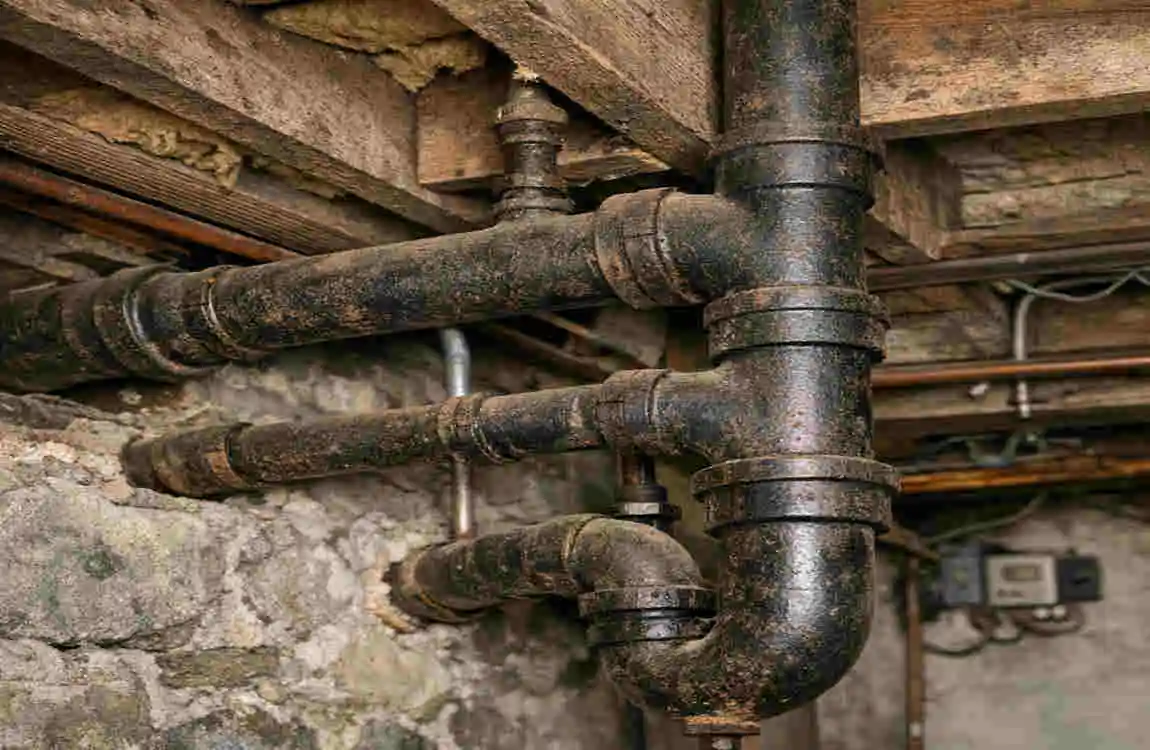
Cast iron pipes usually have a dark grey or black appearance. Over time, they may show rust, corrosion, or a rough surface.
Some pipes may look dull and aged, while others may still appear fairly clean if they have been protected from moisture.
Weight and Thickness
Cast iron is much heavier than modern plastic plumbing. It also feels thick and rigid.
If a pipe looks large, heavy, and solid, it may be cast iron. Plastic pipes are usually much lighter and easier to move.
Joints and Connections
Older cast iron systems often use hub-and-spigot joints. These are traditional connection points that may use sealing materials different from those in modern plumbing fittings.
If the joints look bulky or very old, that can be another clue.
Common Locations in the Home
You are most likely to find cast iron in these areas:
- Basements
- Crawl spaces
- Main drain lines
- Sewer lines
- Vertical waste stacks
- Vent stacks
Do not remove or disturb pipes to identify them. If you are unsure, let a plumber inspect them safely.
How Long Does Cast Iron Plumbing Last?
Typical Lifespan
Cast iron can last a very long time, often many decades. Some systems remain usable well beyond what homeowners expect.
But there is no single lifespan that applies to every house. The condition of the pipe matters more than the age alone.
What Affects Longevity?
Several things can affect how long cast iron lasts:
- Water quality
- Soil conditions
- Pipe quality
- Installation quality
- Corrosion
- Drain usage
- Maintenance
- Pipe location
For example, pipes exposed to moisture or aggressive soil conditions may wear out faster than those in drier, more protected areas.
Why Condition Matters More Than Age
A pipe may be old but still sound. Another pipe may be younger but already badly damaged.
That is why inspection is so important. You want to know how the pipe is actually performing, not just how old it is.
Common Problems With Old Cast Iron Plumbing
Internal Corrosion
One of the biggest issues with old cast iron is internal corrosion. Over time, the inside of the pipe can become rough and narrowed.
That can slow drainage and make clogs more likely.
Cracks and Breaks
As cast iron ages, it can become brittle. That means it may crack or break under stress.
A crack may not always be visible right away, especially if it is hidden behind walls or under floors.
Leaks
Leaks often happen around joints or damaged sections. Even a small leak can cause serious damage over time if it stays hidden.
Water damage, mould, and structural problems can all follow if leaks are ignored.
Sewer Odors
If drain or vent pipes are damaged, you may notice bad smells inside the house. That can be a warning sign that something is wrong in the plumbing system.
Drainage Problems
Recurring backups, slow drains, and repeated clogs can all indicate trouble in old cast-iron pipes. These issues do not always mean the pipes are failing, but they should not be ignored.
Signs Your Home’s Cast Iron Plumbing May Need Attention
Common Warning Signs
Look out for these symptoms:
- Slow drains throughout the house
- Frequent sewer backups
- Bad sewer smells
- Visible rust or corrosion
- Cracked pipes
- Damp areas near plumbing
- Strange noises in the drains
- Repeated drain cleaning needs
- Leaks
- Deterioration around joints
Why Symptoms Need Careful Review
These signs may point to cast iron problems, but they can also come from other plumbing issues. That is why you should avoid guessing.
A professional inspection can help find the real cause and prevent unnecessary repairs.
Should You Replace Cast Iron Plumbing in an Older Home?
When Replacement May Be Worth Considering
Replacement may make sense if the system has repeated leaks, heavy corrosion, frequent clogs, or visible damage.
It may also be worth considering if you are planning a major renovation or want to avoid ongoing repair costs.
Repair, Partial Replacement, or Full Repiping?
Homeowners usually have a few options:
- Repair a small damaged section
- Replace part of the system
- Line certain pipes in some situations
- Repipe the whole system
The right choice depends on how far the damage has spread.
Why One Section May Not Be Enough
If one visible pipe is failing, others may be ageing as well. Replacing only the damaged part can solve one problem but leave the rest of the system at risk.
That is why full-system evaluation is so important.
Factors to Consider
Before deciding, think about:
- Pipe condition
- History of leaks
- Home remodelling plans
- Accessibility
- Local plumbing rules
- How long you plan to keep the home
- Your budget
Cast Iron vs PVC Plumbing
FeatureCast IronPVC
Material Metal Plastic
Weight Heavy Lightweight
Corrosion Can corrode Highly corrosion-resistant
Noise Generally quieter Can transmit more drainage noise
Installation More labour-intensive Generally easier
Longevity Can last for decades Long service life when properly installed
Common Use Older homes and drainage systems Modern residential plumbing
Which One Is Better?
Neither material is automatically better in every case. Cast iron is strong and quiet. PVC is lighter, easier to install, and highly resistant to corrosion.
The best choice depends on the plumbing application, the house, and the condition of the existing system.
Why Many Older Homes Have Both
It is very common for older houses to have a mix of cast iron and PVC. This usually happens after a renovation or repair.
A house may keep the original cast iron main line while newer branch lines are replaced with PVC.
Can You Have Cast Iron Plumbing and Modern Plumbing Together?
Mixed Systems Are Common
Yes, many homes have both materials at the same time. That is not unusual at all.
Renovations often create these mixed systems when a plumber replaces only certain sections.
Transitions Must Be Done Properly
The connection between cast iron and PVC must be made correctly. If the transition is poor, leaks or movement can happen.
That is why the joint should always be checked carefully.
Why Professional Inspection Helps
A plumber can inspect the transition points for leaks, weak connections, and deterioration. That gives you a clearer picture of the system’s condition.
How to Maintain Cast Iron Plumbing
Basic Care Tips
Good maintenance can help cast iron last longer.
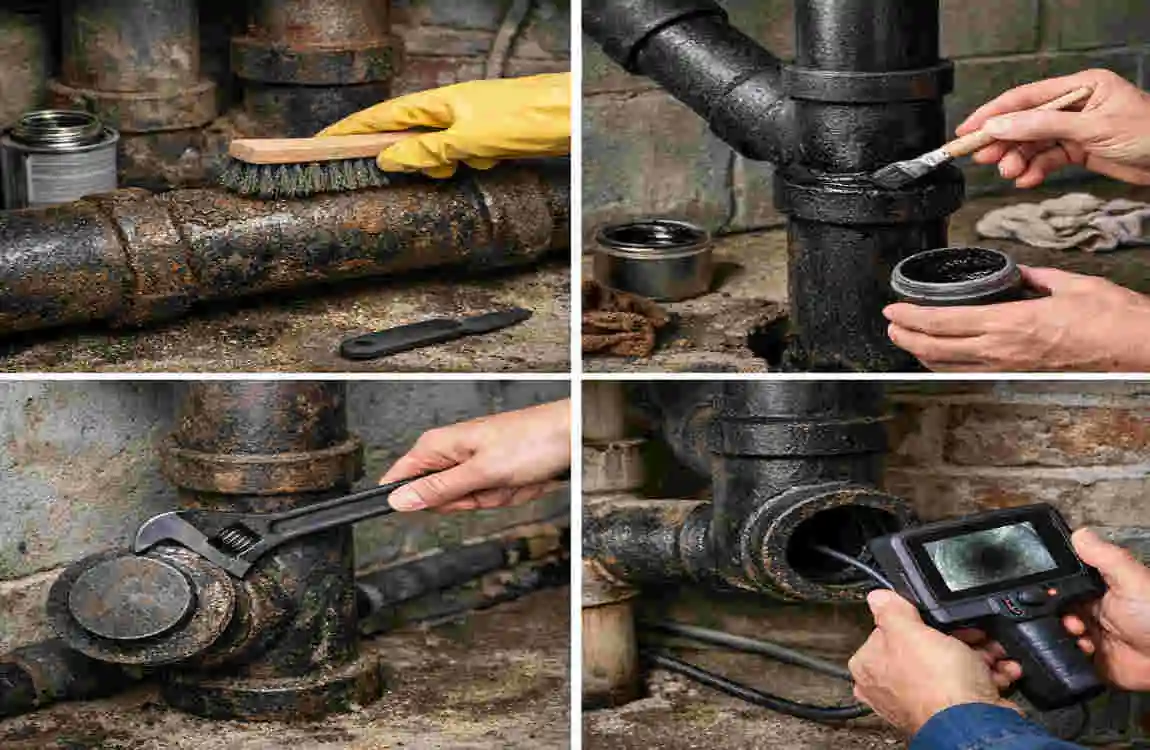
A few simple habits can make a difference:
- Do not flush inappropriate materials
- Fix slow drains early
- Watch for recurring backups
- Check accessible pipes for corrosion or leaks
- Schedule professional inspections in older homes
- Avoid harsh DIY repairs
- Keep records of repairs and replacements
Why Care Matters
Cast iron does not usually fail all at once. Problems often build up slowly.
That means regular attention can help you catch trouble before it becomes expensive.
What Should Homeowners Know Before Buying an Older Home?
Ask About the Plumbing Material
If you are buying an older house, ask what kind of plumbing it has. This can save you from surprises later.
Review Inspection Reports
A good inspection report can tell you whether the plumbing looks healthy or whether it may need work soon.
Look for Signs of Past Repairs
If there have been previous leaks, sewer repairs, or plumbing upgrades, ask for details. A house with some updated piping may be in better shape than one with all original plumbing.
Think About Future Costs
Even if the plumbing is working now, old cast iron may need repairs later. That should be part of your buying decision.
A home’s age alone does not tell you if it is a good purchase. What matters is the actual condition of the plumbing and the rest of the property.
Frequently Asked Questions
When were homes built with cast iron plumbing?
Cast iron plumbing was widely used in residential construction from the late 19th century through much of the 20th century, especially for drain, waste, and vent systems.
How can I tell if my house has cast iron plumbing?
Look for heavy, dark grey or black pipes, often found in basements, crawl spaces, main drains, and sewer lines. A plumber can confirm it for sure.
How long does cast iron plumbing usually last?
It can last for many decades, but actual lifespan depends on corrosion, installation quality, soil conditions, water conditions, and maintenance.
Is cast iron plumbing bad?
Not necessarily. It offers benefits such as strength, durability, and quieter drainage. Problems usually develop when pipes age, corrode, or crack.
Should I replace cast iron plumbing in an old house?
Not always. If it still works well, replacement may not be needed. If there are leaks, backups, or serious corrosion, a professional can help determine the cause.
Is PVC better than cast iron?
PVC is lighter, easier to install, and more corrosion-resistant. Cast iron is stronger and often quieter. The best choice depends on the situation.
Do all old houses have cast iron plumbing?
No. Older homes may have different pipe materials depending on when they were built, where they are located, and whether they were renovated.
| Topic | Quick Information |
|---|---|
| What Is Cast Iron Plumbing? | Durable metal pipes traditionally used for home drainage and sewer systems. |
| When Was It Common? | Cast iron plumbing became widely used in homes during the late 19th and early 20th centuries. |
| Typical Age of Homes | Homes built from the 1900s through the 1950s–1960s may commonly have cast iron drain pipes. |
| How Long Does It Last? | Cast iron plumbing can often last around 50–100 years, depending on conditions and maintenance. |
| Why Was It Used? | It was valued for its strength, fire resistance, and ability to reduce drainage noise. |
| Common Problems | Rust, corrosion, cracks, leaks, scaling, and weakened pipe walls can develop with age. |
| How to Identify It | Cast iron pipes are usually dark gray/black, heavy, and magnetic, unlike many modern plastic pipes. |
