

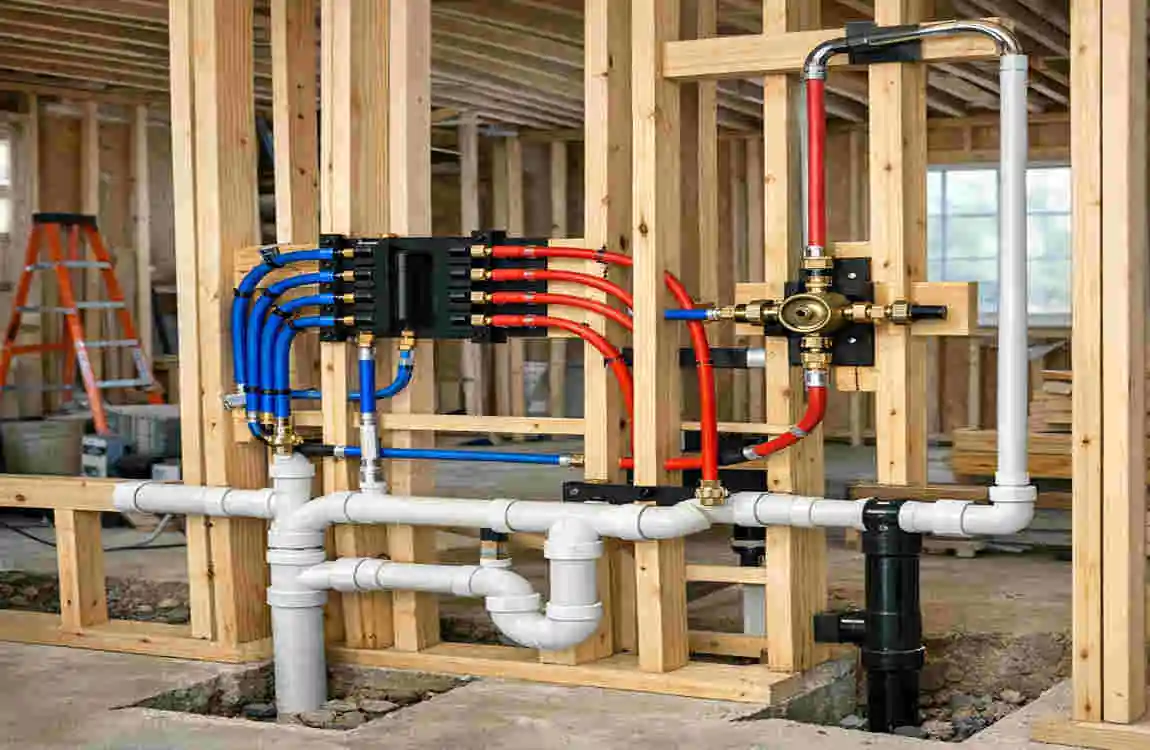
Plumbing work in construction is the process of planning, installing, and connecting pipes and fixtures that bring water into a building and remove wastewater from it. It also includes drainage, venting, and, in some cases, gas lines.
This work matters in both homes and commercial buildings. Without good plumbing, a building cannot provide safe water, proper sanitation, or everyday comfort.
Modern plumbing systems do more than move water. They support clean water supply, drainage, waste removal, and, where allowed, gas-related services. That is why plumbing must be planned carefully, installed correctly, and inspected properly.
What Is Plumbing Work in Construction?
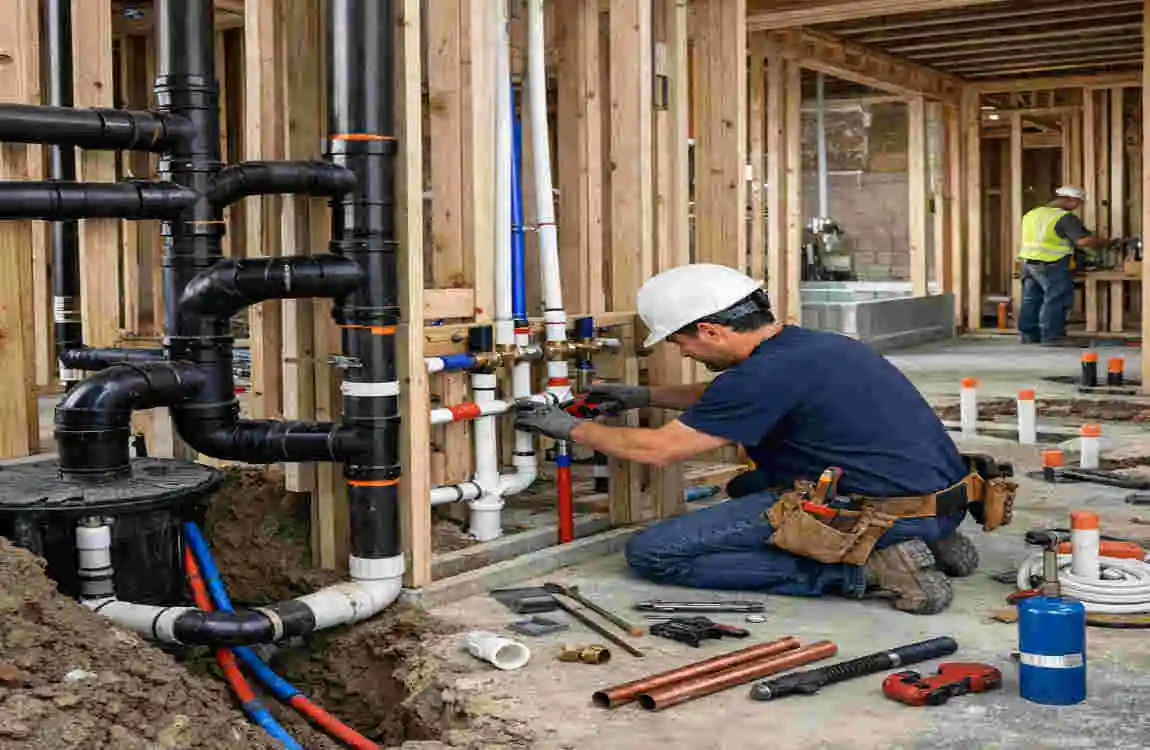
Plumbing work in construction involves installing the full water and waste system in a new building or during a renovation.
Construction plumbers handle many important tasks. They install supply lines, waste pipes, vent lines, and fixtures. They also ensure the system complies with local building codes.
There are two main stages:
Rough-In Plumbing
This is the early stage, when pipes are placed before walls, ceilings, and floors are finished.
Finish Plumbing
This is the final stage, when visible fixtures like sinks, toilets, and faucets are installed.
Plumbing plans also work closely with architectural plans and structural plans. This helps prevent clashes with walls, beams, and electrical systems.
Main Types of Plumbing Systems
Water Supply Systems
Water supply systems carry clean water into the building.
They include:
- Cold-water pipes
- Hot-water distribution lines
- Main water lines
- Branch lines that serve different rooms
Good water supply design helps maintain steady pressure and proper flow.
Drainage and Waste Systems
Drainage systems remove wastewater from sinks, toilets, showers, and other fixtures.
They usually include:
- Drainpipes
- Waste lines
- Sewer connections
- Floor drains
These parts must slope correctly so wastewater moves away without backing up.
Ventilation Systems
Plumbing vents are often forgotten, but they are very important.
They help air move through the drainage system, which:
- Prevents sewer gases from entering the building
- Supports smooth drainage
- Reduces pressure problems inside pipes
Gas and Specialty Plumbing
Some construction projects also include gas piping where local rules allow it.
This may cover:
- Gas lines for appliances
- Water heaters
- Outdoor plumbing
- Special systems in commercial buildings
These systems need extra care because safety is critical.
How Modern Plumbing Work in Construction Is Done
Planning and Design
Plumbing work starts on paper long before pipes go into the ground or walls.
The team reviews the building layout, checks water demand, and plans drainage needs. They also choose the right pipe sizes and materials.
Good planning helps avoid unnecessary bends, hard-to-reach pipes, and future repair problems.
Rough-In Plumbing
During rough-in, plumbers install the main supply, drain, waste, and vent pipes.
They place pipes for:
- Bathrooms
- Kitchens
- Laundry rooms
- Utility spaces
Before the walls close up, the system is often tested. This helps catch leaks or layout problems early.
Fixture Installation
After the rough-in is complete, plumbers install visible fixtures.
These may include:
- Sinks
- Toilets
- Showers
- Bathtubs
- Faucets
Each fixture is connected to both the water supply and the drainage system. Every joint must be checked carefully for leaks.
Final Testing and Inspection
The last step is testing.
Plumbers check:
- Water pressure
- Drainage flow
- Pipe joints
- Fixture connections
Then the system is inspected in accordance with local building codes. Any problems must be fixed before the job is finished.
Common Plumbing Materials Used in Modern Construction
Different projects use different materials. The right choice depends on local rules, building type, water quality, cost, and use.
MaterialCommon UseMain Benefit
PEX Water supply lines Flexible and easy to install
PVC Drainage and waste pipes Lightweight and affordable
CPVC Hot and cold water lines Handles heat better than PVC
Copper Water supply systems Durable and long-lasting
Cast iron Strong drainage systems Very sturdy and quiet
Material choice is important because each type works best in different conditions.
Why Proper Plumbing Work Matters in Construction
Good plumbing is not just about convenience. It affects the whole building.
It prevents damage
Leaks can damage walls, floors, ceilings, and even the building structure.
It supports reliable water use.
A well-built system gives steady water pressure and smooth flow.
It improves hygiene
Proper drainage and waste removal help keep the building safe and clean.
It lowers repair costs.
When plumbing is done right the first time, future problems are less likely.
It adds long-term value.
A building with solid plumbing is more useful, comfortable, and valuable.
Professional installation and inspection matter because small mistakes can create big problems later.
Common Plumbing Problems During Construction
Even new construction can have plumbing issues if the work is rushed or poorly planned.
Some common problems include:
- Incorrect pipe sizing
- Poorly sealed joints
- Wrong pipe slopes
- Blocked or badly placed drains
- Weak venting
- Low water pressure
- Hidden leaks behind walls
- Fixtures installed in the wrong location
Most of these issues can be avoided with careful planning, proper testing, and skilled workers.
Modern Trends in Plumbing Construction
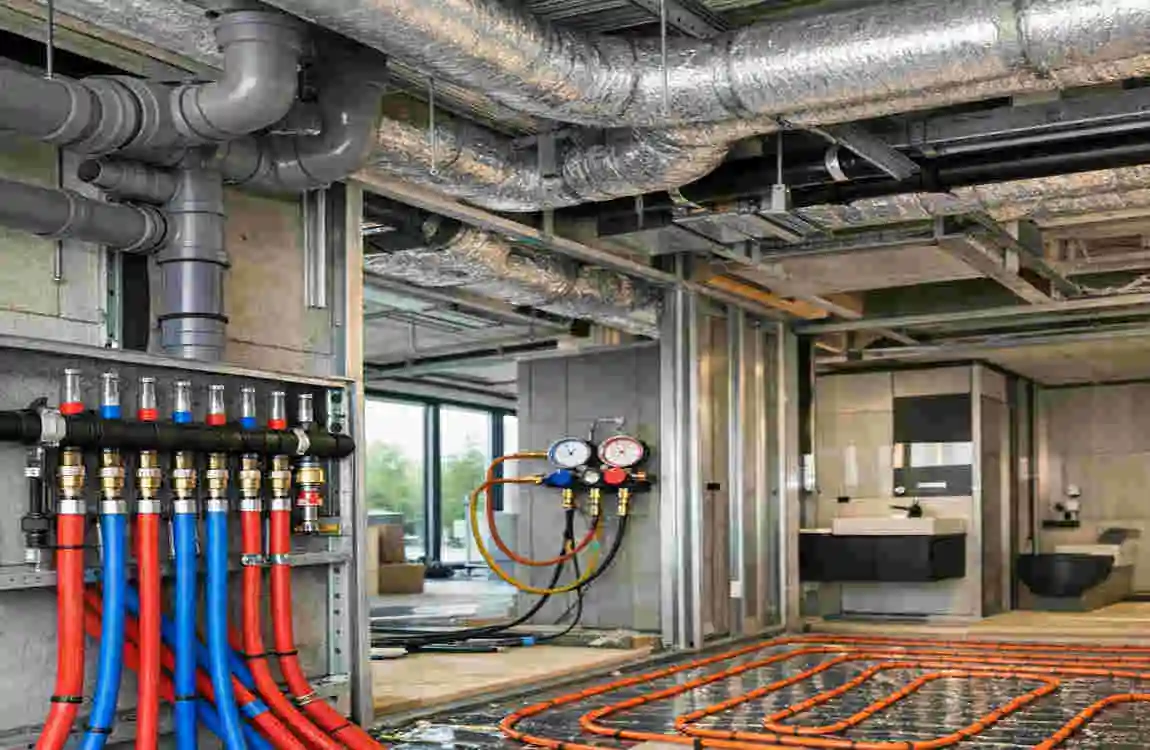
Plumbing is changing with new technology and better materials.
Water-Saving Fixtures
Low-flow toilets, faucets, and showerheads help reduce water use without compromising system effectiveness.
Efficient Water Heaters
Tankless and high-efficiency water heaters save energy and provide hot water when needed.
Smart Leak Detection
Some systems can detect leaks early and send alerts before serious damage happens.
Touchless Faucets
These are popular in homes and commercial spaces because they improve hygiene and reduce water waste.
Smart Water Monitoring
These tools track use and help owners understand where water is being consumed.
Modern plumbing trends focus on efficiency, convenience, and conservation.
Tips for Better Plumbing Work in Construction
Here are a few simple ways to improve results:
- Create a clear plumbing plan before construction starts.
- Use code-compliant materials and parts.
- Hire trained plumbing professionals.
- Pressure-test supply lines.
- Test drainage before closing walls.
- Keep plumbing easily accessible for repairs.
Also, make sure plumbing is coordinated with electrical, HVAC, and structural work. This avoids delays and conflicts on site.
Frequently Asked Questions
What is plumbing work in construction?
Plumbing work in construction involves installing and connecting systems that supply clean water, remove wastewater, and support drainage, venting, and fixtures.
What is rough-in plumbing?
Rough-in plumbing is the stage when supply, drain, waste, and vent pipes are installed before walls and finishes are completed.
Which pipes are commonly used in modern construction?
PEX, PVC, CPVC, copper, and cast iron are commonly used, depending on the project and local rules.
Why is plumbing important in construction?
Plumbing provides water supply and wastewater removal while helping prevent leaks, sanitation issues, and costly repairs.
When should plumbing be installed during construction?
Most plumbing is installed during the rough-in stage, before walls and finishes are closed up.
How can plumbing problems be prevented during construction?
Careful planning, correct pipe sizing, quality materials, testing, and inspections help prevent most problems.
Does modern plumbing save water?
Yes. Water-saving fixtures, smart monitoring, and efficient systems can reduce water use and improve performance.
| Modern Plumbing Work | Simple Explanation |
|---|---|
| Water Supply | Delivers clean water to kitchens, bathrooms, and other fixtures. |
| Drainage Systems | Safely carries wastewater away from the building. |
| Pipe Installation | Uses modern materials such as PEX, PVC, and copper for reliable plumbing. |
| Plumbing Fixtures | Includes sinks, toilets, showers, faucets, and water heaters. |
| Ventilation Pipes | Helps maintain proper air pressure and prevents sewer gases from entering the home. |
| Water Heating | Supplies hot water through traditional or energy-efficient water heaters. |
| Leak Prevention | Modern fittings, valves, and pressure controls help reduce leaks and water damage. |
