

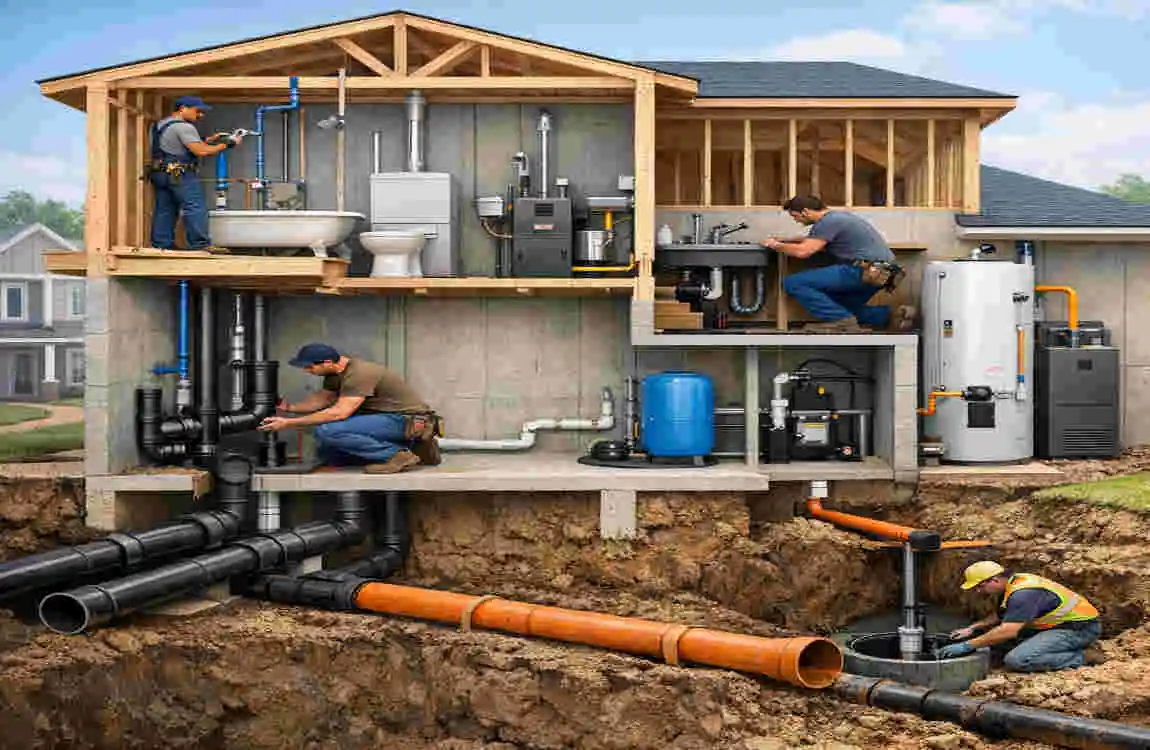
When you build a new home, plumbing is one of the most important systems to plan early. It carries clean water into the house and safely removes wastewater. If the plumbing is done well, daily life becomes easier, cleaner, and more comfortable.
The plumbing installation cost for a new house can vary a lot. A small home with simple plumbing will usually cost less than a large home with several bathrooms, a complex layout, or premium fixtures. Your final price will depend on the home’s size, pipe materials, labor rates, location, and the amount of plumbing the house actually needs.
What Is Included in New House Plumbing Installation?
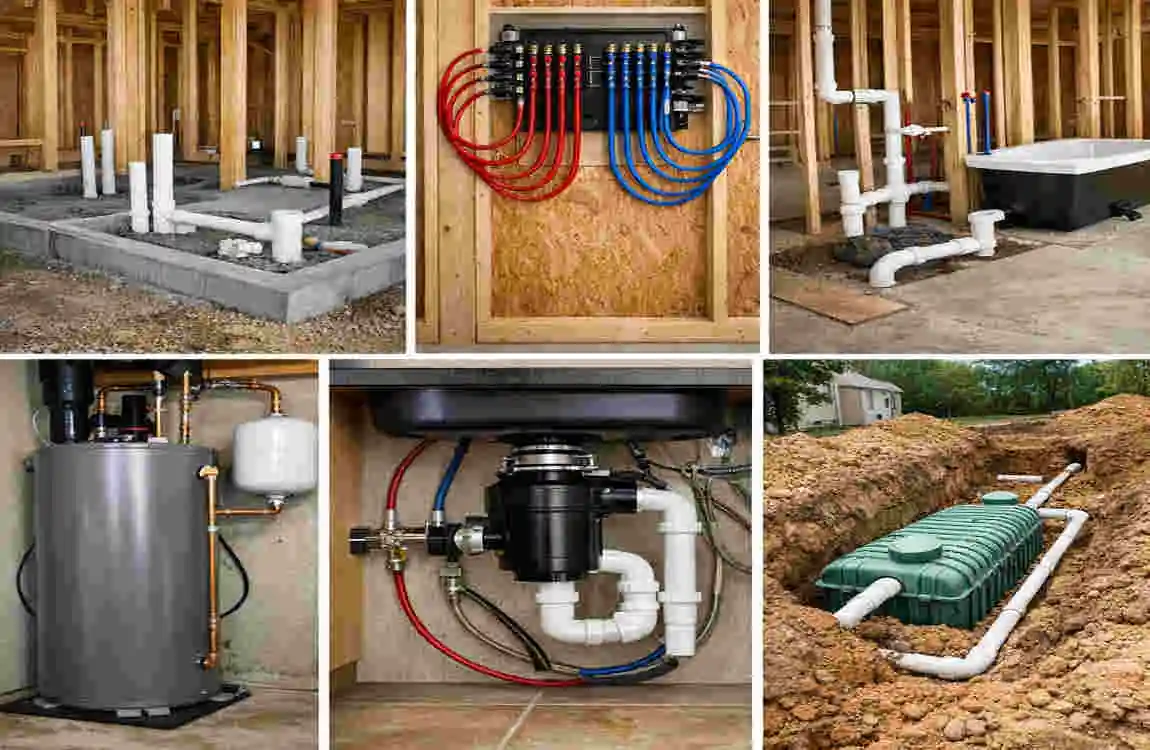
Rough-In Plumbing
Rough-in plumbing is the early stage of the job. At this point, plumbers install the pipes inside walls, floors, and ceilings before drywall or finished surfaces go in.
This part usually includes:
- Water supply lines
- Drain pipes
- Waste lines
- Vent pipes
This stage matters because it creates the basic plumbing network for the entire home. If rough-in work is planned poorly, the rest of the project becomes harder and more expensive.
Fixture Installation
After the rough-in is done, plumbers install fixtures such as:
- Toilets
- Sinks
- Showers
- Bathtubs
- Faucets
- Outdoor water connections
The type of fixture you choose can affect the total plumbing installation cost. Basic fixtures are usually cheaper, while larger tubs, special faucets, or high-end appliances can raise the budget.
Main Water and Drain Connections
A new home also needs a way to connect to water and waste systems. That may include a connection to the city water line or a private well.
On the drainage side, the home may connect to a sewer system or a septic tank. Plumbers also install shut-off valves and other key parts that help control water flow and make future repairs easier.
Average Plumbing Installation Cost for a New House
There is no single price that fits every home. Some builders estimate plumbing by square footage, while others look at fixture count or the overall complexity of the design.
The table below shows common plumbing parts and what affects their cost:
Plumbing Component Main Cost Factors
Water supply lines Pipe material, distance, layout
Drainage system Pipe size, house design, labor
Bathroom plumbing Number of fixtures
Kitchen plumbing Sink, dishwasher, water lines
Water heater Type, capacity, installation
Sewer connection Distance and local requirements
Outdoor plumbing Hose bibs, irrigation, drainage
Local labor prices and material costs can significantly affect the final number. That is why it is smart to ask for detailed quotes rather than relying on a rough estimate.
Factors That Affect Plumbing Installation Cost
House Size and Layout
Larger homes need more pipe, more labor, and more planning. A simple single-story layout is often easier and cheaper to plumb than a large two-story home with bathrooms spread far apart.
The more complex the floor plan, the more time the plumber needs.
Number of Bathrooms
Bathrooms are one of the biggest cost drivers in a new home. Each bathroom needs water lines, drain lines, venting, and fixtures.
A home with one bathroom will usually cost much less to plumb than a home with three or four bathrooms.
Pipe Material
Different pipe materials come with different price tags and performance levels.
Common options include:
- PEX: Flexible, often lower cost, easy to install
- Copper: Durable, but usually more expensive
- CPVC: Common for water lines, often budget-friendly
- PVC: Often used for drain and waste lines
Your local building code may also affect which material is allowed or preferred.
Labor Costs
Labor often accounts for a large share of the total plumbing installation cost. Rates change based on location, plumber experience, and job complexity.
If the design is difficult or the home has tight access areas, the plumber may need more time, which raises the price.
Fixtures and Appliances
Every fixture adds to the budget. That includes sinks, toilets, showers, tubs, dishwashers, washing machines, water heaters, and refrigerators with water lines.
Premium fixtures can look great, but they also increase the total cost. It helps to decide early where you want to spend more and where you can save.
Building Codes and Permits
New construction plumbing usually needs permits and inspections. These rules help make sure the system is safe and built correctly.
Requirements vary by location, so check local regulations before work begins. Skipping this step can lead to delays and extra costs later.
Plumbing Installation Cost by Area of the House
Kitchen Plumbing
Kitchen plumbing usually includes the sink, dishwasher, and sometimes a refrigerator water line. The layout of the kitchen matters because the pipe routes may be simple or more complex.
If the kitchen is far from other plumbing areas, the installation may cost more.
Bathroom Plumbing
Bathrooms often take up a large share of the plumbing budget because they require several connected fixtures in a single space.
A full bathroom may include:
- Toilet
- Sink
- Shower
- Bathtub
- Ventilation
More fixtures mean more lines, more connections, and more labor.
Laundry Room Plumbing
Laundry rooms need water supply lines and drainage for the washing machine. Some homes also include a utility sink.
These are usually simpler than bathrooms, but they still add to the overall cost of the plumbing installation.
Basement and Utility Areas
Basements can be more challenging, especially if the plumbing has to drain below the main sewer line. That may require special equipment or extra planning.
Utility rooms and basement bathrooms can also add to costs due to extra pipe runs and drainage work.
Outdoor Plumbing
Outdoor plumbing may include hose bibs, irrigation lines, and drainage systems. These features are often forgotten during planning, but they are important for convenience and yard care.
How to Reduce New House Plumbing Installation Cost
You can save money without cutting corners if you plan carefully.
Here are a few smart ways to manage cost:
- Plan the plumbing layout early
- Keep bathrooms close together when possible
- Choose durable but affordable pipe materials
- Compare several estimates
- Avoid unnecessary fixture upgrades
- Check fixture compatibility before buying
- Plan for future needs before walls are closed
- Hire qualified workers instead of the cheapest option
Good planning helps prevent changes later, and changes often cost more.
Hiring a Plumber for a New Construction Project
What to Look For
A good plumbing contractor should have:
- Proper licensing
- New construction experience
- Knowledge of local codes
- Written estimates
- Insurance
- References or past project examples
These things help reduce risk and improve the chance of a smooth project.
Questions to Ask Before Hiring
Before you choose a plumber, ask:
- What is included in the quote?
- Does it cover labor and materials?
- Are permits included?
- Which pipe materials do you recommend?
- How long will the work take?
- Are inspections part of the process?
- What happens if problems come up?
Comparing Plumbing Estimates
The lowest quote is not always the best one. Compare the full picture, including materials, labor, warranties, permits, and scope of work.
A clear, itemized estimate makes it easier to see where your money is going.
Common Plumbing Mistakes to Avoid in a New House
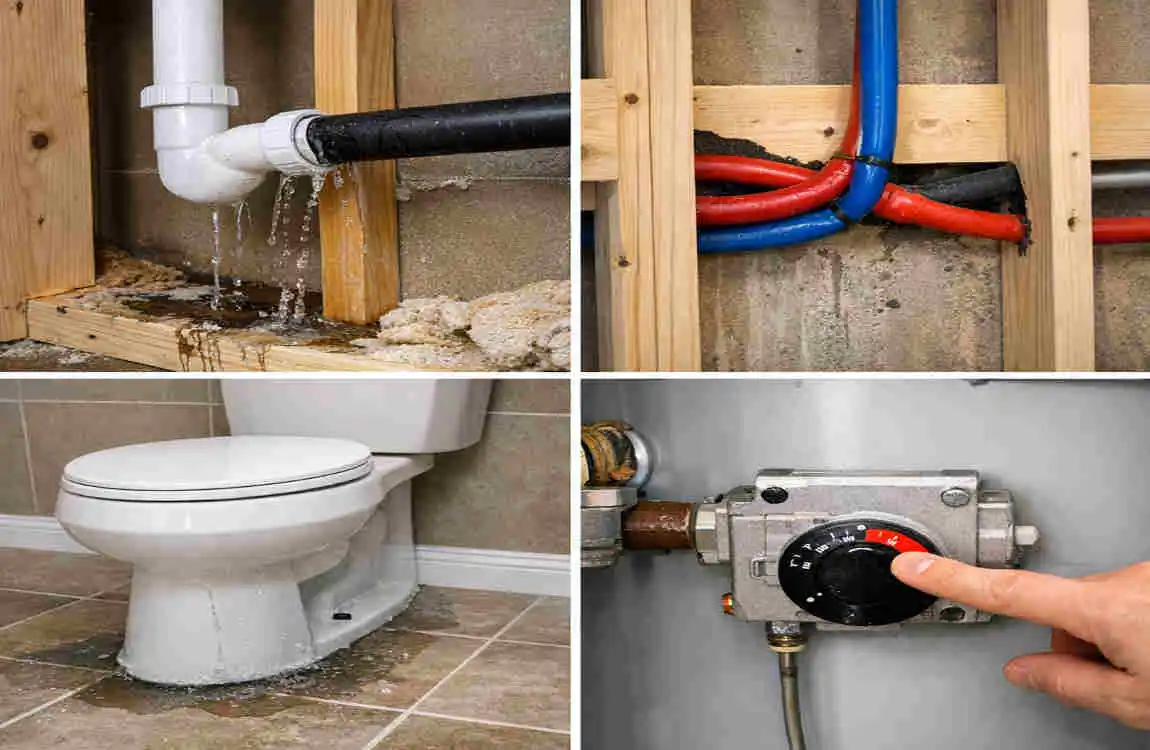
A few simple mistakes can lead to costly problems later.
Avoid these:
- Poor layout planning
- Choosing materials only by price
- Installing too few shut-off valves
- Forgetting future upgrades
- Skipping drainage and venting needs
- Ignoring inspections
- Hiring an inexperienced contractor
- Forgetting to budget for changes
The best time to fix plumbing mistakes is before the walls are closed.
FAQ
How much does plumbing installation cost for a new house?
It depends on the home’s size, number of bathrooms, pipe materials, labor rates, and the complexity of the system.
What is the most expensive part of new house plumbing?
Large rough-in work, multiple bathrooms, sewer connections, water heaters, and complex drainage systems are often the biggest cost drivers.
Is PEX cheaper than copper for new house plumbing?
Usually yes. PEX is often less expensive and easier to install, while copper tends to cost more.
How long does plumbing installation take in a new house?
It depends on the home size, design, number of fixtures, inspection schedule, and contractor availability.
Does new construction plumbing require a permit?
In most areas, yes. Permit rules vary by location, so check local building requirements before starting.
Can plumbing installation costs be reduced?
Yes. Early planning, efficient layouts, good material choices, and competitive estimates can all help lower costs.
Should plumbing be installed before drywall?
Yes. Rough-in plumbing is usually done before the walls are closed so the pipes can be properly placed.
| Cost Factor | Typical Cost Range |
|---|---|
| Basic plumbing installation | $4,000–$8,000 |
| Plumbing rough-in | $2,000–$5,000 |
| Fixtures and connections | $1,000–$3,000+ |
| Water supply lines | $500–$2,000 |
| Drain and waste pipes | $1,000–$3,000 |
| Labor | $2,000–$6,000+ |
| Estimated total | $4,000–$15,000+ |
