

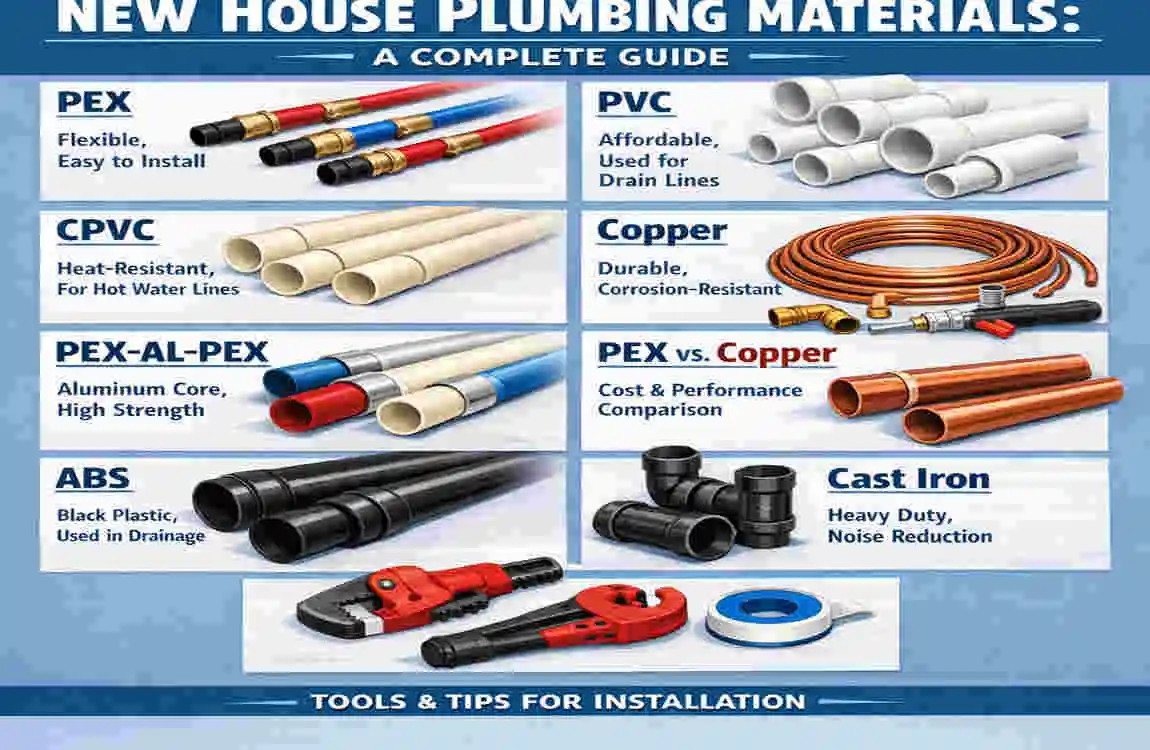
Choosing the right new house plumbing materials is one of the most important steps in home construction. The pipes and fittings hidden behind walls may not look exciting, but they control water flow, durability, safety, and long-term repair costs.
If you choose the wrong materials, you may face leaks, low water pressure, corrosion, or costly repairs later. If you choose well, your plumbing system can work smoothly for years with less stress.
What Are New House Plumbing Materials?
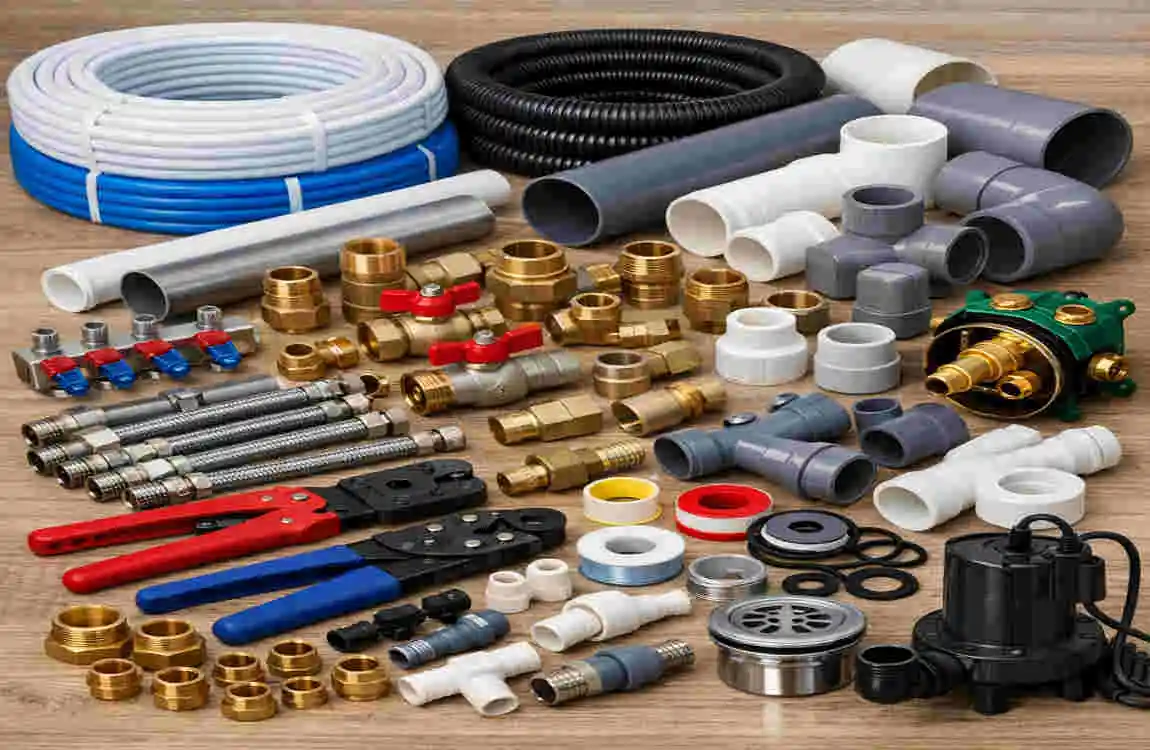
Plumbing materials are the parts used to carry water in and out of a home. In a new house, these materials form the full plumbing system, from the supply lines to the drainage network.
Main Types of Plumbing Materials
Here are the main parts you should know about:
- Water supply pipes
- Drain and waste pipes
- Vent pipes
- Plumbing fittings
- Valves and connectors
- Water heater connections
- Insulation and protective materials
Each part plays a different role. Some carry clean water into the home. Others remove wastewater safely. Some help control flow, while others protect pipes from damage.
Why Material Selection Matters
The materials you choose affect more than just price. They also affect water quality, ease of installation, code compliance, and the frequency of repairs you may need.
That is why new home builders and homeowners should think beyond the lowest cost. A cheaper pipe is not always the better choice if it wears out faster or is hard to maintain.
Best Plumbing Materials for a New House
Different materials work better for different plumbing jobs. Some are best for supply lines. Others are better for drainage.
PEX Plumbing
PEX is one of the most common choices for modern homes.
It is flexible, which makes it easier to run through walls and around corners. This also helps reduce the number of fittings, which can lower the risk of leaks. PEX is a popular choice for both hot and cold water lines.
It also handles freezing better than many rigid pipes. If water inside PEX freezes, the pipe is less likely to burst than pipes made of other materials. That makes it a smart option in colder areas.
Copper Pipes
Copper is a long-time favorite in plumbing. It is known for being strong, durable, and heat-resistant.
Copper can last a very long time when installed properly. It is often used in hot and cold water systems, and many homeowners like it because of its trusted history.
The downside is cost. Copper usually costs more than plastic piping, both in material and labor. It also takes more skill to install.
CPVC Pipes
CPVC is a plastic pipe used for water supply. It is affordable, corrosion-resistant, and commonly used in residential plumbing.
It works with both hot and cold water lines, making it useful in many homes. CPVC is also lighter than copper, so it is easier to handle.
Compared with PEX, it is less flexible. That can make installation a little harder in tight spaces.
PVC Pipes
PVC is one of the most common materials used for drainage, waste, and vent systems.
It is lightweight, economical, and easy to cut and connect. Since it is not usually used for hot water supply, you will most often find it in drain lines rather than water feed lines.
PVC is a practical choice where cost and simplicity matter most.
ABS Pipes
ABS is another pipe used for drainage systems. It is strong, lightweight, and simple to install.
It is commonly used for waste and vent lines in homes. In some areas, code rules or local practices may favor ABS over PVC, so homeowners should always check local requirements.
Plumbing Fittings and Connections
Pipes alone do not make a plumbing system work. Fittings connect the pipes and help water move in the right direction.
Common Plumbing Fittings
Some of the most common fittings include:
- Elbows
- Tees
- Couplings
- Adapters
- Unions
- Reducers
- Shut-off valves
These parts help change direction, join pipes, reduce pipe size, or shut off water when needed.
Choosing Quality Fittings
Good fittings matter because a weak joint can lead to leaks. When buying fittings, check for:
- Correct size
- Material compatibility
- Pressure rating
- Durable construction
- Approved use for the system
The right fitting should match both the pipe and the job it needs to do.
How to Choose New House Plumbing Materials
Consider the Water Supply System
Think about your water pressure, temperature, and water quality. Some materials handle hot water better. Others perform better in areas with freezing weather or high mineral content.
If your water is aggressive or corrosive, certain metals may wear down faster. In that case, plastic options may be a better fit.
Think About Durability and Lifespan
Some materials last longer than others, but only if they are installed properly. Copper often lasts a long time. PEX and CPVC can also perform very well in the right conditions.
Ask yourself: How much maintenance do I want later? That question often helps narrow the choice.
Consider Installation Costs
Material price is only part of the total cost. Labor matters too.
PEX is often quicker to install, which can lower labor costs. Copper may cost more because it takes longer and requires more skill. CPVC, PVC, and ABS may be more budget-friendly depending on the system.
Follow Local Plumbing Codes
This is very important. Not every material is allowed in every place for every use.
Local plumbing rules may affect pipe type, size, connection method, and where certain materials can be used. Always make sure your plan follows the code in your area.
Consider Future Repairs
You should also think about the future. If a pipe needs replacement, how easy will it be to find the same fittings? Will the line be easy to reach?
A smart plumbing plan makes later repairs simpler and less expensive.
Plumbing Materials for Different Areas of the Home
Kitchen Plumbing
Kitchen plumbing usually needs supply lines, a sink drain, dishwasher connections, and shut-off valves.
PEX or CPVC may work well for supply lines. PVC is often used for drain lines. Quality shut-off valves are especially helpful here because kitchen fixtures often need occasional service.
Bathroom Plumbing
Bathrooms include sinks, toilets, showers, tubs, and drains. Because these areas are used often, the materials should be reliable and easy to service.
Supply lines may be made of PEX, CPVC, or copper. Drain and vent systems often use PVC or ABS.
Laundry Room Plumbing
Laundry rooms need strong supply lines for the washing machine and a dependable drain system.
Flexible and durable supply tubing is helpful here. Shut-off valves should also be easy to reach in case of emergencies.
Outdoor Plumbing
Outdoor plumbing must withstand weather exposure, temperature fluctuations, and occasional freezing.
Materials may need extra insulation or protection. Hose connections, exterior water lines, and irrigation-related plumbing should all be planned with the climate in mind.
Common Plumbing Mistakes in New House Construction
Using the Wrong Pipe Size
Pipe size affects water flow and drainage performance. If the pipe is too small, pressure can suffer. If it is too large or poorly planned, the system may not work as intended.
Mixing Incompatible Materials
Some materials can be joined only with the right transition fittings. If you mix incompatible parts without proper connections, leaks or failures can occur later.
Ignoring Water Pressure
Too much pressure can strain pipes and fixtures. Too little pressure can make showers and sinks frustrating to use. Pressure needs to be planned properly from the start.
Poor Pipe Support
Pipes need support to stay stable. Without enough support, they may move, make noise, or wear out faster.
Skipping Pressure and Leak Testing
Never close walls or ceilings before testing the plumbing system. This step helps catch problems early, when they are still easy to fix.
How Much Do New House Plumbing Materials Cost?
There is no single price for a new plumbing system. The total cost depends on many things.
Factors Affecting Cost
- House size
- Number of bathrooms
- Number of fixtures
- Pipe material
- Pipe diameter
- Plumbing layout
- Labor costs
- Local material prices
- Water heater needs
The best approach is to compare the total installed cost, not just the price of the pipe itself.
Tips for Buying Plumbing Materials
Before you buy, keep these simple tips in mind:
- Choose materials that meet local codes
- Confirm pipe and fitting sizes
- Buy compatible parts from trusted makers
- Do not mix materials without proper transition pieces
- Buy a few extra fittings
- Save product details and warranty information
These small steps can prevent big delays during construction.
Maintenance Tips for New House Plumbing
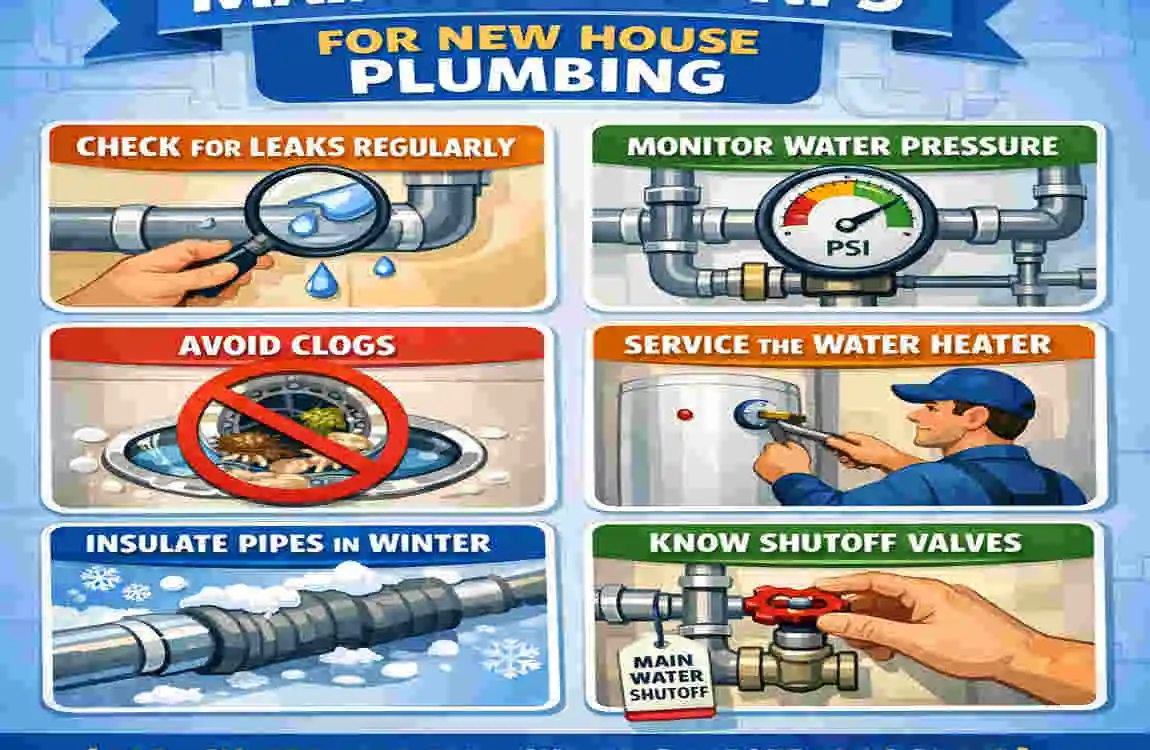
Inspect for Leaks
Check visible pipes, cabinets, utility spaces, and under sinks from time to time. Small leaks are easier to fix than major ones.
Monitor Water Pressure
If pressure changes suddenly, do not ignore it. High or low pressure can point to a problem in the system.
Protect Pipes From Freezing
In cold climates, use insulation and other protective measures to reduce the risk of freezing.
Avoid Chemical Drain Abuse
Too many harsh drain cleaners can harm plumbing parts. Use them carefully and only when needed.
Schedule Professional Inspections
If you notice recurring leaks, slow drains, strange noises, or water quality issues, get a professional inspection.
Frequently Asked Questions
What are the best new house plumbing materials?
PEX, copper, CPVC, PVC, and ABS are commonly used. The best one depends on whether the pipe is for supply, drainage, or another purpose.
Is PEX better than copper for a new house?
PEX is easier to install and more flexible, while copper is very durable and heat-resistant. The better choice depends on budget, code, and application.
What pipe is commonly used for house drainage?
PVC and ABS are commonly used for residential drainage, waste, and vent systems.
How long do new house plumbing pipes last?
Lifespan depends on the material, installation quality, water conditions, and maintenance.
Should all plumbing pipes be the same material?
No. Different parts of the house may need different materials.
Can plumbing materials be mixed in a new house?
Yes, but only with approved transition fittings and proper installation methods.
When should new house plumbing be tested?
It should be tested during construction before walls and ceilings are closed.
| Plumbing Material | Common Use in a New House | Key Benefit |
|---|---|---|
| PEX Pipes | Water supply lines | Flexible, affordable, and easy to install |
| PVC Pipes | Drainage and waste lines | Lightweight and corrosion-resistant |
| CPVC Pipes | Hot and cold water supply | Handles higher temperatures |
| Copper Pipes | Water supply and heating | Durable and long-lasting |
| ABS Pipes | Drainage systems | Strong and suitable for waste pipes |
| Brass Fittings | Pipe connections and valves | Durable and leak-resistant |
| Stainless Steel | Faucets and selected fittings | Corrosion-resistant and stylish |
| Plumbing Valves | Water flow control | Helps shut off and regulate water |
