

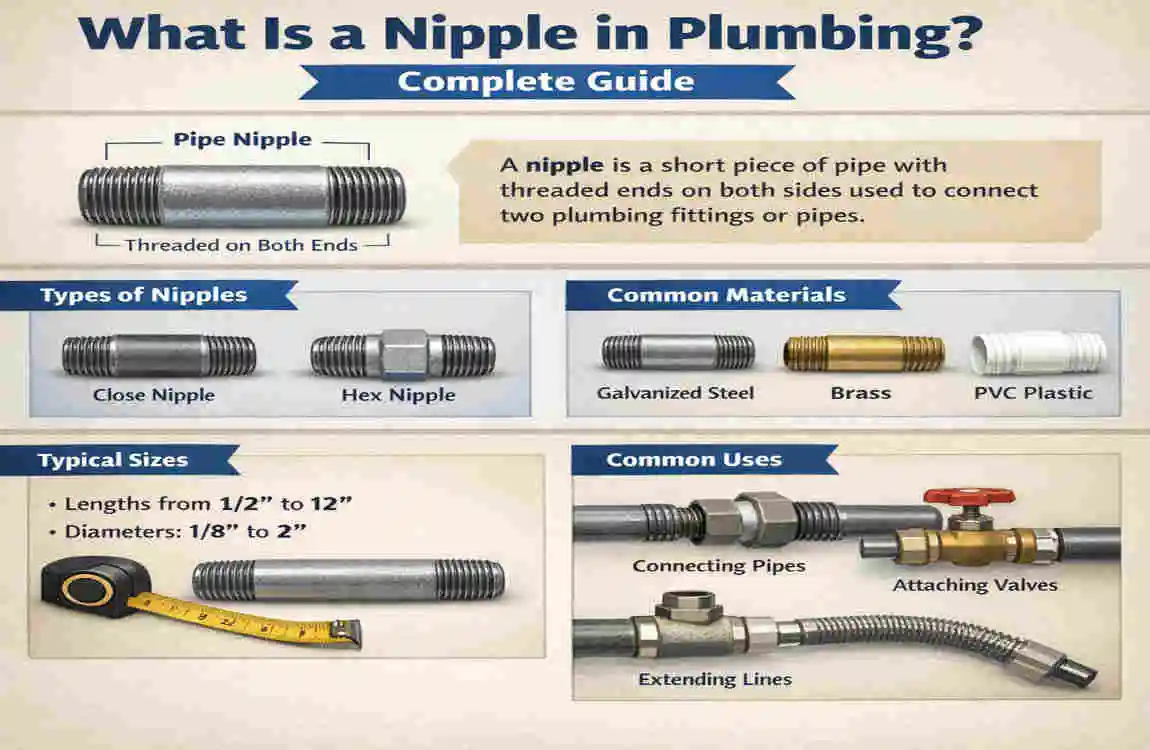
If you have ever looked at a pipe connection and wondered what a nipple in plumbing is, you are not alone. A plumbing nipple is a small but useful fitting that connects two threaded parts. You’ll find them in home plumbing, water heaters, pumps, and many other systems.
People often use nipples because they are simple, strong, and easy to install. They bridge the gap between fittings, valves, and fixtures without complicating the plumbing layout. In many cases, they are the small connector that keeps the whole system working smoothly.
What Is a Nipple in Plumbing?
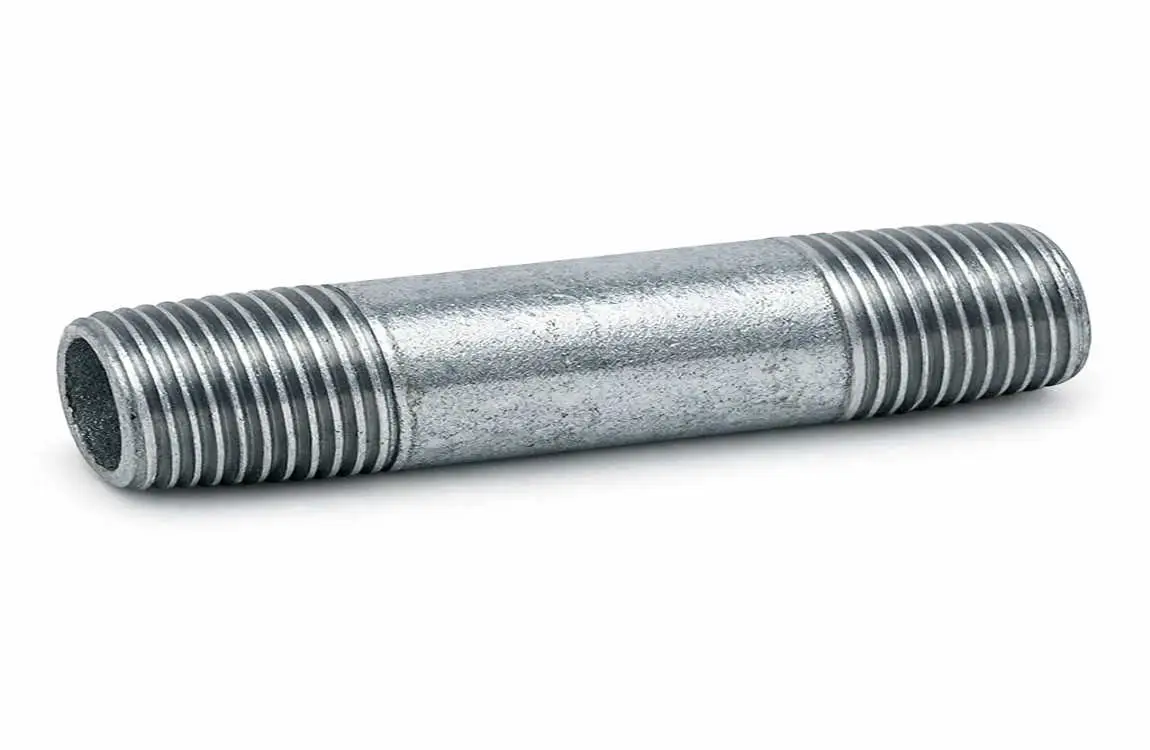
Simple Definition of a Plumbing Nipple
A plumbing nipple is a short piece of pipe, usually threaded on both ends, that connects two female-threaded fittings or components. Think of it as a small connector that joins parts of a plumbing system.
It may look simple, but it plays an important role. Without nipples, many pipe connections would be harder to build or adjust.
How a Plumbing Nipple Works
A nipple works by screwing into fittings with female threads. The nipple has male threads, meaning the threads are on the outside. When you tighten the two threaded parts together, they form a secure connection.
To help stop leaks, plumbers often use thread seal tape or pipe thread sealant. This fills tiny gaps in the threads and helps create a tighter seal.
Where Plumbing Nipples Are Used
Plumbing nipples are used in many places, such as:
- Water supply systems
- Heating systems
- Pumps and tanks
- Valves and fixtures
- Gas piping, where allowed and approved
They are especially useful when equipment needs a short connector between two threaded parts.
Nipple vs. Regular Pipe
A regular pipe is usually longer and carries water or gas over a distance. A nipple, on the other hand, is a fitting designed mainly to connect parts.
The biggest differences are usually length and threading. A nipple is short and made for joining. That is why plumbers treat it as a fitting, not just a simple pipe section.
Types of Plumbing Nipples
Close Nipple
A close nipple is very short. In many cases, there is almost no visible unthreaded space between the fittings once it is installed.
It is useful when you need a tight connection and have very little room. However, it can be harder to install and remove because there is less space to grip.
Hex Nipple
A hex nipple has a hexagonal section in the middle. This makes it easier to hold with a wrench during installation.
It is a popular choice because it gives better grip and makes tightening easier. This type is often used in places where a strong, neat connection is needed.
Reducing Nipple
A reducing nipple has different sizes on each end. One side may fit a 1-inch pipe, while the other side may fit a 3/4-inch pipe.
This type helps you connect pipes or fittings of different sizes without extra adapters.
Barrel Nipple
A barrel nipple is longer than a close nipple. It is a common option when you need a little more distance between fittings.
It is often used in general plumbing setups where a short extension is needed. Still, a very tight connection is not required.
Weld Nipple
A weld nipple is different from a threaded nipple. Instead of being screwed into place, it is welded to the system.
This type is used in some industrial or heavy-duty systems where a welded joint is preferred for strength and durability.
Other Specialized Nipple Designs
There are also nipples made from different materials or coatings, such as:
- Galvanized nipples
- Brass nipples
- Stainless-steel nipples
- Plastic nipples
Each one has a different use depending on water conditions, temperature, and corrosion risk.
Nipple TypeMain FeatureCommon Use
Close nipple Very short Tight spaces
Hex nipple Hex center for wrench grip Easier installation
Reducing nipple Different sizes on each end Size transition
Barrel nipple Longer body General connections
Weld nipple Welded connection Heavy-duty systems
Plumbing Nipple Materials and Sizes
Common Materials
Plumbing nipples come in different materials. The most common are:
- Brass
- Copper
- Stainless steel
- Galvanized steel
- PVC and other plastics
Each material has its own strengths. For example, brass resists corrosion well, while stainless steel is very durable.
Choosing the Right Material
The best material depends on the job. You should think about:
- Water type
- Temperature
- Pressure
- Corrosion resistance
- Compatibility with the existing pipe
For example, a hot-water system may need a more heat-resistant material than a simple cold-water connection.
Common Plumbing Nipple Sizes
Plumbing nipples come in standard sizes like:
- 1/2 inch
- 3/4 inch
- 1 inch
These are called nominal sizes, which means the listed size may not match the exact outside measurement. That is why checking the connection carefully matters.
Thread Types
Most plumbing nipples use standard pipe threads. These threads must match the fitting they connect to.
A male thread goes into a female thread. If the thread type does not match, the connection may leak or not fit at all.
How to Choose the Right Plumbing Nipple
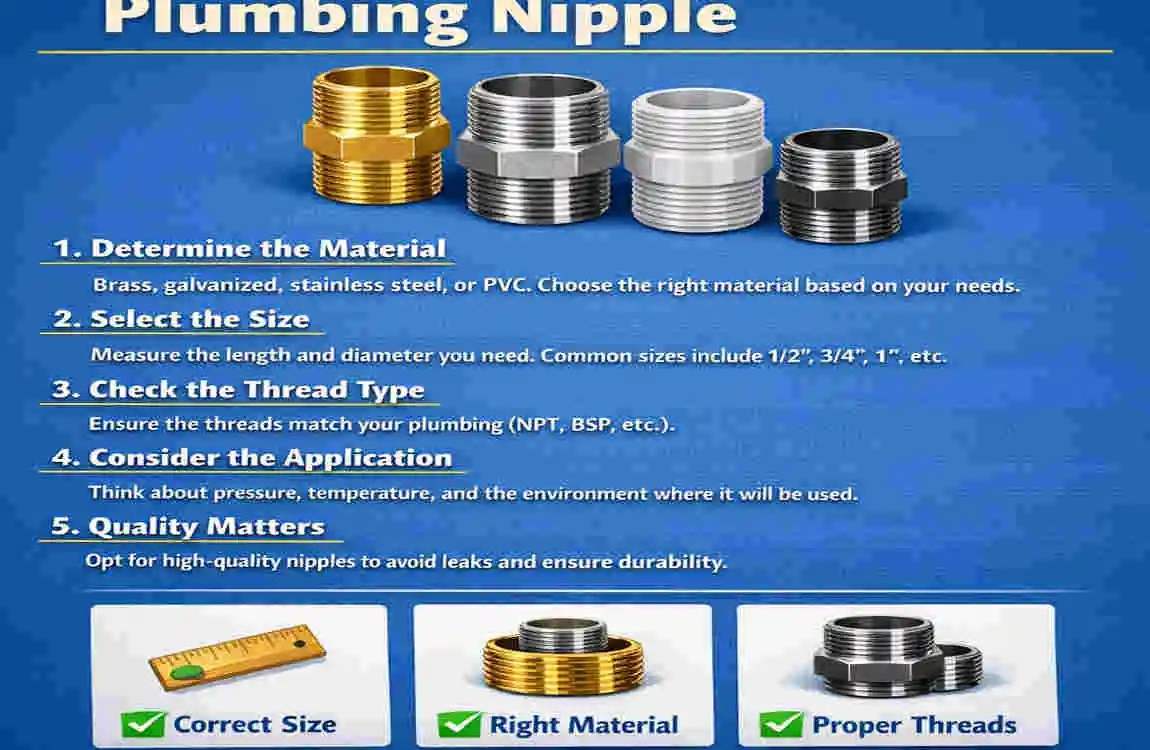
Check the Pipe Size
Start by measuring the pipe or fitting you need to connect. Do not guess the size. Even a small mismatch can cause leaks or a poor fit.
Consider the Material
When possible, match the nipple material to the rest of the system. This helps reduce corrosion and keeps the connection reliable.
Select the Correct Length
A close nipple is best for very short gaps. Use a longer nipple when you need more space between fittings.
Choosing the wrong length can put stress on the connection and make installation harder.
Check Pressure and Temperature Requirements
Some systems deal with high pressure or hot water. In those cases, the nipple must be strong enough to handle the conditions safely.
Match the Thread Type
Always make sure the threads are compatible. Don’t force parts together if they don’t fit naturally.
Consider the Application
Ask yourself where the nipple will be used:
- In a home plumbing line
- On a water heater
- In a pump
- Outdoors
- In an industrial system
The job decides the best choice.
How to Install a Plumbing Nipple
Tools and Materials You May Need
Before you begin, gather the basic tools:
- Adjustable wrench or pipe wrench
- Thread seal tape or pipe sealant
- Correct-size nipple
- Compatible fittings
Step-by-Step Installation
- Shut off the water supply if needed.
- Clean the threads on the fittings.
- Check the nipple for damage or defects.
- Apply thread seal tape or sealant.
- Hand-tighten the nipple first.
- Use a wrench carefully to tighten it more.
- Reconnect the plumbing parts.
- Turn the water back on and check for leaks.
Common Installation Mistakes
Here are some mistakes to avoid:
- Over-tightening
- Cross-threading
- Using the wrong size
- Mixing incompatible materials
- Skipping leak checks
When to Call a Professional Plumber
You should call a plumber if the job involves:
- Gas lines
- High-pressure systems
- Hidden pipes
- Major leaks
- Hard-to-reach areas
Safety matters more than saving a little time.
Advantages, Problems, and Maintenance of Plumbing Nipples
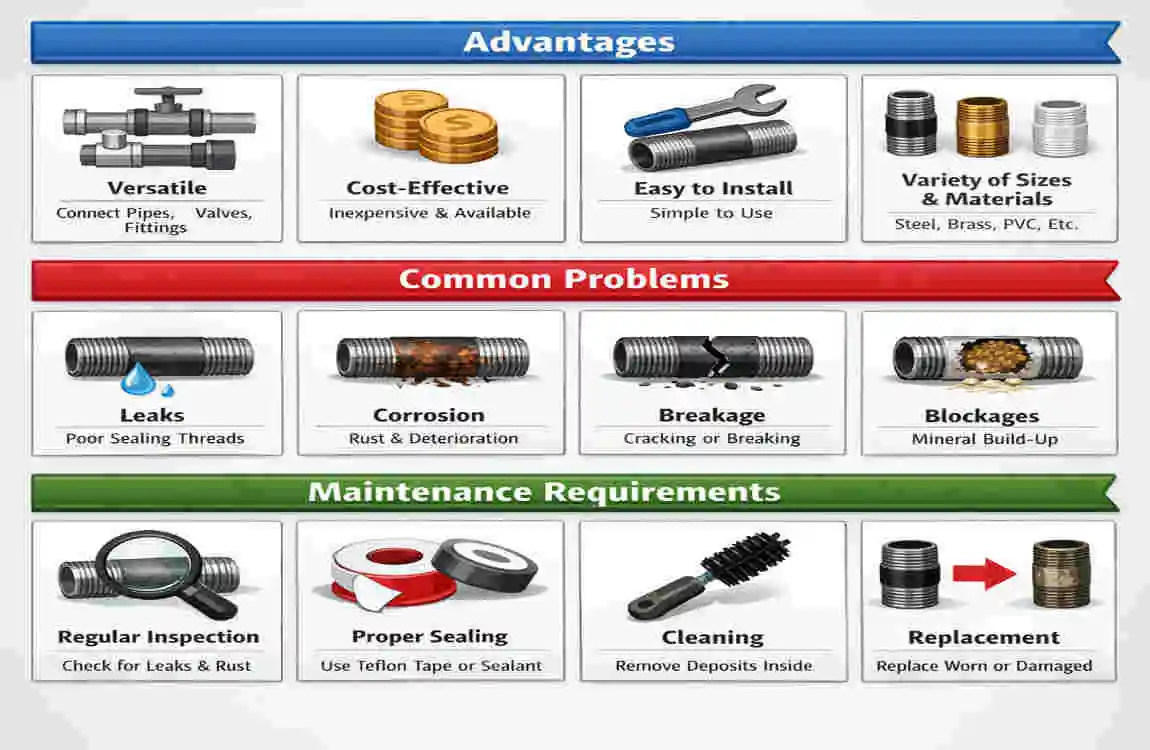
Advantages of Plumbing Nipples
Plumbing nipples are popular because they are:
- Simple to use
- Available in many sizes
- Easy to replace
- Useful for many kinds of connections
They are small parts, but they make a big difference in plumbing systems.
Common Problems
Some common issues include:
- Leaking threads
- Corrosion
- Damaged threads
- Cracking in plastic nipples
- Wrong sizing
How to Prevent Problems
You can avoid many issues by:
- Using compatible materials
- Choosing the right size
- Not over-tightening
- Inspecting exposed connections
- Replacing damaged parts quickly
Signs a Nipple Needs Replacement
Look for these warning signs:
- Rust or corrosion
- Constant dripping
- Cracks
- Stripped threads
- Weak water flow caused by a bad connection
If you notice these signs, replace the fitting soon.
Plumbing Nipple vs. Other Pipe Fittings
Plumbing Nipple vs. Coupling
A nipple is a short male-threaded connector. A coupling joins two pipes with female ends.
Simply put, a nipple connects other fittings, while a coupling joins pipe ends directly.
Plumbing Nipple vs. Adapter
An adapter changes one connection type to another. A nipple mainly creates a short threaded extension.
If you need to switch between different connection styles, an adapter may be the better choice.
Plumbing Nipple vs. Elbow
A nipple is straight. An elbow changes the pipe’s direction.
So if you need a bend, use an elbow. If you need a short straight connector, use a nipple.
Plumbing Nipple vs. Union
A union is made for easy removal and reassembly. A nipple is a simple connector, not a quick-release fitting.
If you may need to take the system apart often, a union may be more practical.
Frequently Asked Questions
What is a nipple in plumbing?
A plumbing nipple is a short pipe fitting with male threads, usually used to connect two female-threaded parts.
What is a plumbing nipple used for?
It connects threaded plumbing components in water, heating, and other systems.
Are plumbing nipples threaded on both ends?
Most are threaded on both ends, but some special types may differ.
What sizes do plumbing nipples come in?
Common sizes include 1/2 inch, 3/4 inch, and 1 inch.
Can a plumbing nipple leak?
Yes. Leaks can happen from poor sealing, wrong sizing, damaged threads, or over-tightening.
| Topic | Short Information |
|---|---|
| What is a plumbing nipple? | A short piece of pipe, usually threaded on both ends, used to connect two plumbing fittings. |
| Main purpose | It extends a pipe connection and joins fittings, valves, or other threaded components. |
| Common materials | Brass, stainless steel, galvanized steel, copper, PVC, and other approved materials. |
| Common types | Close nipple, hex nipple, reducing nipple, barrel nipple, and threaded nipple. |
| Thread type | Commonly male threads on both ends, with thread standards depending on the plumbing system. |
| Where it is used | Water supply lines, valves, tanks, pumps, pipe fittings, and plumbing fixtures. |
| Size | Available in many diameters and lengths to match different plumbing systems. |
