

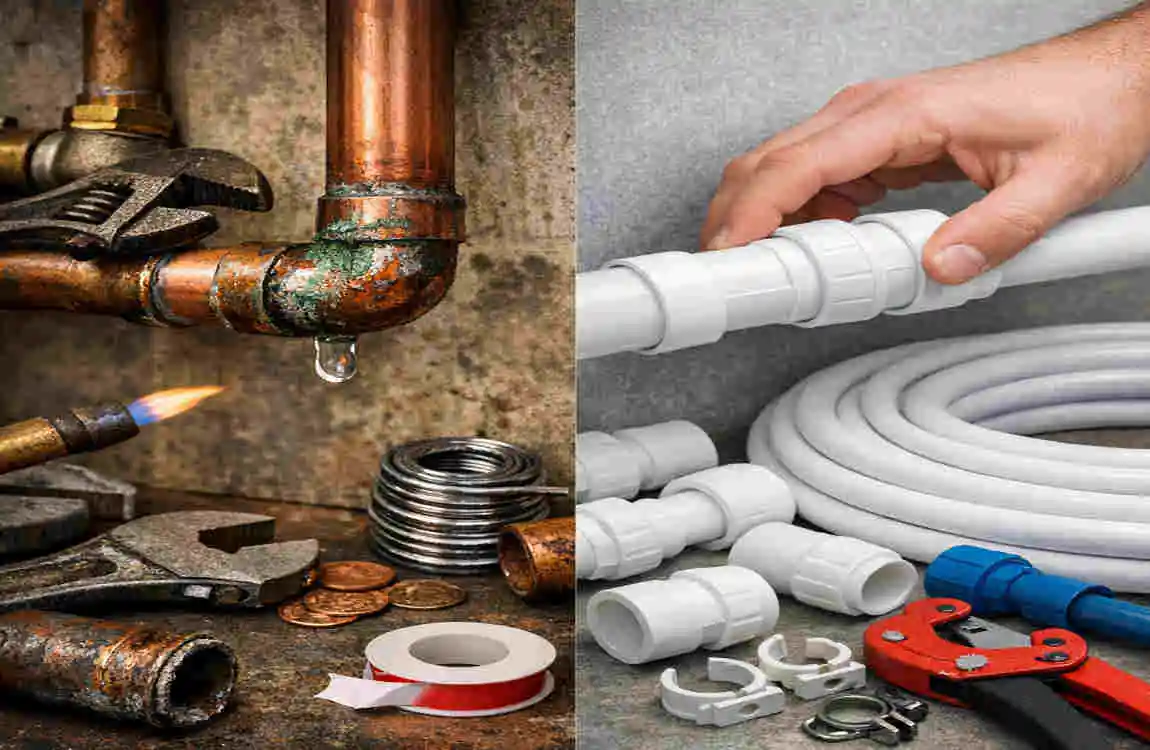
For many years, copper was the standard plumbing material. People trusted it, used it widely, and saw it as a strong choice for water lines in homes and buildings.
Over time, though, plumbing systems began to change. Plastic pipes became more common because they were easier to use, often cheaper, and resistant to problems that often affect metal pipes.
So, why did plumbing switch from copper to plastic pipes? The answer is not just one reason. It was a mix of cost, speed, corrosion resistance, flexibility, and changing building needs.
Why Was Copper Traditionally Used for Plumbing?
Copper’s long history in plumbing
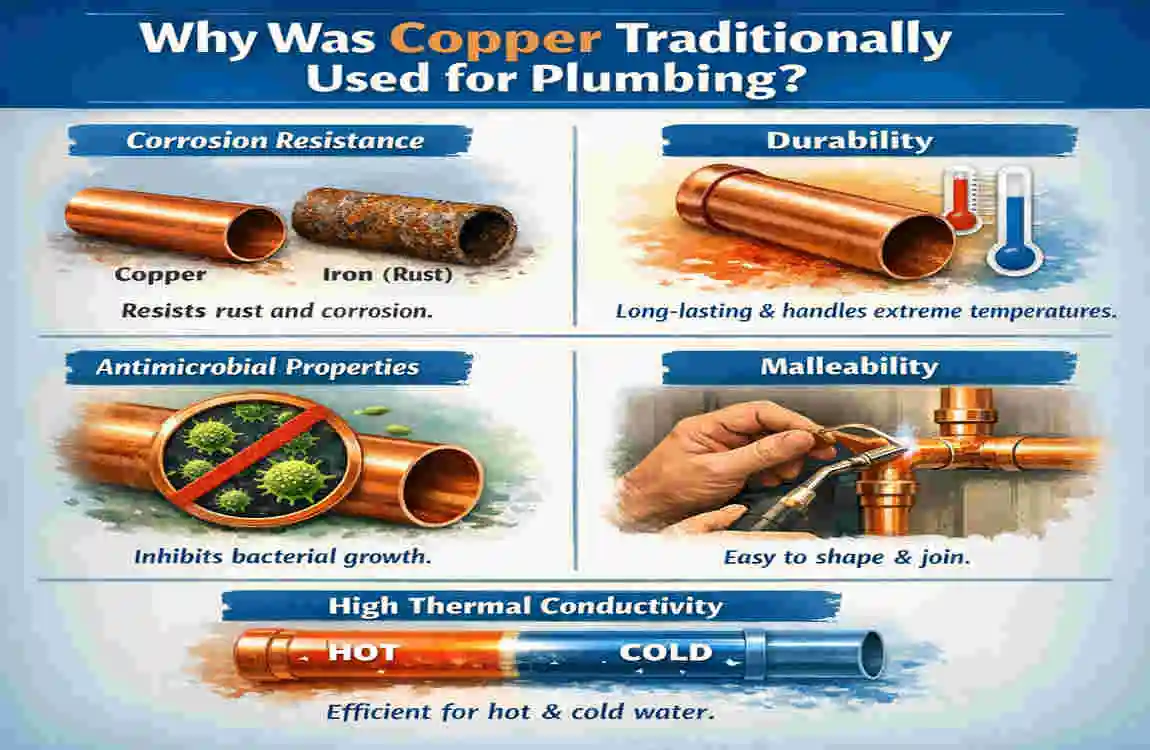
Copper has been used in plumbing for a very long time. It became popular because it was strong, reliable, and worked well for water supply systems.
For decades, many plumbers trusted copper because it had a solid record. It was a familiar material, and building codes often supported its use.
Main advantages of copper pipes
Copper pipes have several real strengths.
- They last a long time
- They handle heat very well
- They can be shaped and joined with skill
- They have a strong reputation in plumbing standards
Because of these qualities, copper became a trusted choice for water lines, especially in older homes.
Problems with traditional copper plumbing
Even with its strengths, copper had some clear drawbacks.
First, it was more expensive than many newer materials. Second, installation often took more time and skill. Third, copper can still corrode, especially under certain water conditions.
There were also practical concerns. Copper has scrap value, which made it a target for theft at job sites. Over time, these issues made builders look for better options.
Why Did Plumbing Switch From Copper to Plastic Pipes?
Lower material and installation costs
Cost was one of the biggest drivers of the shift.
Plastic pipes are often less expensive than copper pipes. That matters a lot in housing projects, renovations, and large buildings where every dollar counts.
They can also save money during installation. In many cases, plastic is quicker to fit, which lowers labour costs. For homeowners and builders, that combination is hard to ignore.
Faster and easier installation
Plastic pipes are usually lightweight, which makes them much easier to carry, cut, and install.
Copper often needs more tools, more soldering, and more time. Plastic systems can be faster, especially in residential work.
This is a big reason many plumbers now prefer plastic in modern projects. When a job moves faster, it often costs less and causes less disruption.
Resistance to corrosion
Copper can corrode in certain conditions. Water chemistry, mineral content, and age can all affect performance.
Plastic does not rust or corrode the same way metal does. That makes it a strong choice in many plumbing situations, especially where water conditions are tough.
This is one of the main reasons plumbers use PEX and other plastic systems so often today.
Flexibility and fewer connections
Some plastic pipes, especially PEX plumbing, are flexible. That flexibility is a major advantage.
A more flexible pipe can often run through tight areas with fewer joints. Fewer joints may mean fewer places where leaks can happen.
This is especially helpful in home construction and remodelling, where plumbers may need to work around walls, floors, and tight spaces.
Growing construction demand
Modern construction often moves quickly. Builders need plumbing systems they can install efficiently in homes, apartments, and commercial spaces.
Plastic piping fits that need well. It supports faster building schedules and simpler installation methods.
As housing demand grew, the plumbing industry naturally moved toward materials that saved time and money while still doing the job well.
Copper vs. Plastic Pipes: Key Differences
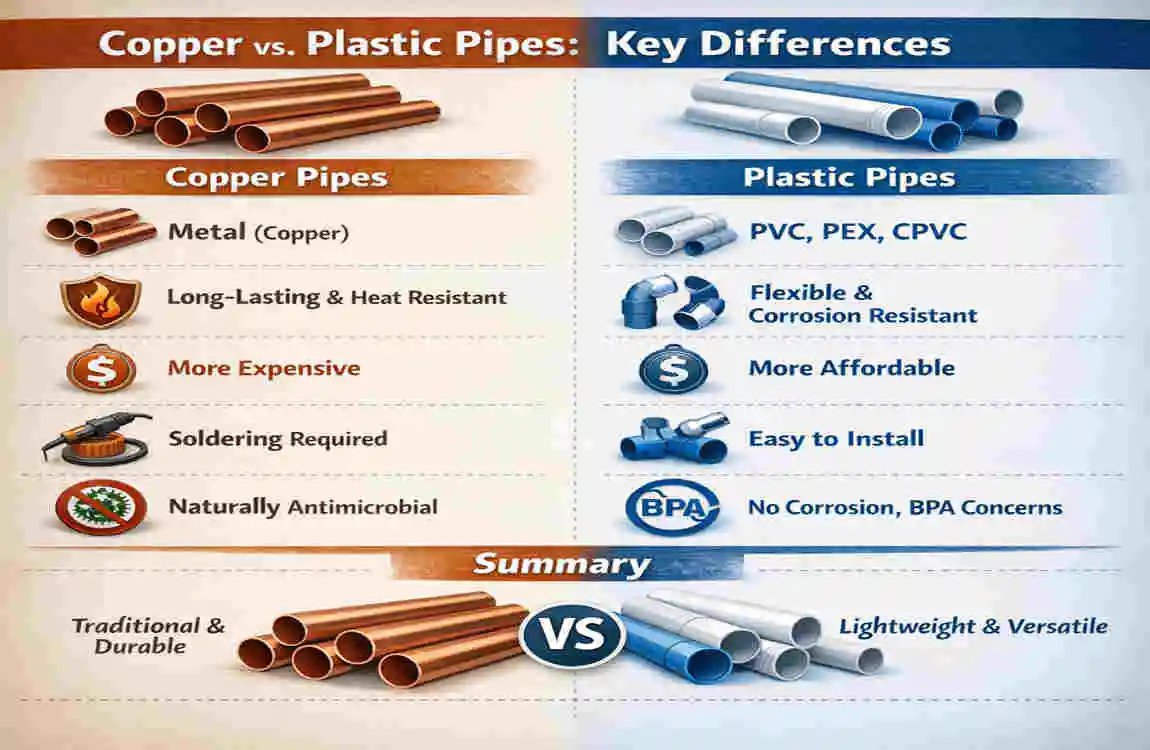
Quick comparison table
FeatureCopper PipesPlastic Pipes
Material Cost Generally higher Generally lower
Weight Heavy Lightweight
Installation More labour-intensive Often easier and faster
Corrosion Can corrode under certain conditions Generally corrosion-resistant
Flexibility Rigid Some types are flexible
Heat Resistance Excellent Depends on pipe type
Maintenance Can need repairs from corrosion Often low maintenance
Common Uses Water supply, specialised applications Water supply, drainage, and more
PEX vs. copper
PEX is one of the most common plastic pipe types in homes.
It is flexible, easy to install, and useful in many residential plumbing systems. Compared with copper, it often needs fewer fittings and less labour.
That is one reason PEX plumbing became so popular in modern homes.
CPVC vs. copper
CPVC is another plastic option. It handles heat better than regular PVC and is often used for hot and cold water lines.
Compared with copper, CPVC usually costs less and is easier to install. It is common in many home plumbing systems.
PVC vs. copper
PVC is widely used for drainage and cold-water applications. It is not normally used for hot water.
Compared with copper, PVC is lighter, cheaper, and easier to work with in drainage systems. That is why it remains common in many plumbing jobs.
Benefits and Limitations of Plastic Plumbing Pipes
Major benefits
Plastic pipes brought several major advantages to plumbing.
- Lower installation cost
- Lightweight handling
- Corrosion resistance
- Quick installation
- Smooth pipe interiors
- Wide range of uses
These benefits made plastic a practical choice for modern plumbing systems.
Important limitations
Plastic is not perfect, and different types have different strengths.
Some plastic pipes handle heat better than others. Some can be affected by sunlight or UV exposure. Expansion and contraction can also matter, depending on the system.
That is why proper selection and installation still matter. A pipe is only as good as the system it is part of.
Which plastic pipe is best?
No single option works best for every situation.
- PEX: Great for flexible residential water lines
- PVC: Common for drainage and cold-water use
- CPVC: Often used for hot and cold water lines
- ABS: Used in some drainage systems
The best choice depends on where the pipe will go and what local plumbing rules allow.
How the Switch to Plastic Changed Modern Plumbing
Impact on home construction
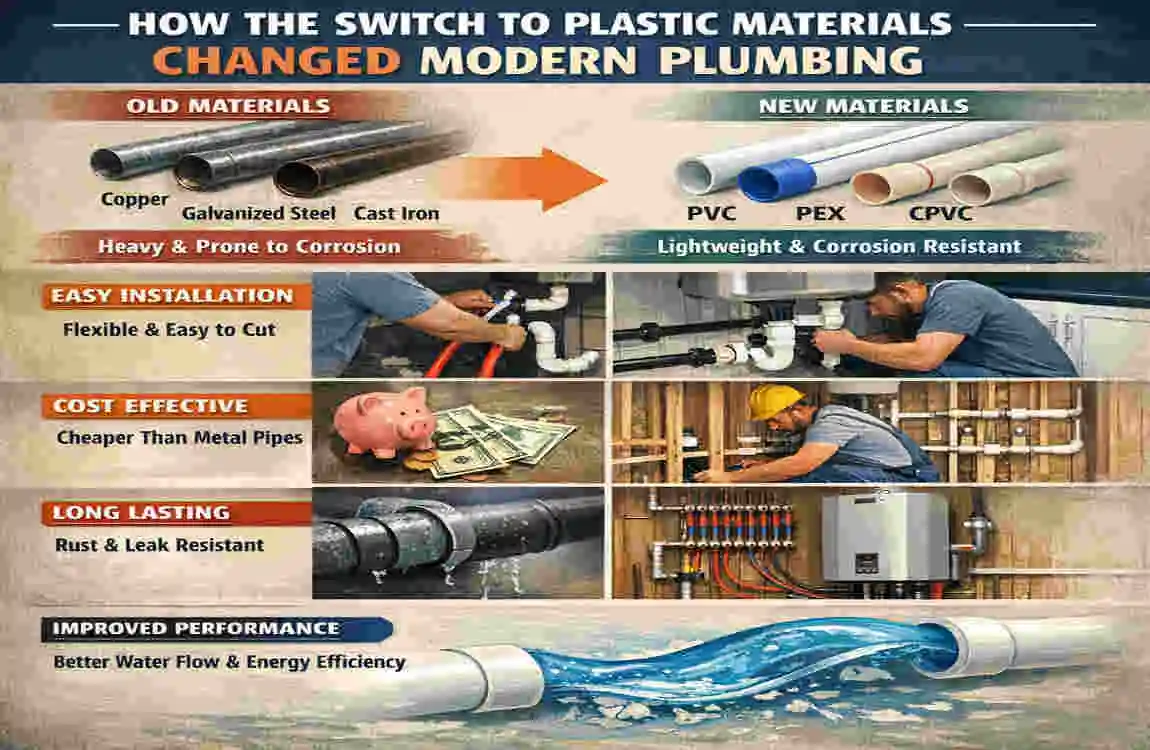
Plastic pipes made plumbing faster and easier in new homes.
Builders could install systems more quickly, which helped projects stay on schedule. Homeowners also benefited from lower costs in many cases.
Impact on plumbing design
Plastic gave plumbers more design freedom. Flexible piping can follow a more direct path and fit into tight spaces more easily.
That can reduce the number of fittings needed, which may lower leak risk and simplify the system.
Energy and water considerations
Plastic pipes often have smooth inner surfaces, which can help water move efficiently. Some systems also work well with insulation for hot-water lines.
That said, performance depends on the full system, not just the pipe material. Good design still matters.
Is copper completely replaced?
No, copper has not disappeared.
It is still used in some homes and buildings, especially where local codes, system design, or performance needs make it a better choice. In many modern plumbing systems, plastic and copper coexist.
So the story is not “copper is gone.” It is more accurate to say that plastic became the more common choice in many residential applications.
Frequently Asked Questions
What is the main reason plumbing switched from copper to plastic?
The main reason is cost and ease of installation. Plastic is usually cheaper and faster to install than copper.
Are plastic pipes cheaper than copper pipes?
Yes, in many cases. They often reduce both material and labour costs.
Is PEX better than copper for residential plumbing?
Not always, but PEX is often easier and cheaper to install. It is a very popular choice for many homes.
How long do plastic plumbing pipes last?
That depends on the pipe type, installation quality, and conditions. Many plastic plumbing systems are designed to last a long time.
Do plastic pipes corrode like copper?
No, plastic does not corrode the same way metal does. That is one of its biggest benefits.
Why is PEX so popular in modern homes?
Because it is flexible, easy to install, and often cost-effective for residential plumbing.
Can plastic pipes handle hot water?
Some can. PEX and CPVC can handle hot water, but PVC is usually for cold water or drainage.
Is copper plumbing still a good choice?
Yes, copper is still a strong option in the right situation. It remains useful in some homes and systems.
| Factor | Plastic Pipes | Copper Pipes |
|---|---|---|
| Cost | Generally more affordable | Usually more expensive |
| Installation | Lightweight and easy to install | Requires more tools and skilled work |
| Corrosion | Resistant to rust and corrosion | Can corrode over time |
| Weight | Very lightweight | Heavier |
| Flexibility | Some types are flexible | Rigid and less flexible |
| Water Flow | Smooth inner surface supports good flow | Good flow but may develop mineral buildup |
| Maintenance | Usually low maintenance | May require more attention over time |
