

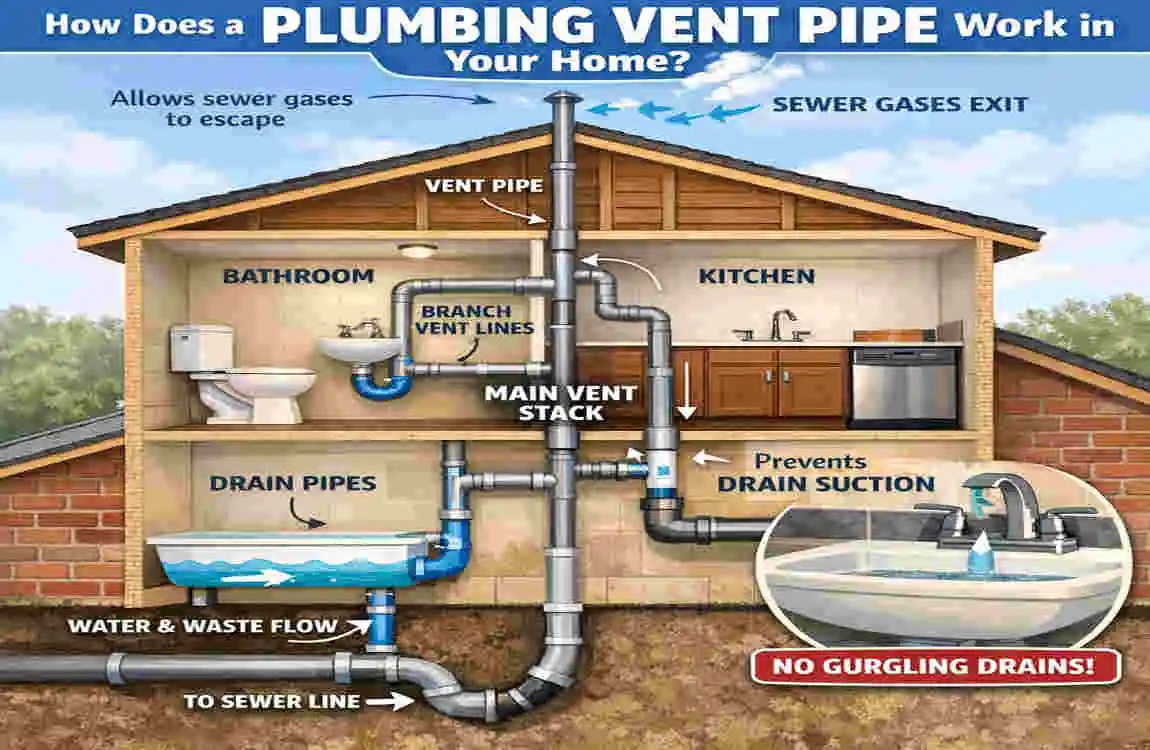
A plumbing vent pipe is a small part of your home’s plumbing system, but it does an important job. It helps wastewater move out of your house smoothly, keeps air pressure balanced, and stops sewer gases from coming inside.
| Topic | Details |
|---|---|
| What Is a Plumbing Vent Pipe? | A plumbing vent pipe is a pipe that allows air to enter the drainage system and helps wastewater flow smoothly. |
| Main Purpose | It balances air pressure in the plumbing system and helps prevent sewer gases from entering your home. |
| How Does It Work? | The vent pipe allows air to circulate through the drainage system, supporting efficient wastewater movement. |
| Where Is It Located? | Plumbing vent pipes are commonly installed inside walls and often extend through the roof. |
| Common Materials | PVC, ABS, cast iron, and other approved plumbing materials. |
| Connected Fixtures | Sinks, toilets, showers, bathtubs, and other household plumbing fixtures. |
| Role of P-Traps | P-traps hold water to help block sewer gases from entering living spaces. |
| Types of Vent Pipes | Individual vents, common vents, stack vents, and other approved venting arrangements. |
If you have ever wondered what a plumbing vent pipe does, the simple answer is this: it helps your drains work properly and keeps your home safer and fresher.
What Does a Plumbing Vent Pipe Do?
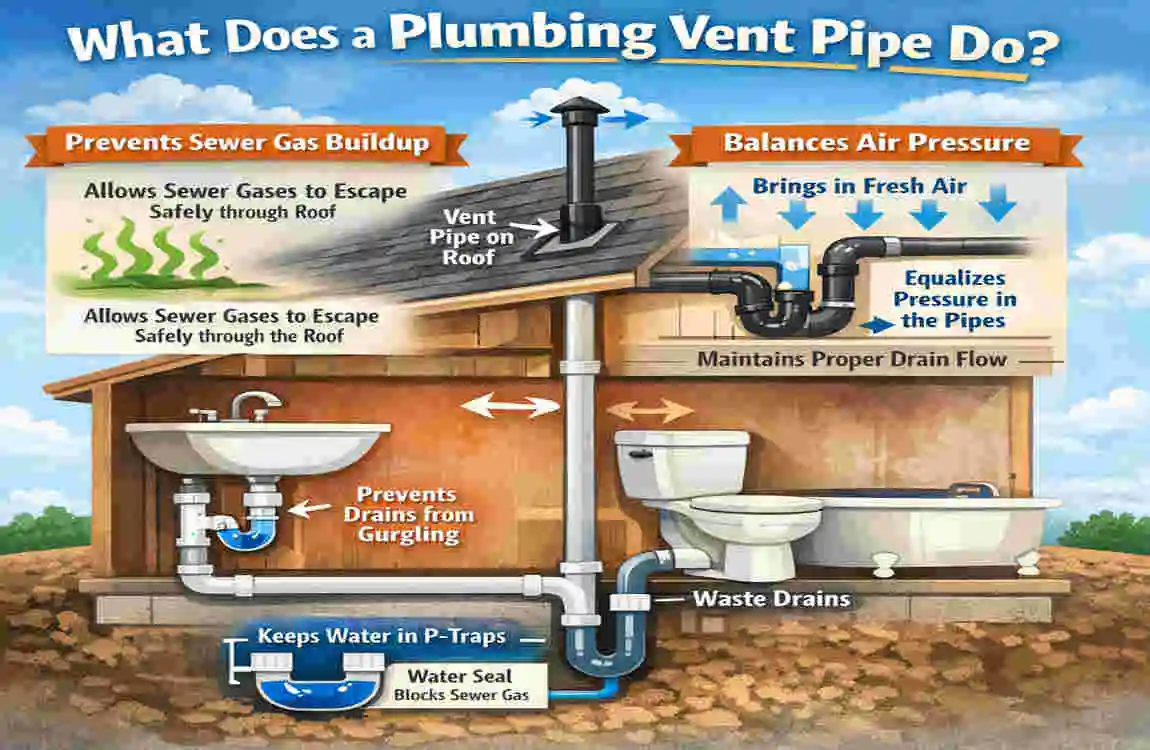
A plumbing vent pipe supports the drain system by letting air move through it. Without that air, water would not flow as easily through the pipes.
How Plumbing Vent Pipes Work
When water drains from a sink, shower, or toilet, the vent pipe allows air to enter the system. That air helps wastewater move freely instead of getting stuck or slowed down.
Why Air Pressure Matters in Plumbing
Good air pressure keeps drains running smoothly. Without proper pressure, you may hear gurgling sounds, notice slow drains, or see water traps lose their seal.
How Vent Pipes Protect Your Home
Plumbing vents also help block sewer gases from entering your living space. They work with water traps to keep bad smells and harmful gases where they belong, inside the drain system.
Types of Plumbing Vent Pipes Used in Homes
Homes can use different vent setups depending on the plumbing design and local rules.
Common Vent Pipes
Standard vent pipes connect fixtures to the main vent system and help each drain work properly.
Individual and Common Vents
Some fixtures have their own vent, while others share one. Both methods help balance air pressure and support drainage.
Vent Pipes Through the Roof
Many vent pipes rise through the roof so air can escape safely from the plumbing system.
Air Admittance Valves
Some homes use air admittance valves instead of traditional roof vents. These valves let air in when needed, but their use depends on local plumbing codes.
How Does a Plumbing Vent Pipe Connect to Your Plumbing System?
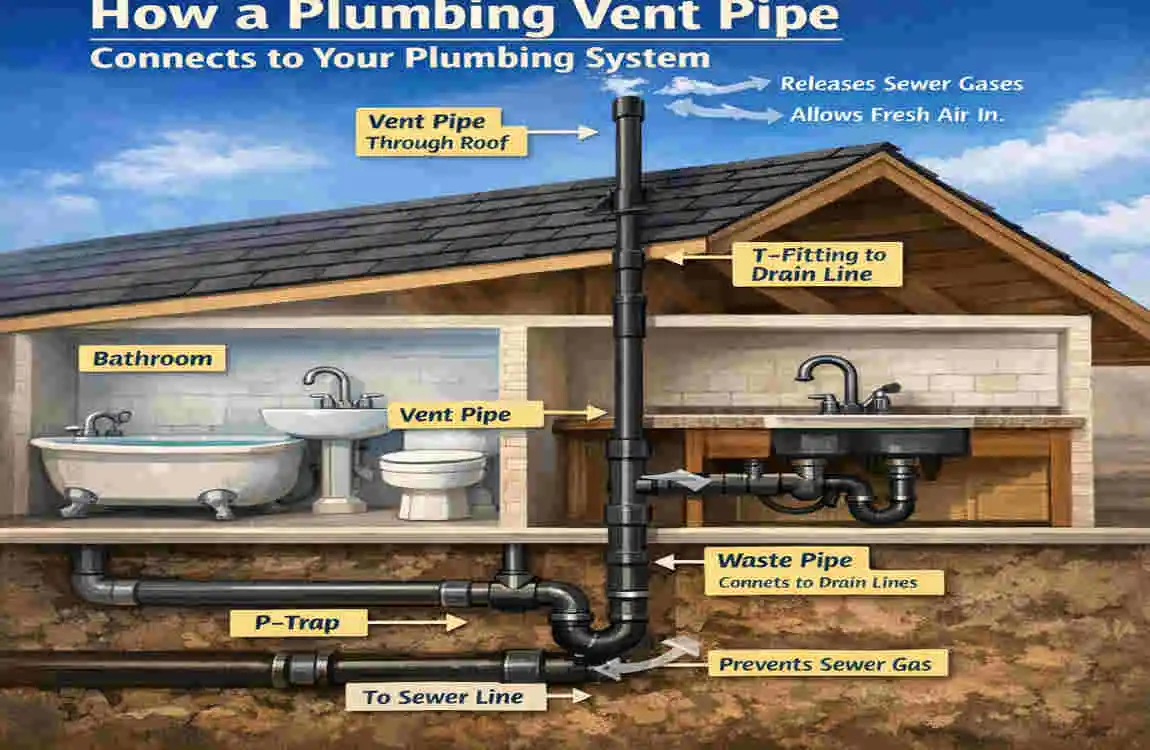
Vent pipes work closely with sinks, toilets, showers, bathtubs, and other fixtures. They are part of the same system that carries wastewater away from the home.
Connection Between Drainpipes and Vent Pipes
Drainpipes move water out, while vent pipes bring air in. Together, they keep the system balanced and moving well.
The Role of P-Traps
A P-trap holds a small amount of water in a curved pipe. This water seal helps stop sewer gases from coming back into the house.
Plumbing Vent Pipe Layout
Most vent systems use vertical pipes, branch lines, and roof exits. Plan the layout carefully so every fixture drains properly.
Why Proper Installation Matters
Proper installation matters because incorrect pipe sizing, poor connections, or code violations can cause drainage problems later. A well-installed vent system helps your plumbing last longer and work better.
Common Plumbing Vent Pipe Problems and Their Warning Signs
Like any part of a home, vent pipes can develop problems over time.
Clogged Plumbing Vent Pipes
Leaves, nests, and other debris can block a vent pipe. When this happens, air cannot move through the system as it should.
Slow Drains and Gurgling Sounds
If a vent is blocked, drains may empty slowly or make bubbling sounds. These are often early signs of a venting issue.
Unpleasant Sewer Smells
A bad vent system or a dry trap can let sewer odors into your home. If you notice this, have a plumber check your plumbing soon.
Water Level Changes in Toilets
Pressure problems in the plumbing system can affect toilet water levels or make flushing seem weak or uneven.
When to Call a Professional Plumber
If several fixtures have problems at once, call a plumber. That often means the issue is deeper than one simple clog.
Plumbing Vent Pipe Maintenance, Installation
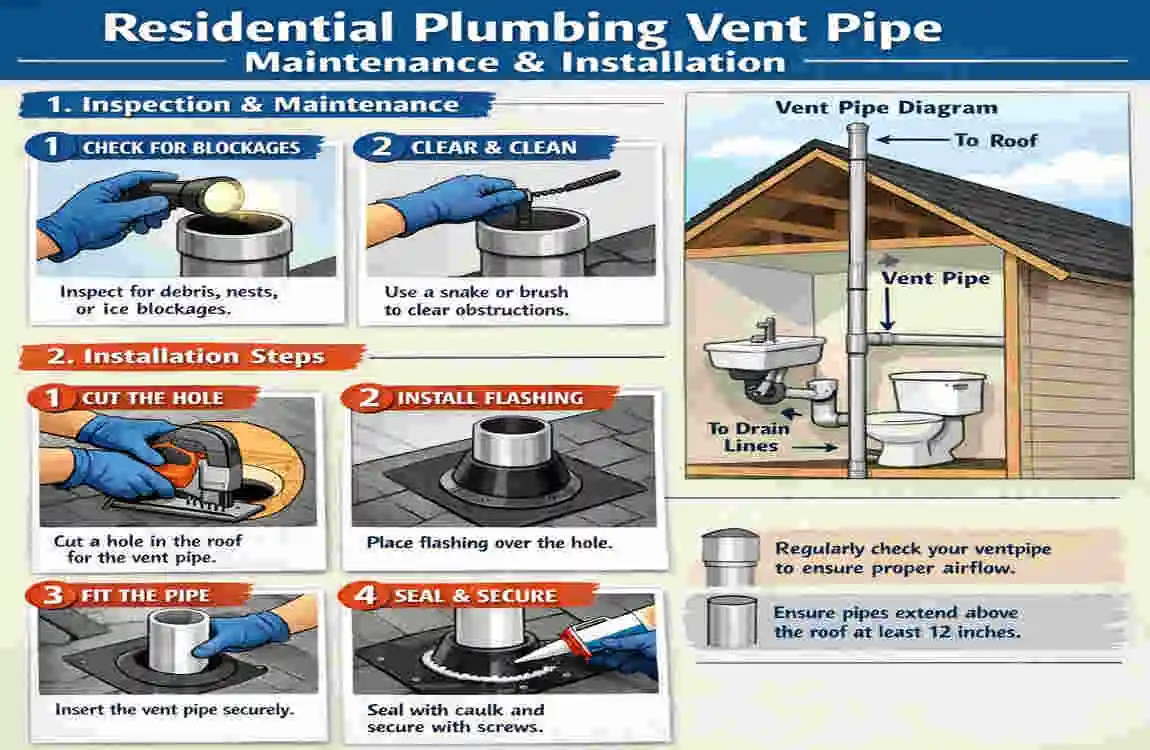
A little care can help your vent pipes work well for a long time.
How to Maintain Plumbing Vent Pipes
Check for visible damage, watch for drainage issues, and inspect roof exits when it is safe to do so. Catching problems early can save you stress later.
Can You Install or Repair a Vent Pipe Yourself?
Small checks may be fine for a homeowner, but roof work, pipe changes, and major repairs are usually best left to a trained plumber.
How Much Does Plumbing Vent Pipe Repair Cost?
Repair cost depends on the problem, where the pipe is located, the materials needed, and how hard it is to reach the issue.
Safety Tips for Plumbing Vent Pipes
Avoid unsafe roof access and always follow local plumbing and building rules. Safety should come first during any plumbing work.
Frequently Asked Questions
What does a plumbing vent pipe do?
It lets air into the drainage system, helps wastewater flow smoothly, and protects water traps from losing their seal.
How do I know if my plumbing vent is clogged?
Common signs include slow drains, gurgling sounds, and sewer smells.
Does every house need a plumbing vent pipe?
Yes, most homes need proper venting so the drainage system can work correctly.
Where is a plumbing vent pipe located?
It is often inside walls and may extend through the roof or connect to an approved vent system.
Can a clogged plumbing vent cause toilet problems?
Yes, a vent blockage can affect flushing and drainage.
How often should plumbing vent pipes be inspected?
Inspection needs depend on the home, weather, and any repeat plumbing issues.
Can a plumbing vent pipe leak?
Yes, leaks can happen from damage, loose connections, or roof flashing problems.
Should I call a plumber for a blocked vent pipe?
Yes, if the problem is serious or hard to reach, a plumber is the safest choice.
