

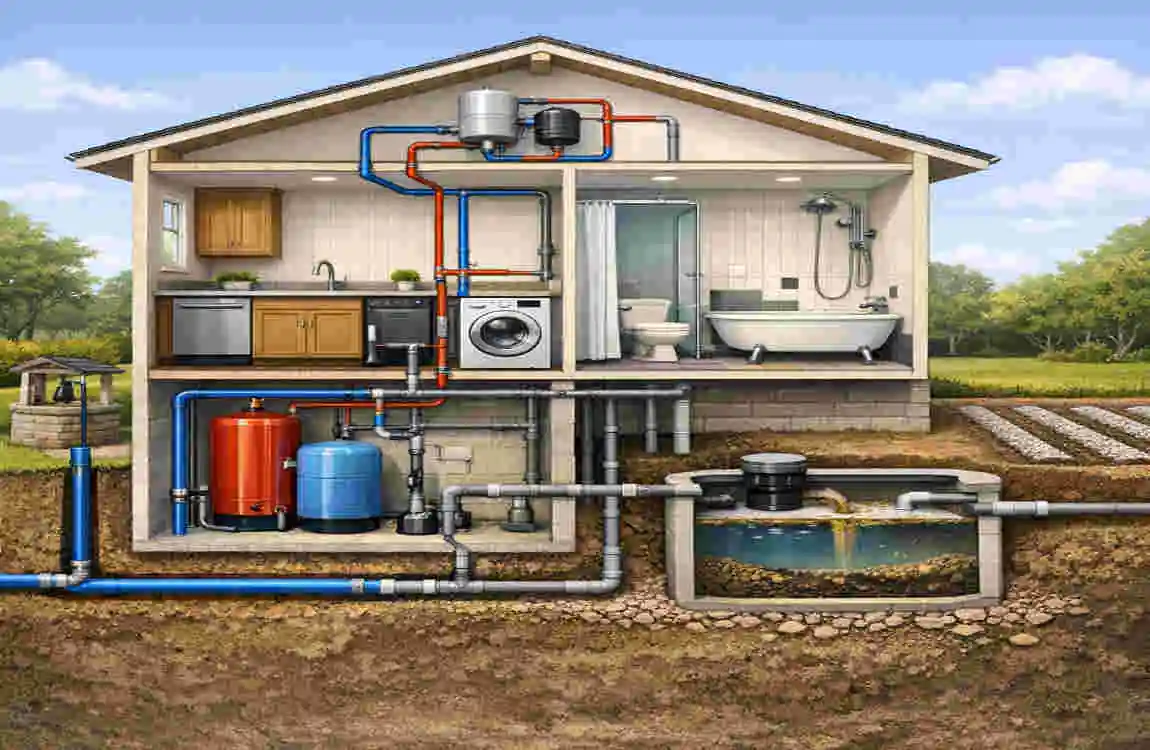
If you have ever wondered what a closed plumbing system is, the simple answer is this: it is a plumbing setup where water moves through pipes and valves in a controlled, sealed path, with pressure and flow managed along the way.
In many modern homes, this type of system is very common. It helps water move safely to sinks, showers, toilets, and appliances while keeping pressure more stable. It also helps reduce backflow and supports modern fixtures that depend on controlled water delivery.
A closed system differs from an open plumbing setup, where water or pressure can move more freely with less control. That difference matters because it affects water pressure, safety, maintenance, and how your home plumbing behaves every day.
What Is a Closed Plumbing System?
Definition of a Closed Plumbing System
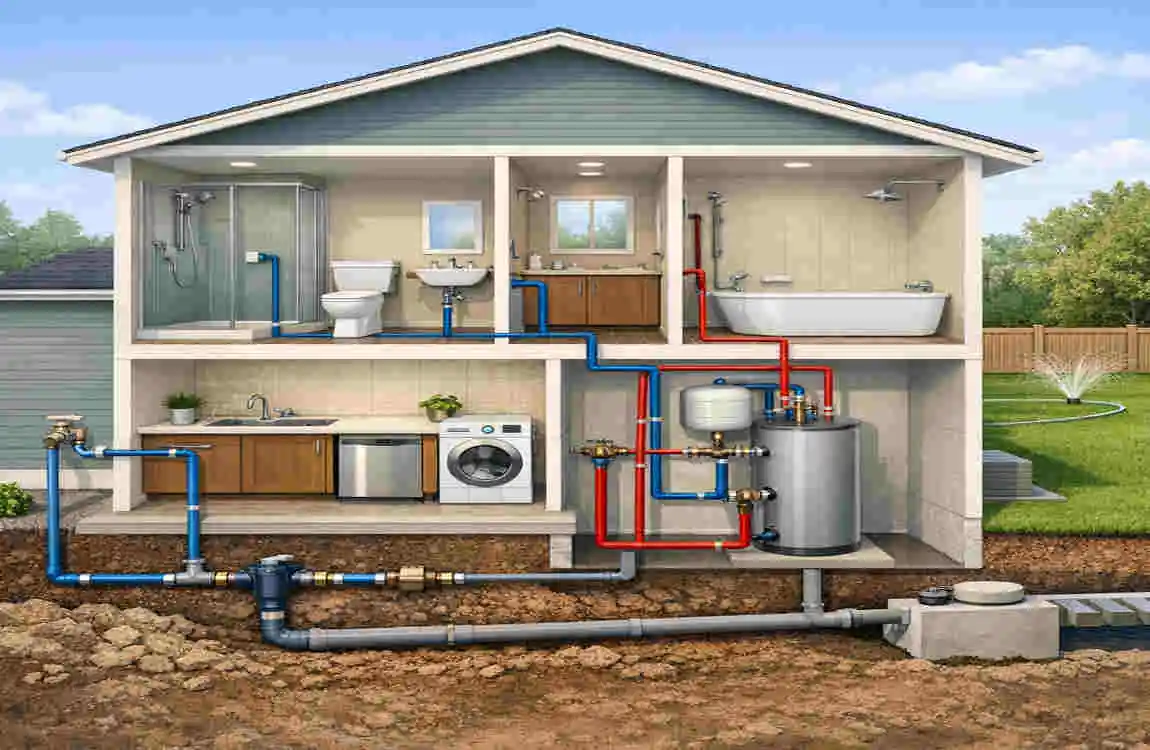
A closed plumbing system is a system where water flows through a controlled network of pipes and valves, and the water path is managed so it doesn’t flow backward into the supply line. In simple terms, the system is designed to send water where it should go while keeping pressure and flow under control.
The word closed does not mean the pipes are airtight or sealed forever. It means the plumbing is arranged so water doesn’t move in any direction it wants. Instead, valves, regulators, and other parts help control the flow.
How Water Moves Through a Closed System
Water usually enters the home from the main supply line. From there, it passes through different parts of the plumbing system. It reaches fixtures like faucets, toilets, showers, and water heaters.
The key thing to understand is that the system guides the water movement. It prevents pressure from building up or moving back into the supply line without control. That is why pressure control devices are such an important part of the design.
Main Purpose of a Closed Plumbing System
The main purpose of a closed plumbing system is to deliver water safely and evenly. It helps keep water pressure at a useful level while protecting the home’s plumbing parts from stress.
This matters because too much pressure can damage pipes, valves, and appliances. Too little pressure can make daily tasks frustrating. A closed system tries to keep things balanced.
Closed Plumbing System in Residential Properties
In a home, a closed plumbing system is often part of modern plumbing design. It supports everyday use, helps control pressure, and works with water heaters and fixtures that need a stable supply.
If you are trying to understand what a closed plumbing system is, think of it as a home plumbing setup that gives water a controlled route and manages pressure carefully along the way.
How Does a Closed Plumbing System Work?
Water Supply From the Main Line
The process begins when water enters the home from the municipal supply or another water source. That water travels through the main line and into the home’s plumbing network.
Once inside, the system directs the water to the right areas. It may go to cold taps, to the water heater, or to appliances that need water for washing or cleaning.
Role of Pipes and Valves
Pipes carry the water from one point to another. Valves control where the water goes and how much can pass.
A shut-off valve, for example, can stop water to one area without turning off the whole home. That is very useful when you need repairs or maintenance.
Water Pressure in a Closed System
Pressure is one of the most important parts of the system. If pressure is too high, it can strain the pipes. If it is too low, showers and faucets may feel weak.
A closed plumbing system often uses special devices to keep pressure steady. This helps the entire home run more smoothly and reduces wear on the plumbing.
How Water Heaters Work With Closed Systems
Water heaters are a major part of many closed systems. They heat water and send it to the fixtures that need warm or hot water.
When water is heated, it expands. In a closed system, you must manage that expansion carefully. That is why pressure relief parts and expansion tanks are often needed.
Expansion and Pressure Changes
As water heats up, it takes up more space. If the system does not have room to handle that extra volume, pressure can rise.
This is one reason closed systems need pressure management. Without it, hot water could create stress inside the plumbing. A simple home example is a shower line connected to a water heater. If that hot water expands and pressure is not controlled, the system can become noisy or stressed.
Main Components of a Closed Plumbing System
Water Supply Pipes
These pipes carry fresh water into the home and deliver it to fixtures. They form the basic path of the plumbing system.
Shut-Off Valves
Shut-off valves let you stop water in specific areas. That means you can repair one fixture without affecting the whole house.
Pressure-Reducing Valve
A pressure-reducing valve lowers incoming water pressure if it is too high. This protects the plumbing and helps keep the system safe.
Check Valves and Backflow Prevention
Check valves allow water to move in one direction only. They help stop dirty or used water from flowing backward into the clean supply.
Expansion Tank
An expansion tank gives heated water a place to expand. This helps reduce pressure spikes in closed systems.
Water Heater
The water heater warms water for showers, sinks, and appliances. It is closely tied to pressure and expansion control.
Pressure Relief Valve
This valve acts as a safety device. If pressure gets too high, it releases some of it to protect the system.
ComponentMain FunctionWhy It Matters
Water supply pipes Carry water through the home Provide the main flow path
Shut-off valves Stop water to specific areas Helpful for repairs and control
Pressure-reducing valve Lowers strong incoming pressure Protects pipes and fixtures
Check valves Allow one-way water flow Helps prevent backflow
Expansion tank Handles hot water expansion Reduces pressure buildup
Water heater Heats water for home use Supports daily hot water needs
Pressure relief valve Releases excess pressure Acts as a safety feature
Closed vs. Open Plumbing System: What Is the Difference?
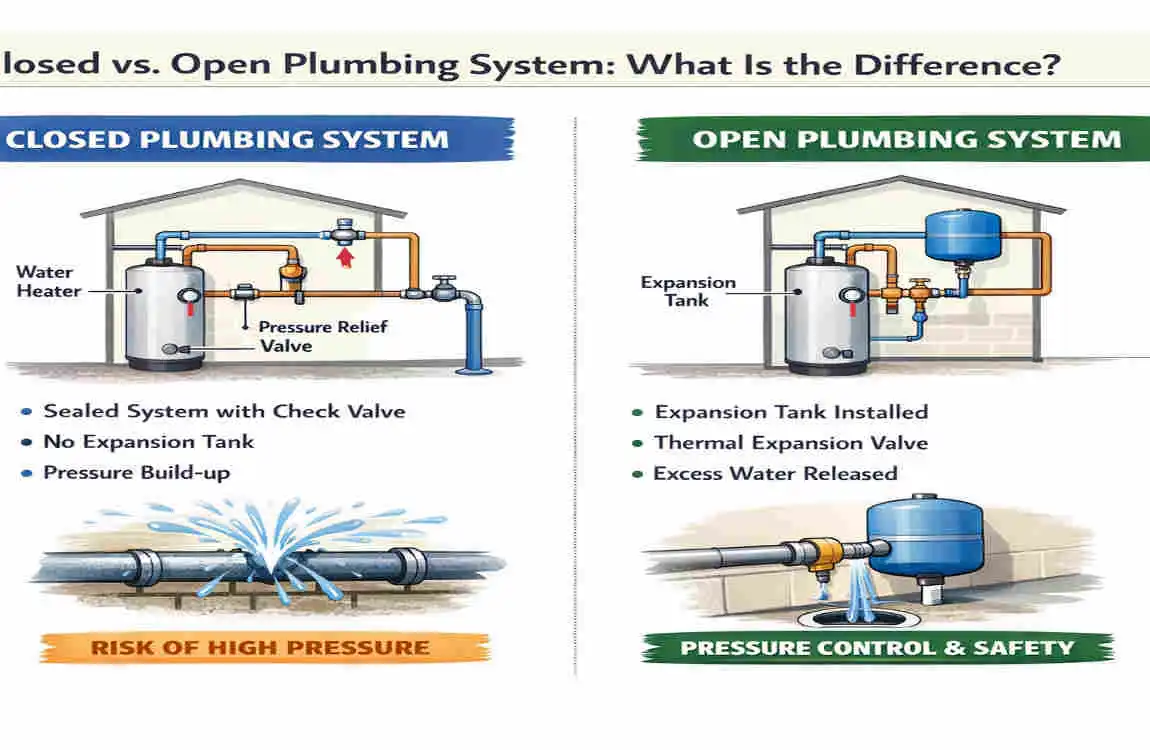
Closed Plumbing System
A closed plumbing system controls water flow and pressure more tightly. It uses valves and pressure devices to manage how water moves through the home.
Open Plumbing System
An open plumbing system is less controlled. Water and pressure can move more freely, and the setup may not include the same pressure-management components.
Differences in Water Pressure
Closed systems usually keep pressure more stable. This helps keep daily use more consistent.
Open systems may have more pressure variation, depending on the design and the water source. This can affect how fixtures feel during use.
Differences in Thermal Expansion
In a closed system, heated water has less room to expand, so the system must manage that pressure. In an open system, the pressure buildup may be less of a concern depending on the design.
This is one reason expansion tanks are often important in closed systems.
Which System Is Common in Modern Homes?
Closed systems are very common in modern homes because they fit current plumbing designs and safety expectations. They help protect fixtures and make pressure easier to manage.
Feature Closed Plumbing System Open Plumbing System
Water control More controlled More open
Pressure Usually more stable Can vary more
Backflow risk Lower with proper devices Can be higher depending on design
Thermal expansion Must be managed carefully May be less concentrated
Maintenance Often needs pressure checks May be simpler in some setups
Common in modern homes Yes Less common in many modern residential systems
Benefits and Problems of a Closed Plumbing System
Advantages of a Closed Plumbing System
One big advantage is better pressure control. Stable pressure makes showers, faucets, and appliances work more reliably.
Another benefit is reduced backflow risk. Because the system controls direction, it helps protect the clean supply.
A closed system also provides more controlled water distribution. That means fixtures get water more predictably.
It is also well suited to modern plumbing equipment, which often depends on stable pressure and clean supply conditions.
Potential Problems
Like any system, a closed plumbing system can have problems if it is not maintained.
Some common issues include:
- High water pressure
- Thermal expansion
- Water hammer
- Valve problems
- Expansion tank issues
High pressure can strain the pipes. Thermal expansion can cause pressure spikes. Water hammer can create loud banging sounds when water suddenly stops or changes direction.
Signs Your Closed Plumbing System May Have a Problem
You may notice a problem if you see:
- Pressure that changes suddenly
- Leaky valves
- Noisy pipes
- Water heater issues
- Pressure relief valve dripping often
If you see these signs, the system may need inspection or repair. It is better to check early than wait for a bigger issue.
How to Maintain a Closed Plumbing System
Check Water Pressure Regularly
Check water pressure from time to time. If the pressure is too high or too low, it can signal a larger issue.
A simple pressure check can help you catch problems before they damage the system.
Inspect Valves and Connections
Look at visible valves and pipe connections for leaks, rust, or wear. Small leaks can become bigger problems if you ignore them.
Maintain the Expansion Tank
Check the expansion tank to make sure it is working properly. If it fails, the system may not handle heat expansion well.
Check the Water Heater
Inspect the water heater regularly for signs of trouble. Look for strange noises, leaks, or inconsistent hot water.
Prevent Backflow Problems
Backflow prevention devices should remain in good condition. These parts help keep dirty water from moving in the wrong direction.
When to Call a Professional Plumber
You should call a plumber if you notice:
- Repeated pressure problems
- Major leaks
- Water heater failure
- Loud banging pipes
- Repeated valve issues
Simple Maintenance Checklist
Use this simple checklist to stay on track:
- Check water pressure.
- Look for leaks around valves and fittings.
- Watch the water heater for noise or leaks.
- Make sure the expansion tank is working.
- Call a professional if the same problem keeps returning.
Closed Plumbing System: Installation, Cost
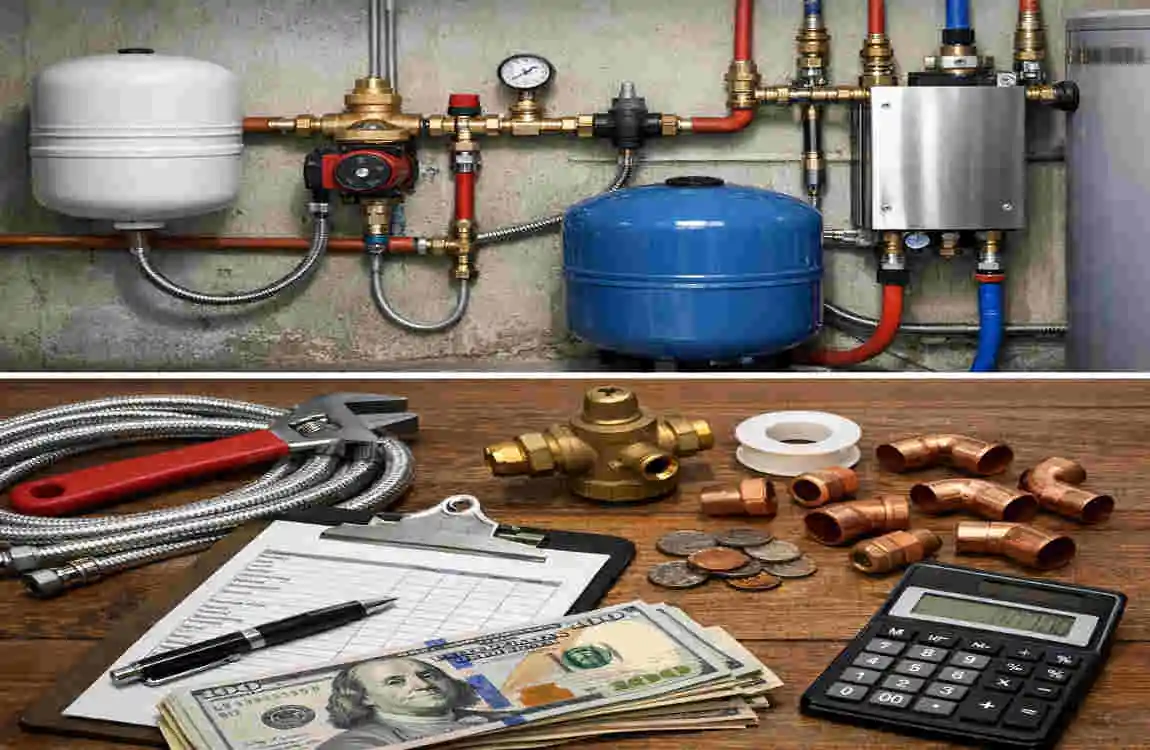
What to Consider Before Installation
Before installing or upgrading a closed plumbing system, think about:
- Home size
- Water pressure
- Existing plumbing condition
- Water heater type
- Local plumbing requirements
These details affect how the system should be designed and installed.
How Much Does a Closed Plumbing System Cost?
Costs can vary based on the home and the equipment needed. You may pay for:
- New parts
- Labour
- Pressure control devices
- Expansion tank installation
- Repairs to existing plumbing
The total cost depends on whether you are starting from scratch or updating an existing setup.
Is a Closed Plumbing System Better for Modern Homes?
A closed plumbing system often fits modern homes, but that doesn’t mean it is automatically the best choice in every case.
The best system depends on the home’s plumbing design, water supply, and existing equipment. What matters most is choosing a setup that is safe, practical, and well-maintained.
Frequently Asked Questions
Q. What is a closed plumbing system?
A closed plumbing system controls water flow and pressure through pipes, valves, and safety devices.
Q. How does a closed plumbing system work?
Water enters from the main line, moves through pipes and valves, and is delivered to fixtures under controlled pressure.
Q. What is the difference between an open and closed plumbing system?
A closed system controls pressure and flow more tightly, while an open system allows more free movement.
Q. Does a closed plumbing system need an expansion tank?
Often yes, especially if the water heater creates pressure from thermal expansion.
Q. What causes high pressure in a closed plumbing system?
Common causes include strong incoming supply pressure, failed valves, or expansion from heated water.
| Feature | Short Information |
|---|---|
| Definition | A plumbing system where water flows through sealed pipes with controlled entry and exit points. |
| Main Components | Supply pipes, valves, fixtures, water heater, pressure regulator, and drainage pipes. |
| Water Flow | Pressurized water travels through pipes to faucets, showers, toilets, and appliances. |
| Pressure Control | Valves and pressure regulators help maintain safe and steady water pressure. |
| Water Heater | Heats and supplies hot water through dedicated plumbing lines. |
