


If you have ever looked at plumbing parts and felt confused by the names, you are not alone. Plumbing includes many small fittings, and each one has a specific job. One of those parts is the bushing.
So, what is a bushing used for in plumbing? In simple terms, a plumbing bushing helps connect pipes or fittings of different sizes. It is used when one opening is too large and needs to be reduced so another part can fit properly. That small job can make a big difference in how well a plumbing system works.
This fitting may look simple, but it plays an important role in water lines, Drainage, pumps, valves, irrigation systems, and everyday home repairs. If you are planning a plumbing project or want to understand your system better, learning about bushings will help you make smarter choices.
What Is a Plumbing Bushing?

A simple definition
A plumbing bushing is a small fitting that reduces the size of a pipe opening. It fits inside or into another fitting and changes a larger connection into a smaller one. This makes it easier to connect different parts of a plumbing system.
Think of it like a size adapter. When two parts do not match, the bushing helps them work together. Without it, you might not be able to connect the pieces properly.
How bushings connect pipes and fittings
In plumbing, not every pipe or fitting has the same diameter. Some systems use larger lines, while other parts need smaller ones. A bushing bridges that gap.
For example, if you have a large threaded opening but need to connect a smaller pipe fitting, a bushing helps you do it cleanly and securely. It creates a better fit without forcing the parts together.
Why reducing pipe size is sometimes necessary.
Plumbing systems often need to move from one size to another. This may happen because of pressure changes, fixture needs, or design limits. A sink may need a smaller connection than the main supply line. A pump may also need different connection sizes on each side.
That is where a bushing becomes useful. It helps the system transition smoothly from one size to another without creating leaks or weak points.
The basic role of a bushing
The main role of a bushing is simple: make different pipe sizes work together. It supports a neat, practical connection and helps plumbing systems stay organized.
It may not be the biggest part in the room, but it often makes the installation possible. That is why plumbers use it in both small home jobs and larger commercial systems.
What Is a Bushing Used for in Plumbing?
The main purpose
Now let’s answer the core question directly: what is a bushing used for in plumbing?
A bushing reduces the size of a threaded opening or connects parts with different diameters. It creates a usable connection when pipe or fitting sizes don’t match.
This is especially helpful when a larger fitting is already in place, but the next piece in the system is smaller. Instead of replacing everything, a plumber can use a bushing to make the connection work.
Reducing a larger threaded opening
One of the most common uses of a bushing is reducing a larger threaded opening to a smaller one. This is very common in plumbing systems that use threaded joints.
For example, a large valve or fitting may have a bigger opening, but the pipe or fixture you want to attach may be smaller. A bushing reduces that opening so the smaller part fits correctly.
Connecting pipes or fittings of different sizes
Bushings are also used when one plumbing component is larger than the other. This happens in many parts of a home or building. Instead of cutting and changing the full line, the bushing helps create a proper match.
That makes the system more flexible. It also helps save time and materials during installation.
Why bushings are practical
Bushings are practical because they solve a common plumbing problem: size mismatch. Not every pipe, valve, or fitting matches the same measurement.
Rather than replacing a whole section of pipe, the plumber can use a bushing to make the connection work neatly and efficiently.
Common applications
Bushings are used in both residential and commercial plumbing. You may find them in:
- Water supply lines
- Drain and waste lines
- Valves and pumps
- Sprinkler and irrigation systems
- Bathroom and kitchen repairs
- Mechanical and utility systems
In each case, the bushing connects parts that wouldn’t fit together on their own.
Types of Plumbing Bushings
Not all bushings are the same. They come in different styles and materials depending on the job.
Threaded Bushings
What they are
Threaded bushings have threaded edges so that they can screw into fittings or pipes. They often have male threads on one side and female threads on the other, depending on the design.
Where they are used
These are very common in plumbing systems that rely on threaded connections. You may see them in water lines, pumps, and metal piping systems.
Why they matter
Threaded bushings provide a tight fit when installed correctly. They are useful when you need a reduced opening but still want a secure, threaded joint.
Reducing Bushings
What they do
A reducing bushing changes from a larger pipe size to a smaller one. This is one of the most common types of plumbing bushings.
When they are useful
They are helpful when you want to connect a larger fitting to a smaller pipe without changing the whole setup. This is common in repair work, renovations, and system upgrades.
Why plumbers like them
Reducing bushings save space and simplify the job. They allow the plumber to keep the system moving in the right direction without unnecessary changes.
PVC, Brass, and Metal Bushings
PVC bushings
PVC bushings are often used in lightweight plumbing systems, especially where plastic piping is common. They are easy to handle and work well in many drainage or water applications.
Brass bushings
Brass bushings are popular because they are durable and resist corrosion well. They are often used in water supply systems and fittings that need a strong, long-lasting connection.
Metal bushings
Metal bushings, such as those made from steel or other alloys, are often used in tougher systems. They can handle more demanding conditions and are common in industrial or mechanical settings.
Choosing the right material
The best material depends on the pipe type, water conditions, and where the fitting will be used. A bushing that works well in one system may not be the best choice in another.
Bushing MaterialBest FeatureCommon Use
PVC Lightweight and simple Drainage and plastic pipe systems
Brass Strong and corrosion-resistant Water lines and household plumbing
Metal Durable under pressure Industrial or heavy-duty systems
How Does a Plumbing Bushing Work?
How threaded connections fit together
A plumbing bushing creates a smaller connection point inside a larger one. If the parts are threaded, the bushing screws into the fitting, leaving a smaller opening for the next pipe or part.
This lets two different sizes connect without changing the entire pipeline. It is a simple idea, but it solves a very common plumbing problem.
Basic installation idea
You usually insert the bushing into a larger threaded fitting first. Then the smaller pipe or fitting connects to the bushing.
The goal is a smooth, secure transition. If the fit is correct, the plumbing line stays stable and is less likely to leak.
Why proper sizing matters
Sizing matters a lot. If the bushing is too loose or too tight, it will not work properly. A loose fit can leak. A forced fit can damage the threads or crack the fitting.
That is why plumbers always match the exact size before installation. The right size means less trouble later.
Using thread sealant
Thread sealant, tape, or another sealing method can help create a watertight joint. This is especially important in threaded plumbing systems.
The sealant helps reduce the chance of leaks and makes the connection more reliable. Apply it properly, and don’t use it as a replacement for correct sizing.
Avoiding over-tightening
It is easy to think that tighter is better, but that is not always true. Over-tightening a bushing can damage the threads or stress the fitting.
A secure fit is important, but it should still be gentle enough to protect the plumbing parts. In many cases, careful hand fitting plus a proper wrench finish is enough.
Where Are Plumbing Bushings Commonly Used?
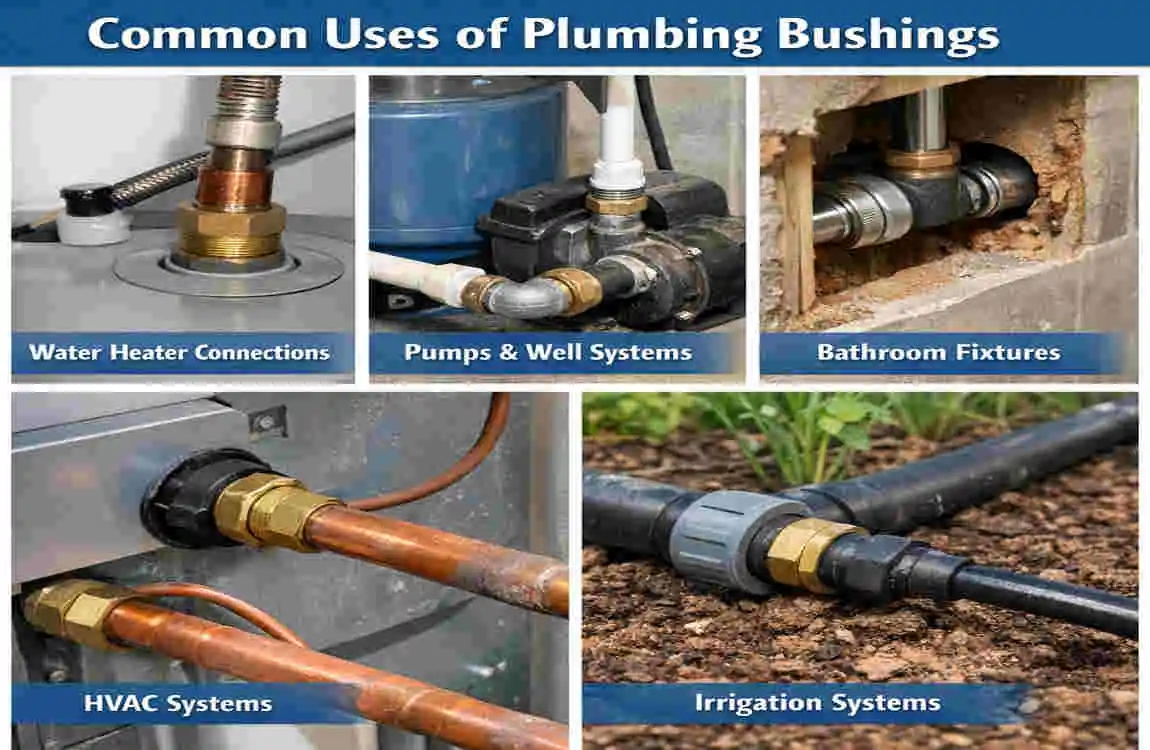
Water supply lines
Bushings are often used in water supply lines where pipe sizes need to change. This is common in homes, apartment buildings, and commercial spaces.
They help connect supply components without needing a full redesign of the piping system.
Drain and waste systems.
Drain and waste systems may also use bushings, especially when different pipe sizes meet. They help keep the flow path consistent and practical.
This is useful during repairs, bathroom updates, or new fixture installations.
Pumps and valves
Pumps and valves often have set connection sizes, and those sizes may not match the rest of the system. A bushing helps make the connection work smoothly.
This is one reason bushings are popular in both plumbing and mechanical systems.
Irrigation systems
In irrigation and outdoor water systems, bushings help connect pipes of different sizes while keeping water flow steady. They are useful in sprinkler setups and garden water lines.
Because these systems may include different pipe types, bushings simplify the transition.
Residential plumbing repairs
In home repairs, bushings can save time and reduce the need to replace more parts than necessary. If a fitting is too large, the bushing helps make the repair possible.
This is very helpful in older homes where pipe sizes may not match modern fixtures.
Commercial plumbing installations
Larger buildings often have more complex plumbing systems with many pipe sizes. Bushings help installers handle those size differences without major system changes.
That makes them a small but important part of commercial work.
Plumbing Bushing vs. Other Pipe Fittings
It is easy to confuse a bushing with other fittings. They may look similar, but they do different jobs.
Bushing vs. reducer
A bushing usually reduces a threaded opening. A reducer often connects two different pipe sizes more directly.
Reducers are common in pipe transitions, while bushings are more often used inside another fitting.
Bushing vs. coupling
A coupling joins two pipes of the same or similar size. It does not usually reduce the opening.
A bushing, on the other hand, is used when the size needs to change.
Bushing vs. adapter
An adapter changes the connection type, such as from threaded to slip connection or from one pipe style to another.
A bushing focuses on size reduction. It usually doesn’t change the connection style as much as an adapter does.
Which one should you choose?
The right fitting depends on the job. If you need to reduce a threaded opening, a bushing is often the best choice. If you need to join two similar pipes, a coupling may be better. If you need to change connection style, use an adapter. If you need to transition sizes directly, a reducer may be the right answer.
FittingMain PurposeTypical Use
Bushing Reduces a threaded opening Different pipe sizes
Reducer Connects different pipe sizes Pipe transitions
Coupling Joins similar pipes Pipe extensions
Adapter Changes connection type Threaded-to-pipe connections
How to Choose and Install the Right Bushing
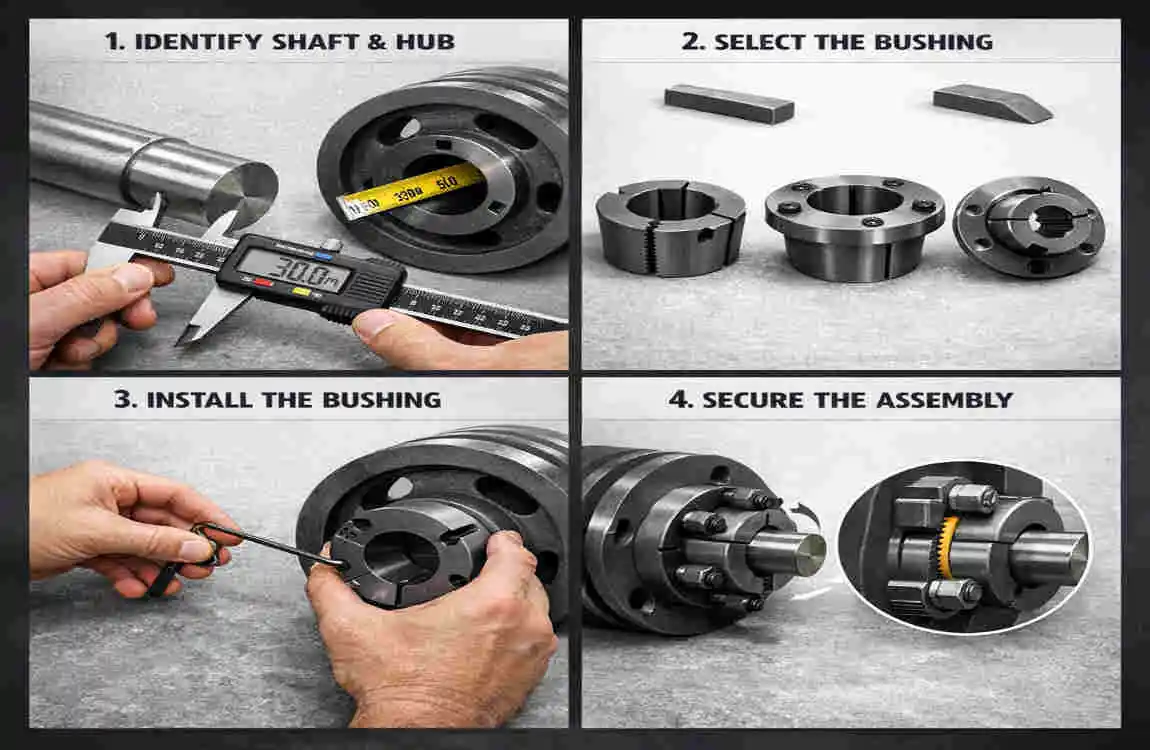
Check pipe and fitting sizes.
Before buying a bushing, measure the pipe and fitting sizes carefully. A small mistake can lead to leaks or a connection that doesn’t fit.
Plumbing parts often look similar, so verify the exact dimensions. This step saves time and frustration.
Match thread types
Not all threads are the same. Some are tapered, and others are straight. The thread type must match the fitting system you are using.
If the threads do not match, the connection may not seal properly. That is why it is important to check the product specs before installing.
Choose the correct material.
The material should match the plumbing system and the conditions it will face. PVC works well in many plastic pipe setups. Brass is often better for water supply lines. Metal may be the right choice for tougher systems.
The wrong material can wear out faster or react poorly to the surrounding system.
Think about pressure and temperature.
Water pressure and temperature matter too. Some bushings work better under certain conditions than others.
For example, a bushing in a hot water line may need to hold up better than one in a simple drain line. Always choose a fitting that can handle the system demands.
Basic installation steps
A basic bushing installation usually follows these steps:
- Check the sizes
- Clean the threads or pipe ends
- Apply thread sealant if needed
- Insert or screw in the bushing
- Tighten it carefully
- Test for leaks
These steps may change depending on the type of plumbing system, but the general process is similar.
Common mistakes to avoid
Here are a few mistakes to watch out for:
- Choosing the wrong size
- Mixing incompatible thread types
- Over-tightening the fitting
- Skipping sealant when it is needed
- Using the wrong material for the system
- Ignoring pressure or temperature limits
Even a small mistake can cause leaks or damage later, so careful work matters.
When to call a professional plumber
If the plumbing system is complex, if the pipe sizes are unclear, or if you are working on a main water line, it may be best to call a professional plumber.
A plumber can make sure the fitting is correct and installed safely. That can save you from bigger repair costs later.
FAQ: Plumbing Bushings
What is a bushing used for in plumbing?
A bushing reduces a larger pipe or fitting opening to a smaller one. It helps connect different pipe sizes securely and practically.
What is the difference between a bushing and a reducer?
A bushing usually works inside a threaded fitting to reduce the opening. A reducer is generally used to connect two pipe sizes more directly in a transition.
Can a plumbing bushing connect different pipe sizes?
Yes. That is one of its main jobs. It helps different sizes work together without replacing the whole setup.
What materials are plumbing bushings made from?
Common materials include PVC, brass, and metal. The right one depends on the type of plumbing system and the conditions it will face.
Are plumbing bushings suitable for water lines?
Yes, many bushings are used in water lines. The key is choosing the right size and material for the specific job.
How do you install a threaded plumbing bushing?
A threaded bushing is usually screwed into the fitting using the proper thread sealant or sealing method. Tighten it carefully, and don’t force it.
Can a bushing be used with PVC plumbing?
Yes, PVC bushings are commonly used in PVC systems. You often find them in drain lines and other lightweight plumbing applications.
| Topic | Short Information |
|---|---|
| What Is a Bushing? | A plumbing fitting used to connect pipes or fittings with different sizes. |
| Main Purpose | Reduces the size of a threaded connection from a larger opening to a smaller one. |
| Common Material | Brass, PVC, CPVC, stainless steel, and other plumbing materials. |
| How It Works | One side has larger threads, while the other side has smaller threads. |
| Where Used | Water supply lines, drainage systems, pumps, valves, and pipe connections. |
| Key Benefit | Helps create a secure connection when pipe sizes need to be changed. |
