

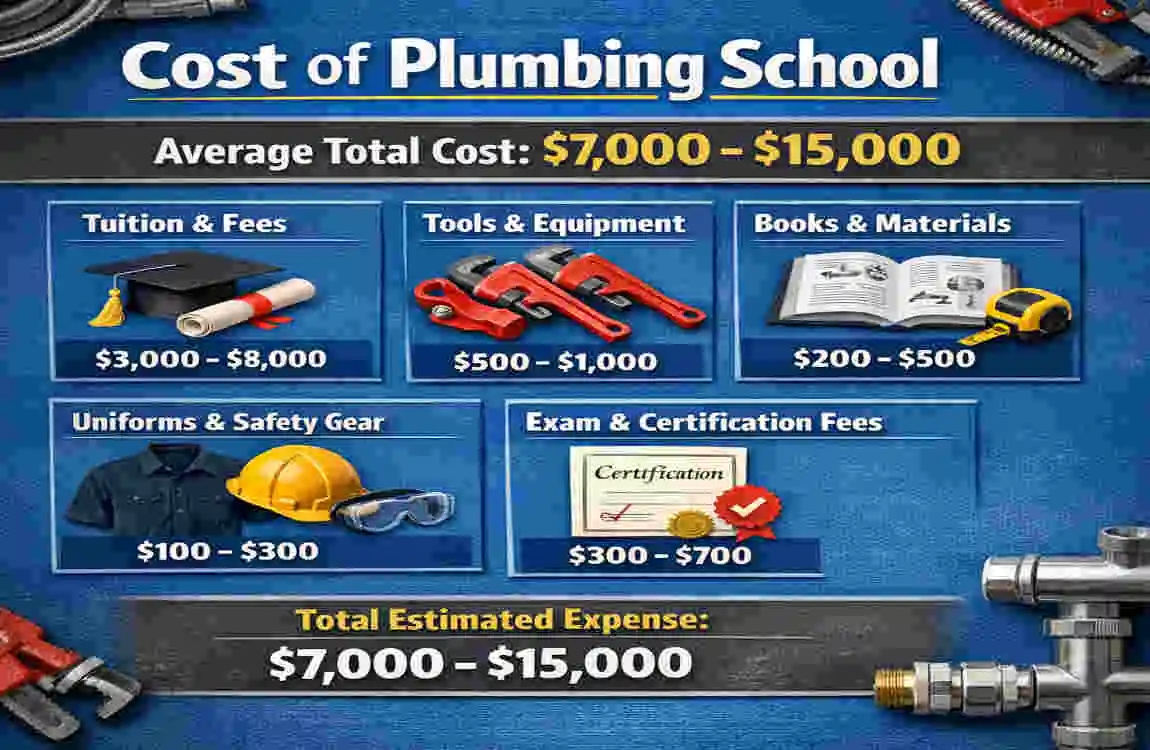
If you’re considering a career in the trades, plumbing can be a smart path. It is hands-on, practical, and often in steady demand. But before you enroll, one big question comes up: how much is plumbing school?
The answer is not the same for everyone. Your total cost depends on the program type, where you live, how long you study, and what extra expenses you need to cover. Some students pay mostly for tuition. Others also need tools, books, safety gear, exam fees, and transportation.
How Much Is Plumbing School? Understanding the Main Costs
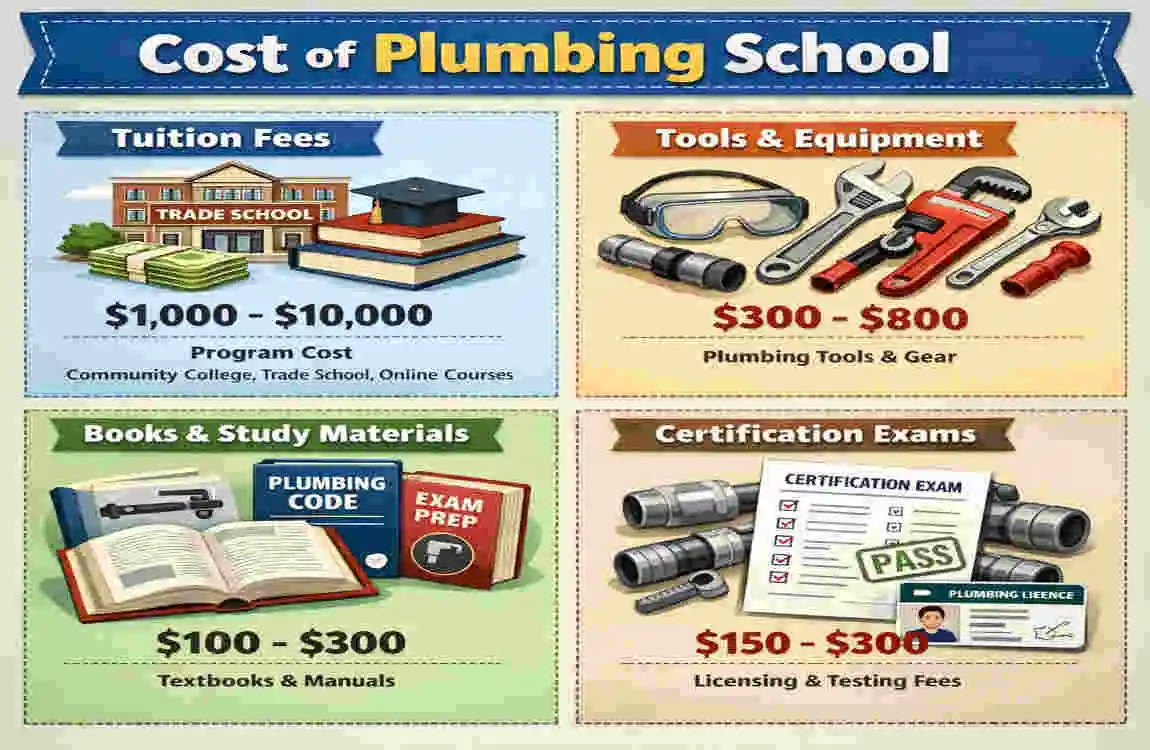
Plumbing school can mean different things in different places. For some people, it is a short training course. For others, it is a technical college program or a longer trade school path.
Average Plumbing School Tuition
Tuition is usually the biggest starting cost. Short programs may cost less because they focus on basic skills and finish quickly. Longer programs often cost more because they include more classroom time, lab work, and hands-on practice.
The total tuition can also change based on:
- program length
- school location
- type of training
- whether the school is public or private
- how much hands-on practice is included
A simple certificate program may be more affordable than a full diploma or longer trade-school path. But a lower price doesn’t always mean better value. A program with strong training and good job preparation may be worth more in the long run.
Apprenticeship vs. Plumbing School Costs
An apprenticeship is often a lower-cost way to enter the field. In many cases, you earn while you learn. That means you work with an experienced plumber while also getting classroom training.
This can reduce your upfront education cost. Instead of paying full tuition at once, you may pay less for classes or receive training through an employer or union program.
That said, apprenticeships can be competitive. You may need to apply, wait for an opening, or meet certain requirements first. If you want a more direct school route, plumbing school may feel easier to start, even if it costs more at the beginning.
Community College and Technical School Options
Community colleges and technical schools are often popular choices because they can be more affordable than private trade schools. They may also offer flexible schedules, certificate programs, or diploma options.
These schools can be a good fit if you want:
- a lower tuition option
- local training
- a structured learning path
- help preparing for work in the trade
If you are trying to save money, this is often one of the best places to start your search.
What Other Expenses Should You Budget For?
Tuition is only one part of the total cost. Many students forget the smaller expenses, but those can add up quickly.
Plumbing Tools and Equipment
Plumbers need tools from the start. Some schools expect students to bring their own basic equipment, while others include part of the kit in the program cost.
Common tool expenses may include:
- pipe wrenches
- pliers
- tape measure
- safety glasses
- work gloves
- tool belt
- flashlight
- cutter tools
You may also need a strong tool bag or storage box. Over time, tools can wear out or need replacement, so it helps to budget for that too.
Books, Supplies, and Course Materials
Your school may require textbooks, handouts, worksheets, or access to online learning. Some programs also charge lab fees or supply fees.
You may need to pay for:
- textbooks
- notebooks
- online course access
- testing materials
- classroom supplies
These costs may seem small at first, but they can still make a noticeable difference in your total budget.
Transportation and Living Expenses
If your school or training site is far from home, transportation becomes part of the cost. That may include gas, bus fare, parking, or even car maintenance.
If you move for school or attend full-time, you may also need to think about:
- housing
- meals
- utilities
- personal expenses
These aren’t always listed in the school brochure, but they matter as much as tuition.
Plumbing License, Exam, and Certification Costs
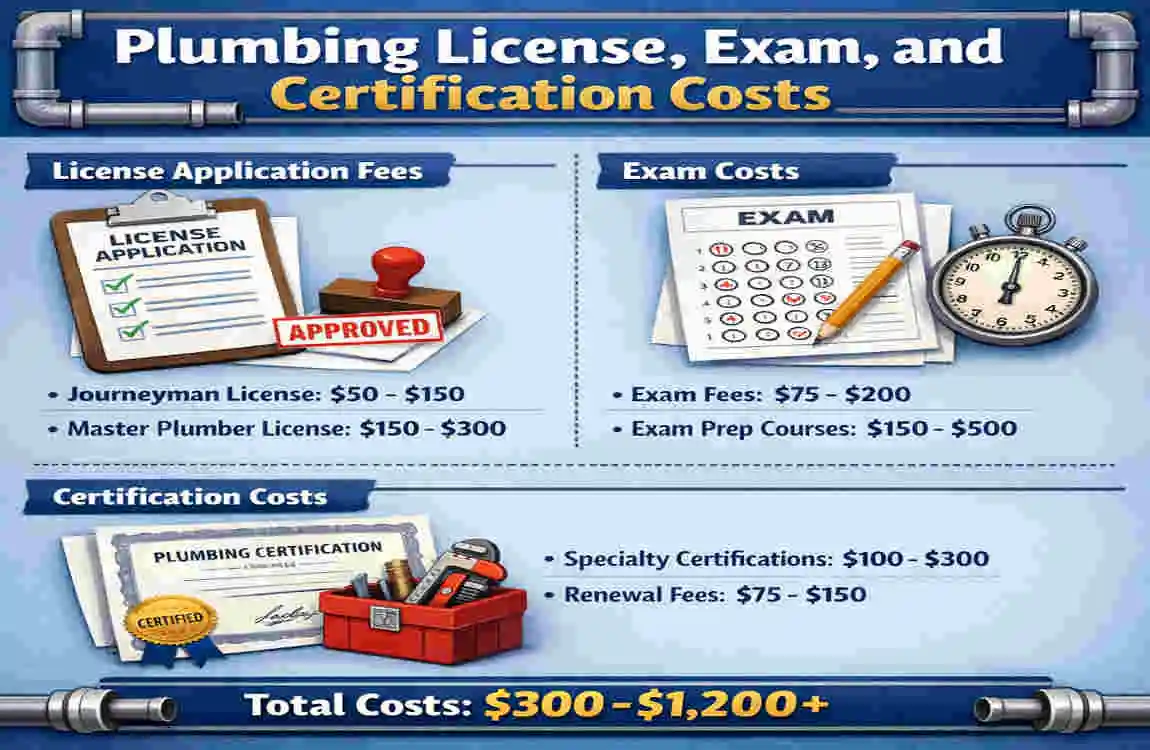
In many places, school is only one step. After training, you may need to take exams or get a license before you can work on your own.
Plumbing Exam Fees
Licensing exams usually cost money. In some areas, you may also have to pay for exam preparation, study guides, or review classes.
Exam costs can vary by location and the type of license you want. Some tests are basic, while others are more advanced.
License and Certification Fees
Getting licensed may involve application fees, background checks, or renewal fees. Some certifications may also need renewal after a certain number of years.
Keep in mind that education costs and professional license costs are not the same thing. You may pay for school first, and then pay again later for licensing.
Why Location Matters
Local rules can change the total cost a lot. One state may require more training hours. Another may ask for more testing or a different license level.
So when people ask how much plumbing school costs, the real answer often starts with location. A program in one area may be much cheaper or more expensive than the same type of training somewhere else.
How to Pay for Plumbing School
The good news is that several options can reduce the financial pressure.
Scholarships and Grants
Some trade schools, colleges, unions, and workforce programs offer scholarships or grants. These can help cover tuition, books, or tools.
If you want this help, check the eligibility rules carefully. Some programs are based on income, location, school performance, or career goals.
Financial Aid and Payment Plans
Some schools offer payment plans that let you spread the cost over time instead of paying everything at once. Others may offer aid through federal or private sources, depending on the school and your situation.
Before you choose a payment plan, compare:
- interest rates
- monthly payment amounts
- deadlines
- extra fees
A lower monthly payment may sound good, but the total cost still matters.
Employer-Sponsored Apprenticeships
Some employers and unions offer training while you work. This can be one of the most affordable ways to enter plumbing because you learn and earn at the same time.
This route may not be right for everyone, but it is worth exploring if you want to keep costs low.
Is Plumbing School Worth the Money?
For many people, the answer is yes. Plumbing is a skilled trade, and skilled trades often offer strong long-term career value.
Potential Career Benefits
Plumbing can lead to steady work, room for advancement, and the chance to become more independent over time. You may start as a helper or apprentice and later move into more skilled work.
A trained plumber may also have more options than someone who only learns informally on the job.
Plumbing School vs. Learning on the Job
Learning on the job has value, but classroom training gives you structure. It can help you understand codes, safety rules, tools, and common systems more systematically.
The best outcome is often a mix of both: classroom learning plus hands-on practice.
How Quickly Can You Recover Your Costs?
That depends on your training path, local job market, and how quickly you enter the workforce. Some people recover their education costs faster than others.
Don’t expect a guaranteed return in a fixed time. Instead, think about long-term earning power, job stability, and skill growth.
How to Create a Plumbing School Budget
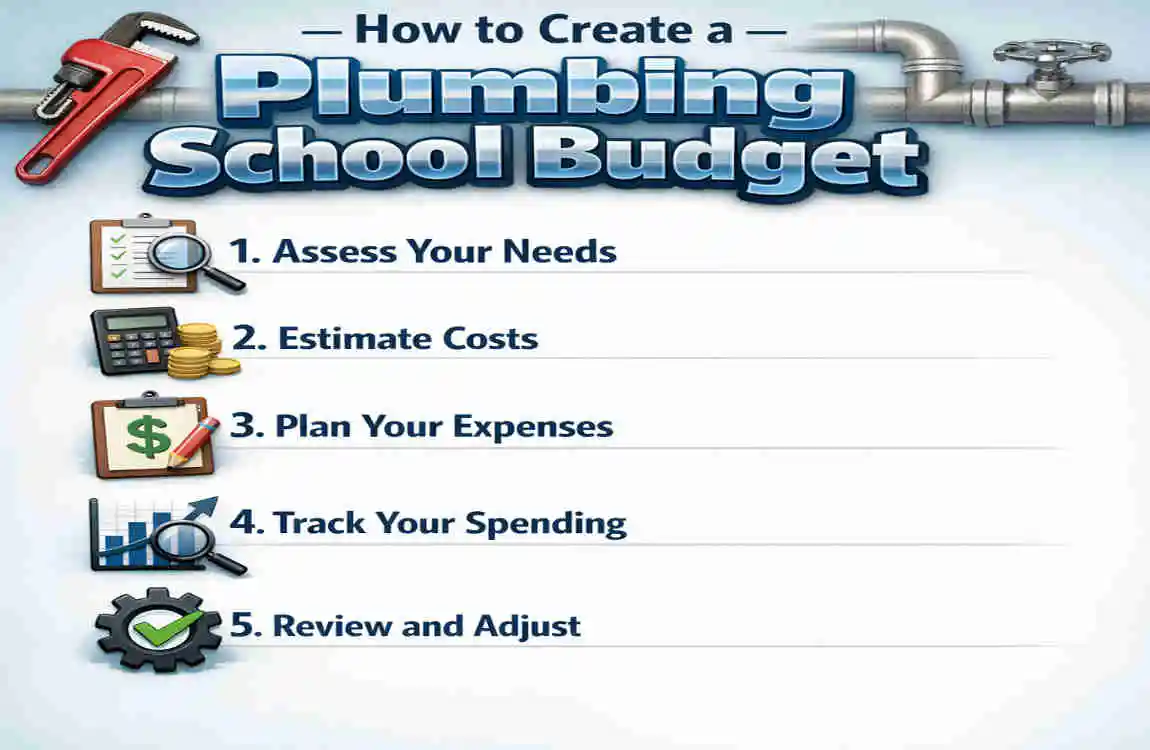
A smart budget helps you avoid surprises.
Make a Complete Cost Checklist
Before enrolling, list every likely expense.
Here is a simple checklist:
- tuition
- plumbing tools
- books and supplies
- transportation
- exam fees
- licensing costs
- safety gear
- living expenses
Compare Several Training Programs
Do not look only at the advertised tuition. Ask what is included. Some schools may cover tools or supplies. Others may charge extra.
Compare:
- total tuition
- program length
- hands-on training hours
- exam preparation
- included supplies
- job placement help
A slightly higher-priced program may offer more value if it includes better training or more support.
Keep an Emergency Fund
Unexpected costs happen. You may need extra money for tool replacement, travel, or exam retakes.
Try to keep a small emergency buffer so one surprise expense does not interrupt your training.
FAQ About How Much Plumbing School Costs
How much is plumbing school on average?
It varies a lot depending on the school, program length, and location. Short courses usually cost less, while longer trade or technical programs cost more.
Is plumbing school expensive?
It can be, but not always. Community colleges, apprenticeships, and payment plans can make it more manageable.
Can I become a plumber without going to plumbing school?
In some places, yes, through an apprenticeship or on-the-job training path. But rules vary, and some classroom education may still be required.
Is plumbing apprenticeship cheaper than trade school?
Usually yes, because apprenticeships often let you earn while you train. They can reduce upfront education costs.
Do plumbing schools offer financial aid?
Some do. Scholarships, grants, payment plans, and aid programs may be available depending on the school and your eligibility.
How much should I budget for plumbing tools?
That depends on the program and the tools required. A basic starter set can cost less than a full professional kit, but you should still plan.
Do I have to pay for a plumbing license separately?
Often yes. School and licensing are usually different costs, and licensing may include application or exam fees.
How long does plumbing school take?
That depends on the program. Some take only a few months, while others last much longer if they are more complete or certification-based.
Is plumbing school worth the cost?
For many students, yes. Strong training, hands-on experience, and licensing preparation can help build a solid career path.
| Expense | Typical Cost |
|---|---|
| Tuition & enrollment | $1,000–$5,000+ |
| Books & study materials | $100–$500 |
| Tools & equipment | $200–$1,000 |
| Licensing/exam fees | $50–$300 |
| Transportation & other costs | $100–$500+ |
| Estimated total | $1,450–$7,300+ |
