

Choosing the best plumbing pipes for homes is not just a technical decision. It affects how clean water moves through your home, how well your drains work, how long the system lasts, and how much you may spend on repairs later.
Each one has strengths and limits. That is why the best plumbing pipes for homes depend on the part of the plumbing system, your budget, and local building rules.
What to Consider Before Choosing Plumbing Pipes
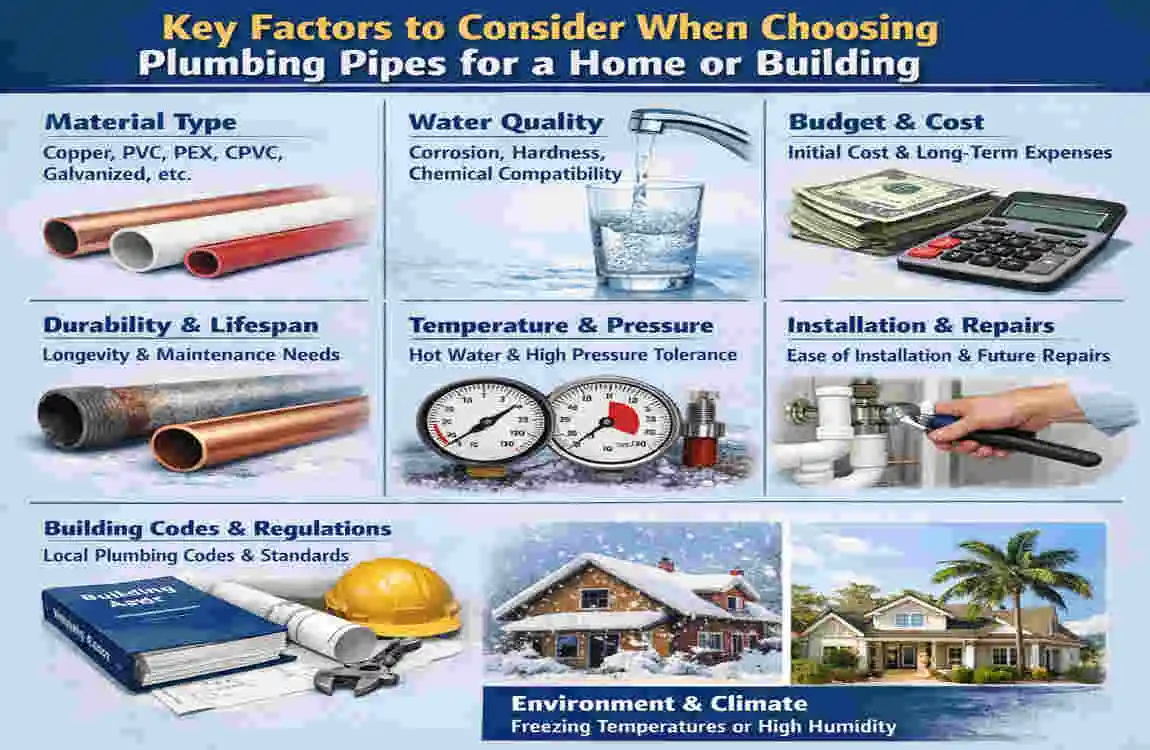
Water supply vs drainage
This is one of the first things to understand. Water supply pipes carry clean water into sinks, showers, toilets, and appliances. Drainage pipes carry wastewater away.
Not every pipe type works for both jobs. Some pipes are better for pressure and hot water. Others are better for waste removal and colder conditions.
Durability and lifespan
A good pipe should hold up over time. You want material that can handle:
- Water pressure
- Heat
- Corrosion
- Physical wear
- Long-term use
Some materials last longer than others, but lifespan also depends on installation quality and maintenance.
Installation and maintenance
Some pipes are easier to install than others. Flexible pipes may be easier to route through walls and around corners. Rigid pipes may need more cutting and joining.
Think about future repairs too. If a pipe is easy to replace or modify, that can save time and money later.
Cost and budget
It is tempting to choose the cheapest option, but price should never be the only factor. A low-cost pipe that fails early can become more expensive in the long run.
You should compare:
- Material cost
- Labor cost
- Repair cost
- Expected lifespan
A slightly more expensive pipe may actually offer better value.
Local building codes
Always check local plumbing rules before starting. Some areas limit which pipe materials can be used in certain parts of the home.
This is important for safety, code compliance, and insurance reasons. If you are unsure, a licensed plumber can help.
Types of the Best Plumbing Pipes for Homes
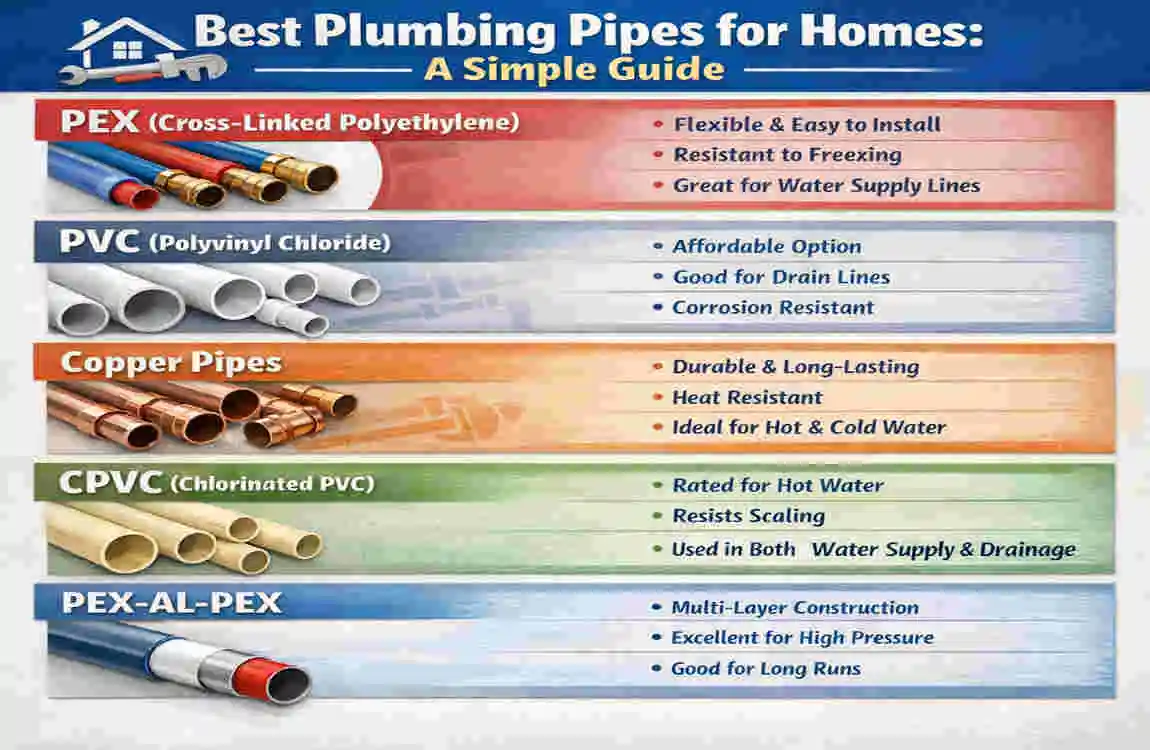
PEX Pipes
PEX is one of the most popular modern choices for residential plumbing. It is a flexible plastic pipe that is easier to bend around corners than rigid pipe types.
Advantages
PEX is often chosen because it is:
- Flexible
- Easy to install
- Good for indoor water supply
- Less likely to need many fittings
That flexibility can reduce labour time, which is helpful in new builds and remodels.
Disadvantages
PEX does have some limits. It can be affected by UV light, so it should not sit in direct sunlight for long periods. It is also not always the right choice for every exposed or outdoor use.
Best uses
PEX works well for most indoor water supply lines, especially when you want a practical and efficient system.
Copper Pipes
Copper has been used in homes for a long time, and many people still trust it. It is known for strength, heat resistance, and long service life.
Advantages
Copper is:
- Very durable
- Heat resistant
- Reliable for hot and cold water
- Trusted in many homes
It also has a solid reputation for performance over time.
Disadvantages
The biggest drawback is cost. Copper often costs more than plastic pipe options, both for materials and installation.
It can also be affected over time by certain water conditions, depending on water quality and system design.
Best uses
Copper is often a strong choice for hot and cold water lines when the budget allows.
PVC Pipes
PVC is a common plastic pipe used in many homes, especially for drainage. It is lightweight, affordable, and corrosion-resistant.
Advantages
PVC is:
- Low-cost
- Easy to handle
- Corrosion resistant
- Good for drainage systems
Because it does not rust, it works well in many wastewater applications.
Disadvantages
PVC is not suitable for every hot-water use. Heat can weaken it, so it is usually not used for lines that carry hot water.
Best uses
PVC is commonly used for drainage, waste, and some cold-water applications depending on local rules.
CPVC Pipes
CPVC is similar to PVC but is designed to handle higher temperatures. That makes it a better choice for some hot-water systems.
Advantages
CPVC can handle:
- Hot and cold water
- Higher temperatures than standard PVC
- Corrosion resistance
- Simple installation in many homes
It gives homeowners a more heat-friendly option than regular PVC.
Disadvantages
CPVC can become brittle over time in some conditions. It also needs to be installed correctly to avoid problems later.
Best uses
CPVC is often chosen when you need a plastic pipe that can handle both hot and cold water.
HDPE Pipes
HDPE is a strong and flexible pipe material often used in underground plumbing and water supply systems.
Advantages
HDPE is:
- Flexible
- Impact resistant
- Durable
- Well suited for underground use
It can handle movement in the ground better than many rigid pipe types.
Disadvantages
The joining process may require special tools or methods. That means installation can be more specialised than with some other pipes.
Best uses
HDPE is a smart option for underground runs and certain supply lines where flexibility and toughness matter.
Best Plumbing Pipe Materials Compared
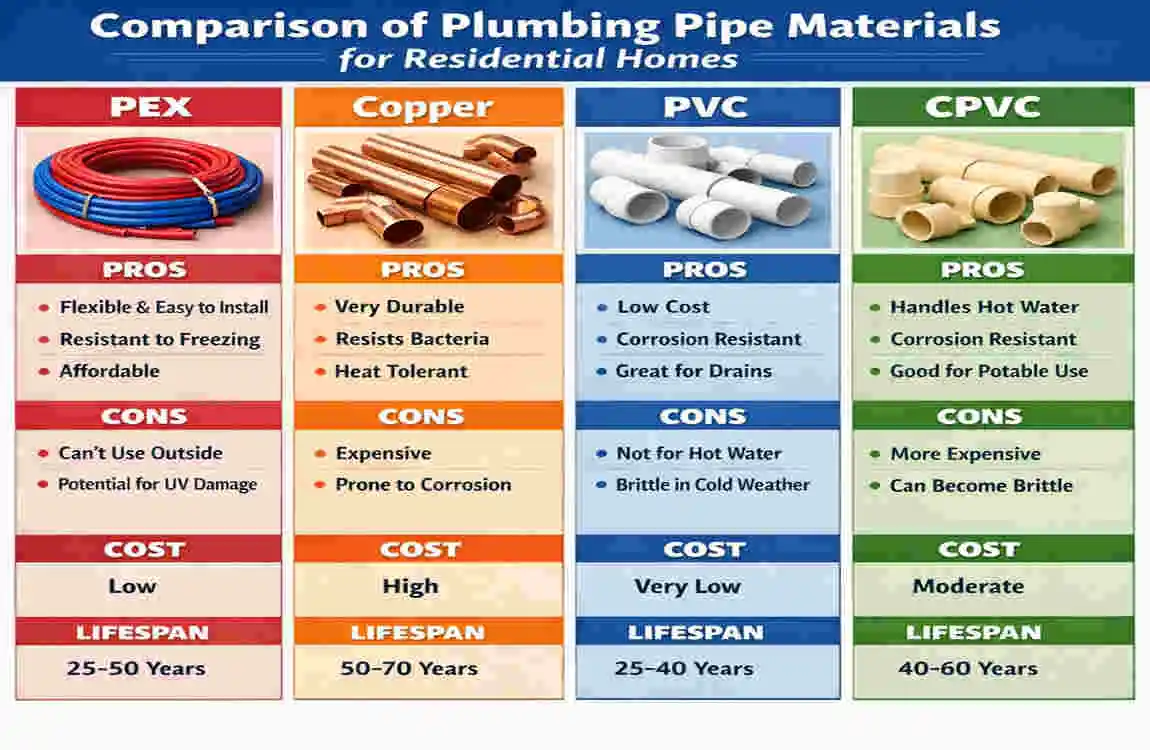
Here is a simple comparison to make the differences easier to see.
Pipe TypeBest ForMain BenefitMain Drawback
PEX Indoor water supply Flexible and easy to install Can be affected by UV exposure
Copper Hot and cold water Durable and heat resistant Higher material cost
PVC Drainage and cold water Affordable and corrosion resistant Not suitable for every hot-water application
CPVC Hot and cold water Handles higher temperatures Can become brittle over time
HDPE Water supply and underground use Flexible and durable Installation may require specialised joining
PEX vs. copper
This is a common comparison. PEX is usually cheaper and easier to install. Copper is stronger in some situations and has a long track record.
If you want easier installation and lower cost, PEX often wins. If you want long-term strength and heat resistance, copper may be worth the higher price.
PVC vs. CPVC
These two pipes look similar, but they are not the same. PVC is mainly used for drainage and colder water. CPVC can handle hotter water, which makes it more versatile for supply lines.
If your project involves hot water, CPVC is usually the better fit.
Why there is no single best pipe
The truth is simple: there is no one perfect pipe for every home. The best choice depends on what the pipe must do.
A house may need one pipe type for indoor water supply, another for drainage, and another for underground sections. That is normal.
How to Choose the Right Plumbing Pipes for Your Home
For new home construction
If you are building a new home, you have more flexibility. You can plan the entire plumbing system from the start and choose materials that match the layout.
This is a good time to think about:
- Budget
- Expected lifespan
- Ease of repair
- Local codes
A well-planned system can save money later.
For home renovations
In a renovation, the old system already influences your choices. You may need to work around existing pipe types, wall access, and room layout.
This is where compatibility matters. Sometimes the best option is the one that connects smoothly with what is already there.
For hot-water lines
Hot-water lines need pipe material that can handle heat safely. That is why material ratings matter so much.
Always check the manufacturer’s temperature limits. Do not assume every pipe can handle the same heat level.
For underground plumbing
Underground plumbing faces extra pressure from soil movement, moisture, and outside conditions. You want a material that can handle those challenges.
In many cases, flexibility and durability matter most here. HDPE is often useful in this area.
For budget-friendly plumbing
If money is a major concern, focus on value rather than just the lowest upfront cost. PVC, PEX, and CPVC are often more budget-friendly than copper.
Still, make sure the pipe fits the job. A cheap pipe in the wrong place can cost more later.
When to hire a professional plumber
Some jobs are better left to a professional. Call an expert when the work involves:
- Major repairs
- Hidden pipe damage
- Gas lines
- Code requirements
- Complex connections
A plumber can also help you avoid mistakes that are hard to fix later.
Common Plumbing Pipe Mistakes to Avoid
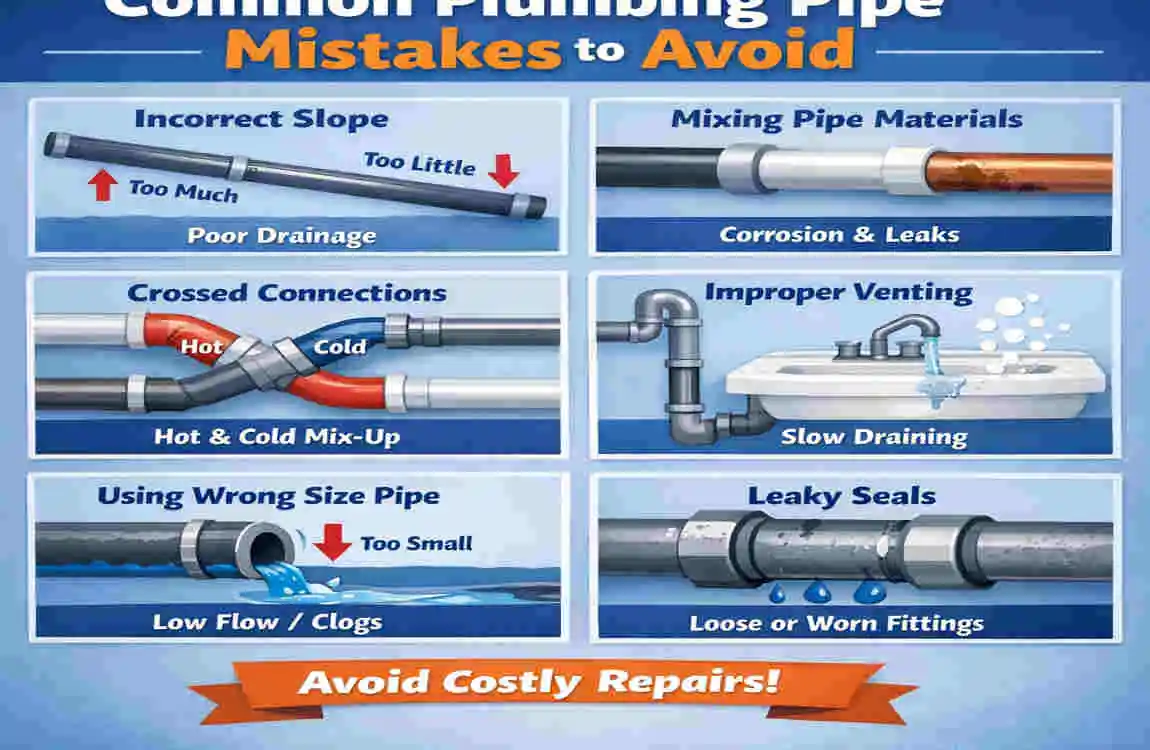
Choosing the best plumbing pipes for homes becomes much easier when you avoid common mistakes.
Choosing only by price
Cheap is not always smart. You should think about long-term performance, not just the first bill.
Using the wrong pipe for hot water
Some pipes cannot handle heat well. If you use the wrong one, it may weaken or fail sooner than expected.
Ignoring water pressure
Not every pipe handles pressure the same way. Your system must match the pressure needs of your home.
Mixing materials the wrong way
Different pipe types can sometimes be connected, but only with the proper fittings. Never force incompatible materials together.
Exposing pipes to the wrong conditions
Sunlight, freezing temperatures, and physical damage can all shorten pipe life. Protect exposed pipes whenever possible.
Skipping building-code checks
This can cause safety issues and future repair headaches. Always check the rules first.
Using damaged fittings
Even a good pipe can fail if the fittings are poor. Low-quality joints can lead to leaks and weak connections.
Avoiding professional help when needed
For large or hidden plumbing work, expert inspection is worth it. It can prevent expensive mistakes.
Frequently asked questions
What are the best plumbing pipes for homes?
The best plumbing pipes for homes depend on the job at hand. PEX, copper, PVC, CPVC, and HDPE can all be good choices in the right situation.
Is PEX better than copper for home plumbing?
PEX is usually easier and cheaper to install. Copper is more traditional, highly durable, and heat-resistant. The better option depends on your budget and project needs.
Which pipe is best for hot water?
Copper and CPVC are often strong choices for hot water. Some PEX systems can also work well if they are rated for the right temperature.
Are PVC pipes good for residential plumbing?
Yes, but mostly for drainage and certain cold-water applications. PVC is not usually the right choice for hot-water lines.
How long do home plumbing pipes last?
Lifespan depends on the material, installation quality, water conditions, and maintenance. Good installation makes a big difference.
What is the most affordable plumbing pipe?
PVC and PEX are often among the more affordable options, but the true cost also includes labour and future maintenance.
Can different types of plumbing pipes be connected?
Yes, sometimes they can. But you need the right connectors and methods. This is one area where a plumber can help.
Should I choose plumbing pipes myself or hire a professional?
For simple planning, you can learn a lot on your own. For installation, major repairs, or code-related work, a professional is a safer choice.
| Pipe Type | Best For | Main Benefit | Typical Lifespan |
|---|---|---|---|
| PEX | Hot & cold water | Flexible and easy to install | 40–50+ years |
| Copper | Indoor water lines | Durable and heat-resistant | 50+ years |
| PVC | Cold-water & drainage | Affordable and lightweight | 50+ years |
| CPVC | Hot & cold water | Handles higher temperatures | 40–50 years |
| HDPE | Outdoor water lines | Strong and flexible | 50–100 years |
| Cast Iron | Drainage systems | Excellent durability and sound reduction | 50–100+ years |
