

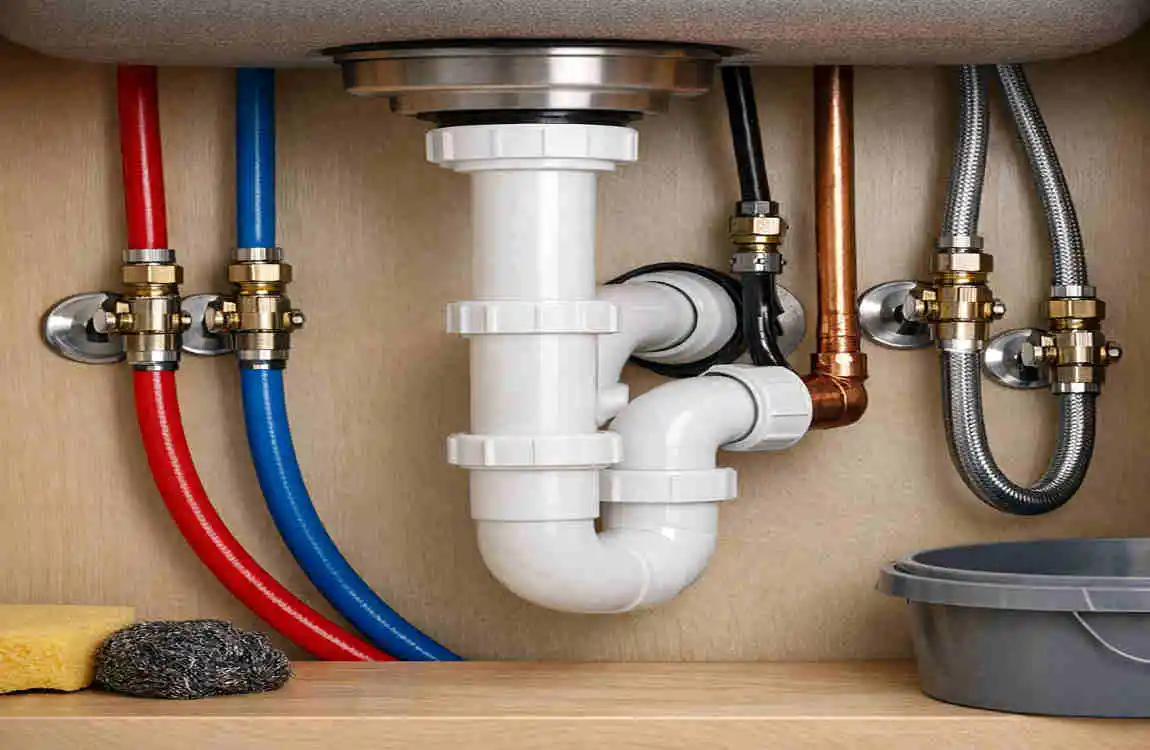
If you are asking how long plumbing pipes last, the short answer is: it depends on the pipe material, water quality, installation quality, and system maintenance. Some kitchen pipes last only a few decades, while others can last much longer.
How Long Does A Kitchen Plumbing Pipe Usually Last?
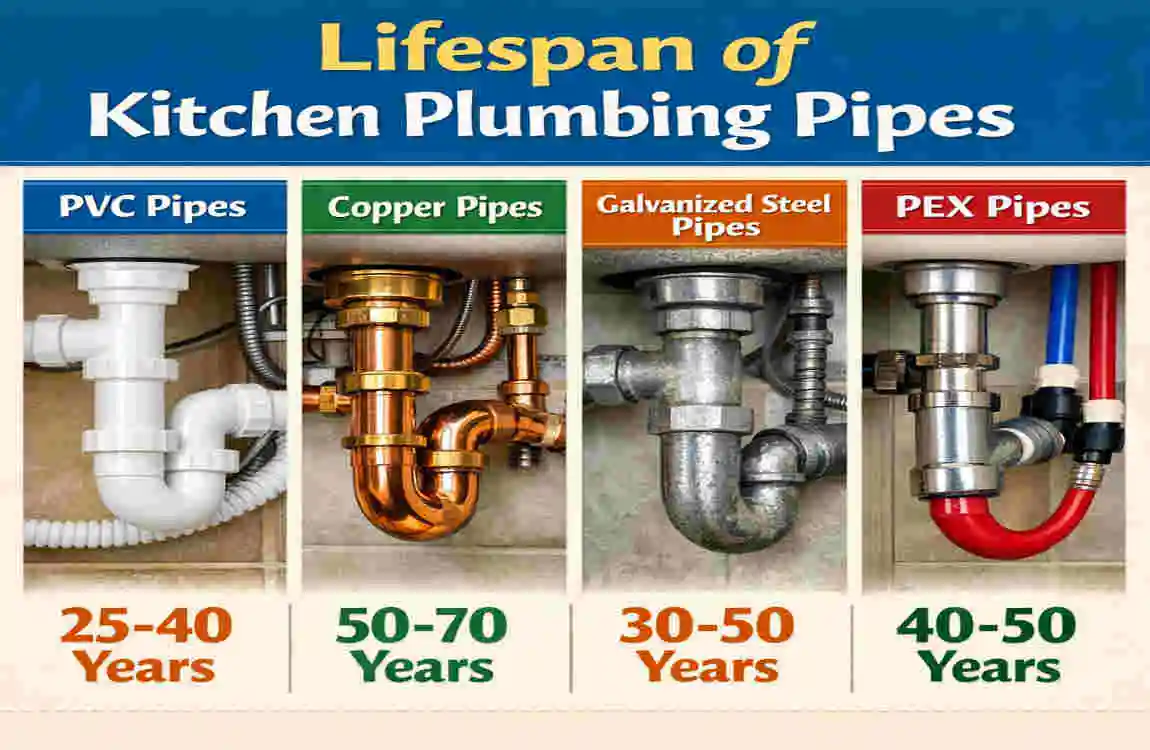
Kitchen plumbing pipes do not all age the same way. Some wear out slowly, while others can fail more quickly when exposed to poor water conditions or repeated stress.
A Simple Answer
In general, kitchen plumbing pipes can last anywhere from 20 to 100 years depending on the pipe type. That is a wide range, but it gives you a good idea of how much material matters.
What Affects Pipe Lifespan?
A pipe may last longer or shorter based on:
- Pipe material
- Water hardness or acidity
- Quality of installation
- Daily use
- Repairs and maintenance
- Temperature changes
- Corrosion over time
Supply Pipes vs. Drain Pipes
It also helps to know that kitchen plumbing includes two main pipe types:
- Supply pipes bring clean water to the sink and faucet
- Drain pipes carry wastewater away
Supply pipes usually need to stay watertight under pressure. Drain pipes deal more with waste flow and buildup. Because of that, their problems can look a little different.
Kitchen Plumbing Pipe Lifespan by Material
Different pipe materials have different strengths. Some are better for long-term use, while others are chosen for being easier to install or replace.
Copper Pipes
Copper is one of the most trusted plumbing materials. It has been used in homes for many years and is known for being durable.
Typical lifespan: 50+ years
Copper works well because it handles heat and pressure fairly well. It is also less likely to bend or collapse. But older copper pipes can still develop pinhole leaks, especially if water is aggressive or the pipes are aging.
Signs copper may need attention:
- Green or blue stains
- Small leaks
- Low water pressure
- Corrosion near joints
PEX Pipes
PEX is a flexible plastic pipe that has become very popular in modern kitchens and homes.
Typical lifespan: 40–50+ years
People like PEX because it is easy to install, bends around corners, and resists some common plumbing problems. It is also less likely to burst in freezing conditions than some rigid pipes.
However, PEX should be protected from sunlight and high heat, as they can shorten its lifespan.
PVC and CPVC Pipes
PVC is often used for drains, while CPVC can be used for hot and cold water lines in certain homes.
Typical lifespan: 50–100 years
These pipes are light, affordable, and resist rust. PVC is especially common in drain systems. CPVC can withstand higher temperatures than regular PVC, making it better suited for some supply lines.
Still, both can have issues if the joints are poorly fitted or the pipe becomes brittle over time.
Galvanised Steel Pipes
Galvanised steel is an older plumbing material and is much less common in newer kitchens.
Typical lifespan: 20–50 years
These pipes tend to rust from the inside over time. That can cause buildup, poor water flow, and discoloured water. In many older homes, galvanised steel is one of the first things plumbers recommend replacing.
Signs Your Kitchen Plumbing Pipes Need Replacement
Sometimes pipes fail slowly, and the warning signs are easy to miss. If you catch them early, you may avoid bigger damage later.
Common Signs to Watch For
- Frequent leaks under the sink
- Low or inconsistent water pressure
- Rusty or discoloured water
- Slow kitchen drains
- Damp cabinets or walls
- Odd rattling or banging noises
- Visible corrosion, cracks, or bulges
- Repeated plumbing repairs
Why One Small Leak Matters
A small leak is not always just a small leak. It can mean the pipe is weakening, the joint is failing, or the system is under pressure. If one section is failing, other parts may not be far behind.
When Damage Becomes a Bigger Problem
If you notice water stains, a mouldy smell, or swelling around cabinets, the problem may have been there for a while. In that case, the pipe issue may be only part of the story.
When Should You Replace Kitchen Plumbing Pipes?
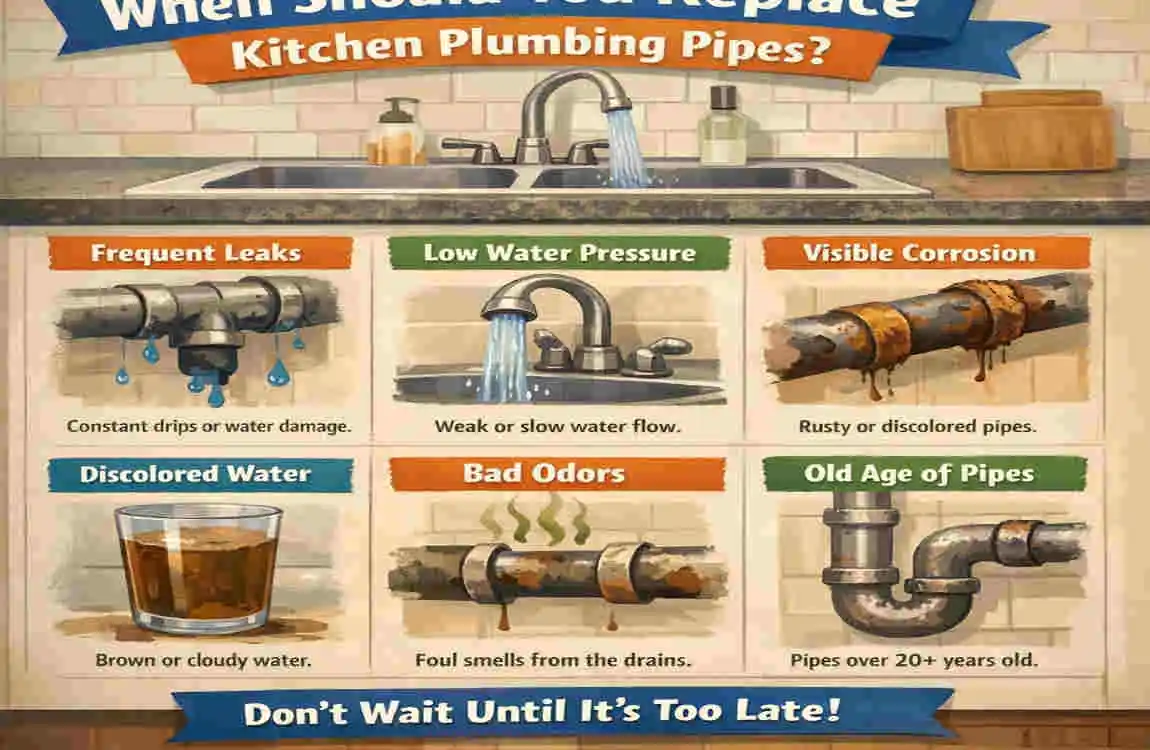
Not every pipe problem means full replacement. Sometimes a repair is enough. Other times, replacement is the smarter choice.
Repair vs. Replacement
If the damage is small and the rest of the pipe is in good shape, a repair may make sense. But if the pipe is old, rusted, or leaking repeatedly, replacement is usually the better long-term option.
When Replacement Makes More Sense
You should think about replacement when:
- The pipes are very old
- Leaks keep coming back
- Corrosion is visible
- Water pressure has dropped
- The kitchen is already being remodelled
- The plumbing system has many weak spots
Why Remodelling Is a Good Time
If you are already opening walls or cabinets during a remodel, it can be a smart time to upgrade old pipes. That may save you from paying for the same labour twice later.
How to Replace Kitchen Plumbing Pipes
If you are dealing with a pipe problem, the replacement process should be handled carefully.
Identify the Problem
First, find out whether the issue is in the supply line or the drain line. This helps you avoid replacing the wrong section.
Shut Off the Water
Always turn off the water before starting work. This prevents flooding and makes the job safer.
Remove the Damaged Pipe
Once the water is off, the damaged pipe can be removed. The surrounding fittings should also be checked for wear or corrosion.
Install the New Pipe
The new pipe should match the rest of the plumbing system. The fittings, size, and material all need to work together properly.
Test for Leaks
After the new pipe is in place, slowly turn the water back on. Watch all joints and connections closely.
Safety Note
If the pipe runs inside walls, under floors, or through a complicated system, call a licensed plumber. Hidden plumbing problems can be harder to diagnose than they look.
How to Extend the Life of Kitchen Plumbing Pipes
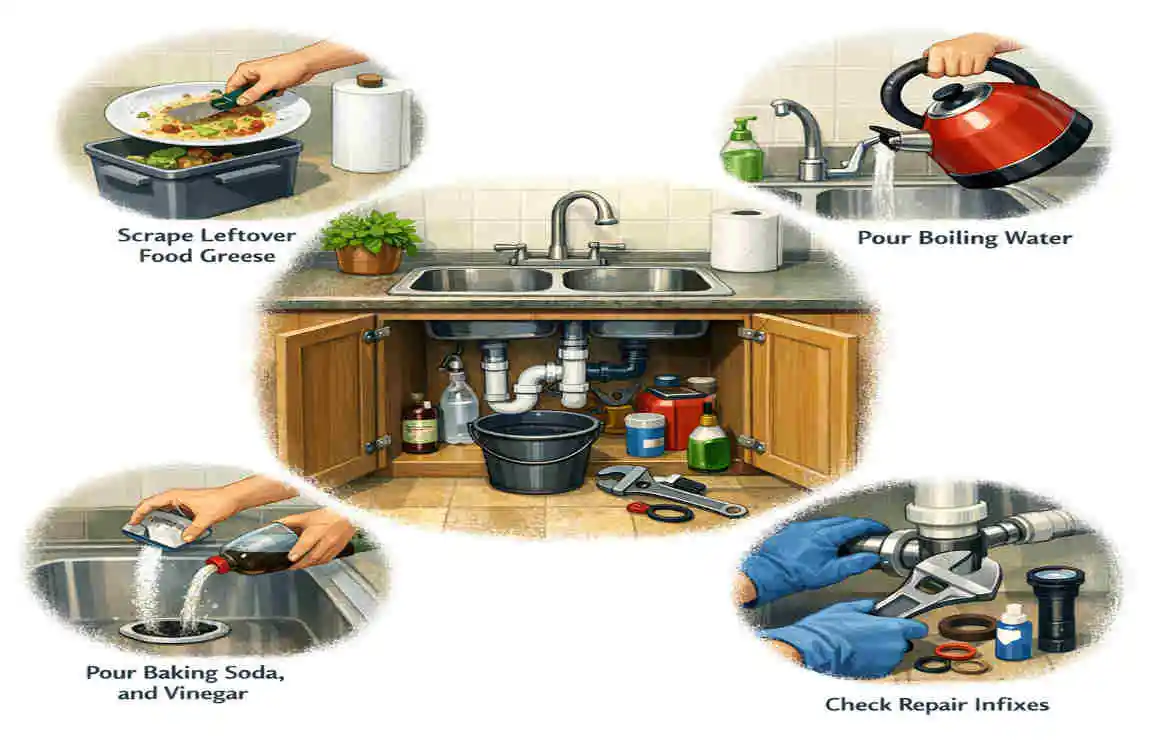
Good care can add years to your plumbing system. A little attention now can save you a lot of trouble later.
Helpful Maintenance Tips
- Fix small leaks quickly
- Do not pour grease or oil down the drain
- Use drain strainers
- Check under-sink pipes often
- Keep pipes safe from extreme cold
- Maintain normal water pressure
- Avoid harsh chemical drain cleaners
- Schedule inspections for older plumbing
Why These Habits Matter
Grease and food scraps can clog drains. High water pressure can stress joints. Chemical cleaners may weaken some pipe materials over time. Simple habits can make a big difference in how long your kitchen plumbing lasts.
Kitchen Plumbing Pipe Replacement Costs
The cost of replacing kitchen pipes can vary widely. There is no single price because every home is different.
What Affects the Cost?
- Pipe material
- How many pipes need replacement
- How easy the pipes are to reach
- Labour rates in your area
- Whether cabinets or walls must be removed
- The overall condition of the plumbing system
Is It Better to Replace All Kitchen Pipes at Once?
Sometimes yes, sometimes no. If only one section is damaged and the rest is fairly new, a small repair or partial replacement may be enough. But if the pipes are old and failing in several places, replacing more at once can be more practical.
FAQs
How long do kitchen plumbing pipes last?
It depends on the material. Some pipes last around 20 years, while others can last 50 years or more.
How often should kitchen plumbing pipes be replaced?
There is no fixed schedule. Replace them when they show clear signs of aging, damage, or repeated failure.
What type of pipe is best for kitchen plumbing?
That depends on your home, budget, and plumbing setup. Copper, PEX, and CPVC are all common choices for different situations.
How do I know if my kitchen pipes are bad?
Look for leaks, rust, low pressure, strange noises, or water damage around the sink and cabinets.
Can old kitchen plumbing cause low water pressure?
Yes. Rust buildup, corrosion, and hidden leaks can all reduce water flow.
Should I repair or replace a leaking kitchen pipe?
Repair is fine for small, isolated issues. Replace the pipe if leaks keep recurring or it is old and damaged.
How long does it take to replace kitchen plumbing pipes?
A simple repair may take only a short time, but a full replacement can take much longer, especially if walls or cabinets must be opened.
| Pipe Type | Typical Lifespan | Replacement Signs |
|---|---|---|
| Copper | 50–70 years | Corrosion, leaks, green stains |
| PEX | 40–50 years | Cracks, leaks, damaged fittings |
| PVC | 50–70+ years | Cracks, brittle sections, leaks |
| CPVC | 40–50 years | Discoloration, splitting, leaks |
| Galvanized Steel | 20–50 years | Rust, low water pressure, frequent leaks |
| Cast Iron | 50–100 years | Rust, cracks, drainage problems |
| Best Replacement Tip | — | Replace severely corroded or repeatedly leaking pipes promptly |
