

A pedestal sink is a popular choice in small bathrooms and modern spaces because it looks clean, simple, and stylish. It saves floor space and gives the room a lighter feel.
But installing one is not just about placing the sink in the right spot. The real challenge is learning how to plumb a pedestal sink so the water supply lines and drain plumbing work properly while still looking neat.
Understand How a Pedestal Sink Plumbing System Works
What Is a Pedestal Sink?
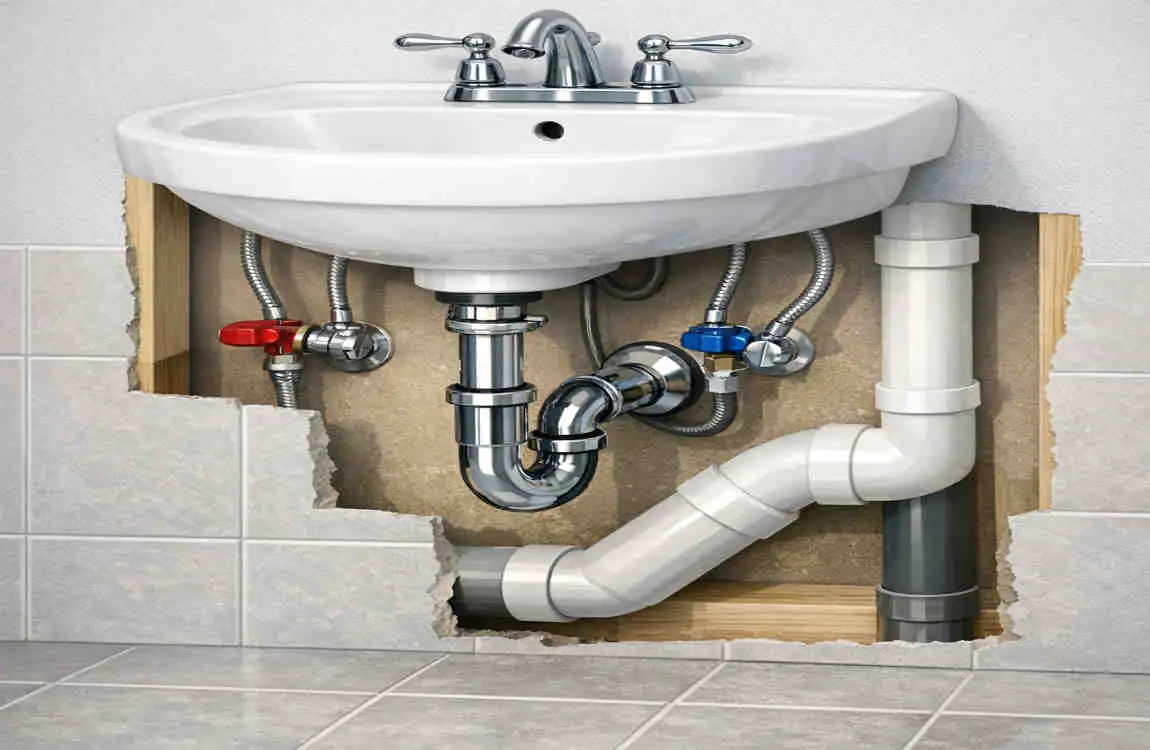
A pedestal sink has two main parts: the basin and the pedestal base. The basin holds the water, while the pedestal supports it from below.
The pedestal also helps hide part of the plumbing. That is one reason many homeowners choose it. It gives the bathroom a neat appearance without taking up much space.
Main Plumbing Components
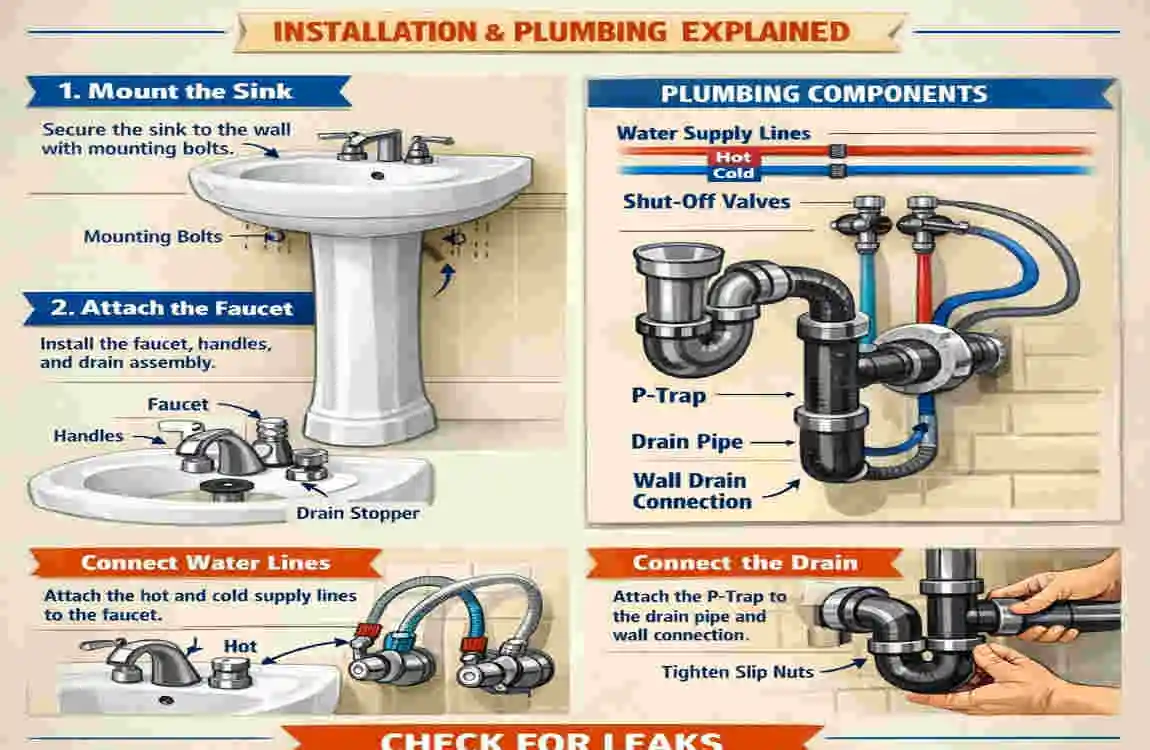
A pedestal sink plumbing setup usually includes:
- Hot and cold water supply lines
- Faucet
- Shutoff valves
- Drain assembly
- P-trap
- Drainpipe
- Wall drain connection
Each part has a job. The supply lines bring water in, and the drain system carries wastewater out.
Why Proper Plumbing Matters
Good plumbing keeps the sink safe, useful, and clean. If the connections are loose or poorly aligned, you may get leaks, odours, or slow drainage.
It also affects the final look. A well-installed pedestal sink should feel stable and appear finished, not messy or awkward.
Prepare the Bathroom Before Installation
Check the Existing Plumbing
Before you begin, look at where the current plumbing is located. You need to know where the supply lines and drain opening are positioned.
This matters because pedestal sinks have limited space behind the pedestal. If the pipes sit too high, too low, or too far off-centre, the sink may not fit properly.
Gather the Required Tools and Materials
You do not want to stop halfway through the job because something is missing. Have everything ready first.
Basic Tools and Parts
- Adjustable wrench
- Screwdriver
- Pliers
- Level
- Bucket
- Plumber’s tape, if needed
- Supply lines
- P-trap and drain pieces
- Mounting hardware
Having the right tools makes the job smoother and helps reduce mistakes.
Shut Off the Water
This step is very important. Turn off the bathroom water supply before touching any plumbing parts.
Then open the faucet to release pressure and drain any leftover water. Keep a towel or bucket nearby, because some water may still come out of the lines.
How to Plumb a Pedestal Sink Step by Step
Position and Mark the Sink
Place the sink basin and pedestal where you want them. Make sure the sink feels centred and balanced.
Use a level to check that the basin sits straight. Then mark the wall according to the sink’s mounting points and the manufacturer’s instructions.
Connect the Faucet and Supply Lines
In many cases, it is easier to install the faucet before the sink is fully mounted. This gives you more room to work.
Next, connect the hot and cold supply lines. Tighten the fittings carefully. Do not overtighten, because that can damage the threads or washers.
Install the Drain Assembly
The drain assembly helps water flow from the sink into the plumbing system.
Fit the drain flange and gasket into the sink opening. Then attach the drain tailpiece and, if included, the pop-up drain mechanism. Make sure all parts sit snugly and in the right order.
Connect the P-Trap
The P-trap is the curved pipe under the sink. It helps prevent sewer gases from returning to the bathroom.
Attach the P-trap to the drain tailpiece first. Then connect it to the wall drain opening. The fit should be smooth and aligned, without forcing the pipes into place.
Secure the Sink
Once the plumbing parts are connected, fasten the basin to the wall with the proper hardware. This is what gives the sink stability.
Then position the pedestal under the basin. The pedestal should support the sink visually and help hide some of the plumbing, but the sink must still be firmly mounted on the wall.
Simple Installation Order
- Mark the sink position
- Install the faucet
- Connect the supply lines
- Fit the drain assembly
- Attach the P-trap
- Mount the sink to the wall
- Place the pedestal
- Test for leaks
Conceal and Finish the Pedestal Sink Plumbing
How the Pedestal Hides Plumbing
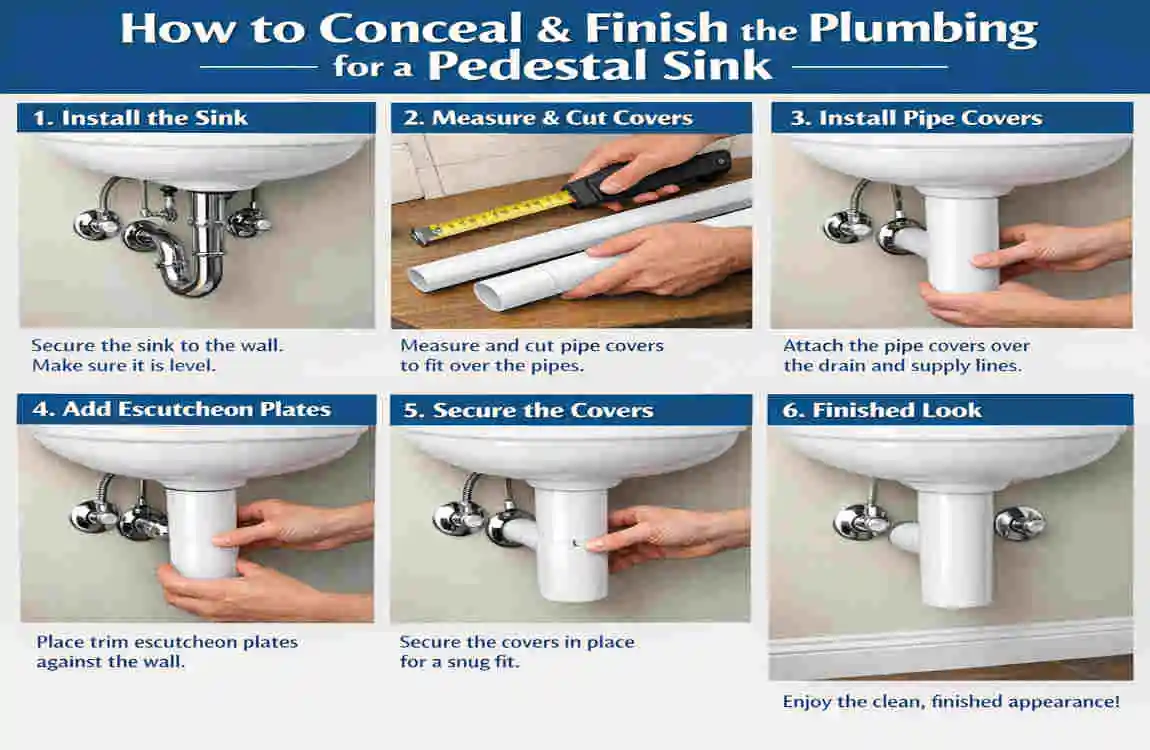
One of the main benefits of a pedestal sink is that it hides much of the pipework. The base covers the lower area, creating a cleaner look.
Still, the plumbing should remain accessible for future repairs. Do not box everything in so tightly that you cannot reach it later.
Keep Pipes Neat
Good pipe routing makes the sink look better and work better. Try to avoid extra bends, tight pressure points, or long exposed sections.
Also check that the supply lines do not rub against the pedestal or sit under tension. The goal is a tidy, relaxed fit.
Use Sealants the Right Way
Some parts need plumber’s tape, washers, or approved sealants. But sealant should not be used to hide a poor fit.
If a part does not line up correctly, the connection needs to be fixed properly. Sealants help support a good joint, but they should never replace one.
Test the Installation and Fix Common Problems
Check for Water Leaks
Once everything is connected, slowly turn the water supply back on. Watch each connection closely.
Check the faucet lines, supply line fittings, drain joints, and the P-trap. Then run water through the sink and look underneath for drips.
Common Pedestal Sink Plumbing Problems
Here are some common issues you may see:
- Leaking P-trap
- Slow drainage
- Loose supply connections
- Misaligned drainpipe
- Faucet leaks
- Sink movement
Most of these problems come from loose fittings, poor alignment, or missing seals.
When to Call a Plumber
Some jobs are simple, but not all of them are DIY-friendly. You should call a plumber if:
- The wall drain needs to be moved
- The pipes are damaged
- The plumbing layout does not match the sink
- You suspect code-related problems
- The sink requires major changes to the bathroom plumbing
A professional can save you time and help you avoid costly mistakes.
Common Mistakes to Avoid When Plumbing a Pedestal Sink
Forgetting the Water Shutoff
This is one of the easiest mistakes to make and one of the most expensive. Always shut off the water first.
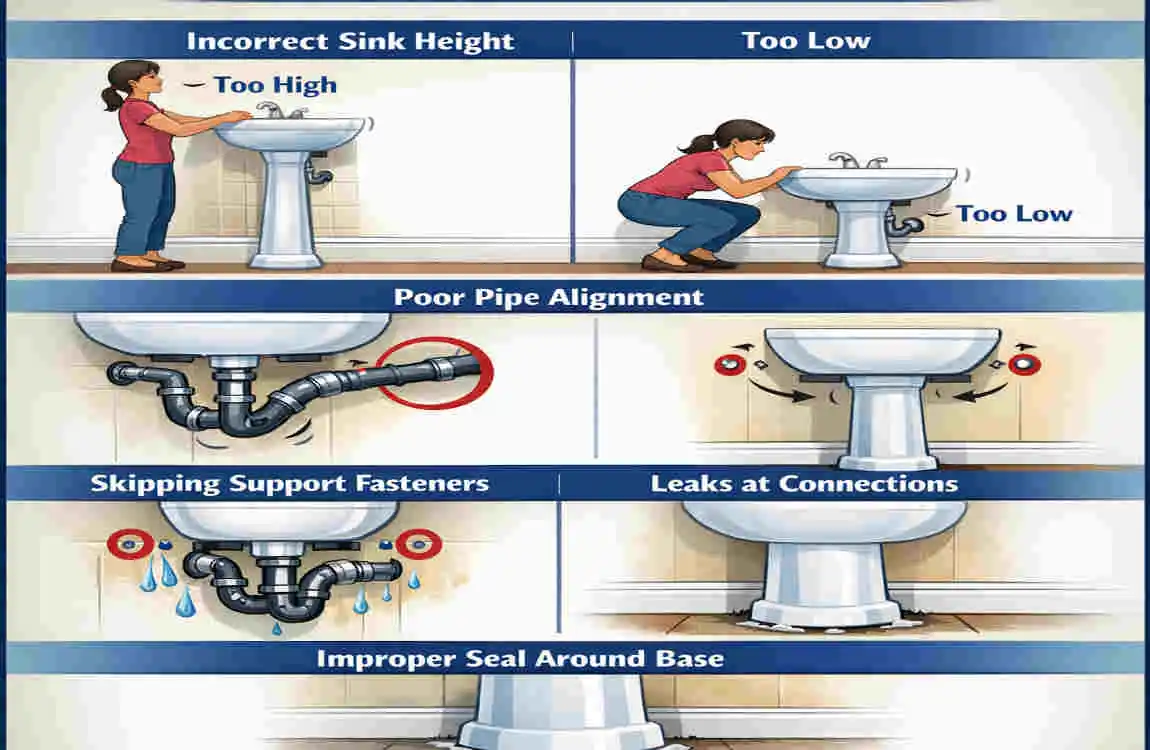
Measuring Incorrectly
Pedestal sinks need careful placement. If the drain or supply lines are off by even a little, the fit may be awkward or impossible.
Overtightening Fittings
Too much force can crack washers, strip threads, or damage parts. Tighten fittings only as much as needed.
Installing the P-Trap at the Wrong Angle
If the P-trap is crooked, drainage can suffer. It may also place stress on the pipes and cause leaks later.
Hiding Plumbing Before Testing
Never cover or hide pipes before checking for leaks. You should always test the system first.
Ignoring Local Plumbing Rules
Different places may have different code requirements. If you are unsure, check before you install anything permanent.
Pedestal Sink Plumbing FAQs
How do you plumb a pedestal sink?
To plumb a pedestal sink, you connect the faucet, supply lines, drain assembly, P-trap, and wall drain connection, then secure the sink and test for leaks.
Does a pedestal sink need a P-trap?
Yes. A properly installed P-trap is generally needed because it helps block sewer gases and keeps the drain system working correctly.
Can you install a pedestal sink over existing plumbing?
Sometimes yes, if the existing supply and drain locations match the sink layout. If they do not, some plumbing adjustment may be needed.
How high should the plumbing be for a pedestal sink?
That depends on the sink model. Always follow the manufacturer’s installation guide and your local plumbing code.
Can I install a pedestal sink myself?
If you have basic plumbing experience and the existing setup fits the new sink, you may be able to do it yourself. If major pipe changes are needed, hire a professional.
Why is my pedestal sink drain leaking?
Common reasons include loose connections, damaged washers, poor alignment, or incorrectly assembled drain parts.
How do you hide pipes under a pedestal sink?
The pedestal covers much of the plumbing, but the pipes still need to remain accessible for maintenance and repair.
| Aspect | Quick Information |
|---|---|
| What Is It? | A pedestal sink is a wall-mounted basin supported by a decorative pedestal underneath. |
| Main Plumbing | Includes hot and cold water supply lines plus a drainpipe and P-trap. |
| Wall Support | The sink should be securely anchored to wall studs or suitable blocking. |
| Installation Steps | Mark position, install supports, mount basin, connect faucet and drain, then attach the pedestal. |
| P-Trap | Connects the sink drain to the wall drain and helps prevent sewer gases from entering the bathroom. |
