

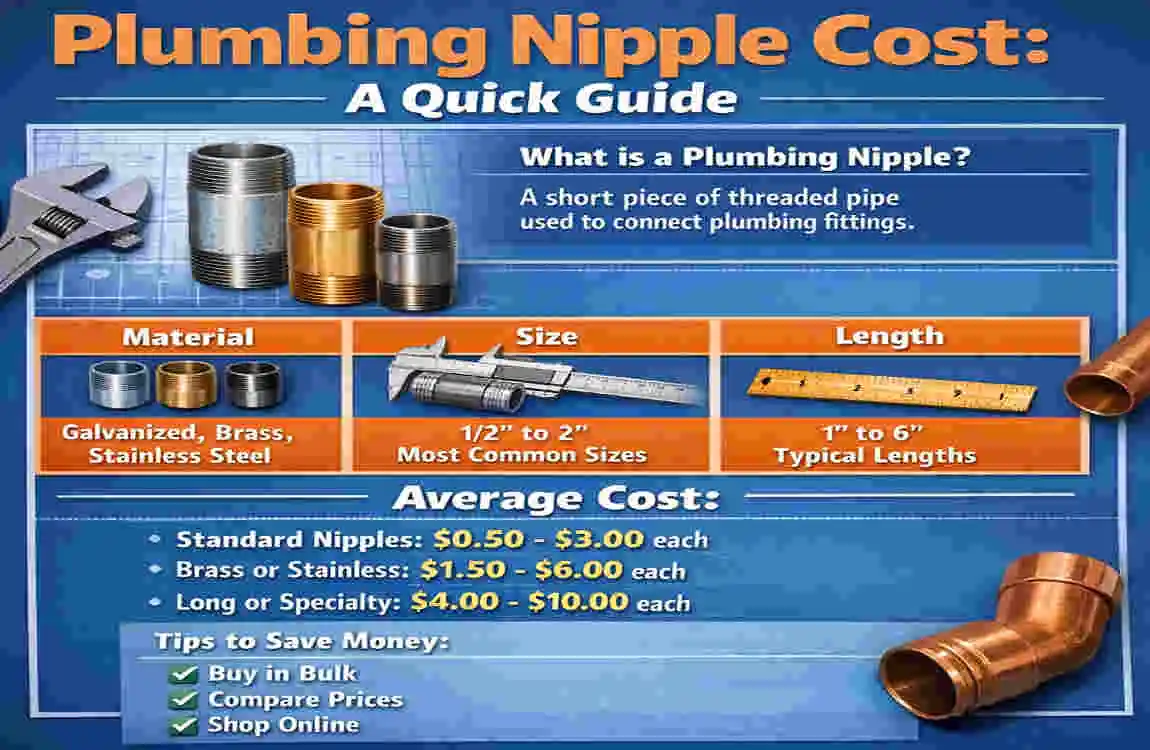
If you are asking what a plumbing nipple costs, the short answer is that it depends on the material, size, length, and thread type. A plumbing nipple is a small pipe fitting that connects two plumbing parts, and the price can vary widely depending on the job it needs to do.
What Is a Plumbing Nipple Cost?
What is a plumbing nipple?
A plumbing nipple is a short piece of pipe with threads on one or both ends. It joins fittings, valves, and other plumbing parts.
You will see it in water lines, gas lines, heating systems, and many home repair jobs. It may look small, but it plays an important role in keeping the system connected and sealed.
What does plumbing nipple cost mean?
Plumbing nipple cost refers to the price of the fitting itself. In some cases, people also mean the full plumbing fitting cost, which can include installation.
How Much Does a Plumbing Nipple Cost?
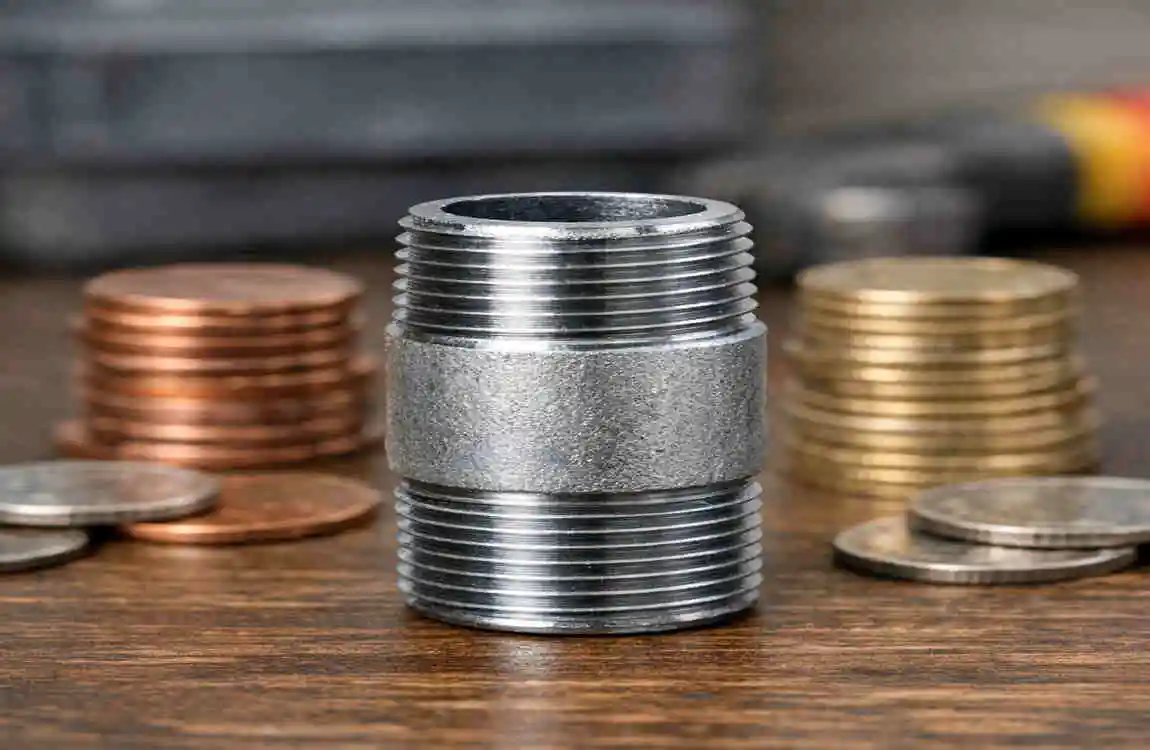
Typical price range
In most stores, a basic plumbing nipple may cost only a few dollars. Simple models are usually low-cost, while specialty fittings can cost more.
If you are buying one piece for a quick repair, the price is often small. If you need several fittings for a larger project, the total can add up fast.
Cost by size
The cost of a plumbing nipple by size changes because larger fittings use more material. Small nipples are usually cheaper, while long or wide ones cost more.
A short nipple for a simple water line may be very affordable. A long threaded nipple for a larger system may cost more even if it looks similar at first glance.
Short vs. long nipples
Short nipples are often used where space is tight. Use long nipples when you need more reach between fittings.
Because long nipples use more material, they usually cost more than short ones.
Threaded and specialty pricing
A standard threaded nipple is usually easier to find and less expensive. Specialty nipples, such as those with special coatings, extra strength, or uncommon thread types, usually cost more.
Retail vs. bulk purchase
Buying one nipple at a hardware store is often more expensive per piece than buying in bulk. Contractors and plumbers often get better pricing when they buy several at once.
If you only need one, retail is fine. If you are doing a bigger job, bulk pricing may save money.
Plumbing Nipple Cost by Material
Different materials serve different jobs. Some are stronger, some resist rust better, and some are made for lighter-duty systems.
Galvanized steel nipples
Galvanized steel nipples are common in older plumbing and some water or gas applications. They are strong and durable, but they can rust over time.
They are often priced in the middle range. Their cost depends on coating quality and size.
Stainless steel nipples
Stainless steel nipples usually cost more, but they resist corrosion better. This makes them a good choice for wet or demanding environments.
If long life and durability matter, stainless steel may be worth the extra cost.
Brass nipples
Brass nipples are popular for water connections because they are easy to work with and resist corrosion well. They are often a bit more expensive than basic steel fittings.
They are a reliable choice when you want a balance of price and performance.
Copper nipples
Copper nipples are used in many water supply systems. They are valued for their good performance and compatibility with copper piping.
Copper often costs more than basic materials because it is more valuable.
PVC and plastic nipples
PVC and plastic nipples are usually the cheapest option. They work well in certain low-pressure or plastic pipe systems.
They are not used for every job, but they can be a budget-friendly choice when the system allows it.
Quick material guide
Plumbing Nipple Type Main Cost Factor Common Use
Brass Material and size Water connections
Galvanized Steel Size and coating Water and gas piping
Stainless Steel Grade and size Corrosion-resistant systems
Copper Material and diameter Water supply lines
PVC Size and pressure rating Plastic pipe systems
Factors That Affect Plumbing Nipple Prices
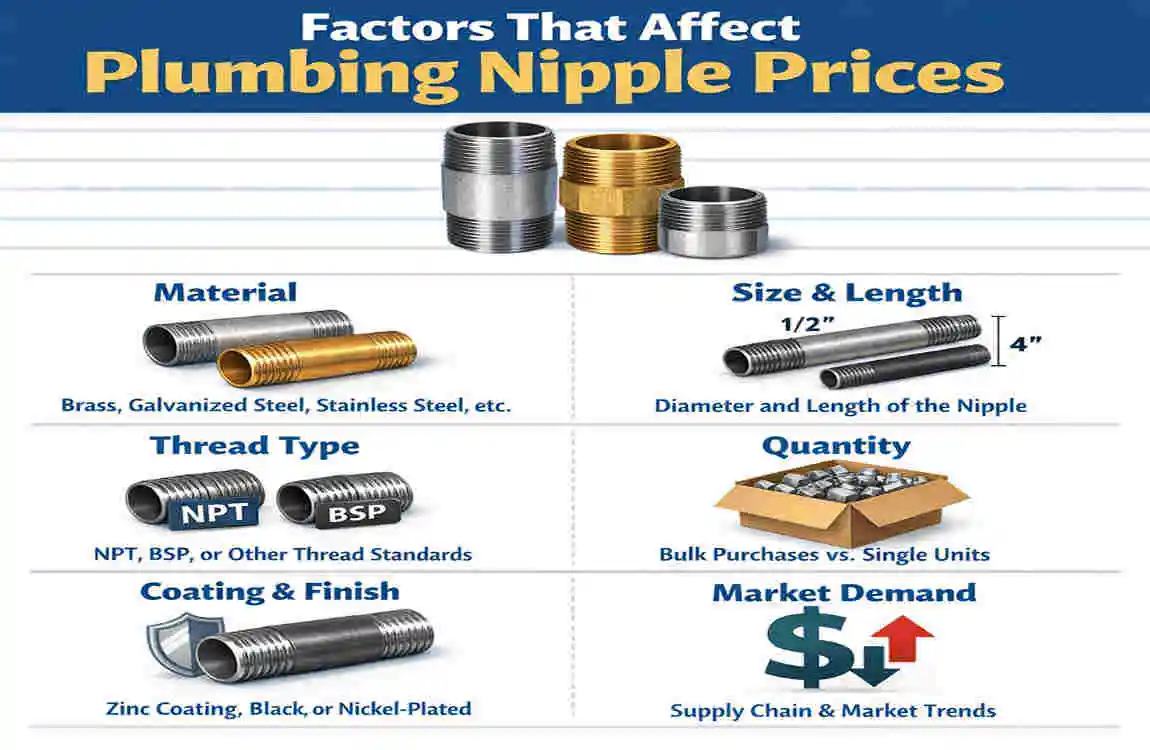
Size and diameter
Bigger fittings need more material, so they usually cost more. Diameter also matters because a wider fitting may need extra production work.
Length
Longer nipples usually cost more than shorter ones. Even a small increase in length can raise the price if the material is expensive.
Material quality
Better material usually means better performance and a higher price. A stronger or more corrosion-resistant nipple often costs more upfront, but it may last longer.
Thread type
Some threads are standard and easy to produce. Others are special, which can raise the price.
If the thread must match a specific fitting exactly, the part may cost more than a basic option.
Brand and manufacturer
Well-known brands sometimes charge more. In return, you may get better consistency, better finish, or stronger quality control.
Local supply and demand
Prices can change depending on where you live. If a certain fitting is hard to find in your area, it may cost more.
Quantity purchased
One fitting may cost more per piece than a box of ten. Bulk buying usually lowers the unit price.
Specialty or custom fittings
Custom pieces, unusual thread types, and specialty materials usually cost the most. These are made for specific jobs and are not always easy to replace.
How to Choose the Right Plumbing Nipple
Check pipe size first.
Before you buy anything, check the pipe size carefully. A wrong size will not fit properly and can cause leaks or wasted money.
Choose the correct material.
Pick the material based on the job. For example, brass works well for many water connections, while stainless steel is better for corrosion resistance.
Match the thread type.
Thread matching is very important. If the threads do not match, the connection may not seal well.
Think about water pressure and temperature.
Some systems handle high pressure or high heat better than others. Make sure the nipple is made for your specific plumbing setup.
Check compatibility with existing pipes.
Do not mix materials carelessly. Some combinations can cause wear or corrosion over time.
Plumbing Nipple Cost: DIY vs. Professional Installation
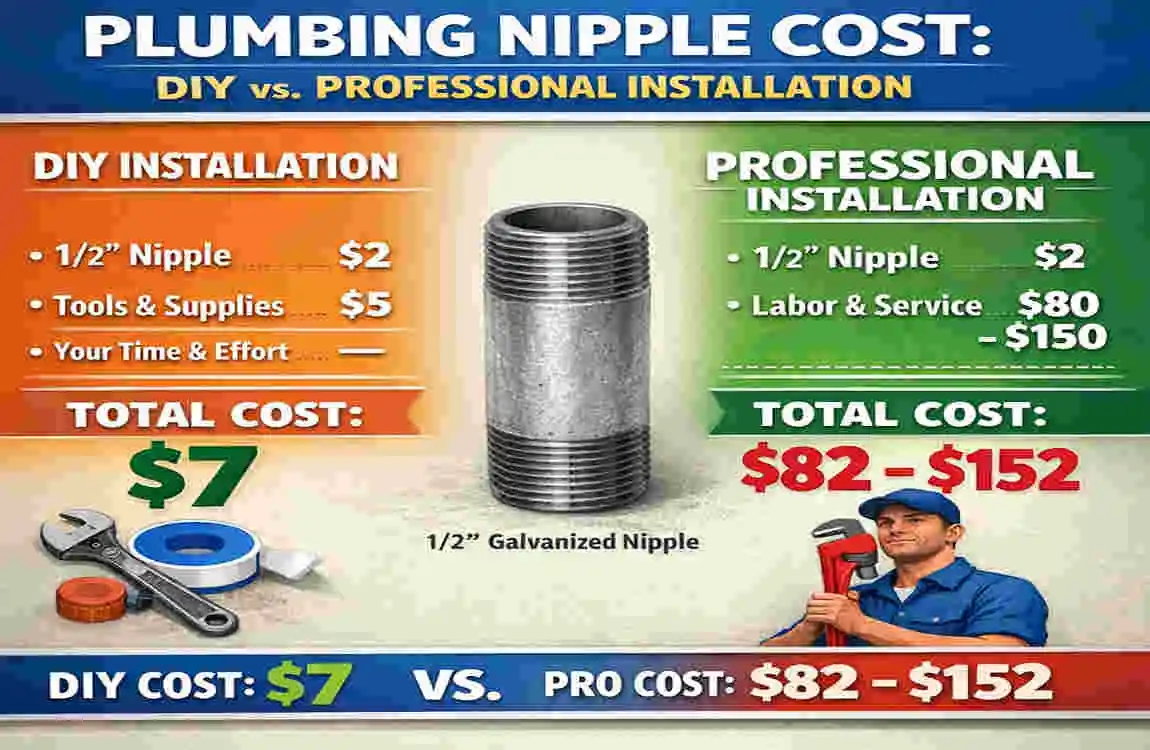
When DIY may work
A simple nipple replacement can sometimes be a DIY project if you already have basic tools and know how to shut off the water safely.
This is often true for small, easy-to-reach fittings.
Basic tools you may need
Common tools include:
- Adjustable wrench
- Pipe wrench
- Thread seal tape
- Plumber’s sealant
- Gloves and safety gear
Labor costs to consider
If you hire a plumber, you may pay for both the part and the labor. The labor can cost much more than the fitting itself, especially if the job is difficult or urgent.
When to call a professional
You should hire a plumber if:
- The fitting is hard to reach
- The line carries gas
- The pipe is old or damaged
- You are not sure about thread matching
- There is a risk of leaks or water damage
Mistakes that can raise repair costs
A small error can become expensive fast. Common mistakes include:
- Using the wrong size
- Overtightening the fitting
- Mixing incompatible materials
- Skipping sealant
- Replacing the part without checking the full line
Plumbing Nipple Cost FAQs
What is a plumbing nipple cost?
What is a plumbing nipple cost? It is the price of a threaded pipe fitting used to connect plumbing parts. The cost depends on material, size, length, and thread type.
How much does a standard plumbing nipple cost?
A standard plumbing nipple usually costs only a few dollars. However, larger or specialty fittings can cost more.
Are brass plumbing nipples more expensive?
Yes, brass plumbing nipples often cost more than basic steel or plastic ones, but they are durable and resist corrosion well.
Does plumbing nipple size affect the price?
Yes, size matters a lot. Larger nipples usually cost more because they use more material.
What is the cheapest plumbing nipple material?
PVC or plastic is often the cheapest material when the system allows it.
How do I know which plumbing nipple size I need?
Check the pipe diameter, length needed, and thread type before buying. If possible, compare the old fitting with the new one.
Can I install a plumbing nipple myself?
Yes, in some cases, especially for a simple repair. But if the fitting is part of a gas line or a difficult plumbing system, it is safer to call a professional.
Does a plumbing nipple include installation costs?
Not always. Some prices cover only the part, while others may include labor. Always ask before you buy or hire someone.
| Plumbing Nipple Type | Typical Cost Range | Common Use |
|---|---|---|
| PVC Nipple | $1–$5 | Water supply lines |
| Brass Nipple | $2–$10 | Durable plumbing connections |
| Stainless Steel Nipple | $3–$15 | Corrosion-resistant systems |
| Galvanized Steel Nipple | $2–$8 | Older or heavy-duty plumbing |
| Copper Nipple | $3–$12 | Hot and cold water lines |
| Black Iron Nipple | $2–$10 | Gas and industrial applications |
| Installation Labor | $50–$150+ | Professional fitting and replacement |
