

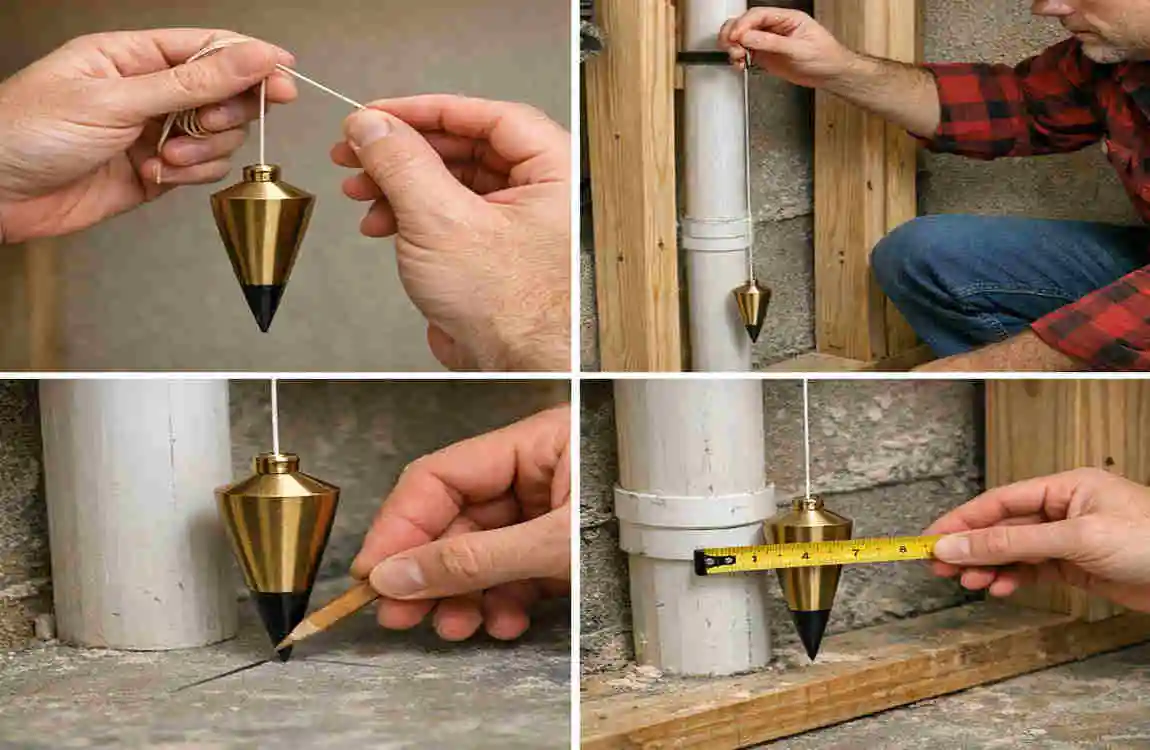
If you want a simple way to check true vertical alignment, learning how to use a plumb bob is very useful. A plumb bob is one of the oldest measuring tools in construction. However, it still works well today because gravity never changes.
In plumbing work, straight vertical lines matter. Pipes, fixtures, and wall layouts all need to line up correctly. If the line is off, you can end up with crooked installation, poor fit, or extra work later.
What Is a Plumb Bob and How Does It Work?
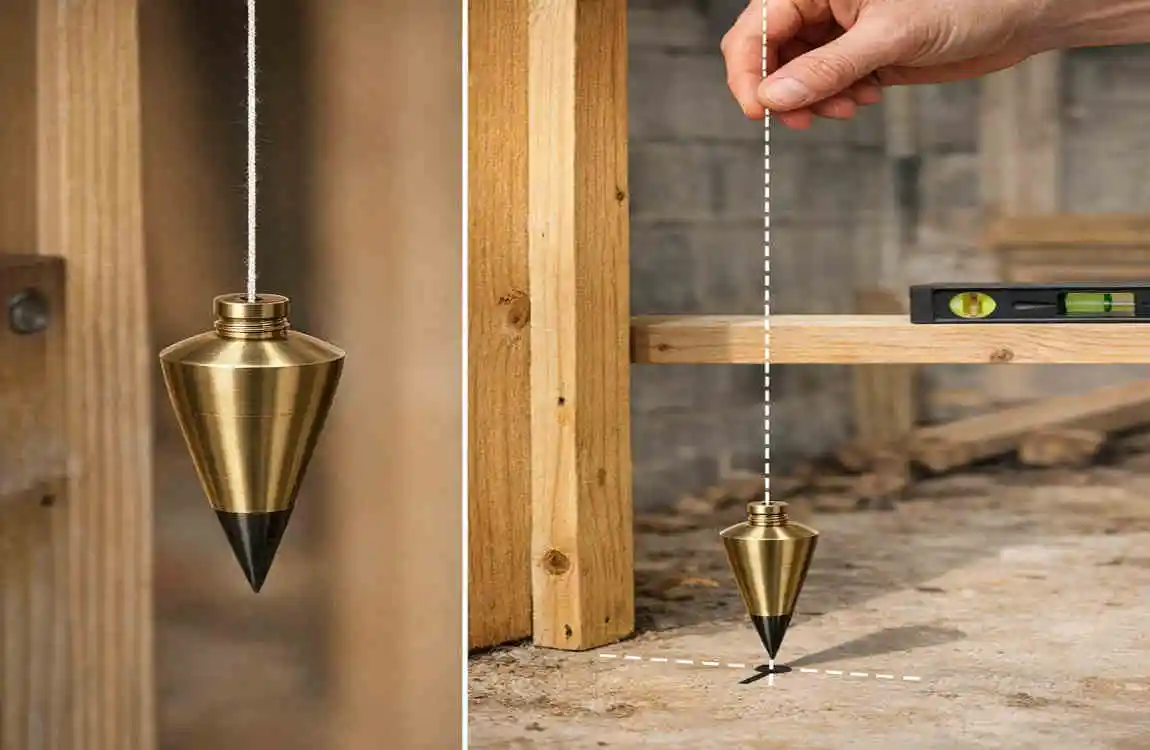
What is a plumb bob?
A plumb bob is a small weight with a pointed tip that hangs from a string. It is used to show a perfectly vertical line.
Most plumb bobs have:
- A weighted body
- A pointed bottom tip
- A strong string or line
- A top point where the string attaches
Some are simple and basic. Others are made for professional use and may be more durable or easier to handle.
How does a plumb bob work?
A plumb bob works because of gravity. When the weight hangs freely, it naturally points straight down.
That means the string gives you a true vertical line. If the line leans, the string is not hanging freely, or the bob is still moving.
This is different from a level, which checks horizontal balance. A level helps you find a straight horizontal line. A plumb bob helps you find true vertical.
When should you use a plumb bob?
Use a plumb bob when you need vertical accuracy. Common uses include:
- Checking if a wall is straight
- Aligning plumbing pipes
- Marking a point from ceiling to floor
- Positioning fixtures
- Checking framing during remodeling
If you work on plumbing or home projects, this tool can save time and reduce mistakes.
Tools and Materials Needed Before You Start
Choosing the right plumb bob
Not every plumb bob is the same. Some are small and lightweight, while others are heavier and more stable.
A heavier bob may stay steadier in some situations. A lighter one may be easier to carry and use for simple home work.
Choose one that feels balanced and easy to control.
Other helpful tools
Before you begin, gather a few simple items:
- Strong string or plumb line
- Measuring tape
- Pencil or marker
- Level
- Ladder, if needed
- Safety gear
You don’t need much equipment, but the right tools make the job easier.
Preparing the work area
A good setup matters.
Make sure the space is clear so the bob can hang freely. Avoid drafts, fans, or movement around the line. Even a little air movement can make the bob swing and affect the reading.
Also check the surface where you plan to make your mark. It should be clean and easy to see.
How to Plumb Bob: Step-by-Step Method
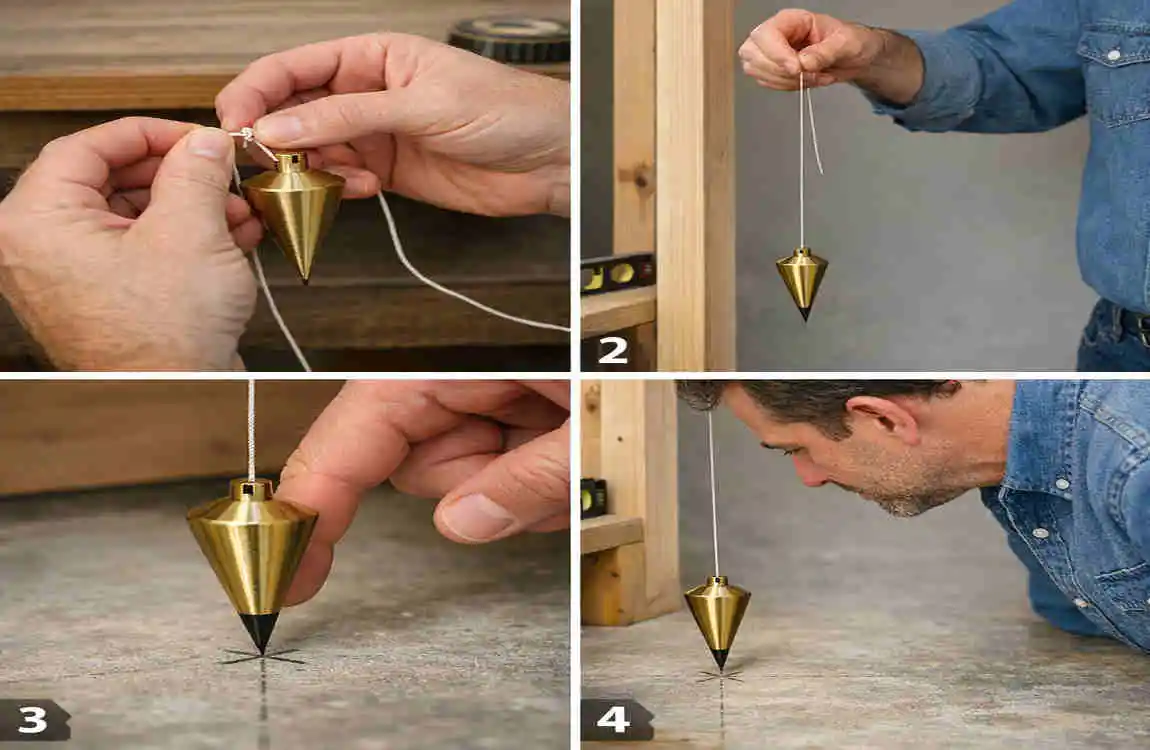
Choose the starting point.
First, decide where you want to begin. This could be a spot on the ceiling, wall, or another reference point.
Mark it clearly so you know exactly where the measurement starts.
Attach the string
Tie the string securely to the plumb bob.
Tie the knot tightly and securely. If the string slips, the measurement will be wrong. Also make sure the string is straight and not twisted.
Position the plumb bob.
Hold or secure the string directly above the reference point.
Let the weight hang freely without touching walls, pipes, or other objects. If it bumps into anything, it will not show the correct vertical line.
Wait for the bob to stop moving.
This part is important. Do not rush it.
Let the bob settle completely before reading it. If it is still swinging, the point below it will not be accurate.
If the room has drafts or vibration, wait longer for the motion to stop.
Mark the true vertical point.
Once the bob is still, look at the tip. That point shows the exact spot below the top reference point.
Make a clear mark on the surface below.
This mark can then guide pipe placement, fixture alignment, or wall layout.
Check the accuracy
For important plumbing work, don’t rely on a single reading.
Check it again if needed. You can also compare the result with a spirit level or laser level. Using more than one tool gives you better confidence in the result.
How to Use a Plumb Bob for Plumbing Projects
Aligning vertical pipes
One of the best uses of a plumb bob in plumbing is checking vertical pipe runs.
If a pipe needs to go straight up or down, the plumb bob helps you see whether it is aligned properly. This is useful for drain lines, plumbing stacks, and supply pipe layout.
A straight pipe usually fits better and looks cleaner too.
Installing wall-mounted plumbing fixtures
If you are placing a sink, faucet, or other wall-mounted fixture, a plumb bob helps you keep everything lined up.
It can show whether the fixture is centered and vertical. That matters because even a small tilt can be noticeable after installation.
Transferring plumbing points
Sometimes you need to move a point from one level to another.
For example, you may want to transfer a mark from a ceiling to the floor. A plumb bob makes that easy because it shows the exact point below the top mark.
This is very helpful during bathroom or kitchen remodeling.
Checking walls before plumbing installation
Walls are not always perfectly straight.
A plumb bob can help you see if a wall leans in or out. That matters because a crooked wall can affect how pipes and fixtures sit against it.
If the wall is out of plumb, you may need to adjust your installation plan.
Common Mistakes, Safety Tips, and Better Accuracy
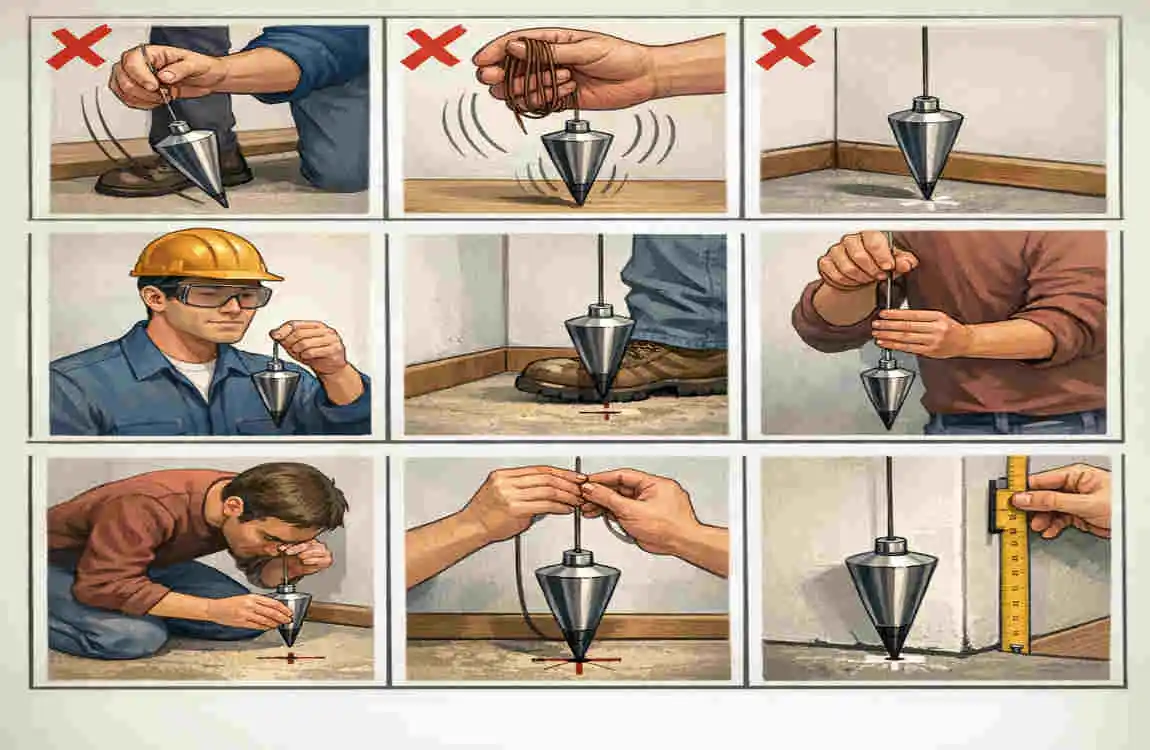
Common plumb bob mistakes
Here are some mistakes to avoid:
- Using a bent or damaged bob
- Holding the string at an angle
- Marking before the bob stops moving
- Working in a drafty area
- Using weak or stretched string
- Measuring from the wrong point
Even small errors can lead to a bad layout.
Safety tips
A plumb bob is simple, but you still need to use care.
- Be careful on ladders
- Keep the weight away from people
- Avoid dropping the tool on fragile surfaces
- Stay alert near electrical hazards
If you are working overhead, take your time and keep the area safe.
Tips for more accurate results
To get better results, try these:
- Use a straight, strong string
- Let the bob settle fully
- Make clear reference marks
- Take more than one reading
- Confirm important measurements with another tool
These small habits can make a big difference.
FAQ: How to Plumb Bob Accurately
What does it mean to plumb something?
To plumb something means to make sure it is perfectly vertical, or straight up and down.
How do you use a plumb bob?
Tie the bob to a strong string, hold it above your reference point, let it hang freely, wait for it to stop moving, and then mark the point directly below it.
Can a plumb bob be used to align pipes?
Yes. It is very useful for checking whether pipes run straight up and down.
How long should you let a plumb bob settle?
Wait until it stops swinging completely. If it is still moving, the reading will not be reliable.
Is a plumb bob more accurate than a level?
They do different jobs. A plumb bob is best for vertical alignment. A level is best for horizontal checks.
Can you use a plumb bob outdoors?
Yes, but wind can make it swing. Use it only when the air is calm enough for an accurate reading.
What type of string is best for a plumb bob?
Use a strong, non-stretching string or plumb line material. That helps keep the reading accurate.
How do you check if a wall is plumb?
Hang the plumb bob near the wall and see whether the wall stays aligned with the vertical line.
| Topic | Short Information |
|---|---|
| What Is a Plumb Bob? | A weighted tool used to create a perfectly vertical reference line. |
| Main Purpose | Helps ensure pipes, walls, posts, and fixtures are installed straight and plumb. |
| Tools Needed | Plumb bob, string or cord, measuring tape, pencil, and a secure fixing point. |
| Attach the String | Secure the cord firmly to the top point where the vertical line should begin. |
| Hang the Bob | Allow the weighted bob to hang freely without touching walls or objects. |
| Let It Settle | Wait until the bob stops swinging for a more accurate reading. |
| Mark the Line | Mark the position directly beneath the string to establish the vertical reference. |
