

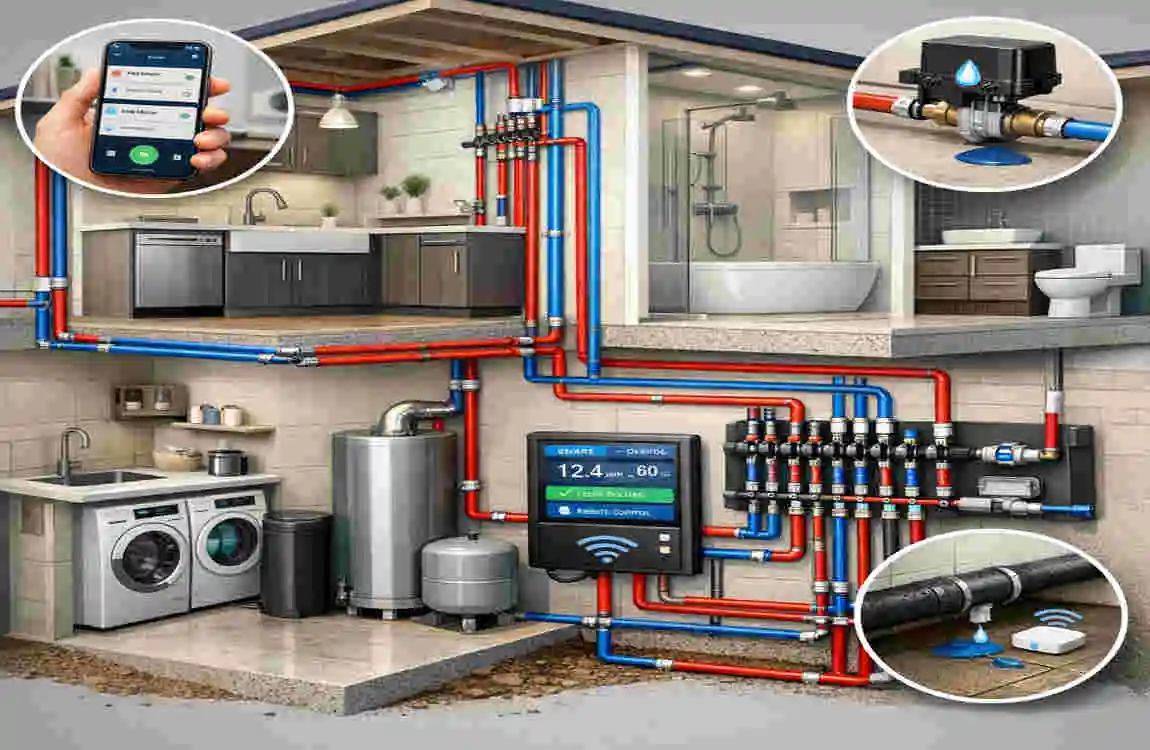
PEX has become a popular choice in modern home plumbing, and it is easy to see why. It is flexible, simpler to route, and often faster to install than older piping options like copper or PVC. For many homeowners and builders, PEX feels like a practical upgrade that makes plumbing easier to plan and manage.
But a good PEX system is not just about using the right pipe. It is about planning the layout, choosing the right pipe sizes, placing the manifold in the right spot, and thinking ahead for maintenance. If you want a system that works well for years, design it carefully before you run any pipes.
Understanding a PEX Plumbing System
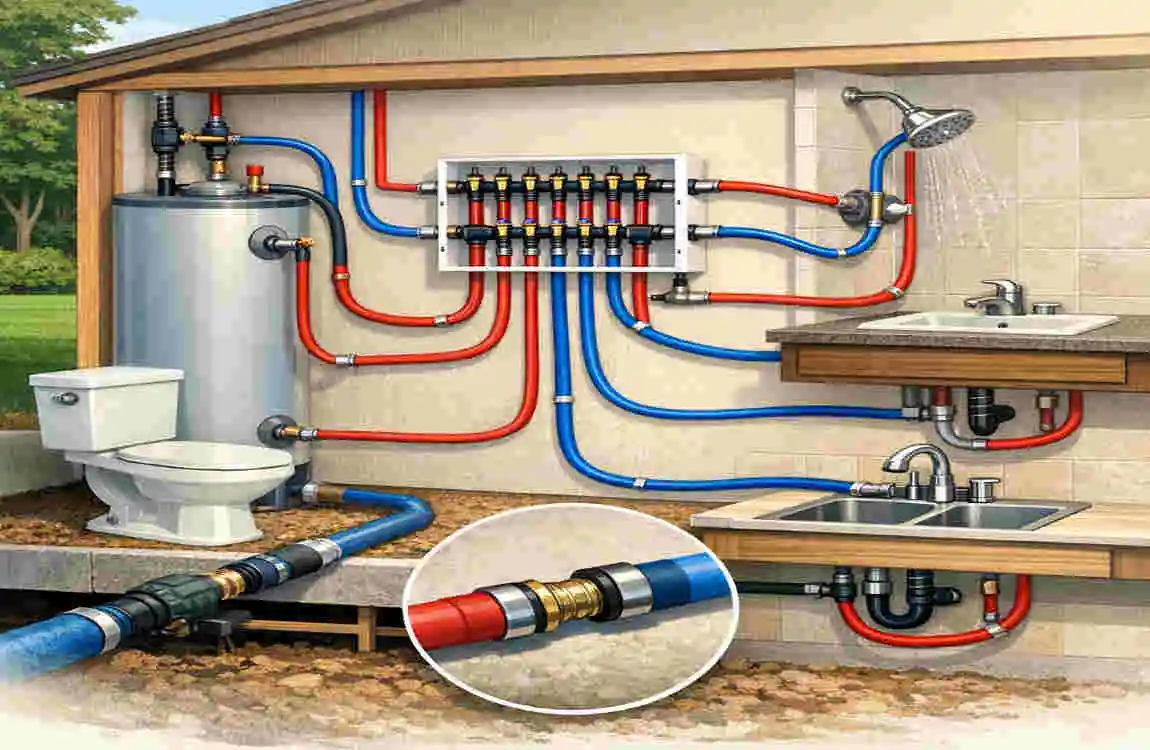
What Is PEX Plumbing?
PEX stands for cross-linked polyethylene. In simple terms, it is a strong, flexible plastic tubing used for water supply lines inside homes.
It is commonly used for both hot and cold water distribution. You can run it through walls, floors, ceilings, and crawl spaces more easily than many rigid pipe materials.
PEX comes in different types, and you can use each type in residential plumbing depending on the system and local code rules. The key point is that PEX gives you flexibility without giving up everyday reliability.
Main Components of a PEX System
A PEX plumbing system usually includes:
- PEX tubing
- Manifolds
- Fittings
- Shutoff valves
- Hot and cold supply lines
- Pressure control or support parts
Each part has a job. The tubing carries water. The manifold divides water into separate lines. Shutoff valves make repairs easier. Together, these parts create a system that is organized and easier to maintain.
PEX vs. Traditional Plumbing Materials
Compared with copper, PEX is usually easier to install and more flexible around tight spaces. Compared with CPVC, it often handles bends better and may reduce the need for extra fittings.
That said, no material is perfect for every project. In some situations, another pipe material may still be the better choice, especially if local codes, water conditions, or project needs point that way.
How to Design a PEX Plumbing System
Start With a Home Plumbing Plan
Before you install anything, start with a simple floor plan. Mark every place that needs water, such as:
- Bathrooms
- Kitchen
- Laundry room
- Outdoor faucets
- Utility sinks
- Appliance connections
Then identify the main water entry point and the water heater location. This helps you see how water will move through the house.
Plan the shortest practical routes for supply lines. Shorter routes usually mean less waste, better pressure, and cleaner installation.
Determine Hot and Cold Water Needs
Check every fixture for hot- or cold-water use. Some need only cold water, while others need both hot and cold.
Separating these routes early makes the system easier to understand and maintain. This also helps you avoid crossed lines, confusion, and extra work later.
If you have a busy household, think about simultaneous use. A home with multiple bathrooms may need more planning to keep water pressure steady when several fixtures run at once.
Choose the Right PEX Pipe Size
Pipe size matters more than many people think. If the pipe is too small, pressure can drop. If it is too large, you may waste material and increase cost.
Common residential PEX sizes are usually chosen based on fixture demand and pipe length. Main lines often need to be larger than branch lines.
A simple rule: match the pipe size to the job. Do not guess. Think about how many fixtures will use that line and how much flow is needed.
Plan the Manifold Location
A manifold is the control center of many PEX systems. It splits the water into separate lines that run to different fixtures.
A good manifold location should be easy to reach. That makes shutoffs, inspections, and future repairs much easier.
Label each connection clearly. When you know which line goes where, troubleshooting becomes much simpler. This is one of the smartest steps when learning how to design a PEX plumbing system for real-world use.
Design the Pipe Routing
Keep the pipe routes organized. Avoid extra bends and unnecessary turns. Cleaner routing makes the system easier to install and service.
PEX can pass through walls, ceilings, floors, and joists, but it should still be protected at structural openings. It also needs room to move slightly as temperatures change.
Good routing is not just about appearance. It affects performance, service access, and long-term reliability.
Designing an Efficient Hot and Cold Water Layout
Cold Water Distribution
The cold-water line usually starts at the main supply and moves toward the manifold. From there, separate lines can go to each fixture.
Try to keep runs practical and direct. The goal is to keep pressure stable and reduce wasted space in the layout.
Hot Water Distribution
Hot water starts at the water heater and moves through the hot-water distribution system. The shorter and more direct the route, the faster hot water reaches the fixture.
Insulating hot-water lines can help reduce heat loss. This is especially useful when pipes run through cool areas like basements or crawl spaces.
Home-Run vs. Trunk-and-Branch Layout
These are the two most common PEX layout styles.
Layout Type How It Works Pros Cons
Home-run Each fixture has its own line back to the manifold Easy shutoff, better control, simpler repairs Uses more pipe.
Trunk-and-branch One main line feeds smaller branch lines Often uses less pipe, lower material cost Can be harder to isolate problems.
If you want more control and easier maintenance, home-run may be better. If you want a simpler and more cost-conscious layout, trunk-and-branch may fit better.
Designing for Faster Hot Water
Nobody likes waiting forever for hot water. To help reduce delay, keep the path from the water heater to the fixture as short as possible.
You can also think about recirculation systems in larger homes. These can improve comfort, but they also add cost and complexity. The best choice depends on how your household uses water each day.
Smart PEX Plumbing Design for Modern Homes
Integrating PEX With Smart Water Technology
Modern homes can do more than move water. They can also monitor it.
Smart leak detectors, automatic shutoff systems, and water-use monitors can all work with a well-designed PEX layout. These tools help you catch problems early and limit water damage.
Pressure monitoring can also be useful. It helps you spot changes that may point to a leak or system problem.
Designing for Future Maintenance
A smart system is one you can actually maintain. Keep important parts accessible. Label your lines. Add shutoff points where they will help later.
If you ever need to repair, remodel, or replace a fixture, you will be glad the system was planned with service in mind.
PEX Design for Water Efficiency
Efficient design helps save water and time. Long, oversized lines can waste both. Poor planning can also force people to wait longer for hot water.
Choose fixtures that use water wisely, and think about how your family actually uses the home. Good design should support daily life, not fight against it.
Planning for Future Expansion
If you may add a bathroom, laundry area, or outdoor fixture later, plan now. Leaving room for future connections can save major demolition later.
This is one of the best reasons to spend extra time upfront on designing a PEX plumbing system properly.
PEX Installation, Safety, and Common Mistakes
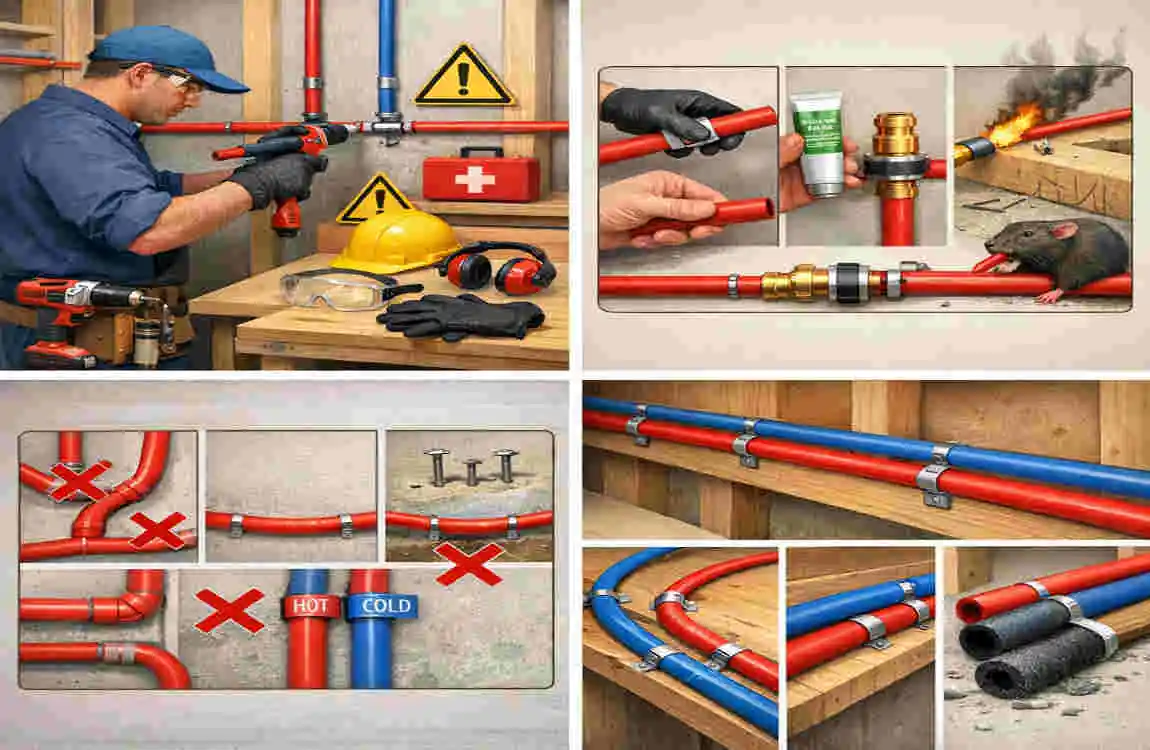
Preparing for Installation
Before installation, make sure you have the correct pipe, fittings, and tools for the system you are using. Check local plumbing rules too, since code requirements can vary.
Inspect the tubing before use. Damaged pipe should not be installed.
Connecting PEX Tubing
You can join PEX using several approved methods. The important thing is to use compatible fittings and the right tools.
Once everything is connected, pressure test the system before closing up walls or ceilings. This step can save a lot of trouble later.
Protecting PEX Pipes
Protect PEX from sharp edges, nails, screws, and excessive heat. Use supports where needed, and insulate areas that may lose heat or face cold conditions.
A little protection during installation can prevent big problems later.
Common Mistakes to Avoid
Here are some of the biggest design mistakes:
- Choosing the wrong pipe size
- Making runs longer than needed
- Placing the manifold in a hard-to-reach spot
- Using too many fittings
- Skipping pressure testing
- Ignoring local codes
These mistakes can affect pressure, cost, and long-term reliability.
PEX Plumbing Cost, Maintenance, and Long-Term Performance
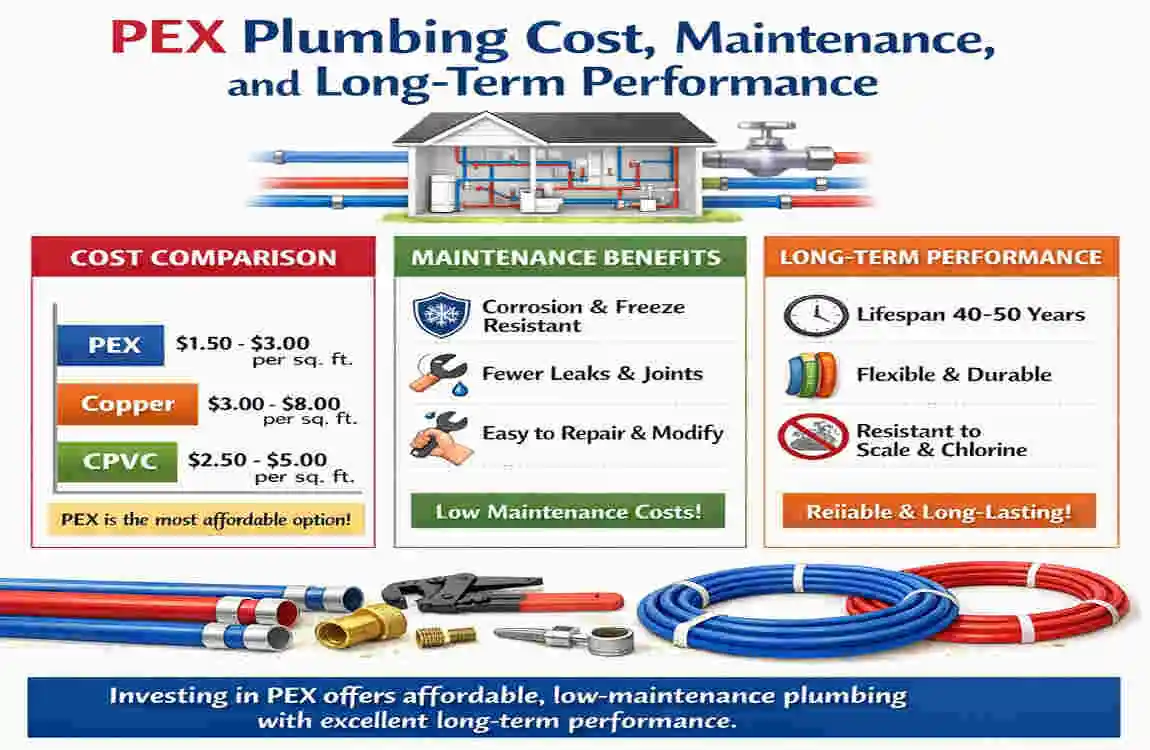
What Affects PEX Cost?
PEX cost depends on home size, fixture count, pipe size, layout type, and labor. New construction may be simpler than a remodel because the pipe routes are easier to plan.
A complex layout with many fixtures and long runs will usually cost more.
Maintenance Tips
PEX doesn’t need constant care, but it benefits from occasional checks. Look at accessible connections, exposed tubing, and the manifold area.
If you notice leaks, pressure changes, or damaged pipe, handle it quickly. Small problems are easier to fix than big ones.
How Long Can PEX Last?
A properly designed and installed PEX system can last a long time. Water quality, installation quality, pressure, and temperature all affect service life.
Using approved materials and following code rules matters.
When to Replace or Upgrade
You may need to upgrade if you see repeated leaks, damaged tubing, outdated parts, or if you are doing a major remodel. This is also a good time to add smart leak protection.
FAQ About How to Design a PEX Plumbing System
Is PEX good for a whole-house plumbing system?
Yes. When designed and installed correctly, PEX can work well for whole-house water distribution.
How do you design a PEX plumbing system?
Start with a floor plan, mark all fixtures, choose pipe sizes, place the manifold, and plan clean, direct pipe routes.
What size PEX should be used for a house?
It depends on fixture demand, pipe length, pressure needs, and local plumbing rules.
Is a PEX manifold better than a traditional plumbing layout?
A manifold gives more control and easier shutoff access. A traditional layout may use less pipe in some homes. The best choice depends on your needs.
Should hot-water PEX lines be insulated?
Yes, in many cases. Insulation helps reduce heat loss and can improve hot-water performance.
Can smart leak detection be added to a PEX system?
Yes, and it can be a very smart upgrade for modern homes.
| Feature | Information |
|---|---|
| PEX Plumbing | Flexible cross-linked polyethylene piping system |
| Main Use | Hot and cold water distribution |
| System Design | Manifold or trunk-and-branch layout |
| Pipe Flexibility | Easily bends around corners with fewer fittings |
| Water Flow | Designed for efficient and consistent water delivery |
| Installation | Faster and simpler than many rigid-pipe systems |
| Manifold System | Allows individual water lines to run to fixtures |
| Leak Reduction | Fewer joints can reduce potential leak points |
| Noise Control | Flexible pipes can help reduce water-flow noise |
