

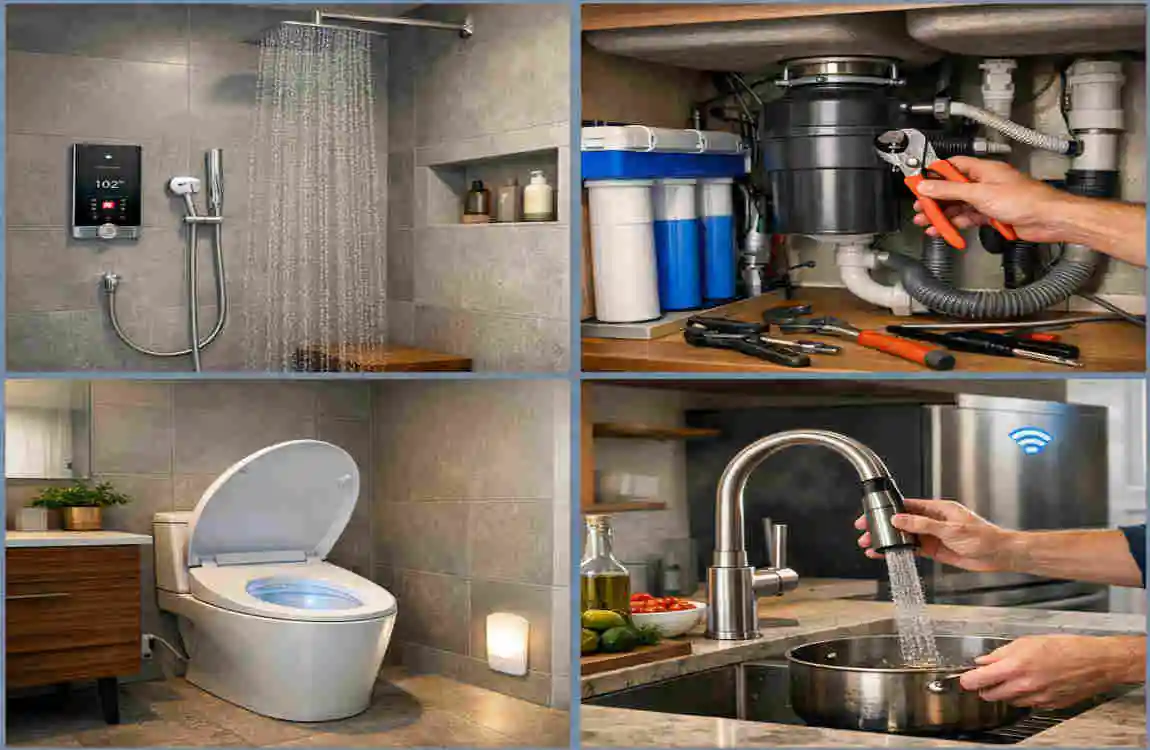
Remodeling plumbing can feel like a big job, but it becomes much easier when you plan it the right way. A good plumbing remodel is not just about replacing old pipes. It is about making your home work better, using water more efficiently, and staying easier to maintain over time.
If you are trying to learn how to remodel plumbing, the first thing to know is this: planning matters more than rushing. When you understand the existing system, your water flow needs, your fixtures, and your budget, you can avoid many common mistakes.
Smart Plumbing Remodeling: Where to Start
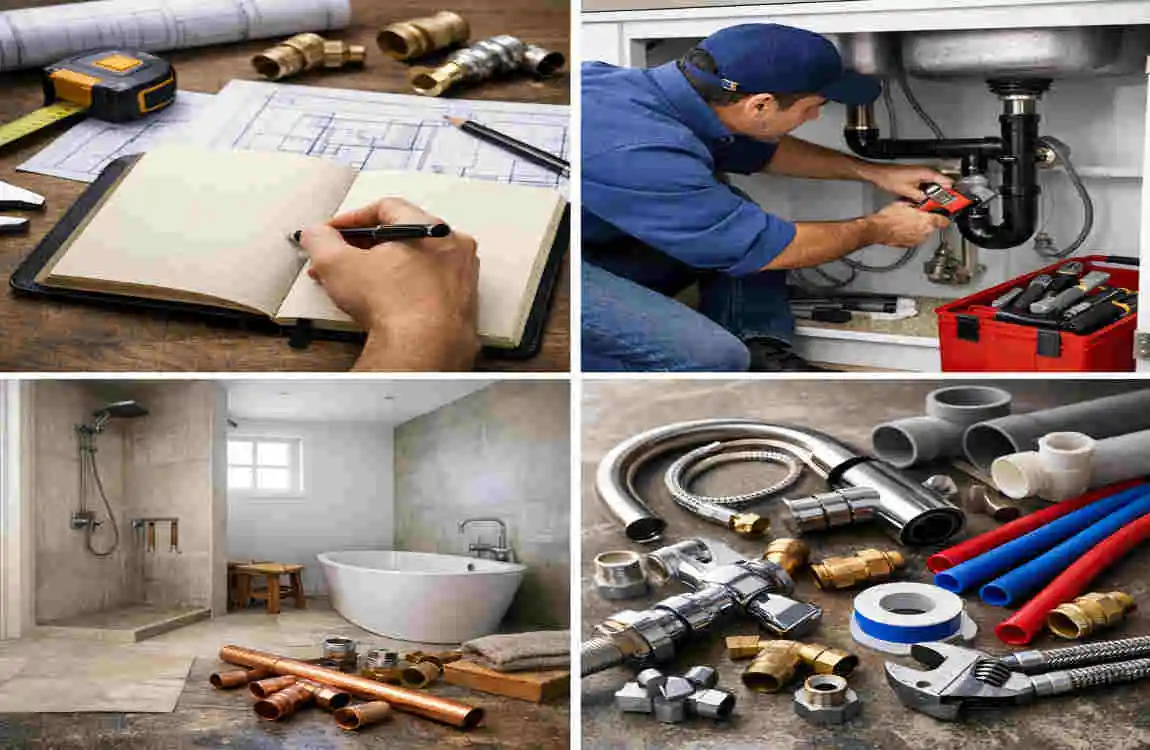
What plumbing remodeling really means
When people ask how to remodel plumbing, they usually mean more than fixing one leak or replacing one faucet. They want to update parts of the plumbing system so the home works better overall.
That can include new pipes, better shut-off valves, updated bathroom and kitchen connections, water-saving fixtures, and improved drainage. In some homes, the work is small. In others, it may involve opening walls, changing layouts, or replacing older materials.
Why planning matters
Plumbing is hidden behind walls, under floors, and inside cabinets. That means problems can grow quietly if you don’t plan well.
A good plan helps you:
- Avoid unnecessary demolition
- Choose the right pipe materials
- Improve water pressure and flow
- Prevent future leaks
- Stay within budget
The better the plan, the smoother the remodel usually goes.
Common reasons homeowners remodel plumbing
Homeowners remodel plumbing for many reasons. Some do it because the system is old. Others want better water pressure, a new kitchen layout, or more modern fixtures.
You may also need a plumbing remodel if your home has frequent leaks, corroded pipes, slow drains, or outdated materials that are no longer reliable.
Start with a simple checklist.
Before any work begins, make a checklist. This keeps the project organized and helps you focus on what matters most.
A basic plumbing remodel checklist may include:
- Inspect current pipes and fixtures
- Identify problem areas
- Decide what must be replaced
- Set a budget
- Plan the work timeline
- Choose materials and fixtures
- Check permit requirements
Set a realistic budget and timeline.
Plumbing projects can move quickly or take time depending on the size of the job. A small fixture upgrade may take a day or two. A larger remodel with pipe replacement can take much longer.
Budget for more than just the pipes and fixtures. You may also need to pay for labor, permits, wall repair, floor repair, and unexpected issues.
How to Inspect Your Existing Plumbing System
Check water supply lines and drainage pipes.
Before you remodel, look at how water enters and leaves your home. Supply lines bring in clean water, while drain lines carry wastewater out.
If either part is damaged, worn out, or poorly arranged, address it first.
Look for leaks, corrosion, and weak water pressure.
A system often gives warning signs before it fails. Watch for dripping pipes, stains, rust, low pressure, or odd noises when water runs.
These signs may point to hidden wear inside the plumbing.
Inspect the main fixtures.
Take a close look at the fixtures you use every day. Check:
- Faucets
- Toilets
- Sinks
- Showers
- Water heaters
If one part has repeated problems, it may be tied to a bigger plumbing issue.
Repair or replace?
This is one of the biggest planning questions. A repair can fix a small, local problem. Replacement makes more sense when the pipe or fixture is old, damaged, or near the end of its useful life.
If you keep fixing the same area again and again, replacement may be the smarter long-term choice.
Watch for outdated plumbing materials.
Older homes may still have outdated pipe materials that wear down over time. Some older systems are more likely to corrode, clog, or develop leaks.
If your home has older plumbing, a remodel is a good time to check whether those materials should be upgraded.
When to get a professional inspection
A professional plumber can help if you are unsure what you are seeing or if the plumbing is hard to reach. That can save time and help you avoid costly mistakes.
A pro inspection is especially useful if:
- The home is older
- Leaks keep coming back
- Water pressure is poor
- Drainage is slow
- You plan a major remodel
How to Remodel Plumbing for Better Water Flow
Plan pipe sizes the right way.
Water flow depends a lot on pipe size. If pipes are too small for the demand, pressure can suffer. If they are too large for the system, you may waste material and space.
The goal is to match pipe size to the number of fixtures and the way the home uses water.
Improve water pressure where needed
Low pressure can come from mineral buildup, old pipes, leaks, or poor layout. A remodel is a good time to fix that.
Sometimes the answer is replacing old lines. Other times, the problem is a bad connection or a narrow section of pipe.
Replace old or damaged supply pipes.
If supply pipes are corroded or weak, replacing them can make a big difference. New lines can improve flow and reduce the risk of leaks.
This is especially important in older homes where hidden wear is common.
Upgrade shut-off valves
Good shut-off valves make maintenance easier. If a fixture leaks later, you can turn off water quickly without shutting down the whole home.
That small upgrade can save a lot of stress later.
Separate plumbing zones when possible
If you’re redesigning the system, it can help to separate kitchen and bathroom plumbing zones. This makes the system easier to manage and can improve performance.
It also makes future repairs simpler because you can service one part of the home without disturbing everything else.
Reduce long pipe runs and extra bends.
Water moves better through simpler routes. Long pipe runs and too many bends can slow flow or create pressure loss.
When remodeling, try to keep pipe paths efficient and direct.
Plan drainage and venting correctly
Drainage is just as important as supply lines. If drains are not planned well, you can end up with slow flow, clogs, or unpleasant odors.
Venting helps the system drain properly by balancing air pressure. Many homeowners don’t think about it, but it matters.
Simple ways to improve efficiency
Here are a few easy ideas to keep in mind:
- Use direct pipe routes
- Replace worn supply lines
- Add proper shut-off valves
- Avoid unnecessary pipe turns
- Plan venting with drainage in mind
Smart Plumbing Upgrades for Kitchens and Bathrooms
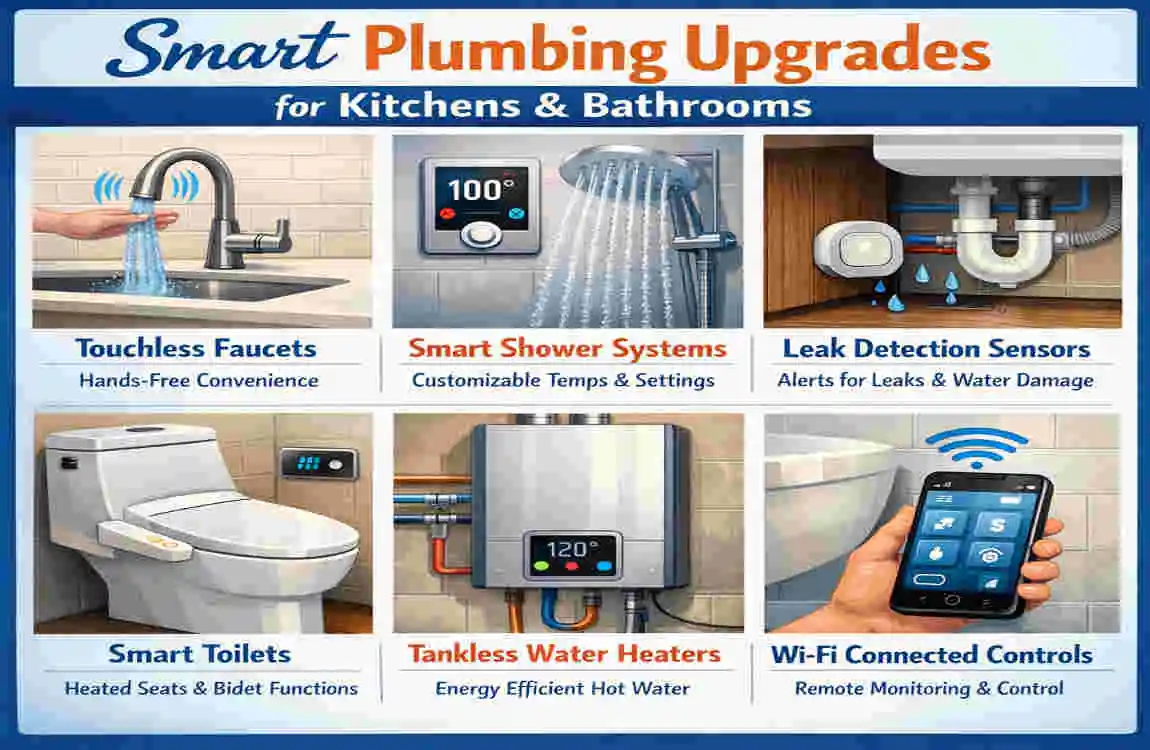
Modernize kitchen sink plumbing.
Kitchen plumbing gets used every day. If the sink plumbing is old or hard to reach, that can become frustrating fast.
During a remodel, you can improve how the sink connects to the drain, add easier shut-off access, and make space for new appliances.
Upgrade bathroom sink and shower connections.
Bathroom plumbing should be reliable and easy to clean around. A remodel is a good time to update supply lines, drains, and shower connections.
This can also help if the bathroom layout is changing or if you want a more modern look.
Add water-saving fixtures
Water-saving faucets and showerheads can lower water use without making the bathroom less comfortable.
These fixtures are often a smart upgrade because they help reduce utility use over time.
Improve toilet plumbing and drainage.
Toilets should flush smoothly and drain properly. If the toilet keeps clogging or rocking, the plumbing underneath may need attention.
A remodel is a good time to correct those issues before they become bigger problems.
Plan for dishwashers and washing machines
Appliances need the right water supply, drain lines, and shut-off access. If you are remodeling the kitchen, laundry room, or utility area, plan for those connections early.
That makes installation easier later.
Add convenient shut-off valves.
Keep shut-off valves easy to reach. If they are hidden in a bad spot, even a small leak can become stressful.
Adding better access during a remodel is a simple but smart move.
Prepare for future fixtures.
Think ahead. If you may add a new sink, fridge line, bidet, or washing machine later, it helps to prepare the plumbing now.
That can save you from opening walls again later.
Improve access to pipes and connections.
One of the best remodel choices is better access. When pipes and valves are easier to reach, future repairs are faster and cheaper.
That does not just help plumbers. It helps you too.
Choosing Plumbing Materials and Fixtures
Common pipe materials
Several plumbing materials are used in remodels. The right choice depends on the location, the water system, and the type of work.
MaterialCommon UseMain Benefit
Copper Supply lines Durable and long-lasting
PEX Supply lines Flexible and easier to install
PVC Drain lines Lightweight and affordable
CPVC Hot and cold water lines Good for many residential uses
How to choose the right pipe material
No single material is best for every home. Some are better for supply lines. Others are better for drains.
Your choice should depend on:
- Where the pipe will go
- Local plumbing rules
- Water temperature needs
- Budget
- Ease of installation
Pick durable fixtures
Fixtures matter more than many people think. A cheap faucet may wear out fast, while a better one can last much longer.
Look for products that feel sturdy, work smoothly, and are easy to maintain.
Water-efficient fixtures
Water-efficient fixtures can reduce waste and lower monthly bills. That includes faucets, showerheads, toilets, and appliances.
They also support a more modern and responsible home design.
Think about maintenance
When you choose materials, ask yourself how easy they will be to maintain later. Some systems are easy to repair. Others may need more effort.
A good remodel should make future care simpler, not harder.
Budget impact of fixtures
Fixture choices can significantly affect your budget. A basic setup may keep costs low. Designer finishes and high-end hardware will raise the total.
Try to balance appearance, durability, and price.
Plumbing Remodeling Costs, Mistakes, and Maintenance
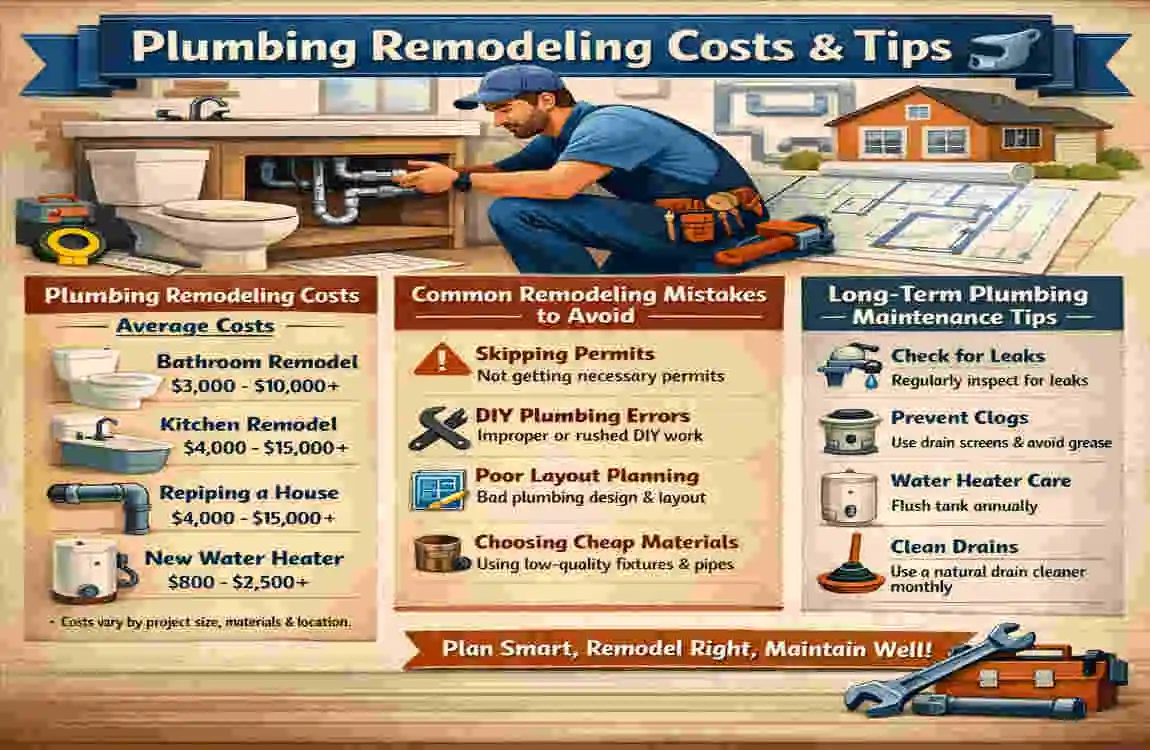
What affects the cost
Plumbing remodel costs depend on many things. The biggest ones are usually labor, materials, fixture quality, permit fees, and how hard the plumbing is to reach.
If you need to open walls or floors, the project may cost more.
Common cost factors
- Project size
- Pipe replacement
- Fixture upgrades
- Labor rates
- Permits
- Wall and floor repairs
- Unexpected damage
Build a practical budget.
A good budget should include the main work and a little extra for surprises. Older homes especially can hide problems that only appear once the work begins.
That buffer can help you stay calm if the project changes.
Mistakes homeowners should avoid
A plumbing remodel can go wrong if you move too fast or guess your way through it. Common mistakes include:
- Choosing the wrong materials
- Skipping pipe inspections
- Ignoring poor drainage
- Forgetting shut-off access
- Underestimating labor
- Not checking permits
Why DIY plumbing can be risky
A handy homeowner can sometimes handle small plumbing tasks. But larger work can get complicated quickly.
If plumbing is installed incorrectly, it can cause leaks, pressure issues, or drain problems later. That is why bigger projects often need a licensed professional.
Protect walls and floors during work.
Remodeling often involves opening access points. Protect nearby surfaces to avoid extra damage.
A little planning during demolition can save repair costs later.
Test before closing things up
Before you seal walls or finish surfaces, test the system carefully. Check for leaks, flow, drainage, and proper shut-off function.
It is much easier to fix a problem now than after the walls are finished.
Create a simple maintenance plan.
Once the remodel is done, keep the system in good shape. A few simple habits go a long way.
- Check for leaks often
- Watch water pressure
- Clean drains regularly
- Test shut-off valves
- Inspect visible pipes
- Fix small issues early
FAQ: How to Remodel Plumbing
How much does it cost to remodel plumbing?
Cost depends on the project size, how much pipe replacement is needed, the fixtures you choose, labor rates, permits, and how easy the plumbing is to access.
How do I know if my plumbing needs remodeling?
Look for frequent leaks, rust, weak water pressure, slow drains, old materials, or fixtures that keep failing.
Can I remodel plumbing without removing walls?
Sometimes yes. If the pipes are accessible through cabinets, crawl spaces, or other openings, you can do some work without major demolition. Bigger changes may still require wall or floor access.
What plumbing pipes are best for remodeling?
That depends on the job. Copper, PEX, and PVC are all common choices. The best one depends on where the pipe goes and what your home needs.
Should I replace old pipes during a home remodel?
If the pipes are aging, damaged, or difficult to maintain, replacement often makes sense. It can be better than repeatedly repairing the same problems.
How can I make remodeled plumbing more water-efficient?
Use low-flow fixtures, stop leaks, choose efficient appliances, and design the system to waste less water.
| Tip | Key Information |
|---|---|
| Inspect Old Pipes | Check for leaks, corrosion, and weak joints before remodeling. |
| Upgrade to PEX | PEX piping is flexible, easy to install, and suitable for many home plumbing projects. |
| Improve Water Pressure | Check pipe size, valves, and fixtures if water flow is weak. |
| Install Water-Saving Fixtures | Low-flow faucets, showerheads, and toilets can reduce water use. |
| Add Shut-Off Valves | Place accessible valves near sinks, toilets, and major appliances. |
| Plan Drainage Carefully | Ensure proper slopes and drain locations to prevent standing water. |
| Upgrade the Water Heater | Choose an efficient system that matches your household’s hot-water needs. |
| Prevent Future Leaks | Use quality fittings and inspect connections before walls are closed. |
