

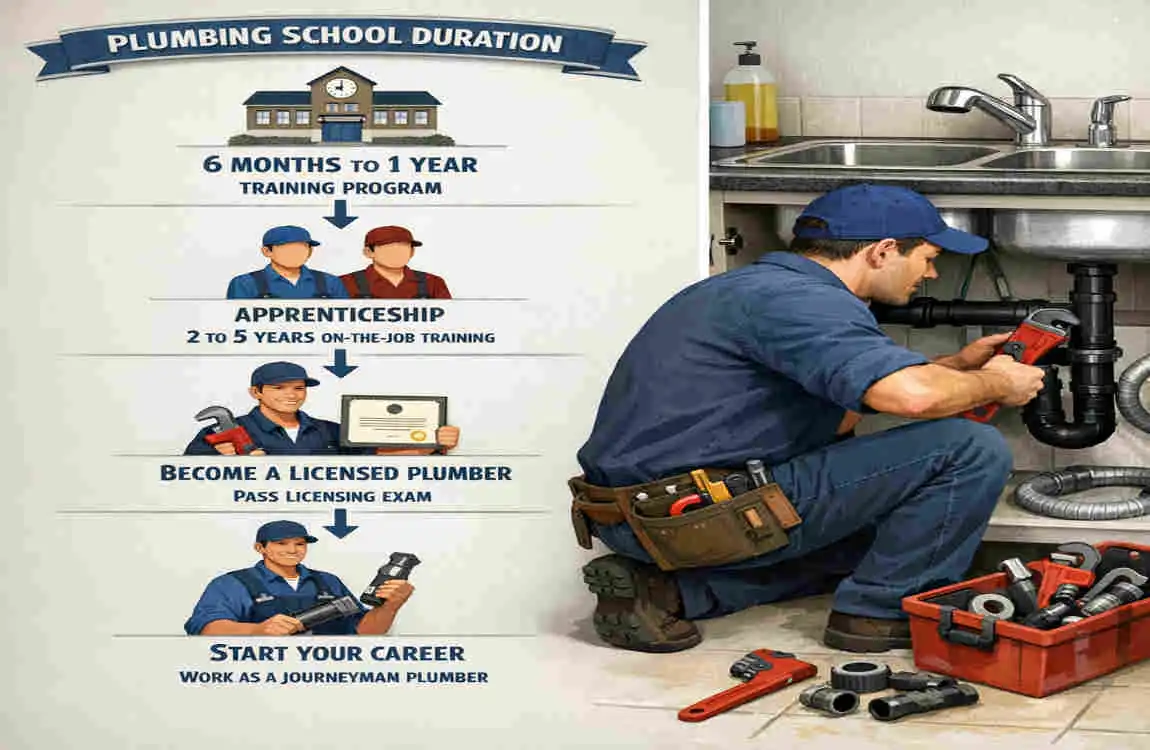
If you are thinking about becoming a plumber, one of the first questions you probably ask is: how long is plumber school? That is a smart question, because the answer helps you plan your time, money, and career path.
The short answer: plumber school can take anywhere from a few months to two years, depending on the program you choose. But becoming a fully licensed plumber usually takes longer, because most people also complete an apprenticeship, gain work experience, and meet local licensing rules.
Plumbing School and Training Options
What Is Plumbing School?
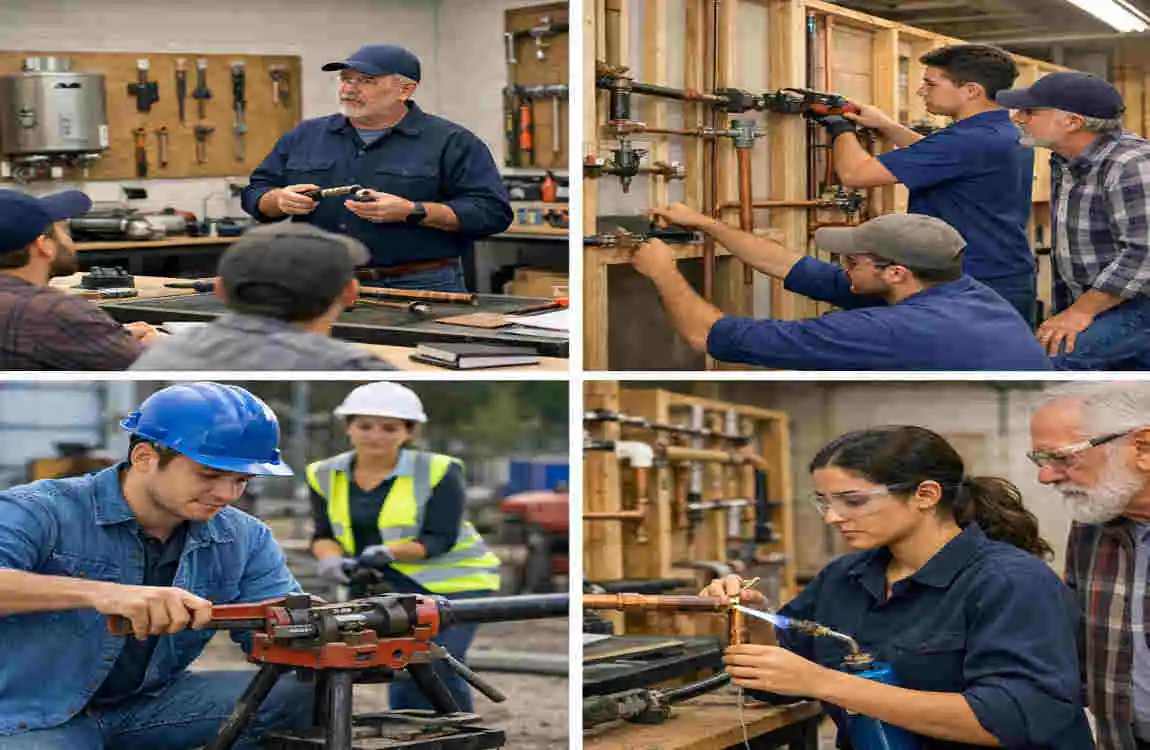
Plumbing school is where you learn the basics of the trade. It usually combines classroom lessons with hands-on practice.
You may study pipe systems, drainage, safety rules, plumbing codes, and how to use tools correctly. Some programs also include workshop training so you can practice on real equipment.
How Long Does Plumbing School Usually Take?
The length depends on the program type.
A certificate program may take only a few months. A diploma or vocational program may take about one year. A more detailed associate-level program can take two years or more.
If you study full-time, you may finish faster. If you study part-time while working, it will usually take longer.
Plumbing School vs. Plumbing Apprenticeship
These two are not the same.
Plumbing school teaches the theory and the basics.
Apprenticeship gives you supervised field experience with a licensed plumber.
In many places, you need both. School helps you understand the work. Apprenticeship helps you do the work in real settings.
What Do You Learn in Plumbing School?
Most programs cover the main skills you need to start in the trade.
Common topics include:
- Plumbing tools and equipment
- Pipe installation and repair
- Drainage and water systems
- Plumbing codes and safety
- Fixtures, valves, and fittings
- Basic blueprint reading
These subjects give you the foundation you need before moving into real job sites.
How Long Does It Take to Become a Plumber?
Starting as a Plumbing Apprentice
Many people start as apprentices after school, or even without formal schooling, depending on local rules. An apprenticeship usually lasts several years.
During this time, you work under supervision and learn from experienced plumbers. In many cases, you also complete classroom hours.
Becoming a Journeyman Plumber
A journeyman plumber has completed the required training and passed the required exam in their area.
This step often comes after years of apprenticeship and work experience. The exact timeline depends on where you live, because every location sets its own rules.
Becoming a Master Plumber
A master plumber is a more advanced level. This usually takes even more experience, extra testing, and sometimes additional licensing.
This level can open more job options and sometimes allows you to supervise others or run your own business.
Can You Become a Plumber Without Plumbing School?
In some places, yes, but it depends on your local rules.
Some people start with employer-based training or go straight into an apprenticeship. Even then, you usually still need to meet local licensing requirements and gain hands-on experience.
What Affects Plumbing School Length?
Program Type
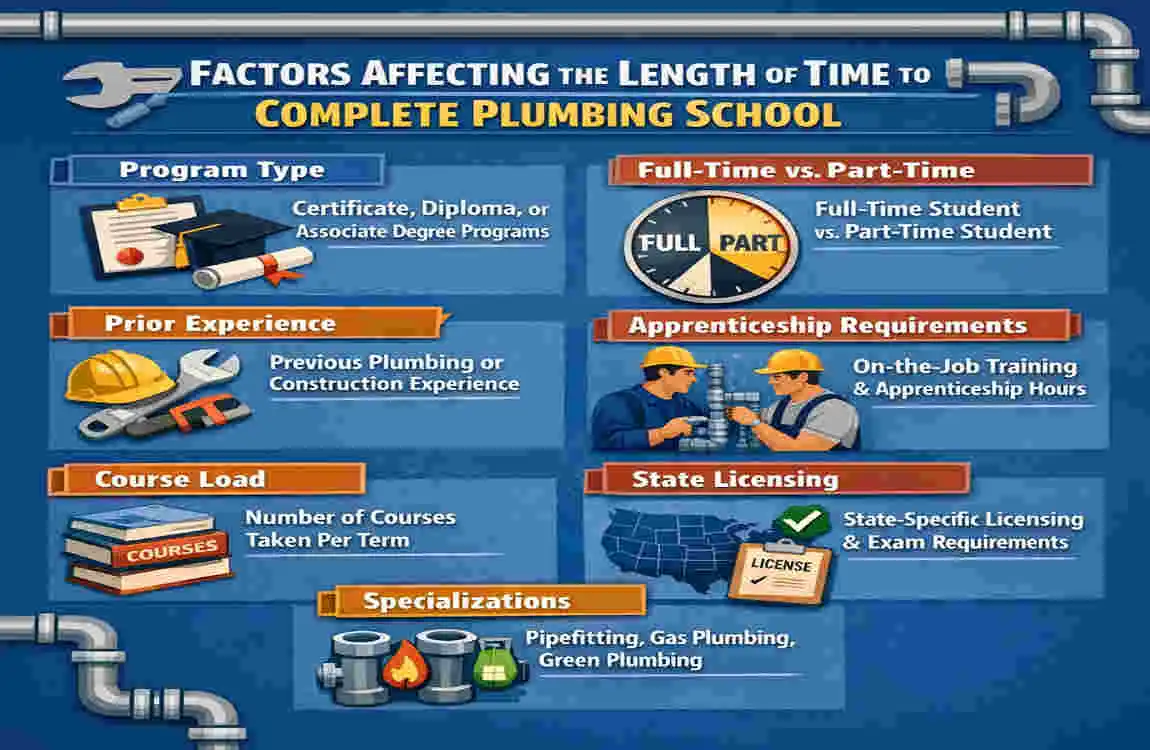
Different programs take different amounts of time.
- Certificate programs: shortest option
- Diploma programs: usually longer and more detailed
- Vocational programs: often focused on job-ready skills
- Associate programs: longer and more complete
Full-Time vs. Part-Time Study
If you study full-time, you may finish faster. Part-time study is helpful if you need to work while learning, but it takes longer overall.
Keep this in mind if you want to enter the trade quickly.
Location and Licensing Rules
Plumbing rules are not the same everywhere. States, provinces, and local authorities can all have different requirements.
That means one person may finish training faster in one place, while another may need more hours or more exams somewhere else.
Previous Experience and Education
If you already have experience in construction, maintenance, or mechanical work, that may help you learn faster.
You still need the proper training, but your background may make some parts easier to understand.
Apprenticeship Requirements
Apprenticeships can significantly affect the total timeline. Some require a set number of work hours plus classroom time.
That is why becoming a plumber usually takes longer than just attending school.
What Does Plumbing School Cost and What Is the Career Like?
Average Plumbing School Costs
Costs vary a lot depending on the school and program type.
You may need to pay for:
- Tuition
- Tools and equipment
- Books and class materials
- Safety gear
- Exam fees
Public programs are often less expensive than private ones, but the best choice depends on your goals and budget.
Can You Earn Money During Plumbing Training?
Yes, often you can. Many apprenticeships pay, so you can earn while you learn.
The pay depends on the employer, location, and your level of training. The main point is that apprenticeships can help you build experience without stopping all income.
Plumber Career Opportunities
A plumbing career can lead to several types of work.
Common options include:
- Residential plumbing
- Commercial plumbing
- Industrial plumbing
- Maintenance and repair
- Construction plumbing
- Specialized plumbing work
This variety is one reason many people choose the trade.
Skills Needed to Become a Successful Plumber
Plumbing is practical work, but it also requires a strong skill set.
You should be comfortable with:
- Problem-solving
- Mechanical tasks
- Physical work
- Attention to detail
- Communication
- Safety awareness
- Customer service
These skills help you do the job well and work safely with others.
Is Plumbing a Good Career Choice?
For many people, yes. It can offer steady demand, room to grow, and the chance to specialize.
Still, the job is physical and sometimes messy. You also need licensing, training, and ongoing learning. So it is a good choice if you want hands-on work and are ready to keep building your skills.
Steps to Start a Plumbing Career
Choose the Right Plumbing Program
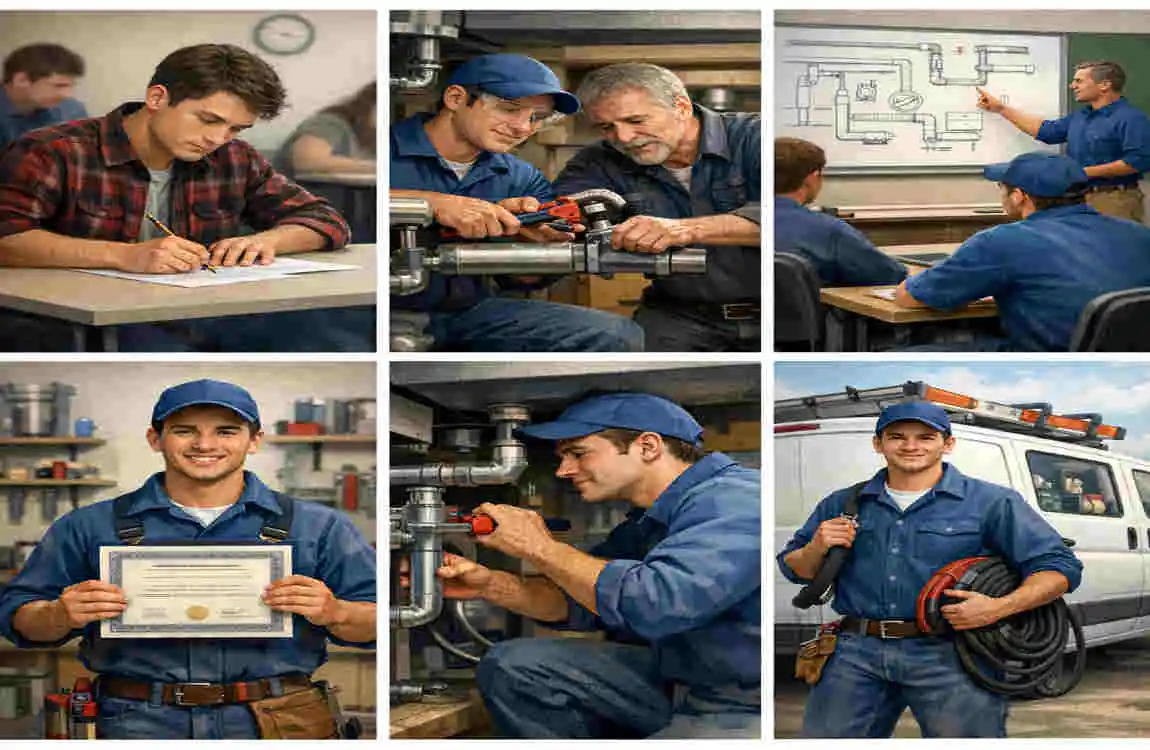
Start by comparing programs carefully. Look at the course content, length, hands-on training, and whether the program matches local licensing needs.
A good program should prepare you for both school learning and real job tasks.
Apply for an Apprenticeship
After school, or sometimes instead of school, you may apply for an apprenticeship. Plumbing companies, unions, contractors, or training groups often offer these.
Each program may ask for different qualifications, so check the requirements before applying.
Complete Classroom and Practical Training
Plumbing is one of those careers that requires both knowledge and practice. Classroom lessons teach the rules, while field work shows you how the work really gets done.
This mix is what helps you become job-ready.
Meet Licensing Requirements
Most places require exams, documented work hours, and proof of training.
Because rules vary, always check with your local authority before you start. That can save you time later.
Build Experience and Advance Your Career
Once you get started, you can move from apprentice to journeyman and, later, to master plumber.
Over time, you may also choose to specialize or continue learning through advanced training.
FAQ: How Long Is Plumber School?
How long is plumber school?
Usually, a few months to two years, depending on the program type and whether you study full-time or part-time.
How many years does it take to become a licensed plumber?
Often, it takes several years because you may need both school and apprenticeship hours before you can get licensed.
Is plumbing school difficult?
It can be challenging, but in a practical way. You need to learn tools, systems, codes, and safety while also doing hands-on work.
Can I become a plumber in one year?
You may complete some training in one year, but becoming fully licensed usually takes longer.
Do plumbers need a degree?
Not always. Some people use certificates, vocational programs, or apprenticeships instead of a degree.
What subjects are taught in plumbing school?
Common subjects include pipes, drainage, water systems, safety, plumbing codes, fixtures, and basic blueprint reading.
Can I become a plumber without experience?
Yes, if you enter through an apprenticeship or training path that starts at the beginner level.
| Topic | Short Information |
|---|---|
| Plumbing School Length | Usually 6 months to 2 years, depending on the program and location |
| Certificate Program | Often takes around 6–12 months |
| Diploma Program | Commonly 1–2 years |
| Apprenticeship | Typically 2–5 years of paid on-the-job training |
| Classroom Training | Covers plumbing systems, tools, safety, pipes, drainage, and building codes |
| Hands-On Training | Students practice pipe installation, repairs, fittings, and troubleshooting |
| Licensing | Requirements vary by country, state, or local authority |
| Entry-Level Career | Graduates may start as plumbing helpers, trainees, or apprentices |
| Advanced Career | Experience can lead to journeyman or master plumber roles where those licenses exist |
