

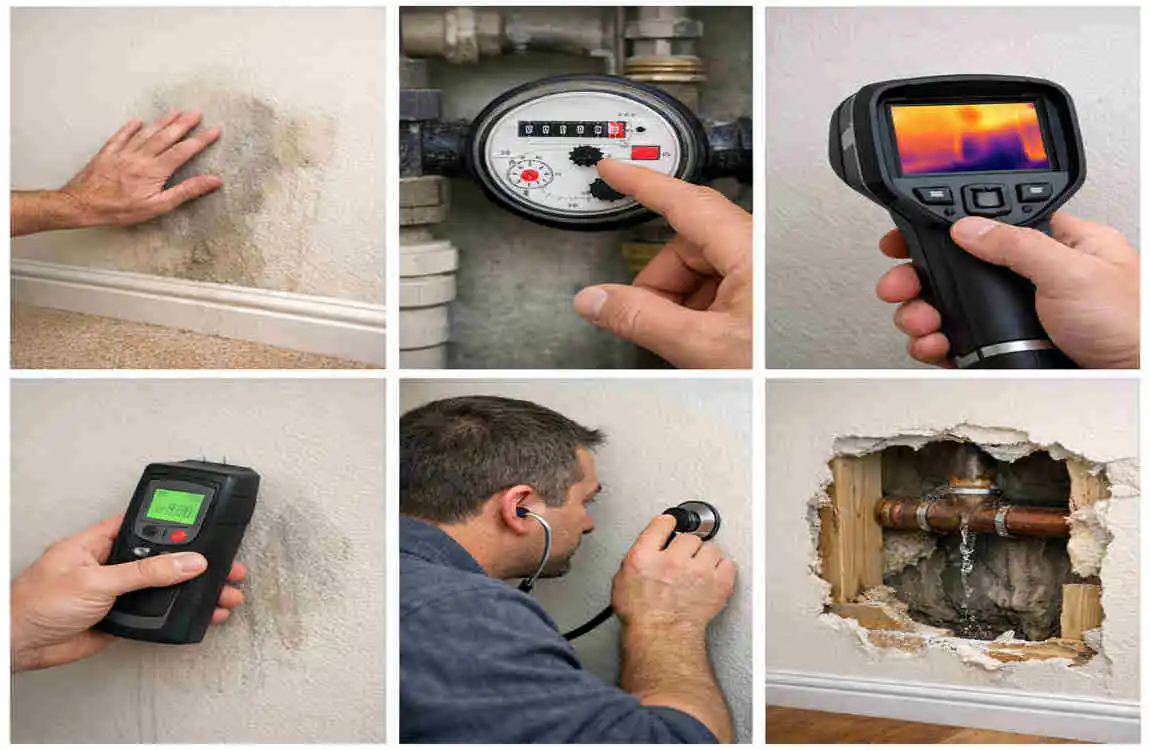
A hidden plumbing leak can cause a lot of damage before you ever see a puddle. Water can quietly move through drywall, framing, insulation, and flooring so that the problem may stay out of sight for days or even weeks.
That is why learning how to detect a plumbing leak behind a wall is so important. The sooner you catch it, the easier it is to protect your home from mold, stains, rot, and expensive repairs.
Why Hidden Plumbing Leaks Are Difficult to Find
Leaks can stay out of sight for a long time.
A wall leak does not always show up as an obvious drip. In many cases, the water starts small and spreads slowly through hidden spaces.
That means the damage may appear far from the actual leak. You might notice a stain in one spot while the real pipe issue is several feet away.
Common causes of hidden wall leaks
Wall leaks often happen because of:
- Damaged pipes
- Loose connections
- Corrosion
- High water pressure
- Aging plumbing
Sometimes the leak comes from a supply pipe. Other times it comes from a drain line. Both can create serious problems if ignored.
Why early detection matters
When you catch a leak early, you can often save money and avoid major repairs. A small leak may only need a simple fix.
But if you wait too long, moisture can damage drywall, insulation, wood framing, paint, and even nearby electrical parts. Mold can also begin to grow in damp areas.
Signs You May Have a Plumbing Leak Behind the Wall
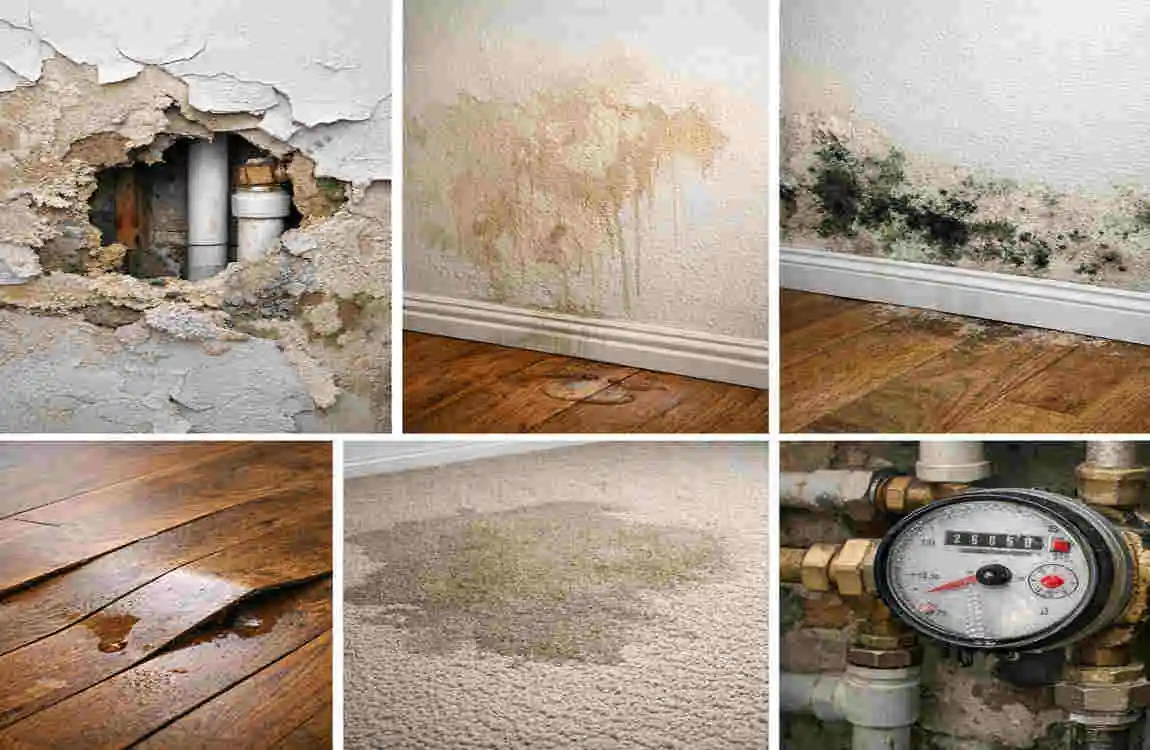
Unexplained damp spots
A damp patch on a wall is one of the most common warning signs. It may feel cool, soft, or slightly wet to the touch.
This can mean a water supply pipe or drain pipe is leaking behind the surface. The wet area may not be right next to the pipe, because water can travel through the wall.
Water stains and discoloration
Look for brown, yellow, or dark stains on walls and ceilings. These marks often grow over time if the leak continues.
A stain that changes in size or darkens is a strong clue that moisture is still present.
Peeling paint or bubbling wallpaper
Moisture can push paint away from the wall surface. You may see bubbling, cracking, peeling, or blistering paint.
Wallpaper can loosen or curl at the edges. Do not treat this as only a cosmetic issue. It often means water is trapped behind the wall.
Musty smells and mold growth
A hidden leak often creates a damp, stale smell. If you notice a musty odor that does not go away, moisture may be trapped inside the wall.
Mold or mildew may appear later, especially if the area stays wet. Even if you cannot see water, smell can be an early clue.
Unusual sounds behind the wall
Sometimes you can hear the leak before you see it. Listen for dripping, trickling, hissing, or rushing sounds.
These sounds are easier to notice when the house is quiet. Turn off noisy appliances and pay attention near the suspicious wall.
Sudden changes in water pressure
If a supply line is leaking, you may notice lower water pressure at faucets or showers. Water may not come out as strongly as it normally does.
Still, pressure changes can also happen for other reasons. So this sign should be checked along with other clues.
Higher-than-normal water bills
A hidden leak often leads to unexpected water use. If your bill rises without a clear reason, that can be a warning sign.
Compare your recent bills with past months. If the usage is unusually high, a hidden leak may be part of the problem.
How to Detect a Plumbing Leak Behind a Wall
Check the water meter.
One of the easiest ways to start is by checking the water meter.
First, turn off all faucets and stop using water-using appliances. Then look at the meter and see whether it keeps moving.
If the meter continues to register use while nothing is running, that suggests a leak somewhere in the plumbing system.
Inspect walls, ceilings, and floors.
Walk through the area carefully and look for:
- Discoloration
- Soft drywall
- Swollen baseboards
- Warped flooring
- Damp surfaces
- Peeling paint
If you see more than one of these signs together, the chance of a hidden leak goes up.
Use a moisture meter.
A moisture meter helps measure how damp a wall is. It can show whether one area is wetter than the surrounding sections.
This is useful because you can compare suspicious spots with dry parts of the wall. Just remember that the meter shows moisture, not the exact pipe location.
Check exposed plumbing connections.
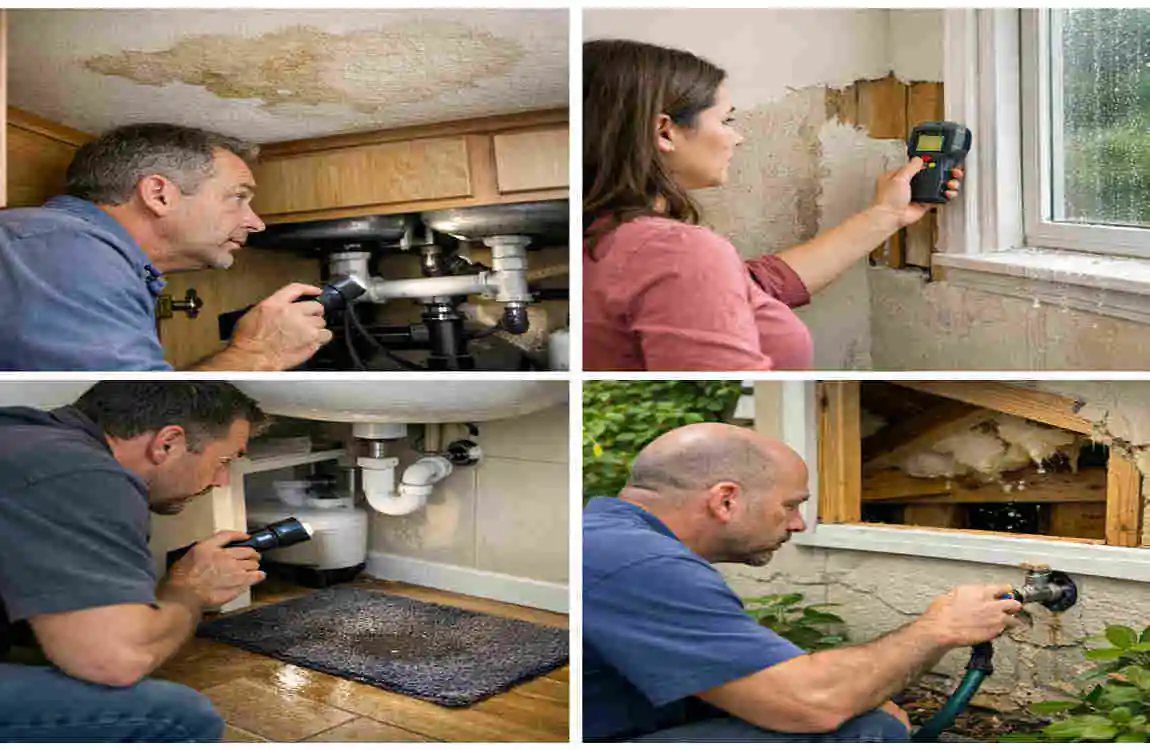
Before assuming the problem is inside the wall, inspect visible plumbing first. Look under sinks, around toilets, near water heaters, and in utility spaces.
Sometimes a leak appears to be hidden when it is really coming from a loose fitting or exposed pipe.
Listen carefully for water sounds.
If possible, turn off water inside the home and listen again. A hidden leak may sound clearer when background noise is reduced.
Still, be careful. Sound can travel through framing, so the place where you hear it may not be the exact place where it starts.
Consider infrared or professional leak detection.
Professional plumbers may use thermal imaging, acoustic tools, or other leak-detection equipment.
These tools can help detect temperature changes or sound patterns that indicate moisture behind a wall. If the leak is hard to locate, this kind of testing can save time and reduce damage.
What Causes Plumbing Leaks Behind Walls?
Aging or corroded pipes
Older plumbing materials wear out over time. Corrosion can weaken pipes and create small openings where water escapes.
This is especially common in older homes or in systems that have not been inspected for many years.
Loose or damaged pipe connections
A leak may also come from a joint or fitting. If a connection was not installed correctly or has loosened over time, water can seep out.
Even a tiny gap can cause major damage if it stays hidden.
High water pressure
Too much water pressure can put stress on pipes and fittings. Over time, that pressure can lead to leaks or cracking.
If you have recurring plumbing problems, it may be worth having the pressure checked.
Frozen or temperature-damaged pipes
In cold weather, pipes can freeze and expand. That expansion can crack the pipe or weaken a joint.
Sometimes the damage does not show up until the pipe thaws and water starts flowing again.
Poor installation or pipe movement
Pipes should be properly supported. If they move when water runs through them, the movement can stress the joints.
Poor installation can lead to repeated leaks over time.
Drain pipe problems
Not all hidden leaks come from pressurized supply pipes. Drain and waste pipes can also leak.
These leaks may show up as moisture, stains, or odors, especially near bathrooms, kitchens, or laundry areas.
What to Do When You Suspect a Hidden Wall Leak
Shut off the water when necessary.
If the leak is active or spreading fast, turn off the main water supply. This can help prevent more damage while you figure out the next step.
If you are not sure where the shutoff valve is, learn its location before an emergency happens.
Protect the surrounding area.
Move furniture, electronics, rugs, and valuables away from the wet area. Use towels or a container if water is visible.
These small steps can help reduce damage while you wait for repairs.
Avoid covering up the damage.
Do not paint over the stain or replace wallpaper before the leak is fixed. That may hide the problem temporarily, but it will come back.
Always repair the source first, then restore the wall after it is fully dry.
Avoid unsafe wall opening.
Cutting into a wall without knowing where the pipes or electrical wires are located can be risky. You could make the damage worse or create a safety problem.
If the source of the leak is unclear, professional help is the safer choice.
Document the damage
Take photos and write down when you first noticed the problem. Keep track of any changes.
This record can help with repair planning and may also be useful for insurance discussions if needed.
Repairing and Preventing Future Hidden Plumbing Leaks
When to call a professional plumber
You should call a plumber if:
- The leak is active
- The wall damage is spreading
- You cannot find the source
- The leak keeps returning
- The pipe is hard to access
- You suspect pipe failure
A professional can often locate the problem more quickly and cause less damage to your walls.
Repair or replace the damaged pipe
The right fix depends on the pipe’s condition, age, material, and location. Sometimes a small repair is enough.
But if the plumbing is very old or has already failed more than once, replacement may be the smarter long-term option.
Dry the wall and surrounding materials.
After the plumbing issue is fixed, the wet materials must dry fully. This includes drywall, wood framing, insulation, and nearby flooring.
If moisture stays trapped, mold and rot can continue to grow even after the pipe is repaired.
Inspect after the repair.
Once the water is turned back on, watch the area closely. Look for new dampness, stains, or unusual sounds.
A second check helps make sure the fix actually worked.
Prevent future plumbing problems.
You can reduce the chance of another hidden leak by:
- Watching water bills
- Maintaining proper water pressure
- Fixing drips quickly
- Protecting pipes from extreme temperatures
- Inspecting older plumbing regularly
- Avoiding difficult DIY plumbing repairs
A little maintenance goes a long way.
Common Mistakes Homeowners Make When Looking for Hidden Leaks
Assuming the wet spot is the exact leak location
Water does not always stay close to the source. It can move through wall cavities and framing before becoming visible.
That is why you should inspect the surrounding area too.
Ignoring small warning signs
A slight stain, light smell, or occasional drip may seem minor. But these often appear before serious damage begins.
Do not wait for a major leak to act.
Waiting for visible water
By the time water becomes visible, the wall may already be damaged. Hidden leaks often work quietly for a long time.
Cutting open too much of the wall
It is tempting to open a large section to find the leak. But that can create more repair work than necessary.
Non-invasive detection first is usually smarter.
Repairing the wall before fixing the plumbing
Do not rush into cosmetic repairs. Fix the plumbing issue first, dry the area fully, and then restore the wall.
If you skip the plumbing repair, the problem will likely return.
Simple Guide to Spotting a Hidden Wall Leak
Here is a quick list to keep in mind:
- Check for stains, peeling paint, or damp spots
- Smell for musty odors
- Listen for dripping or hissing
- Compare water bills
- Test the water meter
- Inspect visible plumbing
- Use a moisture meter if available
- Call a plumber if the source is unclear
This simple process can help you move from suspicion to action.
FAQ
How do you detect a plumbing leak behind a wall?
Look for damp spots, discoloration, peeling paint, musty odors, mold, unusual sounds, and higher water bills. A water meter test or moisture meter can help confirm your suspicion.
How can I tell if a wall has a hidden water leak?
Common signs include soft drywall, bubbling paint, stains, dampness, mold, and a stale smell. If several signs appear together, a hidden leak is likely.
Can a water meter detect a leak behind a wall?
Yes. If all water is off and the meter still moves, that suggests a leak somewhere in the plumbing system. It does not show the exact spot, though.
Does a hidden plumbing leak always make noise?
No. Some leaks are very quiet, especially small ones or leaks inside insulated walls. That is why visual clues are so important.
Can a moisture meter find a pipe leak?
A moisture meter can show wet areas, but it usually cannot identify the exact pipe or cause. It is helpful, but not complete on its own.
Should I cut open the wall to find a plumbing leak?
Not right away. It is safer to narrow down the location first or call a plumber, especially if pipes or wires may be inside the wall.
| What to Check | Signs of a Hidden Leak | What to Do |
|---|---|---|
| Wall surface | Damp spots, stains, or bubbling paint | Inspect the area closely |
| Musty smell | Persistent damp or moldy odor | Check for moisture behind the wall |
| Water sounds | Dripping, hissing, or running-water noises | Listen when all faucets are off |
| Water meter | Meter moves when no water is being used | Shut off fixtures and monitor the meter |
| Flooring | Warped, swollen, or damp flooring near the wall | Check nearby plumbing connections |
| Paint or wallpaper | Peeling, cracking, or discoloration | Look for moisture damage |
| Professional inspection | Leak source remains unclear | Contact a plumber for leak-detection equipment |
