

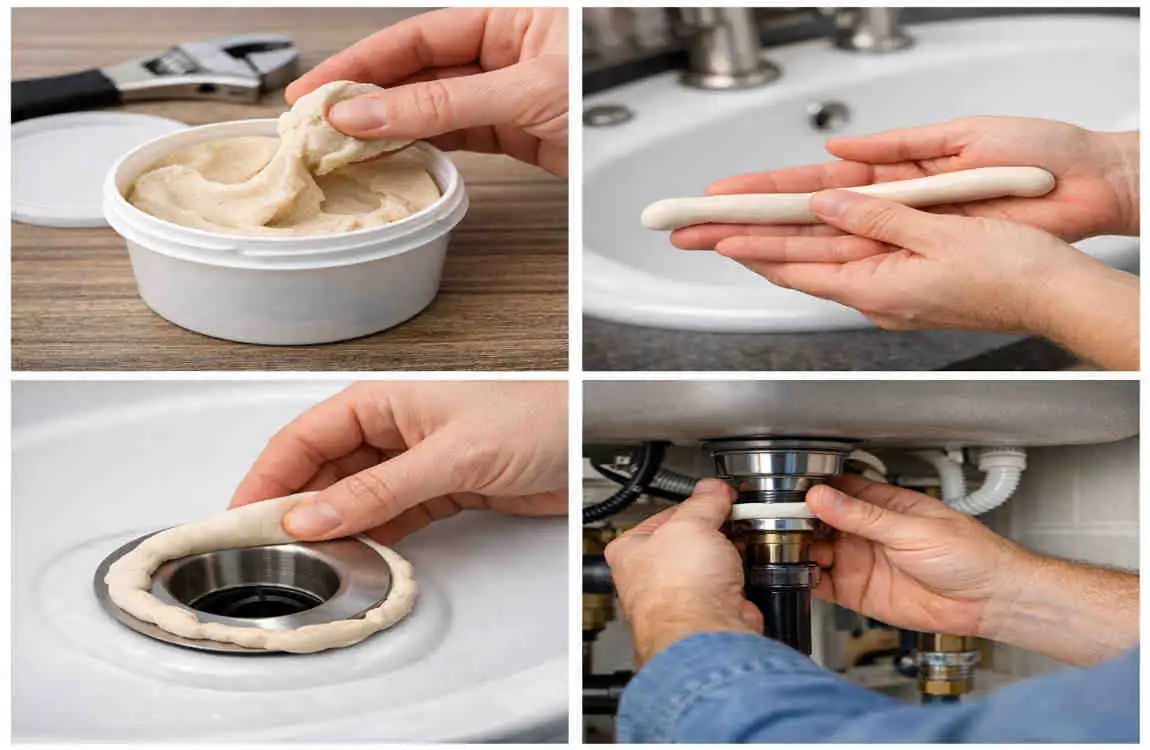
If you are asking what plumber’s putty is, the simple answer is this: it is a soft, moldable sealing compound used in plumbing work to help prevent water from leaking around fixtures.
Homeowners often use it around sinks, drains, faucets, and strainers. It is popular because it is easy to shape and apply, and it is helpful in many basic plumbing jobs.
Still, the right sealant matters. Using the wrong product can lead to leaks, stains, or a messy repair later. That is why it helps to understand what plumber’s putty does, where it works best, and where it should not be used.
What Is Plumber’s Putty and How Does It Work?
Understanding Plumber’s Putty
Plumber’s putty is a soft, clay-like material that remains flexible rather than drying hard like some other sealants. That makes it easy to roll, press, and place around plumbing parts.
Its job is to create a water-resistant seal between two surfaces. When you tighten a drain or fixture into place, the putty fills tiny gaps and helps block water from slipping through.
Because it stays pliable, it is also usually easier to remove later when repairs are needed.
Where Is Plumber’s Putty Commonly Used?
Plumber’s putty is often used in places where a fixture needs to stay serviceable.
Common uses include:
- Kitchen sink drains
- Bathroom sink drains
- Faucet bases
- Sink strainers
- Tub drains and similar fixtures
It works well in these areas because the seal may need to be opened again in the future.
What Plumber’s Putty Does Not Do
This is important: plumber’s putty is not a glue.
It helps seal surfaces, but it does not usually bond parts together. It also should not be used in every plumbing situation just because it is handy.
Some connections need thread seal tape, silicone, or another product instead. The best choice depends on the part and the material.
How to Use Plumber’s Putty Correctly
Prepare the Plumbing Surface
Before applying putty, clean the area well. Remove old sealant, dirt, grease, and debris.
A clean surface helps the putty sit properly and form a better seal. If the area is dirty or uneven, the seal may fail later.
Shape and Apply the Putty
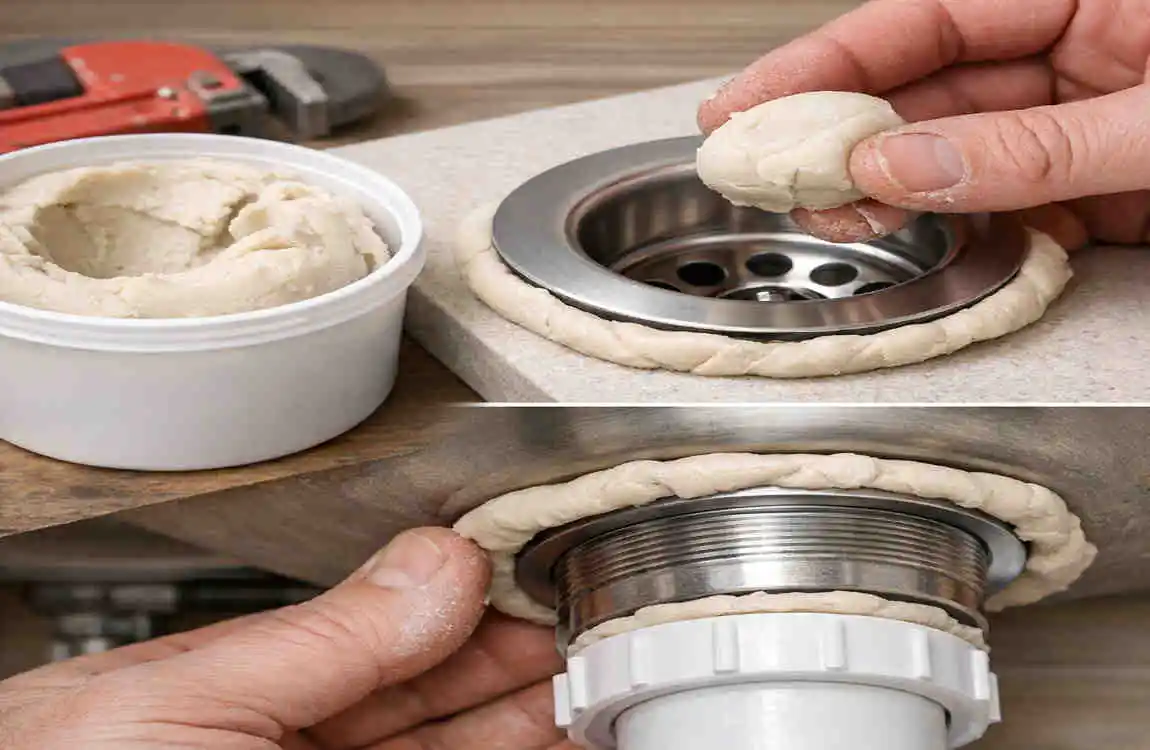
Take a small amount of putty and roll it into a thin rope with your hands.
Then place that rope around the underside of the drain or fixture. Try to keep the thickness even all the way around. Gaps can let water escape, so steady coverage matters.
You do not need a huge amount. A moderate, even ring is usually enough.
Install the Fixture
Now set the fixture into place and tighten it according to the manufacturer’s instructions.
As you tighten, some putty may squeeze out. That is normal. Just wipe away the extra material neatly.
The key is to tighten enough to create a seal without forcing the part too hard.
Check for Leaks
After installation, run water and check underneath the fixture.
If you see a small leak, do not just keep adding putty. Sometimes the fixture must be removed, cleaned, and resealed properly.
A proper leak test saves time and prevents bigger problems later.
Benefits and Limitations of Plumber’s Putty
Benefits of Plumber’s Putty
Plumber’s putty is popular because it is practical and easy to use.
Some of its main benefits are:
- Simple to shape and apply
- Good for many sink and drain jobs
- Usually easy to remove later
- No long curing time in most cases
- Helpful for DIY repairs
For quick household plumbing tasks, it can be a very useful product.
Limitations to Know
Even though plumber’s putty is useful, it has limits.
It is not suitable for every material or fixture type. Some surfaces may stain, absorb oils, or react badly with it. Some manufacturers also prefer silicone instead.
That is why checking the product instructions matters. A quick read can help you avoid a bad fit.
When Plumber’s Putty Should Not Be Used
You should be careful with certain surfaces and parts.
For example, some porous stone, specialty countertops, or plastic fixtures may require an additional sealant. In those cases, the wrong product can cause poor sealing or staining.
If the manufacturer recommends using silicone or another approved sealant, follow that guidance.
Plumber’s Putty vs. Silicone and Other Sealants
Plumber’s Putty vs. Silicone
These two products are often confused, but they are not the same.
Plumber’s putty stays soft and moldable. Silicone, on the other hand, cures into a more durable seal. Silicone is often stronger for bonding and long-term moisture resistance.
A simple way to think about it is this:
- Putty is often easier to remove
- Silicone is usually more permanent
Plumber’s Putty vs. Thread Sealant
Thread sealant is made for threaded pipe joints.
That means plumber’s putty should not replace thread tape or thread sealant on pipe threads. They solve different problems.
Putty seals around fixtures and drains. Thread sealant helps threaded connections stay watertight.
Plumber’s Putty vs. Caulk
Caulk is often used around surfaces where you want a finished edge or a sealed joint.
It may also cure and harden, depending on the type. Plumber’s putty is softer and meant more for plumbing fixture seals than for general surface finishing.
Common Plumber’s Putty Mistakes and Maintenance Tips
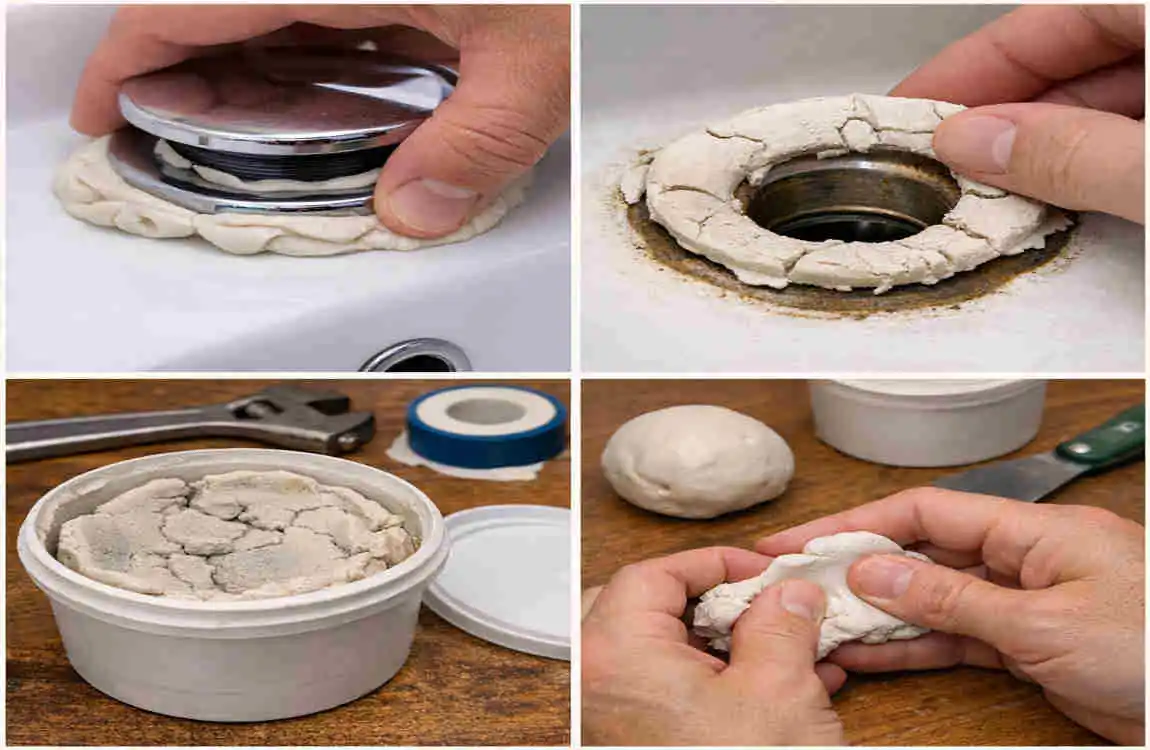
Using Too Much Putty
More putty does not always mean a better seal.
If you use too much, it can squeeze out around the fixture and create a mess. A thin, even rope is usually enough.
Using Too Little Putty
Too little putty can leave gaps. Those gaps may let water escape.
Always cover the full opening evenly so the seal has no weak spots.
Applying Putty to Dirty Surfaces
Old residue can stop the putty from sealing properly.
Clean the surface first, especially if you are replacing an old drain or faucet part. That small step makes a big difference.
Using Putty on the Wrong Material
This is one of the most common problems.
Some sinks, countertops, and fixture materials do not work well with plumber’s putty. Always check compatibility before applying it.
Ignoring Manufacturer Instructions
Modern fixtures can have very specific sealing needs.
If the product instructions say not to use putty, do not guess. Use the recommended sealant instead.
Failing to Test the Finished Installation
A quick water test can catch problems early.
Check under the sink or fixture after installation and again after a little use. If you see moisture, fix it right away.
Frequently Asked Questions About Plumber’s Putty
What is plumber’s putty used for?
It is commonly used to create a watertight or water-resistant seal around plumbing fixtures such as sink drains, strainers, and some faucet parts.
Is plumber’s putty waterproof?
It is designed to resist water and help form a seal, but it should only be used where appropriate.
Does plumber’s putty harden?
No, traditional plumber’s putty usually stays soft and moldable instead of curing hard.
Can plumber’s putty stop a leaking pipe?
Not usually. It is meant for fixtures and drain assemblies, not pressurized pipe leaks.
Can plumber’s putty be used instead of silicone?
Not always. The two products differ, and the right one depends on the fixture and material.
How long does plumber’s putty last?
When installed correctly, it can last a long time. But performance depends on the application, materials, and conditions.
Can you remove plumber’s putty?
Yes. One of its biggest advantages is that it is generally easier to remove than cured sealants.
| Topic | Quick Information |
|---|---|
| What Is Plumber’s Putty? | A soft, moldable sealant used to create watertight seals around plumbing fixtures. |
| Common Uses | Ideal for sink drains, faucets, strainers, and other fixtures that need a flexible seal. |
| How It Works | Putty fills small gaps between plumbing surfaces to help prevent water leaks. |
| How to Apply | Roll a small amount into a rope, place it around the fitting, and press the fixture firmly into position. |
| Main Benefit | Easy to apply, inexpensive, and simple to remove during repairs. |
| Where Not to Use It | Avoid using it on pressurized pipe threads or surfaces where the manufacturer recommends another sealant. |
| Plumber’s Putty vs. Silicone | Putty is easier to remove, while silicone generally provides a stronger, more permanent seal. |
| Quick Tip | Always check the fixture and putty manufacturer’s instructions before use. |
