

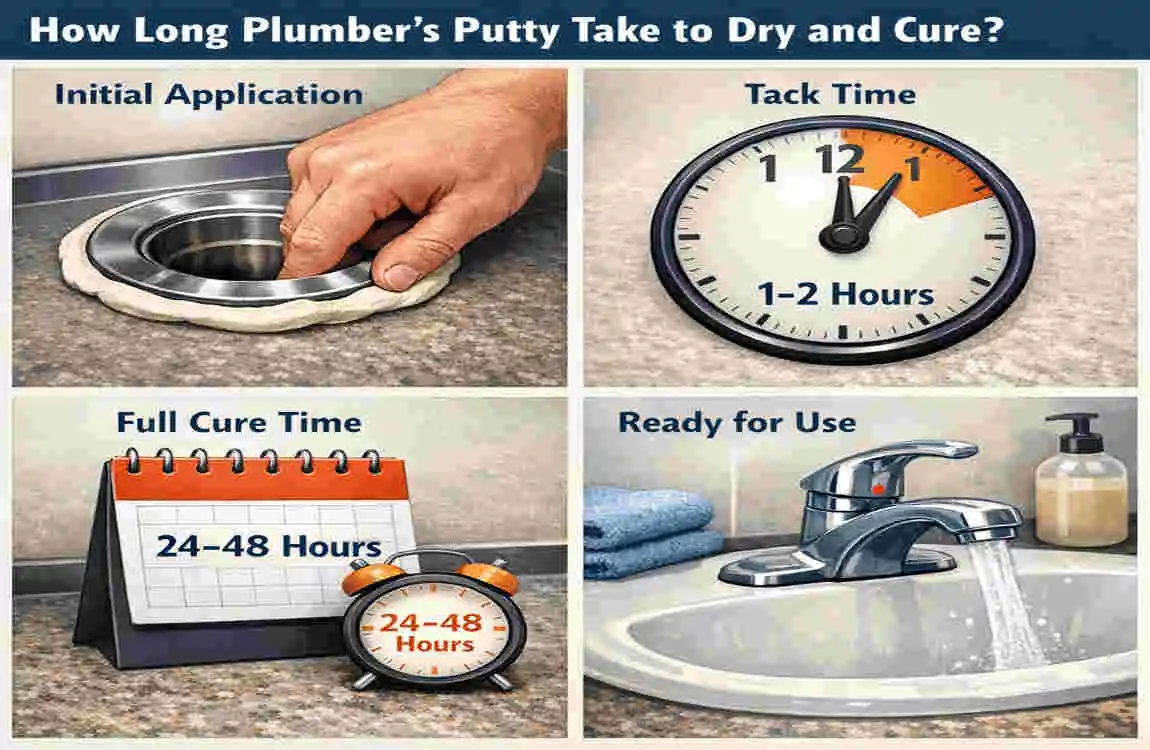
If you are wondering how long plumber’s putty takes to dry, the short answer is this: plumber’s putty usually doesn’t dry or cure like caulk. It stays soft and flexible, which is exactly why many plumbers like it for certain fittings.
That means you usually don’t wait for it to “harden” before using the fixture. In many cases, you can use a sink or drain soon after installation, as long as you tighten the part correctly and the product instructions don’t say otherwise.
What Is Plumber’s Putty?
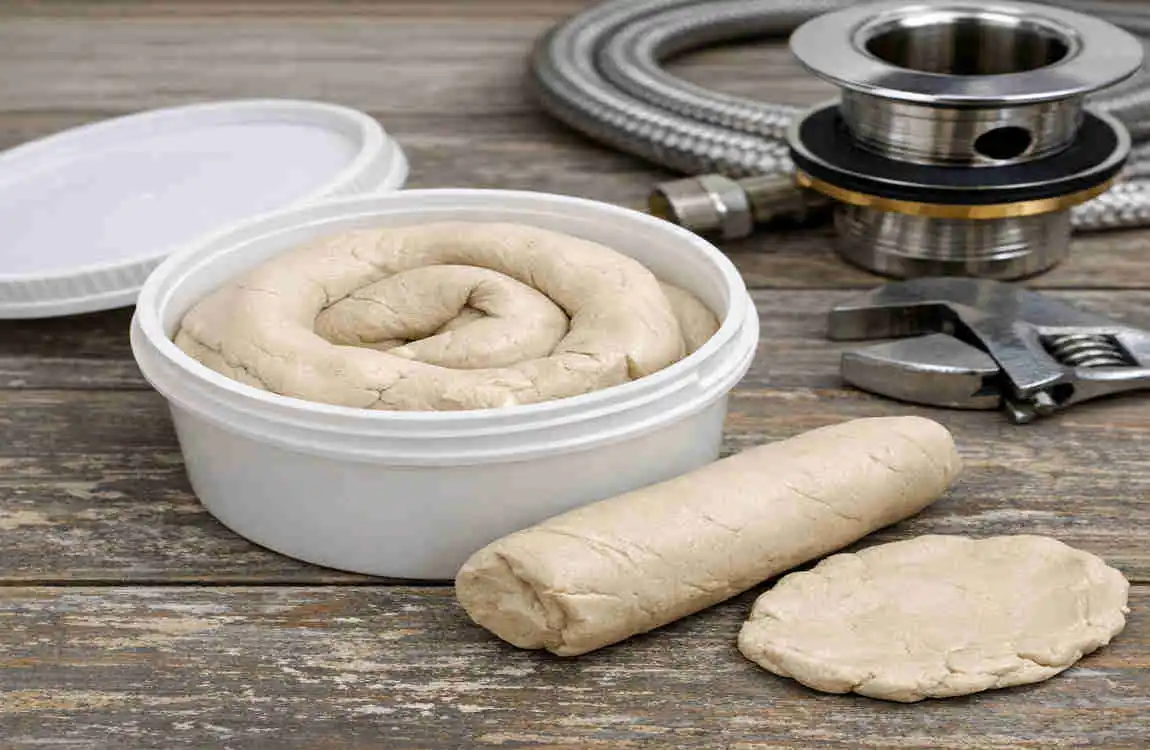
A simple definition
Plumber’s putty is a soft sealing material used in plumbing work. It helps create a watertight seal around parts like sink drains, strainers, and faucet bases.
It is popular because it is easy to shape, apply, and remove later if needed.
Where it is commonly used
You will often see plumber’s putty used on:
- Sink drains
- Basket strainers
- Faucet bases
- Tub drains
- Some bathroom and kitchen fixtures
It works best when you need a seal that stops water from leaking around a fixture but doesn’t need to act like permanent glue.
Why plumbers use it
Plumber’s putty is useful because it fills tiny gaps between a fixture and the surface below it. When you tighten the fixture down, the putty spreads and helps block water.
That simple job makes it a trusted choice in many basic plumbing tasks.
Does Plumber’s Putty Actually Dry?
Drying, curing, and setting are not the same.
This is where a lot of confusion starts. People often ask how long plumber’s putty takes to dry because they expect it to behave like silicone or caulk.
But plumber’s putty is different.
- Drying means moisture leaves the product and it becomes firm.
- Curing means the material chemically hardens over time.
- Setting means the material settles into place and does its sealing job.
Plumber’s putty usually doesn’t go through a full curing process as caulk does.
Why it stays soft
Plumber’s putty is made to stay pliable. It should remain somewhat soft so it can keep sealing small spaces without becoming brittle.
That flexibility is helpful in plumbing, because many sink and drain parts need a material that can adapt to slight movement and pressure.
Why product instructions matter
Even though plumber’s putty is usually simple to use, every product is a little different. Some brands may have limits about where it can be used, how much to apply, or how long to wait before testing the fixture.
So the best rule is: always follow the label.
How Long Does Plumber’s Putty Take to Set?
Typical setting expectations
In many cases, you can use plumber’s putty almost right away after installation because it doesn’t need to harden the way caulk does.
Instead, the key is whether the fixture is installed correctly and tightened enough to form a seal.
Can water be used immediately?
Often, yes. Once the fixture is in place and you remove the excess putty, you can use the sink or drain right away.
But if the manufacturer says to wait, follow that instruction. Also, if the fixture feels loose or uneven, do not rush to test it.
Why extra waiting is sometimes practical
Even though plumber’s putty does not need a long dry time, some people still wait a little before heavy use. That can be helpful if:
- The fixture was just installed
- You want to check for leaks slowly
- The room will be used heavily later
- You are not fully sure the seal is seated correctly
This is more about caution than curing.
Does plumber’s putty need 24 hours to dry?
Usually, no. The common “24-hour rule” often comes from products like silicone sealant, not plumber’s putty.
That said, some people may still wait longer for peace of mind, especially if the fixture was installed in a tricky spot. But 24 hours isn’t a standard plumber‘s putty requirement.
Factors That Affect Plumber’s Putty Performance
Temperature
Very hot or very cold conditions can affect how the putty feels and performs. In a normal indoor setting, this is usually not a big problem. Still, extreme temperatures can make the material harder to work with.
Humidity
Humidity is not a major drying factor for plumber’s putty the way it is for caulk. Still, very damp conditions can make surface prep harder, which can affect the seal.
Thickness of the putty
Using too much putty is one of the most common mistakes. A thick layer can squeeze out too much or sit unevenly.
A thin, even rope is usually better.
Surface cleanliness
Dirty or wet surfaces can weaken the seal. The putty needs a clean area to sit properly.
If old debris, grease, or leftover sealant remains, the new putty may not perform well.
Type and quality of putty
Not all plumber’s putty products are the same. Some are made for specific fixtures or surface types. A higher-quality product may last longer and be easier to apply.
Pressure and movement around the fixture
If the fixture shifts after installation, the seal may weaken. A properly tightened part helps the putty stay where it should.
How to Apply Plumber’s Putty Correctly

Step-by-step basic method
Here is a simple way to apply it correctly:
- Clean and dry the surface
- Take a small amount of putty
- Roll it into a rope shape
- Place it evenly around the fixture or drain opening
- Set the fixture into position
- Tighten the fitting properly
- Remove the excess putty
- Check for leaks after installation
Why removing excess matters
Extra putty can squeeze out around the edges. That is normal, but you should clean it away so the fixture looks neat and the seal seats properly.
Leaving too much behind can make the job messy and may even interfere with the fit.
Common mistakes to avoid
- Using too much putty
- Applying it to a dirty surface
- Using it where the material is not suitable
- Not tightening the fixture enough
- Thinking putty replaces a mechanical connection
- Using old, dried-out putty
- Ignoring the product label
These mistakes can cause leaks or weak seals.
Where Can You Use Plumber’s Putty?
Good uses
Plumber’s putty is commonly used for:
- Sink drains
- Basket strainers
- Faucet bases
- Tub drains
- Some kitchen and bathroom fixtures
It is a good choice when you need a simple, flexible seal around a non-pressurised fixture.
Where you should not use it
Do not use plumber’s putty for every plumbing task. It is usually not the right product for:
- Pressurised pipe connections
- Threaded joints that need thread sealant
- Certain plastic surfaces
- Marble, granite, or porous stone when the manufacturer warns against it
- Applications that require silicone
- Areas needing a permanent adhesive seal
This matters because the wrong product can fail, stain the surface, or create leaks.
Plumber’s Putty vs Silicone: Which Should You Use?
Main differences
Plumber’s putty and silicone sealant are different.
FeaturePlumber’s PuttySilicone Sealant
Drying behaviour Stays soft and flexible Cures and hardens
Best use Sink drains, faucets, strainers Waterproof sealing, joints, many surfaces
Removal Easier to remove Harder to remove
Flexibility Soft and pliable Strong and rubbery after curing
Cure time Usually little to none Often needs many hours
Which one is better?
Neither is always “better.” The right choice depends on the fixture and the surface.
Use plumber’s putty when the job calls for a simple, removable seal. Use silicone when you need a stronger, more permanent waterproof barrier.
Why this choice matters
If you use the wrong product, you may get leaks or damage later. That is why checking the fixture instructions matters.
Plumber’s Putty vs Pipe Joint Compound
Different purpose, different job
Pipe joint compound is made for threaded pipe connections. Plumber‘s putty is made for sealing fixture bases and drains.
They are not interchangeable in most cases.
Simple rule
If the job involves a threaded connection, plumber’s putty is usually not the right choice. If the job involves a sink drain or faucet base, plumber’s putty may be appropriate.
Plumber’s Putty vs Teflon Tape
What each one does
Teflon tape helps seal threaded pipe joints. It wraps around the threads and helps prevent leaks.
Plumber’s putty helps seal around fixtures and drain openings.
Easy way to remember
- Teflon tape = threaded pipes
- Plumber’s putty = drains and fixture bases
How to Tell if Plumber’s Putty Is Working Properly
What to check after installation
After you install the fixture, take a careful look at the area. Check underneath the sink or fixture and test the drain with running water.
Look for:
- Moisture
- Drips
- Water beads
- Movement around the fitting
- Stains or damp spots
Signs of a bad seal
If water is getting through, the putty may not be seated correctly. A loose fixture, uneven tightening, or dirty surface can all cause problems.
If the leak is obvious, you may need to remove the fixture, clean it, and reseal it.
What happens if plumber’s putty gets wet?
That is usually okay. Plumber’s putty is meant for plumbing use, so water exposure is part of its normal job.
The concern is not brief contact with water. The concern is whether water is bypassing the seal because of poor installation.
How Long Does Plumber’s Putty Last?
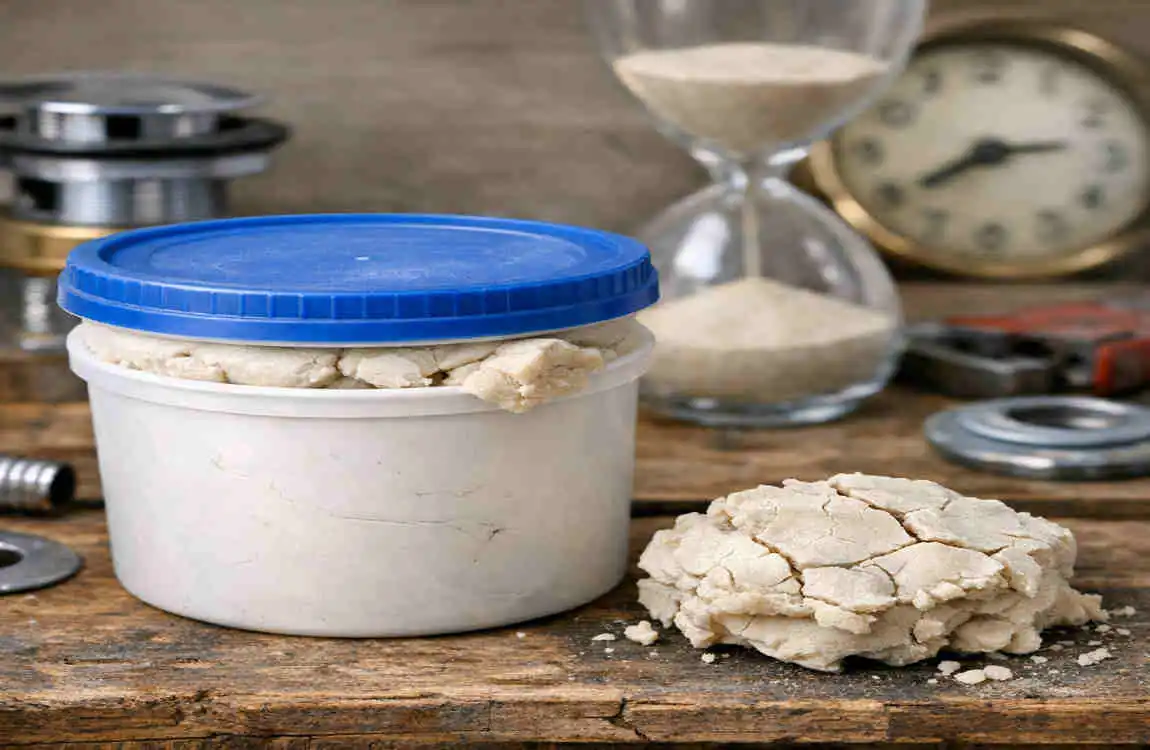
Expected lifespan
A properly installed plumber‘s putty seal can last a long time. In many cases, it stays effective for years.
What can shorten its life?
Its life may be shorter if:
- The fixture moves often
- The surface was dirty
- The wrong product was used
- The installation was too loose
- The fixture was exposed to the wrong materials
When to replace it
Replace it if you notice leaks, movement, or damage around the fitting. If the putty has hardened too much or broken down, it may no longer seal well.
FAQ About How Long Plumber’s Putty Takes to Dry
How long does plumber putty take to dry?
Plumber’s putty generally does not dry like caulk. It stays soft and pliable, so you usually do not wait for it to harden.
Can you use a sink immediately after applying plumber’s putty?
In many cases, yes. Once the fixture is installed correctly and you remove the excess putty, you can often use the sink right away.
Does plumber’s putty need 24 hours to cure?
No, not usually. The 24-hour wait is more common with silicone and other curing sealants.
Can plumber’s putty get wet?
Yes. It is designed for plumbing use, so water exposure is normal. The seal should keep water where it belongs.
Is plumber’s putty better than silicone?
Not always. Plumber’s putty is better for some drains and fixture bases, while silicone is better for stronger, more permanent waterproof sealing.
How do you know if plumber’s putty is working?
Run water through the fixture and check underneath for leaks, drips, or moisture.
| Topic | Quick Information |
|---|---|
| Drying Time | Plumber’s putty generally does not need to dry like caulk or sealant. |
| Ready to Use | Most fixtures can be used immediately after installation if the putty is properly applied. |
| Curing | It remains relatively soft and flexible rather than hardening completely. |
| Water Exposure | It is designed to handle water once the fixture is installed and sealed correctly. |
| Best Uses | Sink drains, faucets, strainers, and other plumbing fixtures requiring a watertight seal. |
| Not Recommended For | Pressurized pipe joints, threaded connections, or areas where the manufacturer specifies another sealant. |
