

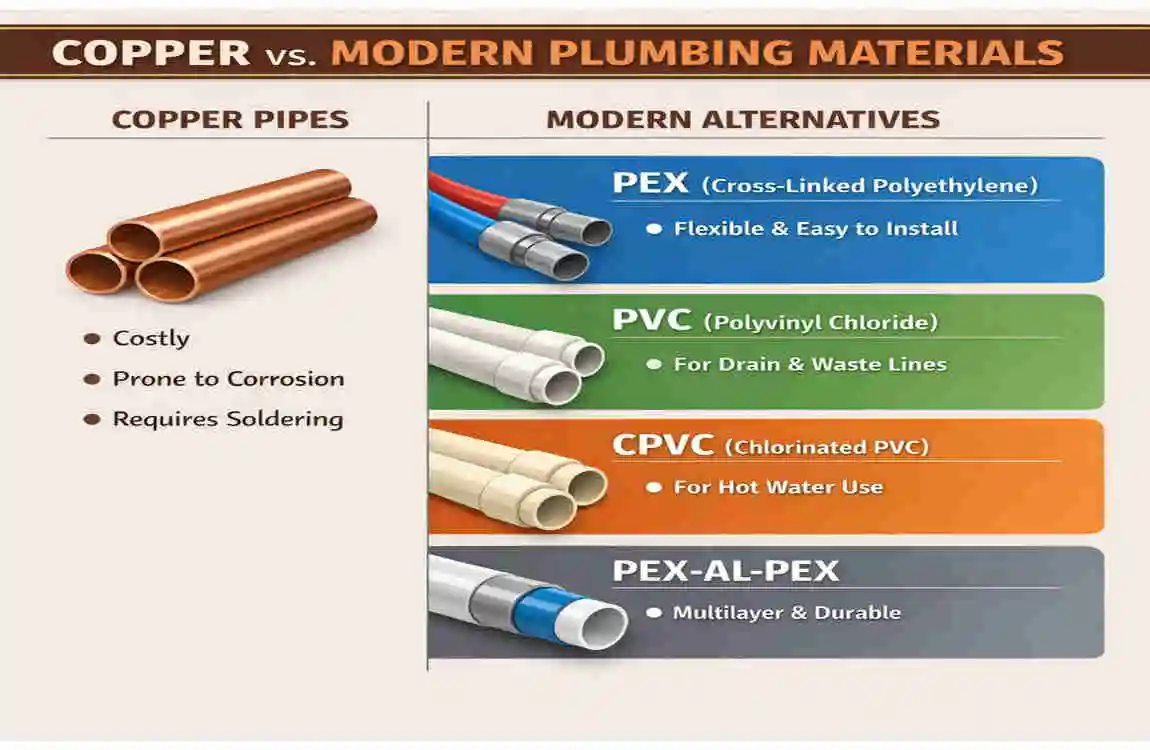
If you have ever wondered why copper pipes were replaced in plumbing, you are not alone. Copper was once the standard choice in many homes, and for good reason. It was strong, dependable, and familiar to plumbers for decades.
But plumbing has changed over time. New materials came in with lower costs, easier installation, and better flexibility for many jobs. That is why modern homes often use PEX, CPVC, PVC, or other pipe materials instead of copper for every part of the system.
Copper is not gone from plumbing. It still has a place in many homes and buildings. The real story is not that copper disappeared, but that plumbing now uses several materials depending on the job.
What Made Copper Pipes Popular in Traditional Plumbing?
A long history in water systems
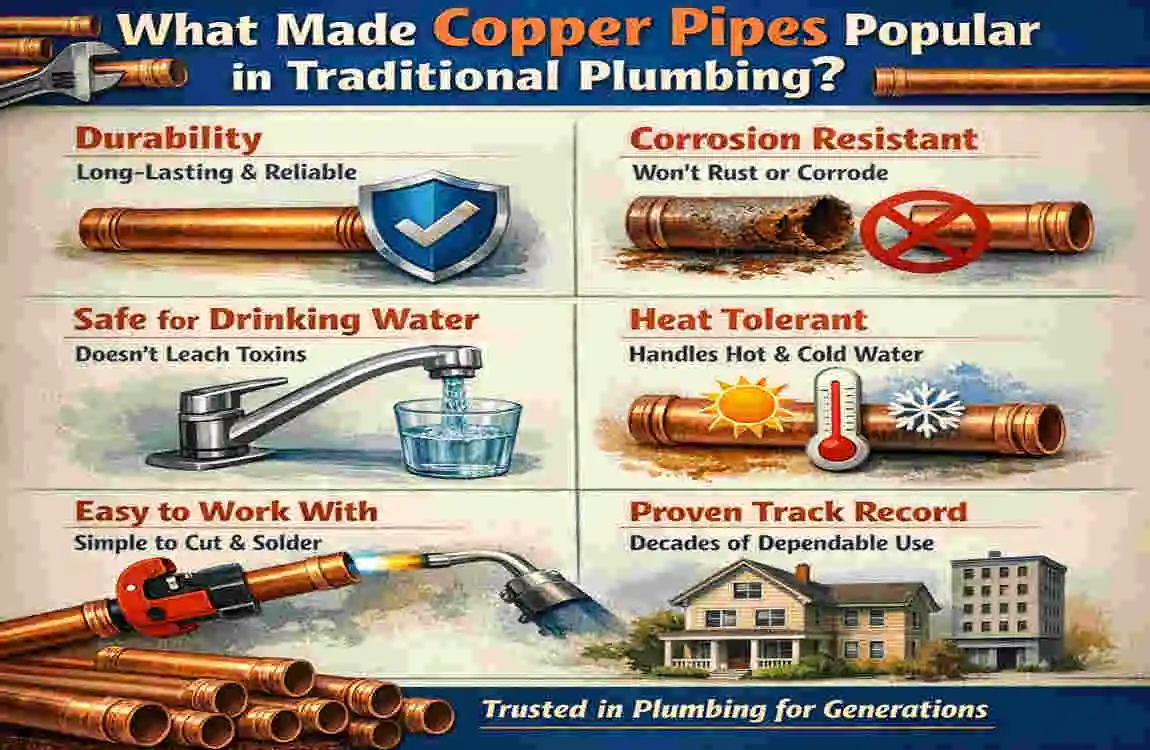
Copper has been used in water systems for a long time. It earned trust because it could handle pressure, heat, and daily use.
Many older homes still have copper plumbing because it was the best mainstream option for years.
Main advantages of copper pipes
Copper had several strong points:
- Long service life
- Good heat resistance
- Strong material structure
- Smaller pipe size than some alternatives
- Useful for hot and cold water lines
That made it a solid choice for many homes.
Common problems with older copper systems
Even good materials have limits. Over time, copper systems can develop problems such as:
- Corrosion
- Pinhole leaks
- Joint failures
- Water chemistry damage
- Repair challenges in older homes
These issues helped push the industry toward other options.
Why Were Copper Pipes Replaced in Plumbing?
Higher material and installation costs
One major reason is cost. Copper is usually more expensive than many newer pipe materials. That includes both the pipe itself and the work needed to install it.
Even if the material is good, the total job cost can be much higher than with newer systems.
More difficult installation
Copper plumbing is not quick or simple to install. It often requires:
- Measuring and cutting
- Fitting rigid pipe sections
- Soldering joints
- Special tools and training
This takes more time and labor than some modern systems. That makes it more expensive on the job site.
Rise of PEX and other plastic pipes
PEX and CPVC grew popular because they are easier to work with. PEX is flexible. CPVC is lightweight and, in many cases, easier to install than copper.
Builders liked that these materials could reduce labor time and simplify plumbing layouts. That helped them spread quickly in residential construction.
Corrosion and water conditions
Copper can perform well, but water chemistry matters. In some homes, certain water conditions can contribute to corrosion and pinhole leaks.
That does not mean all copper plumbing fails. It means copper is more sensitive to some water environments than homeowners expect.
What Replaced Copper Pipes in Modern Plumbing?
PEX pipes
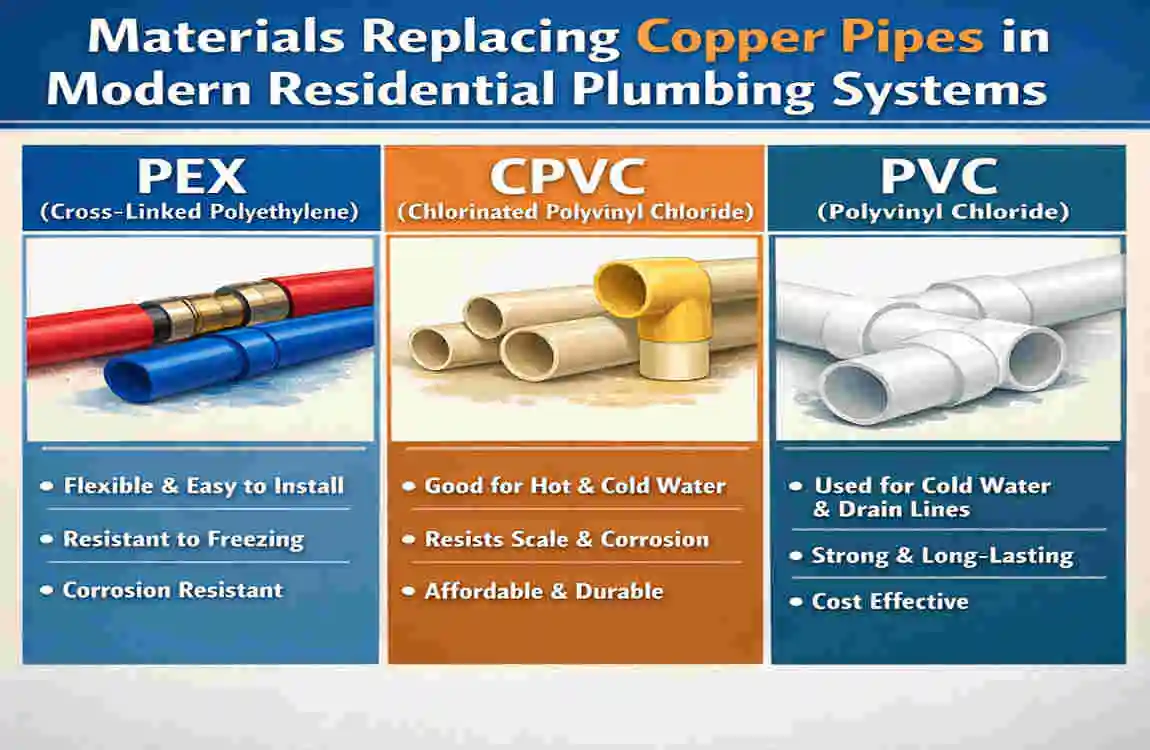
PEX is one of the biggest replacements for copper in residential plumbing. It is a flexible plastic tubing used for water supply lines.
Why PEX became popular
PEX gained traction because it is:
- Flexible
- Fast to install
- Good for reducing fittings
- Useful in renovation work
- Often more affordable than copper
Because it bends around corners, it can save time and reduce connection points.
Limits of PEX
PEX also has some limits. It can be sensitive to UV exposure, so it should not sit in direct sunlight for long periods. It may also not be the best fit for every project or local code.
CPVC pipes
CPVC is another common choice in residential plumbing. It is a rigid plastic pipe often used for water lines.
Why people use CPVC
CPVC is known for being:
- Affordable
- Easy to cut and install
- Suitable for hot and cold water
- Lightweight
It became a practical option for many homes because it is easier to work with than copper.
Things to keep in mind
CPVC is rigid, so it does not have the same flexibility as PEX. It can also be more sensitive to certain installation conditions, so proper handling matters.
PVC pipes
PVC is widely used in plumbing, but mostly for drainage, waste, and vent systems rather than full hot-water supply.
Typical uses
PVC works well for:
- Drain lines
- Vent pipes
- Cold-water or low-temperature uses in some cases
It is lightweight and easy to install, but it is not suitable for every hot-water application.
Other modern plumbing materials
Some systems also use:
- Stainless steel
- Polypropylene
- Hybrid piping systems
Copper still appears in certain projects too, especially where durability or code requirements make it a smart choice.
Copper pipe advantages and disadvantages
Advantages
Copper still has real strengths. It is durable, heat-resistant, and proven over time. It also works well in many water supply applications.
Disadvantages
The downsides are often cost, labor, and potential corrosion in certain conditions. It is also less flexible than PEX.
PEX advantages and disadvantages
Advantages
PEX is flexible, quick to install, and useful in tight spaces. It often reduces labor time and can require fewer fittings.
Disadvantages
It may have limits with sunlight exposure and certain installation preferences. Some homeowners also prefer rigid piping in visible areas.
CPVC advantages and disadvantages
Advantages
CPVC is affordable and fairly easy to install. It works well in many residential water systems.
Disadvantages
It is rigid and can be more sensitive during installation. It also lacks PEX’s flexibility.
How the Shift From Copper Changed Home Plumbing
Faster plumbing installation
One big change was speed. In many cases, builders could install PEX or CPVC faster than copper.
That saved labor costs and helped projects move faster.
Changes in new home construction
New homes often use piping systems that are easier to route through walls, floors, and ceilings. That is one reason plastic-based materials became so common.
They also fit well with modern building schedules and tighter construction budgets.
Repairs and replacements became different too.
When copper fails in an older home, plumbers may repair a section or replace it with another material depending on the project.
In many cases, homeowners do not repipe the entire house at once. They may only replace the damaged section.
Energy and water considerations
Pipe design also affects how well hot water reaches fixtures and how much heat is lost along the way. Good insulation, proper pipe sizing, and smart layout still matter no matter which material is used.
Is Copper Plumbing Still Used Today?
Situations where copper still makes sense
Copper is still useful in some homes and buildings. It may be chosen for:
- Hot-water lines
- Exposed plumbing
- Certain commercial jobs
- Projects with local code preferences
- Homes already using copper piping
When homeowners may still prefer copper
Some people still like copper because it feels familiar, durable, and proven. It can also help match existing copper plumbing in a home.
Can copper and plastic pipes be mixed?
Yes, they often can be connected with the right transition fittings. But the connection must be done properly and according to local plumbing code.
How long can copper pipes last
Copper pipes can last a long time, but not forever. Their lifespan depends on:
- Water quality
- Installation quality
- Maintenance
- Environmental conditions
- Corrosion exposure
How to Choose the Right Plumbing Pipe for Your Home
Consider your budget
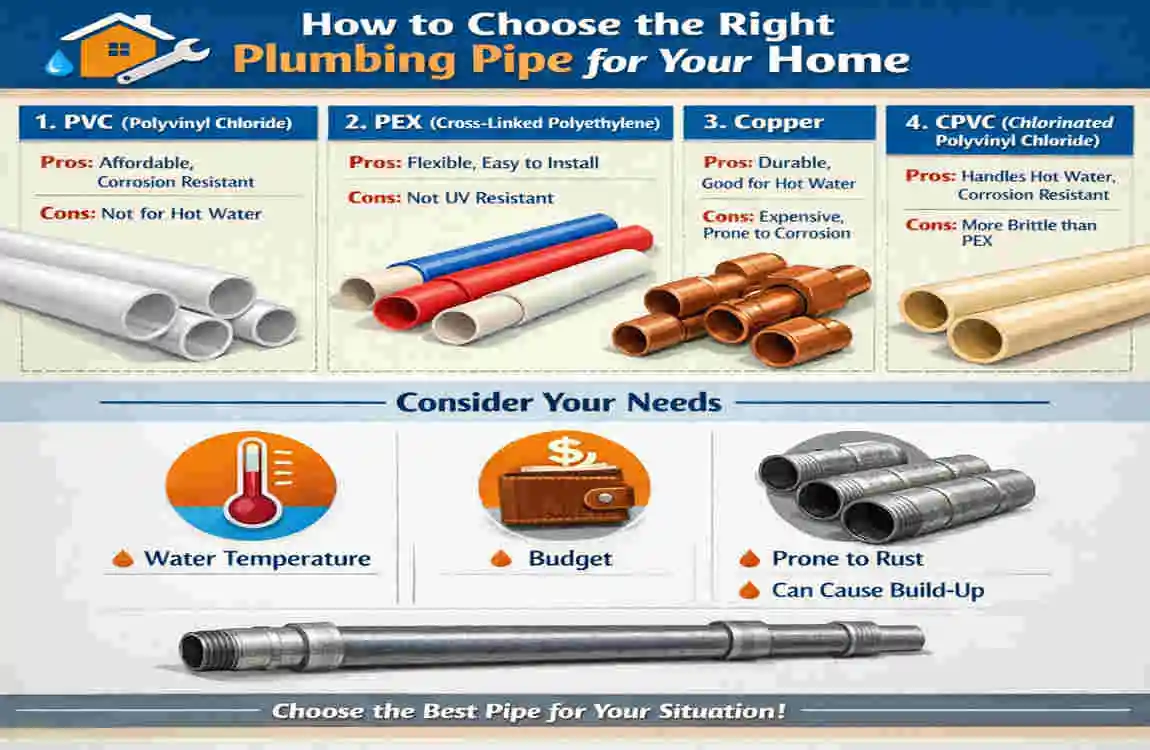
Your budget matters. Copper is usually more expensive in both material and labor. PEX and CPVC are often more affordable.
But cheaper is not always better. The right material should fit the job.
Consider the application
Ask what the pipe will do:
- Hot water
- Cold water
- Drainage
- Indoor use
- Outdoor or exposed use
Different materials work better for different tasks.
Consider local plumbing codes.
Plumbing codes matter a lot. Some places have rules about which materials you can use and how to install them.
Always check local requirements before starting a project.
Consider climate and water conditions.
Cold weather, water chemistry, and moisture levels can all affect pipe performance. A material that works well in one home may not work as well in another.
When old copper pipes should be replaced
You may want to replace old copper if you see:
- Frequent leaks
- Visible corrosion
- Discolored water
- Repeated repairs
- Large renovation needs
If that sounds familiar, a plumber can help decide whether repair or replacement makes more sense.
FAQ: Why Were Copper Pipes Replaced in Plumbing?
Why were copper pipes replaced in plumbing?
Copper was partly replaced because newer materials are often cheaper, easier to install, and more flexible. Corrosion issues also played a role.
What replaced copper pipes in modern plumbing?
The most common replacements are PEX, CPVC, and PVC, depending on the water system and application.
Is PEX better than copper?
Not always. PEX is easier to install and often cheaper, but copper can still be a strong choice in some situations.
Do plumbers still use copper pipes?
Yes. Plumbers still use copper in many homes and commercial projects.
Are copper pipes more expensive than PEX?
Usually yes, especially when you include labor and installation time.
How long do copper plumbing pipes last?
That depends on water quality, installation, and maintenance. Some last for decades, while others fail sooner.
Can old copper pipes be replaced with PEX?
Yes, in many cases. Proper transition fittings and code compliance are important.
Why do old copper pipes develop leaks?
Common causes include corrosion, age, water chemistry, and installation issues.
Should I replace copper pipes in an older house?
It depends on the system’s condition. Frequent leaks and corrosion are strong warning signs.
| Factor | Short Information |
|---|---|
| High Cost | Copper is generally more expensive than PEX and other modern plumbing materials. |
| Installation Time | Copper requires cutting, fitting, and soldering, making installation more labor-intensive. |
| Corrosion | Copper can corrode under certain water conditions and may develop leaks over time. |
| Freezing Risk | Copper pipes can burst when water freezes and expands inside them. |
| PEX Alternative | PEX is flexible, easier to install, and often costs less. |
| Easy Repairs | Modern plastic piping can be simpler and faster to repair or replace. |
