

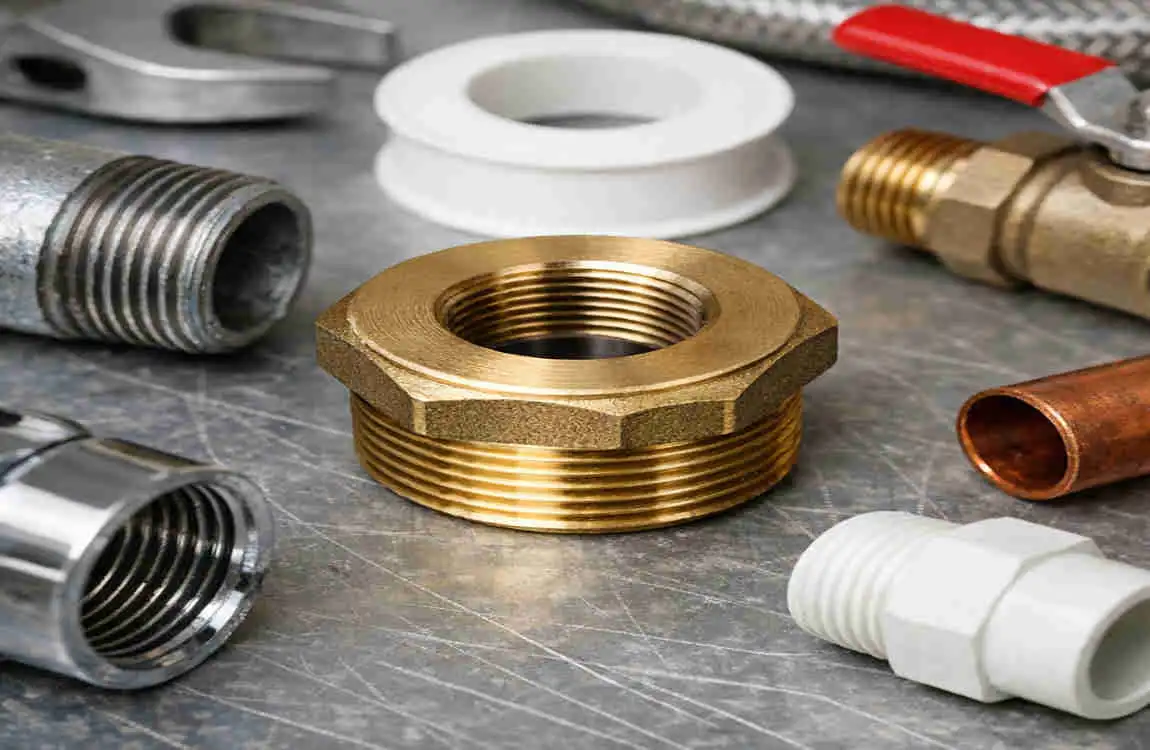
If you are wondering what a bushing is in plumbing, the short answer is this: a plumbing bushing is a small fitting used to connect pipes or fittings of different sizes. It helps one pipe opening fit into another when the sizes do not match exactly.
This makes bushings very useful for home plumbing repairs and upgrades. They help create a clean, secure connection without replacing the whole line.
What Is a Bushing in Plumbing?
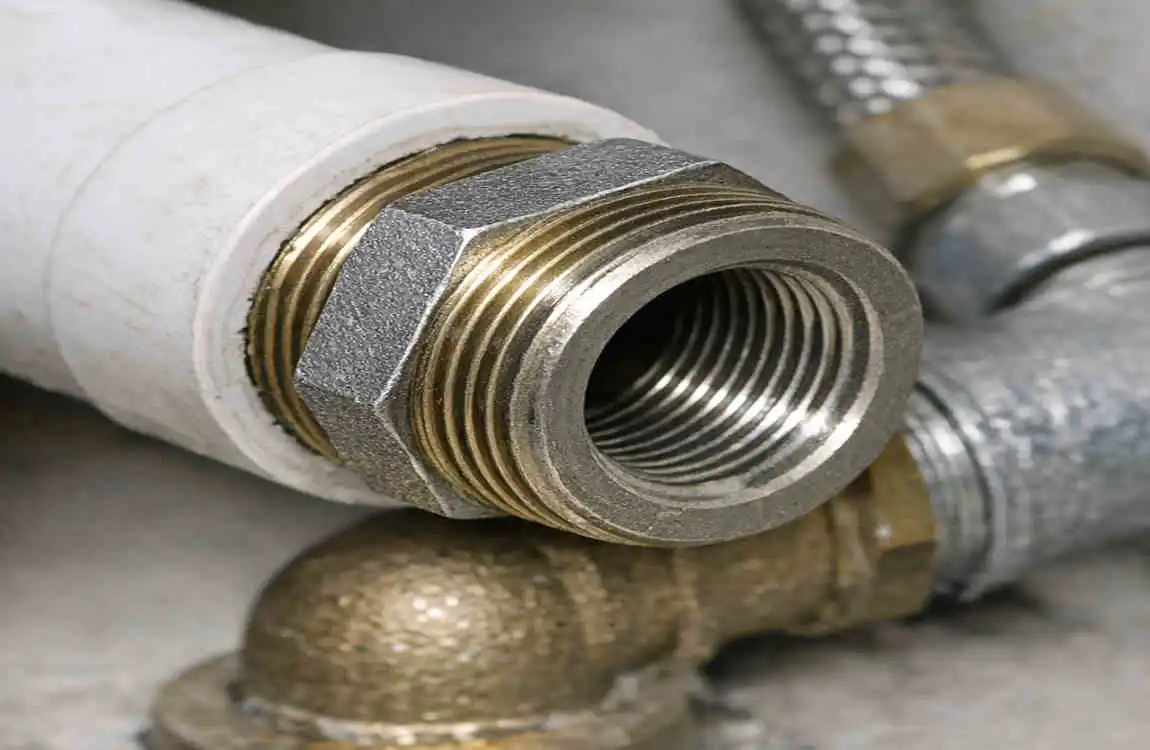
A plumbing bushing is a fitting that helps reduce or adapt pipe size. In simple terms, it allows a larger-threaded opening to connect to a smaller pipe or fitting.
You will often hear the term “reducing bushing” because many bushings are used to reduce the size of a connection.
What Does a Plumbing Bushing Look Like?
A bushing is usually small and round, with threaded edges. Some are made to fit inside a larger fitting, while others connect in a way that adapts one thread size to another.
Most residential bushings come in common sizes and are easy to identify once you know what to look for.
Why Are Bushings Important?
Bushings matter because they help you:
- Connect different pipe sizes
- Save space in tight plumbing areas
- Adjust an older system to fit new parts
- Make repairs easier without replacing large sections
If you are working on plumbing, a bushing can be a simple but very helpful part.
How Does a Plumbing Bushing Work?
A plumbing bushing works by joining two differently sized openings. It changes the connection so the pipes or fittings can fit together properly.
Simple Example of a Bushing
Imagine you have a large threaded fitting, but the pipe you want to connect is smaller. A bushing fills that size gap.
The process is simple:
- The larger fitting holds the bushing.
- The bushing reduces the opening size.
- The smaller pipe or fitting connects to the bushing.
This creates a secure link between parts that would not fit together on their own.
Reducing vs. Non-Reducing Connections
A reducing bushing changes the pipe size. That is its main job.
Not every bushing is used the same way, though. Some are meant for specific thread sizes or material types. That is why matching the right fitting to the right job is so important.
Types of Plumbing Bushings
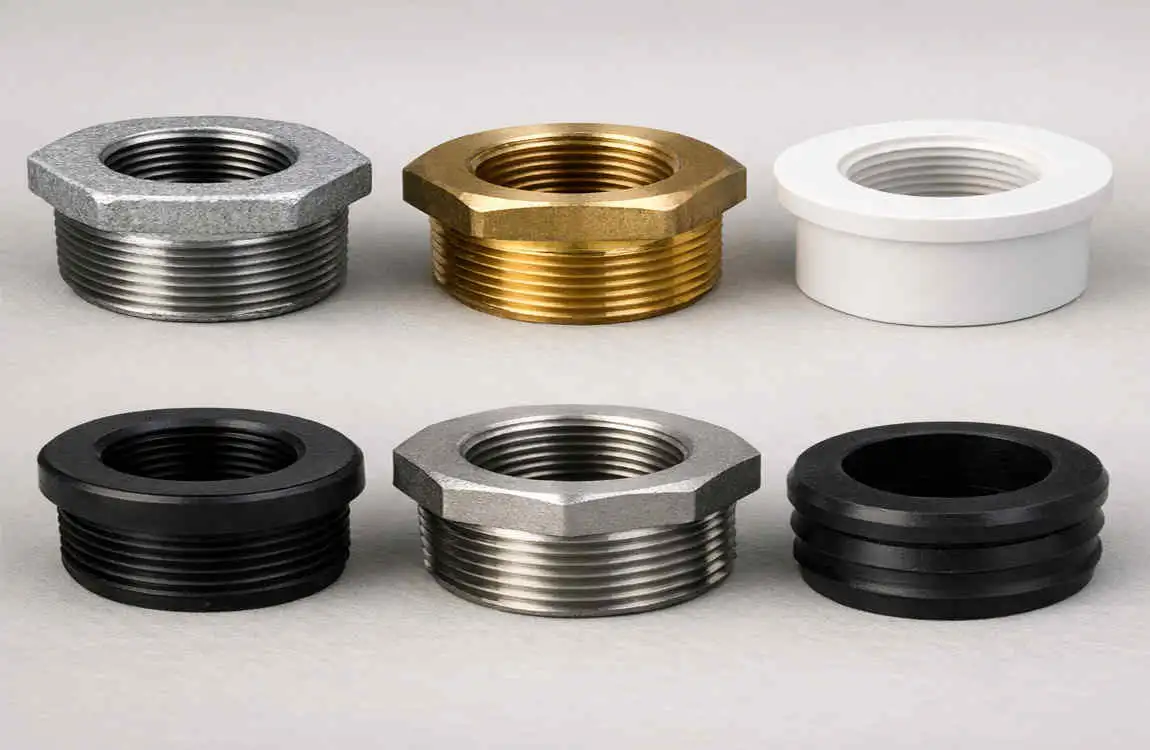
There are several common types of bushings. Each one works best in a different situation.
Threaded Bushings
Threaded bushings are among the most common. They use male and female threads to make the connection.
They are often used in both home plumbing and commercial systems. These are a good choice when you need a tight, secure fit.
Hex Bushings
A hex bushing is hexagonal. This makes it easier to grip with a wrench.
That shape is helpful when you need to tighten or remove the fitting without slipping.
PVC Bushings
PVC bushings are lightweight and corrosion-resistant. They are common in plastic plumbing systems.
They work well in the right setup, especially where metal is not required.
Brass and Metal Bushings
Brass and other metal bushings are known for strength and durability. They are often used in water systems and other plumbing jobs that need a more solid fitting.
Reducing Bushings
Reducing bushings are made to connect a larger opening to a smaller one. This is one of the most useful types for repairs and system changes.
Plumbing Bushing Materials and Applications
The material of the bushing matters just as much as the size. The wrong material can lead to leaks, damage, or early wear.
Bushing MaterialCommon UseMain Benefit
PVC Plastic plumbing Lightweight and corrosion-resistant
Brass Water connections Durable and reliable
Stainless Steel Specialised systems Strong and corrosion-resistant
Steel Heavy-duty applications High strength
CPVC Hot-water applications where compatible Heat resistance
Where Are Bushings Commonly Used?
Bushings are often used in:
- Water supply lines
- Drainage connections
- Equipment hookups
- Irrigation systems
- Commercial plumbing systems
They are especially useful when you need to adapt existing plumbing rather than replace the whole setup.
How to Choose and Install the Right Plumbing Bushing
Choosing the right bushing is not hard, but you do need to check a few details first.
What to Check Before Buying
Look at:
- Pipe size
- Thread type
- Material compatibility
- Pressure needs
- Temperature requirements
- Type of fluid moving through the system
These details help you avoid leaks and poor fits.
Basic Installation Steps
Here is a simple installation process:
- Shut off the water.
- Clean the threads and connection area.
- Confirm the size and thread type.
- Apply thread sealant or plumber’s tape if needed.
- Thread the bushing in carefully.
- Tighten it gently.
- Turn the water back on and check for leaks.
Common Installation Mistakes
A few common mistakes include:
- Choosing the wrong size
- Mixing incompatible materials
- Cross-threading the fitting
- Over-tightening the bushing
- Ignoring pressure or temperature limits
Over-tightening is especially risky with plastic fittings because it can crack the part.
Plumbing Bushing vs. Reducer: What Is the Difference?
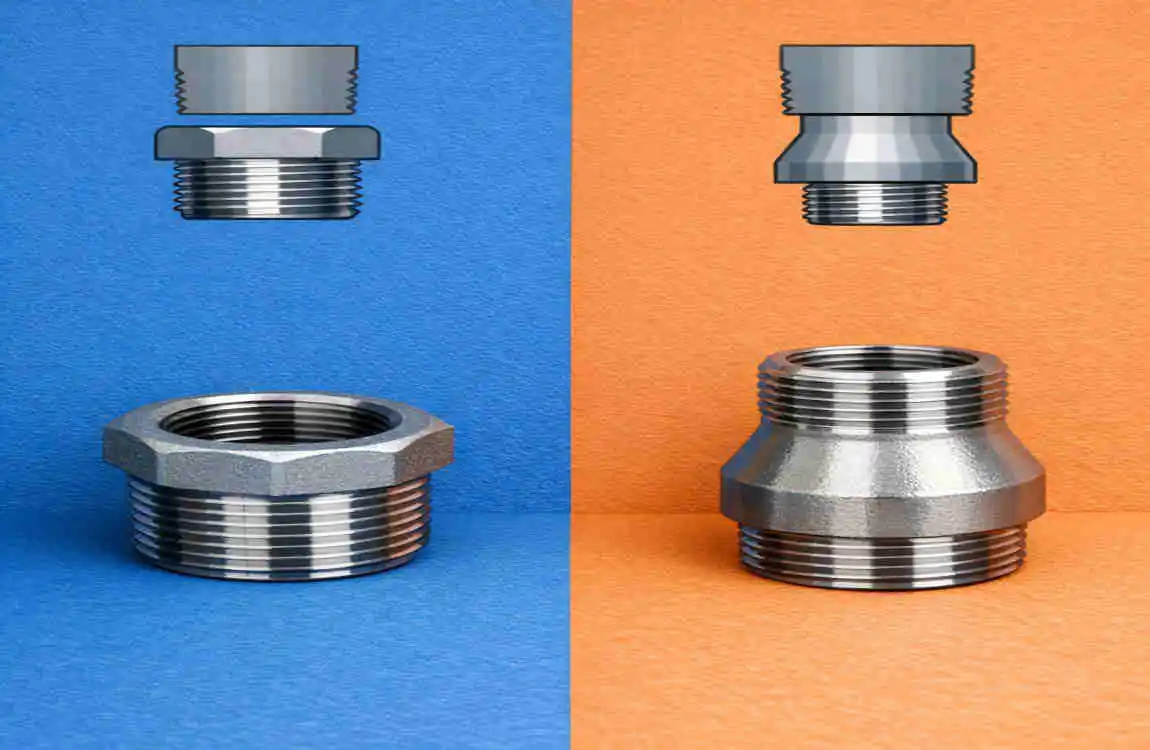
People often confuse a bushing with a reducing coupling or other reducer fitting. They are similar, but not the same.
FeatureBushingReducer
Main purpose Adapts different connection sizes Reduces pipe size
Typical design Often threaded Threaded, solvent-welded, or other types
Space requirement Usually compact May need more space
Common use Adapting fittings Connecting different pipe diameters
Which One Should You Use?
That depends on:
- Pipe size
- Connection type
- Material
- Pressure
- Installation space
If the system is complex or pressurised, it is smart to ask a qualified plumber for help.
Benefits, Maintenance, Plumbing, Bushings
Benefits of Using a Plumbing Bushing
Bushings offer several practical benefits:
- They connect different pipe sizes.
- They save space.
- They come in many materials and sizes.
- They make repairs easier.
- They can help modify older systems.
How to Maintain Plumbing Bushings
Bushings do not need much care, but you should still inspect them from time to time.
Look for:
- Leaks
- Cracks
- Corrosion
- Worn or damaged threads
If a fitting is damaged, replacing it is usually better than tightening it repeatedly.
Frequently Asked Questions
What is a bushing used for in plumbing?
It is used to connect pipes or fittings of different sizes, especially in threaded plumbing systems.
Is a plumbing bushing the same as a reducer?
They are similar, but not always the same. A bushing is often more compact and used to adapt fittings, while a reducer is mainly used to lower pipe size.
Can PVC bushings be used with metal pipes?
Sometimes, but compatibility depends on the full system. Always check the material, pressure, temperature, and manufacturer instructions.
How do I know what size bushing I need?
Measure the pipe or fitting size and check the thread type before buying. Matching the exact size is important.
Can a plumbing bushing prevent leaks?
Yes, if it is the right size and installed correctly. But sealant and proper tightening also matter.
Can I install a plumbing bushing myself?
Simple jobs may be fine for DIY work. But hidden, pressurised, or complicated plumbing should be handled by a professional.
| Aspect | Simple Explanation |
|---|---|
| What is a bushing? | A plumbing fitting used to connect pipes or fittings with different sizes. |
| Main purpose | Reduces the size of a pipe connection while keeping the joint secure. |
| Common materials | PVC, CPVC, brass, stainless steel, and other metals. |
| Where it is used | Water supply lines, drainage systems, irrigation, and industrial plumbing. |
| Types | Reducing bushings, threaded bushings, and slip/socket bushings. |
| Key benefit | Makes it easier to transition between different pipe diameters. |
| Installation tip | Choose a bushing that matches the pipe material, size, and connection type |
