
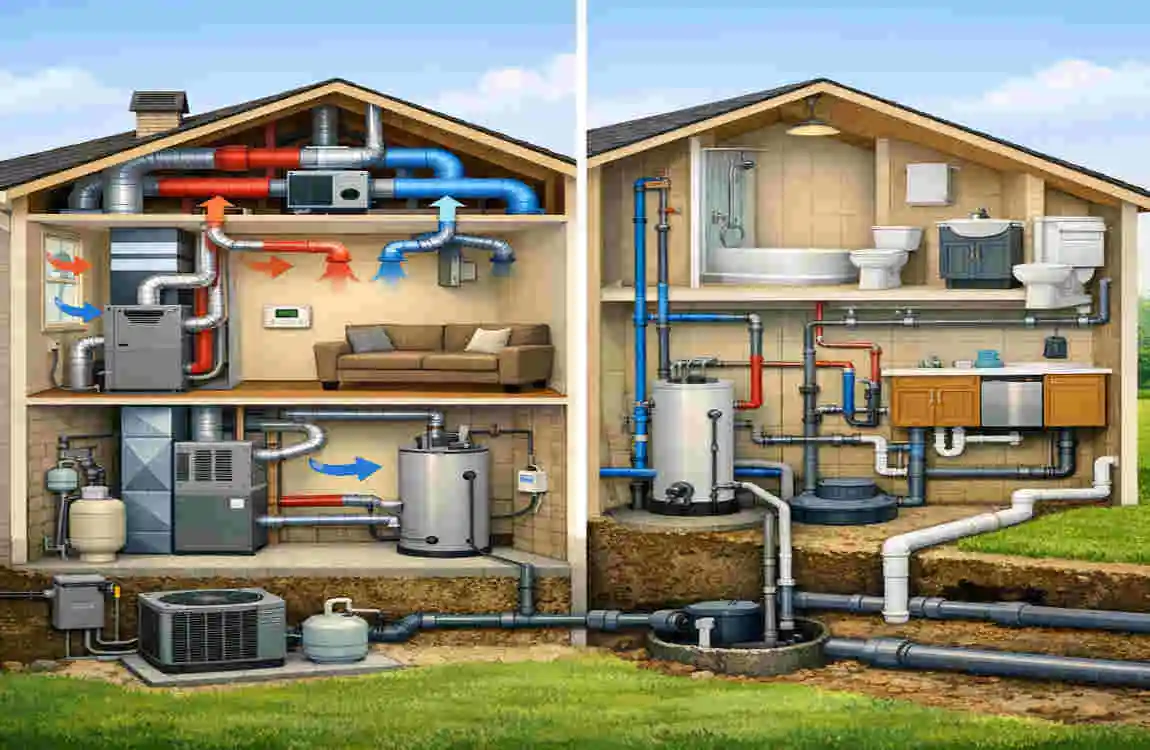
HVAC is not the same as plumbing. They are separate building systems, but they can work together in some homes and commercial properties.
HVAC stands for heating, ventilation, and air conditioning. It helps control indoor temperature, airflow, humidity, and air quality. Plumbing is the system that brings clean water into a building and carries wastewater out through pipes, drains, fixtures, and pumps.
People often mix them up because some contractors handle both, and some equipment connects the two systems. For example, boilers, water heaters, and condensate drains can involve both HVAC and plumbing knowledge.
What Is an HVAC System?
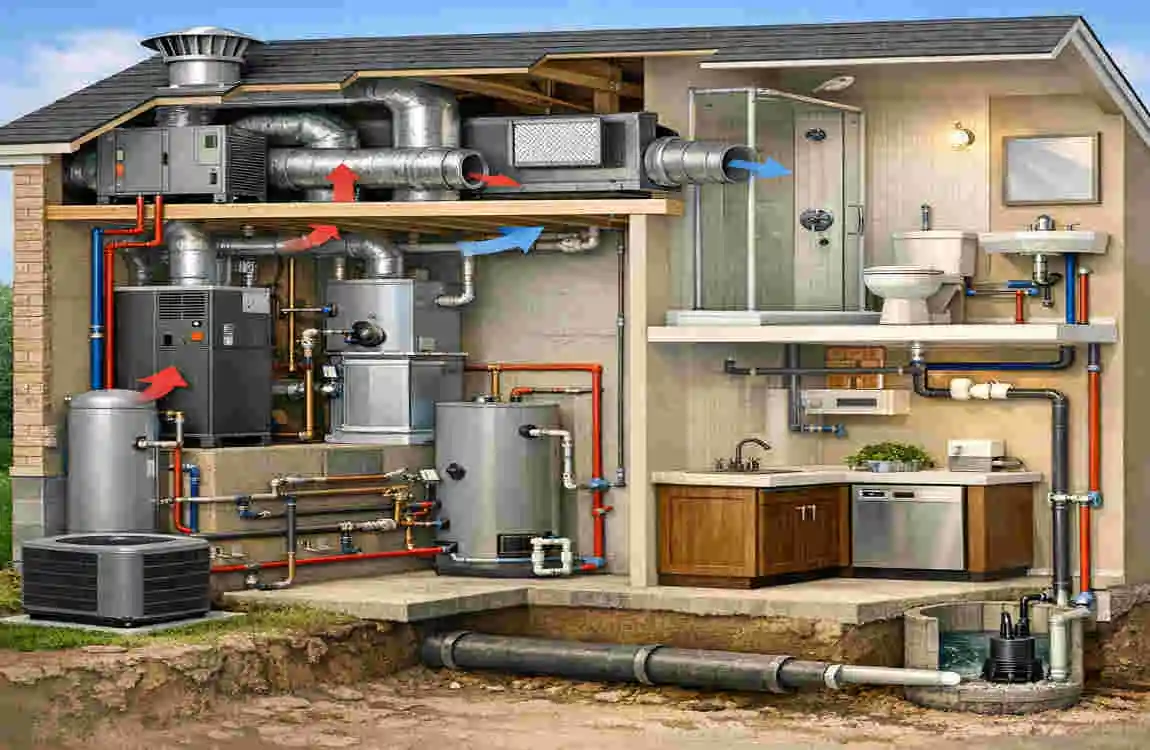
HVAC systems keep a building comfortable and safe by managing heat, air movement, and cooling. They are built to make indoor spaces feel stable and livable in different seasons.
Heating
Heating systems warm a home or building during cold weather. They do this in different ways, depending on the equipment.
Common heating systems include:
- Furnaces, which heat air and send it through ductwork
- Heat pumps, which move heat from one place to another
- Boilers, which heat water for radiators or floor systems
- Electric heaters, which may be used in small spaces or as backup heat
Heating systems can use electricity, natural gas, oil, or water. The main goal is the same: keep indoor spaces warm and comfortable.
Ventilation
Ventilation moves stale indoor air out and fresh air in. This helps with odors, moisture, smoke, dust, and other pollutants.
Ventilation is more than opening a window. A proper system uses air paths, fans, vents, and sometimes fresh-air equipment to keep air moving in a controlled way.
It may include:
- Return vents
- Exhaust fans
- Air handlers
- Mechanical ventilation systems
- Fresh-air intake systems
Good ventilation supports indoor air quality and helps prevent stuffy rooms and moisture buildup.
Air Conditioning
Air conditioning removes heat from indoor air and sends it outside. It also helps control humidity, which matters just as much as temperature.
A typical AC system includes:
- Compressor
- Condenser coil
- Evaporator coil
- Refrigerant
- Blower fan
- Thermostat
When the system runs, it cools air and removes moisture. That is why a room can feel more comfortable even if the thermostat number is only a little lower.
Main HVAC Components
Not every system has the same parts, but many HVAC systems use some of these:
- Thermostats and smart controls
- Ducts and vents
- Air filters
- Indoor and outdoor units
- Refrigerant lines
- Condensate drain lines
- Heat exchangers
- Fans and blowers
A ductless mini-split, for example, works differently from a central air system. That is why HVAC systems can vary a lot from home to home.
What Is a Plumbing System?
Plumbing is the system that delivers clean water into a building and safely removes wastewater. It also may support hot water, drainage, and other special equipment.
Water Supply
Water enters a building through a main supply line. From there, it is sent to sinks, showers, toilets, laundry rooms, and appliances.
Important parts of the supply side include:
- Main shutoff valves
- Cold-water and hot-water lines
- Pressure regulators
- Water meters
- Expansion tanks
- Backflow prevention devices
These parts help keep water flowing safely and at the right pressure.
Drainage and Wastewater
Once water is used, it leaves through drainpipes. These pipes carry wastewater away from sinks, tubs, toilets, and other fixtures.
This part of plumbing includes:
- Drain lines
- Traps
- Vents
- Cleanouts
- Sewer lines
Plumbing vents are especially important. They let air move through the drainage system, balance pressure, and help sewer gases escape safely through the roof.
Fixtures and Appliances
Plumbing systems connect to many everyday items, such as:
- Toilets
- Faucets
- Sinks
- Showers and bathtubs
- Water heaters
- Garbage disposals
- Sump pumps
- Washing machines
- Dishwashers
- Water filtration systems
Water heaters are a good example of where plumbing can connect with heating equipment. Some are simple tank units, while others use heat-pump technology or other advanced systems.
Plumbing Materials
Different homes use different pipe materials. Common examples include:
- Copper
- PVC
- CPVC
- PEX
- Galvanized steel
- Cast iron
The right material depends on water temperature, pressure, building age, local code, budget, and where the pipe is used.
HVAC vs Plumbing: Key Differences
Here is a simple way to compare the two systems:
FeatureHVAC systemPlumbing system
Main purpose Controls heating, cooling, ventilation, humidity, and indoor air quality Supplies water and removes wastewater.
Main materials Ductwork, refrigerant lines, coils, filters, fans, thermostats Water pipes, drainpipes, valves, fixtures, tanks, and pumps
Common equipment Furnace, heat pump, air conditioner, boiler, air handler Water heater, toilet, faucet, sump pump, drain, and sewer line
Main resource Air, electricity, fuel, and sometimes water Fresh water and drainage networks
Common problems Poor airflow, refrigerant issues, dirty filters, frozen coils, thermostat faults Leaks, clogs, low pressure, sewer odors, water-heater problems
Typical professional HVAC technician or mechanical contractor Plumber or plumbing contractor
Maintenance focus Filters, coils, ducts, refrigerant circuits, safety controls, airflow Pipes, valves, drains, water pressure, fixtures, water heating
So, Is HVAC Plumbing?
No, HVAC is not plumbing. HVAC is about heating, cooling, and air movement. Plumbing is about water supply, drainage, and wastewater removal.
That said, the two systems can overlap. A boiler, a condensate drain, or a heat pump water heater may require knowledge of both HVAC and plumbing.
How HVAC and Plumbing Work Together
Condensate Drainage
Air conditioners and some heating equipment make condensation. That water must go somewhere, so it is routed to a condensate drain line or pumped.
If this system fails, you may notice:
- Water around the indoor unit
- A full drain pan
- Musty smells
- Sudden shutdowns
- Water stains on ceilings or walls
These signs should not be ignored. A small drain issue can quickly become a bigger water problem.
Boilers and Hydronic Heating
Boilers heat water and send it through pipes to radiators, baseboards, or radiant floor systems. This is one of the clearest examples of HVAC plumbing systems working together.
The boiler itself is part of the heating system, but water circulation depends on pipework and fittings that often require plumbing skills as well.
Water Heaters
Water heaters are typically considered plumbing equipment because they supply hot water to fixtures. But many modern units use heating technology that overlaps with HVAC.
A heat-pump water heater, for example, moves heat from the air to heat water. That makes it a bridge between the two trades.
Humidity and Moisture Control
HVAC can help control indoor moisture, but it cannot fix a plumbing leak. If a pipe is leaking behind a wall, the source must be repaired first.
Too much moisture can lead to:
- Mold growth
- Damaged paint or drywall
- Bad odors
- Uncomfortable rooms
So if you see water where it shouldn’t be, always check the plumbing side, too.
Coordinated Building Design
In new construction or remodeling, HVAC and plumbing should be planned together. That helps prevent conflicts with walls, ceilings, electrical wiring, and structural parts of the home.
Good planning also makes future repairs easier. When systems are properly placed, technicians can access them without tearing into the building.
Installation, Maintenance, and Common Problems
Good installation matters for both systems. If pipes are sloped incorrectly or HVAC components are poorly sized, problems can recur.
HVAC Maintenance
Regular HVAC maintenance helps the system run smoothly. Simple care can prevent bigger issues later.
Helpful maintenance tasks include:
- Replacing or cleaning air filters as needed
- Keeping outdoor units clear of debris
- Checking vents and registers for blocked airflow
- Cleaning accessible coils and drain pans
- Inspecting ductwork for visible damage
- Testing thermostats and safety controls
- Calling a professional when the system sounds or behaves strangely
Maintenance needs vary by system type, climate, and manufacturer instructions, so there is no one perfect schedule for every home.
Plumbing Maintenance
Plumbing also needs regular care. Small leaks and clogs can lead to costly damage if ignored.
Good plumbing habits include:
- Fixing leaks quickly
- Avoiding grease and wipes in drains
- Checking under sinks for moisture
- Watching water pressure
- Flushing or inspecting water heaters when needed
- Knowing where the main shutoff valve is
- Protecting exposed pipes in cold weather
- Keeping yard and foundation drainage clear
These steps help reduce the risk of water damage and the need for emergency repairs.
Common HVAC Problems
Some common HVAC problems include:
- Uneven temperatures
- Weak airflow
- Strange noises
- Frequent cycling on and off
- Poor heating or cooling
- Rising energy use
- Water leaking from the indoor unit
- Bad smells from vents
Some of these issues are simple, like a dirty filter. Others may involve electrical, refrigerant, gas, or combustion concerns and should be handled by a qualified professional.
Common Plumbing Problems
Common plumbing issues include:
- Dripping faucets
- Slow drains
- Running toilets
- Low water pressure
- Burst or leaking pipes
- Water-heater problems
- Sewer smells
- Discolored water
- Standing water around fixtures
For major leaks, sewage backups, or gas odors, act quickly and call a professional.
Choosing the Right Professional
This part is simple:
- Poor cooling or heating? Call an HVAC technician.
- Blocked drains or pipe leaks? Call a plumber.
- A remodeling project with both systems? You may need both, or a contractor who coordinates them.
Knowing who to call saves time and helps fix the real problem faster.
Quick Summary of HVAC vs Plumbing
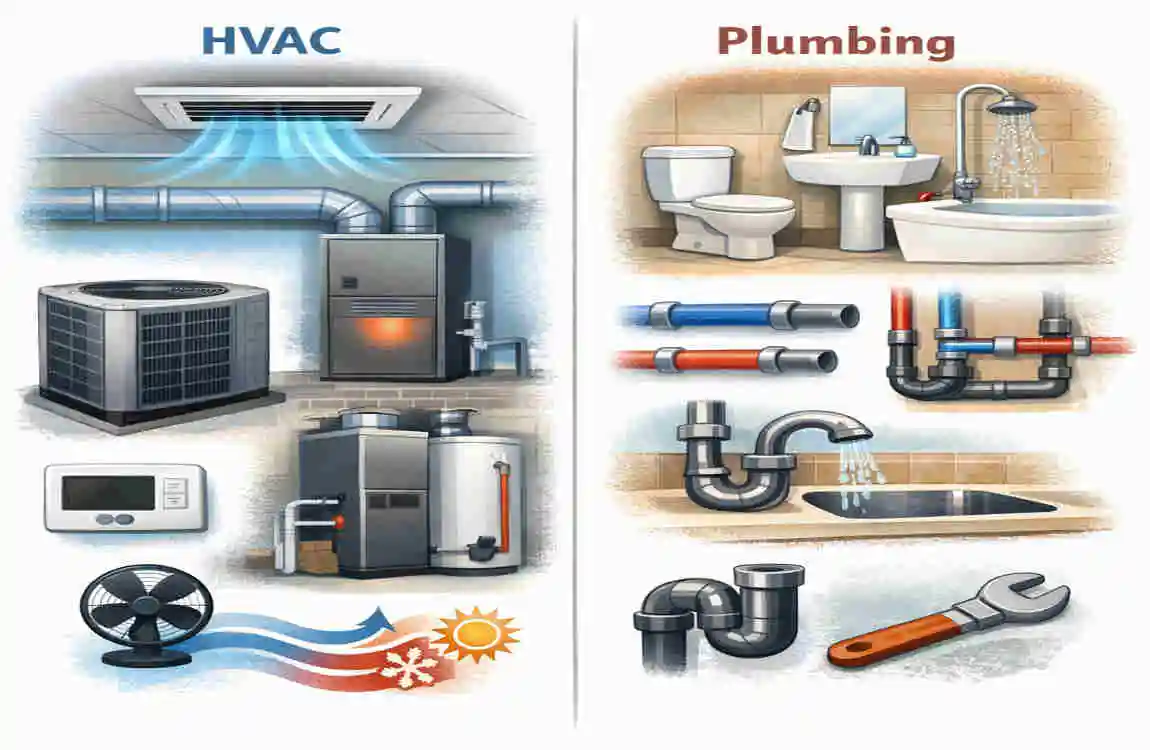
HVAC Is About Comfort and Air
HVAC systems control temperature, airflow, humidity, and indoor air quality. They are designed to maintain a comfortable indoor environment.
Plumbing Is About Water and Waste
Plumbing systems move clean water in and wastewater out. They support everyday needs like bathing, cooking, cleaning, and flushing.
They Can Overlap, But They Are Not the Same
Some equipment, like boilers and water heaters, sits near the line between the two. But in most homes, HVAC and plumbing are still separate trades with different jobs.
FAQ About HVAC and Plumbing
Is HVAC plumbing?
No. HVAC means heating, ventilation, and air conditioning. Plumbing deals with water supply, drainage, fixtures, and wastewater removal.
Does HVAC include plumbing?
Not general plumbing. However, HVAC work may involve condensate drains, boilers, hydronic heating pipes, or water connections for certain equipment.
Is a boiler HVAC or plumbing?
A boiler is usually considered part of HVAC heating because it warms the home. Since it uses water and pipes, plumbing knowledge may also be involved.
Does an air conditioner need plumbing?
A central air conditioner does not use plumbing like a sink or toilet, but it does create water that must be drained safely through a condensate line.
Can a plumber repair an HVAC system?
A plumber can repair water-related components connected to HVAC systems, such as condensate lines or boiler piping. But refrigerant, electrical, and airflow problems usually need an HVAC technician.
Can an HVAC technician repair plumbing?
Sometimes for related parts, yes. But general plumbing repairs, such as clogged drains, toilet issues, and pipe leaks, are usually handled by a plumber.
Are HVAC and plumbing systems connected?
Yes, sometimes. They can connect through boilers, water heaters, condensate drains, and moisture control. Still, they remain separate systems.
| System | What It Does | Main Components |
|---|---|---|
| HVAC System | Controls indoor temperature, air quality, and comfort. | Heating unit, air conditioner, ventilation, thermostat, ductwork |
| Heating | Warms the home during cold weather. | Furnace, boiler, heat pump, radiators |
| Cooling | Removes heat and moisture from indoor air. | AC unit, evaporator coil, condenser, refrigerant lines |
| Ventilation | Brings in fresh air and removes stale air. | Ducts, vents, exhaust fans, air filters |
| Plumbing System | Supplies clean water and removes wastewater. | Pipes, faucets, drains, water heater, valves |
| Water Supply | Delivers hot and cold water throughout the house. | Supply pipes, water heater, fixtures |
| Drainage | Carries wastewater away from sinks, toilets, and appliances. | Drainpipes, traps, vents, sewer line |
| Key Difference | HVAC manages air and temperature, while plumbing manages water and wastewater. | Both require proper installation and regular maintenance |
