

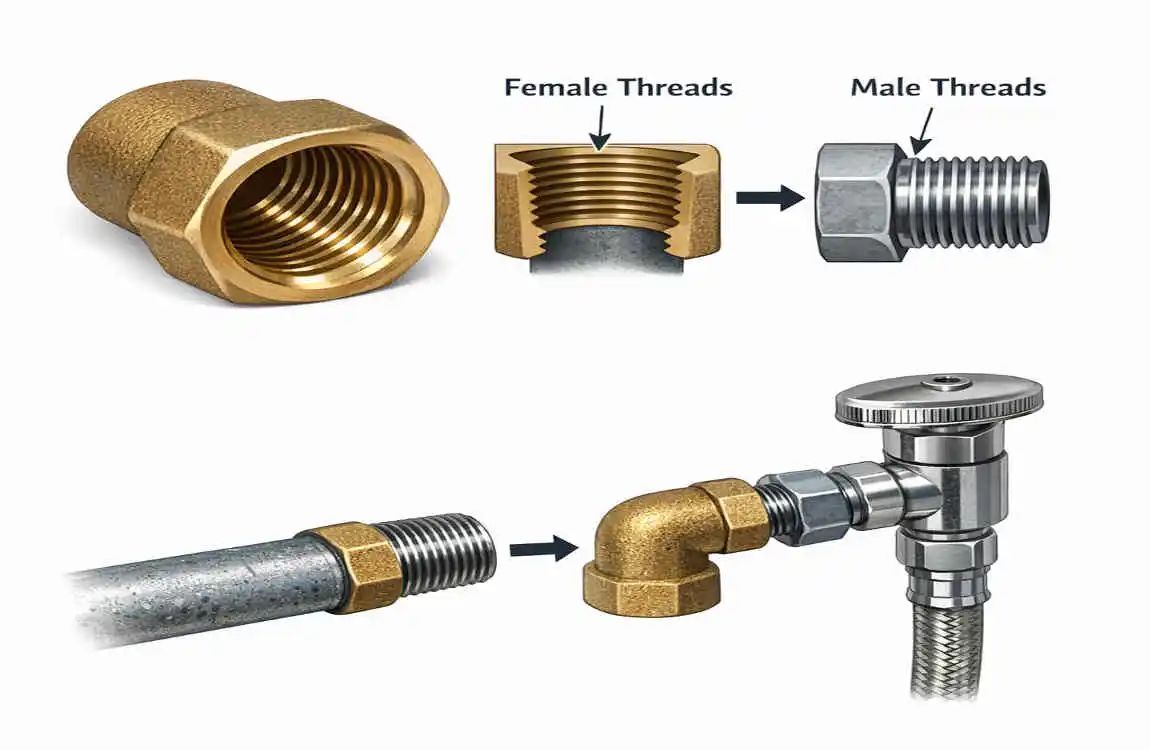
You will often see FPT on fittings made from PVC, brass, copper, or stainless steel. These fittings are common in home plumbing, irrigation systems, valves, and appliance connections.
An FPT fitting has threads cut on the inside wall of the opening. When you turn a male-threaded pipe or connector into it, the threads grab each other and form a tight joint.
That joint often needs a sealant, like thread tape or thread paste, to help prevent leaks. The threads create the connection, while the sealant helps fill small gaps.
Common FPT Plumbing Fittings and Connections
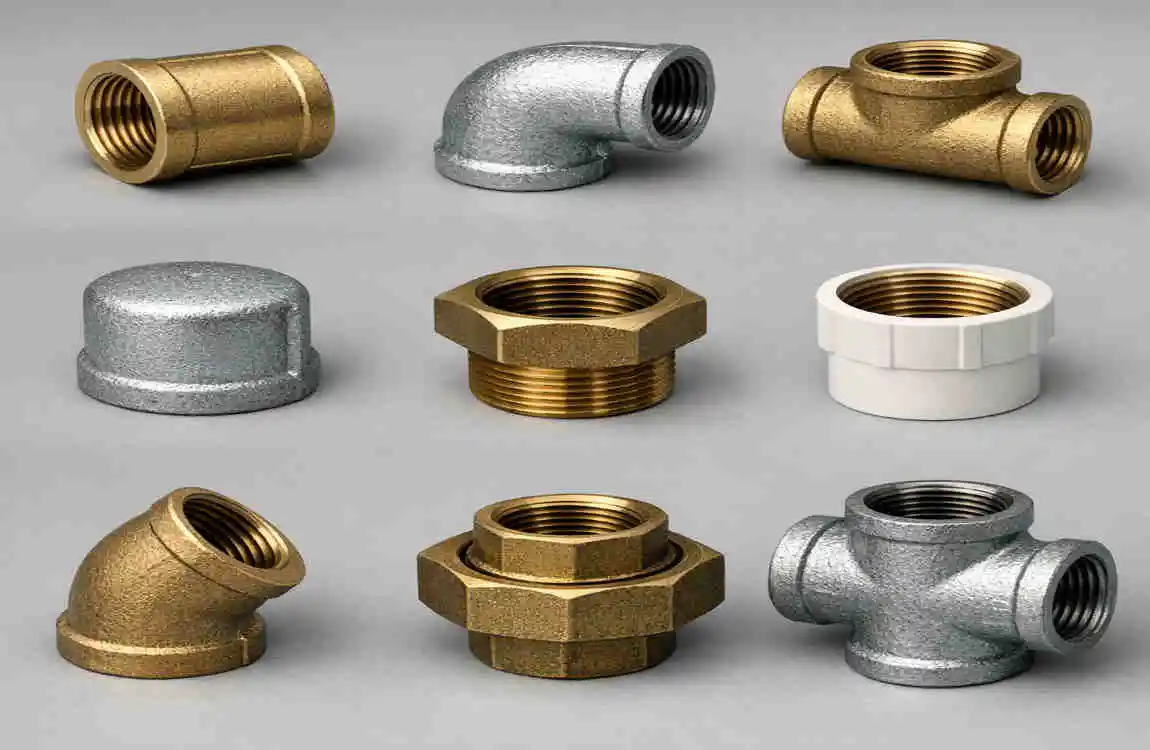
FPT Adapters
FPT adapters connect different types of plumbing parts. For example, an adapter may connect FPT to MPT or FPT to slip.
These are useful when a project has mixed materials or different connection styles. They help make plumbing systems more flexible.
FPT Elbows and Tees
An FPT elbow changes the direction of water flow, usually at a 45-degree or 90-degree angle.
An FPT tee creates a branch line. This is helpful when one water line needs to split into two directions.
These fittings are often used in basic home plumbing layouts.
FPT Valves and Connectors
Many valves use female threads because they need to connect neatly to pipes, fixtures, or other fittings. You may see FPT on shutoff valves, hose connections, and water line parts.
Always make sure the thread size matches. Even if the fitting looks right, the connection will fail if the size is wrong.
FPT vs. Other Plumbing Thread Types
FPT vs. NPT
This is where people often get confused. FPT describes the thread gender. NPT describes the thread standard.
So when you see something like FPT NPT, it usually means a female fitting that uses the NPT standard.
In simple terms:
- FPT = inside thread
- NPT = thread type/standard
FPT vs. MPT
This is the easiest comparison. FPT has inside threads. MPT has outside threads. They are made to fit together.
If you have two female ends, they will not connect directly. If you have two male ends, they will not connect either.
FPT vs. Compression and Slip Connections
Not every plumbing connection uses threads. Some use compression fittings, while others use slip connections.
- Threaded fittings screw together
- Compression fittings use a compression ring
- Slip fittings are glued or joined without threads
Each type has its own purpose. Threaded fittings are useful when you may need to disconnect them later.
How to Choose the Right FPT Plumbing Fitting
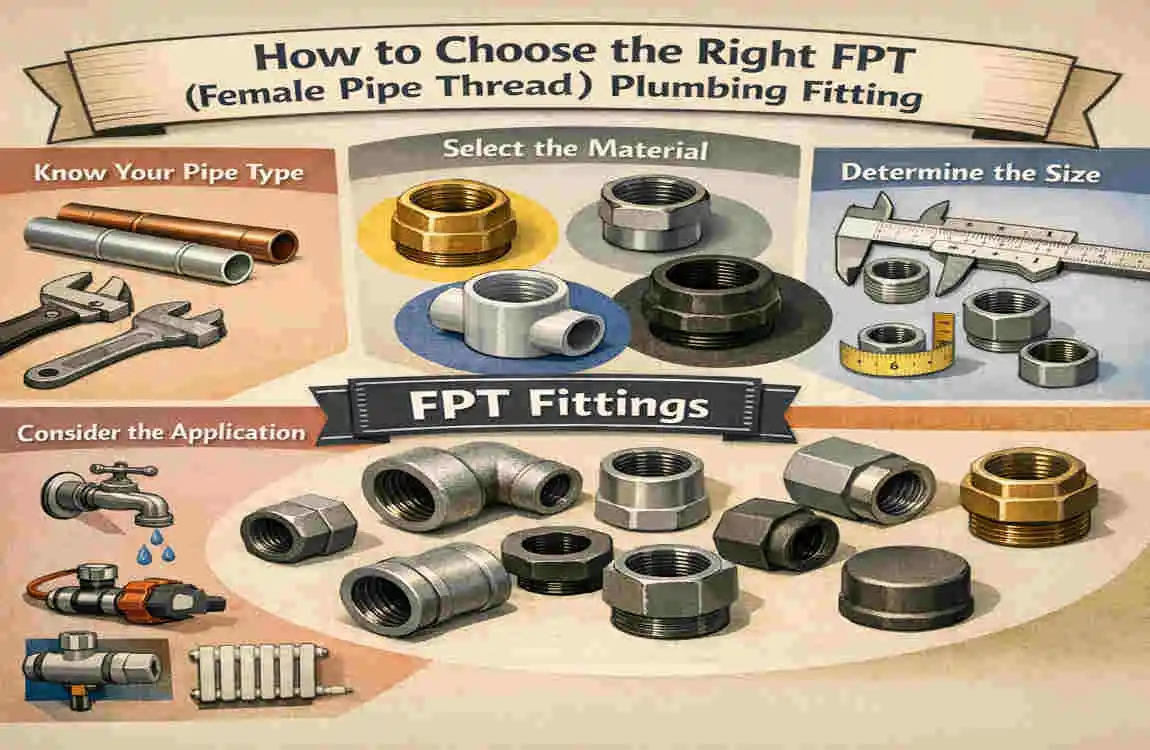
Check the Size
Size matters a lot in plumbing. An almost right fitting is still wrong.
Always check the pipe size and the fitting size before buying. Pipe sizes can be confusing because the listed size is often nominal, not the exact measured opening.
Match the Material
FPT fittings come in different materials, and each one has different uses:
- PVC FPT fittings for many water and drainage applications
- Brass FPT fittings for durability and general plumbing use
- Stainless-steel fittings for strong corrosion resistance
- CPVC fittings for hot-water-related uses in some systems
Make sure the materials are compatible with each other and with the water type and pressure in your system.
Confirm Thread Compatibility
Before installation, check whether the fitting is female or male, and whether it uses the correct thread standard.
Forcing the wrong parts together can damage the threads and cause leaks.
How to Install an FPT Plumbing Fitting
Basic Installation Steps
Installing an FPT fitting is usually straightforward if you take your time:
- Clean the threads
- Inspect for damage
- Apply thread sealant if needed
- Start the connection by hand
- Tighten carefully
- Check for leaks
Do not rush this process. A careful installation usually prevents problems later.
Thread Tape and Pipe Sealant
Thread tape and liquid sealant help seal threaded joints. They aren’t always required, but they are commonly used.
Follow the fitting manufacturer’s instructions. Some fittings need tape, some need paste, and some may not need both.
Common Installation Mistakes
Avoid these common problems:
- Cross-threading
- Over-tightening
- Using the wrong size
- Mixing incompatible thread types
- Ignoring damaged threads
- Using too much sealant
A small installation mistake can create a leak that becomes a bigger problem later.
Where Are FPT Fittings Used in Home Plumbing?
FPT in Water Supply Lines
FPT fittings are often used around shutoff valves, fixtures, filters, and other water lines. They create secure connections where parts may need to be removed or replaced later.
FPT in Outdoor and Irrigation Plumbing
You will also find FPT fittings in garden hoses, sprinkler systems, and outdoor water setups. In these areas, weather-resistant materials are important.
If the connection will be outside, choose a fitting that can handle moisture and temperature changes.
When Should You Use an FPT Fitting?
Use an FPT fitting when:
- You need a female threaded connection
- You are connecting to a male-threaded part
- You are replacing an older threaded fitting
- You need a removable connection
That makes FPT a very practical choice for many home plumbing jobs.
FPT Plumbing Problems, Maintenance
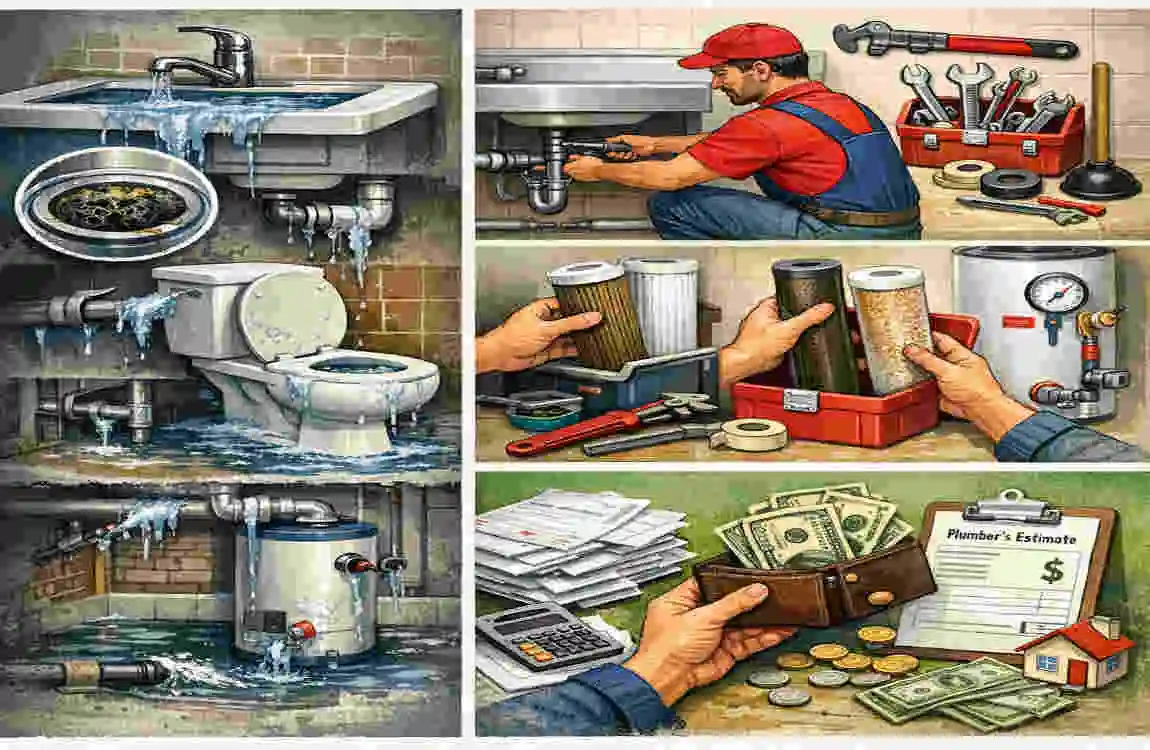
How to Fix a Leaking FPT Connection
If an FPT connection leaks, start by turning off the water.
Then:
- Remove the fitting
- Inspect the threads
- Check for cracks or wear
- Reapply sealant if needed
- Reconnect carefully
- Test the joint again
If the fitting is damaged, replacement may be the better option.
How to Prevent Leaks
You can reduce leaks by:
- Choosing the correct size
- Avoiding cross-threading
- Not over-tightening
- Using the right sealant
- Checking connections over time
Regular inspection helps catch problems early.
FAQ About FPT in Plumbing
What does FPT mean in plumbing?
It means Female Pipe Thread, which is a fitting with internal threads.
Is FPT the same as female pipe thread?
Yes. FPT is the shorthand term for female pipe thread.
What is the difference between FPT and MPT?
FPT has internal threads, while MPT has external threads.
Does FPT mean NPT?
Not exactly. FPT describes the thread gender, while NPT describes the thread standard.
Can an FPT fitting connect to an MPT fitting?
Yes. That is the normal threaded connection.
What size FPT fitting should I use?
Use the size that matches your pipe or fitting exactly. Check manufacturer specifications if needed.
Do FPT fittings need thread tape?
Often yes, but not always. It depends on the fitting type and manufacturer instructions.
Can FPT fittings be used for water lines?
Yes, they are commonly used in water supply systems.
| Term | Meaning | Common Use | Example |
|---|---|---|---|
| FPT | Female Pipe Thread | Connecting pipes and fittings | Valve with female threads |
| Thread Type | Internal threads | Receives a male-threaded fitting | FPT adapter |
| Connection | Screwed/threaded connection | Water and plumbing lines | Pipe-to-valve connection |
| FPT vs MPT | FPT is female; MPT is male | Joining compatible fittings | FPT fitting + MPT fitting |
| Sealing | Thread sealant or PTFE tape may be used | Helps prevent leaks | Threaded water connection |
| Common Materials | PVC, CPVC, brass, steel | Residential and commercial plumbing | FPT PVC adapter |
| Key Tip | Match thread size and type | Ensures proper connection | ½-inch FPT with ½-inch MPT |
