

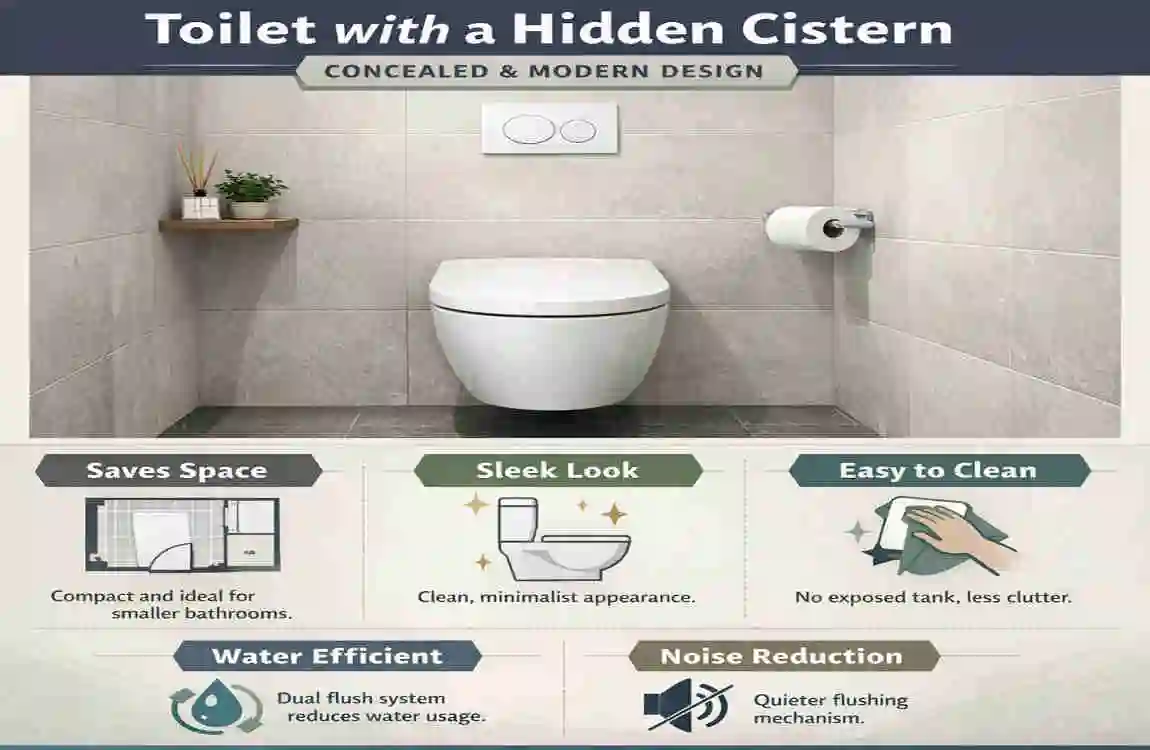
A toilet with a hidden cistern is a popular choice in modern bathrooms because it looks neat, saves visual space, and gives the room a cleaner feel. If you have ever wondered what you call a toilet with a hidden cistern, the answer is a concealed cistern toilet. In some cases, people also call it a back-to-wall toilet with a concealed cistern, depending on the design.
| Feature | Short Information |
|---|---|
| Hidden Cistern | Concealed inside the wall for a clean look |
| Exterior Design | Creates a smooth, modern bathroom appearance |
| Space Saving | Frees up visible wall and floor space |
| Easy Cleaning | Fewer exposed parts make cleaning simpler |
| Modern Style | Works well with minimalist and contemporary interiors |
| Wall Access | An access panel allows servicing when needed |
| Installation | Requires proper wall space and professional installation |
| Main Benefit | Combines a neat exterior with practical bathroom design |
This style of toilet is becoming more common because it fits well with simple, modern interiors. It also helps bathrooms feel less crowded, which is especially useful in smaller homes or compact spaces.
What Do You Call a Toilet With a Hidden Cistern?
The main name
The most common name is a concealed cistern toilet. This means the water tank is not visible.
Other common names
You may also hear:
- Back-to-wall toilet
- Wall-hung toilet with concealed cistern
- Hidden cistern toilet suite
- Furniture-integrated toilet
What “hidden cistern” means
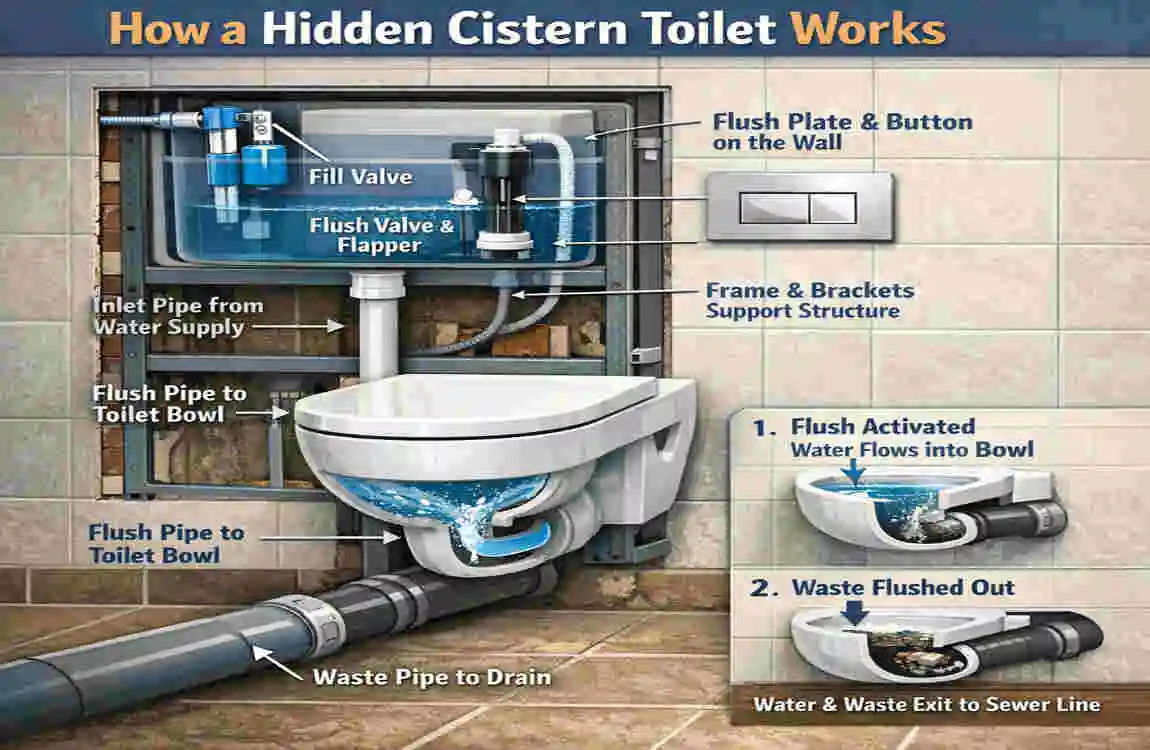
A cistern is the water tank that flushes the toilet. When it is hidden, it sits behind a wall, inside a cabinet, or inside a support frame, so you don’t see it in the bathroom.
How it differs from a standard toilet
A standard toilet usually has a visible tank sitting directly behind or above the pan. A concealed cistern toilet hides that tank, which makes the space look cleaner and more modern.
How Does a Hidden Cistern Toilet Work?
Basic flushing system
The toilet works in the same way as a regular toilet. Water is stored in the cistern, and when you press the flush button or plate, it releases water into the bowl.
Where the cistern sits
The tank is usually installed:
- Inside the wall cavity
- Behind a false wall
- Inside a furniture unit
- In a metal support frame
Flush plate or flush button
Instead of a traditional handle, concealed cistern toilets often use a flush plate or push button on the wall. This button controls the flush and gives the toilet a cleaner look.
Wall-hung or floor-mounted
There are two common setups:
- Wall-hung toilets: The toilet bowl is fixed to the wall and does not touch the floor.
- Floor-mounted concealed cistern toilets: The bowl sits on the floor, but the cistern is still hidden.
Maintenance access
Even though the tank is hidden, it is not sealed forever. A technician can usually reach it through the flush plate opening or a service panel.
Types of Toilets With Concealed Cisterns
Wall-Hung Toilets
These toilets are fixed to a strong frame inside the wall. They look sleek and leave the floor open, which makes cleaning easier. They are a great choice for modern and compact bathrooms.
Back-to-Wall Toilets
These toilets sit directly against the wall or a fitted unit. The cistern stays hidden behind the toilet structure. This style feels more solid and is often easier to install than a wall-hung model.
Concealed Cistern Toilet Suites
A toilet suite includes the bowl, cistern, frame, and flush parts as one setup. This is useful when you want a complete solution that is designed to work together.
Furniture-Integrated Toilets
In this design, the cistern is hidden inside a bathroom cabinet or vanity-style unit. This adds storage and helps the room look more organized.
Design Benefits of a Toilet With a Hidden Cistern
Cleaner bathroom appearance
One of the biggest advantages is the clean, minimalist look. Since the tank is hidden, the bathroom feels less busy and more open.
Better use of space
Hidden cistern toilets can make a room feel larger, even when the floor size doesn’t change. This is especially helpful in small bathrooms or en-suites.
Easier floor cleaning
With some designs, especially wall-hung toilets, more floor space is open under the bowl. That makes cleaning much easier.
Modern style
A concealed cistern gives the bathroom a more up-to-date look. It works well with simple tiles, smooth wall finishes, and modern furniture.
Other practical benefits
- Can reduce noise because the cistern is enclosed
- Can include dual-flush options to save water
- Helps hide plumbing for a tidier layout
- Gives more freedom in bathroom design
Hidden Cistern vs. Standard Toilet: What Is the Difference?
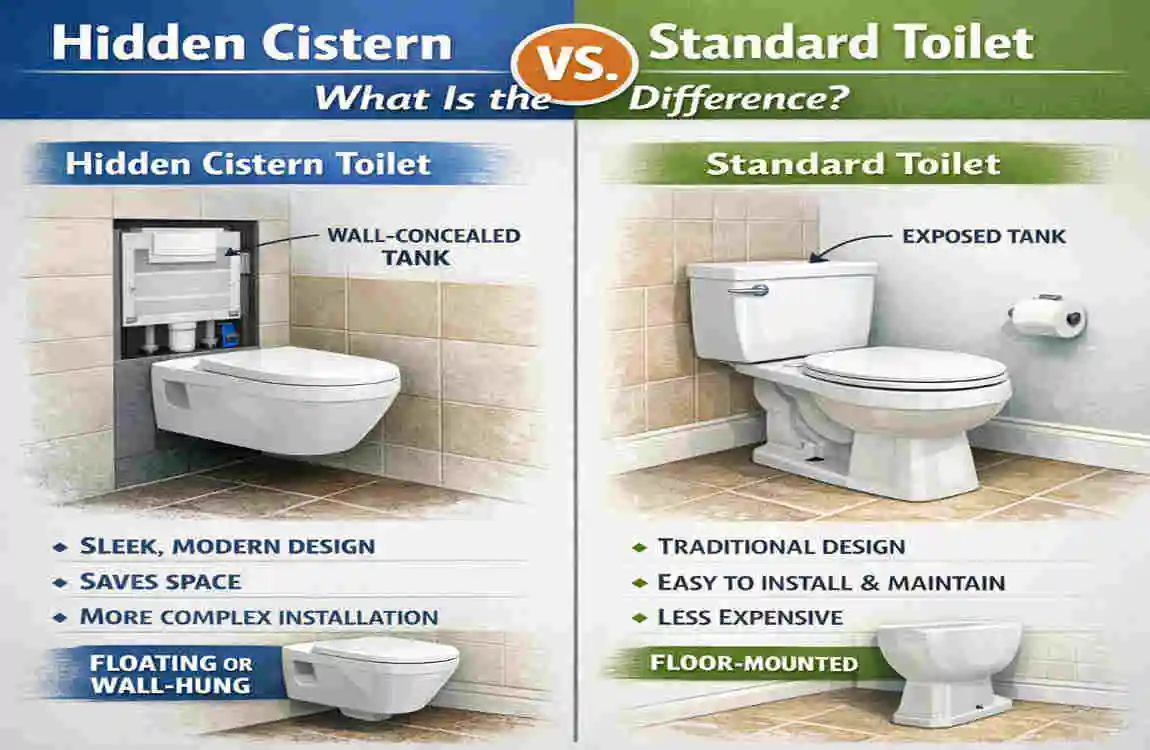
Feature Hidden Cistern Toilet Standard Toilet
Cistern location Hidden behind wall or unit Visible above or behind toilet
Appearance Clean and modern More traditional
Floor cleaning Often easier More areas around the base
Installation More complex Usually simpler
Maintenance access Through access panel/flush plate Usually straightforward
Space appearance Can make room look larger Takes more visual space
Design flexibility High Moderate
What this means in real life
A standard toilet is often easier to fit and repair. A hidden cistern toilet usually costs more and needs more planning, but it gives a much neater finish.
Installation, Maintenance, Cost & Buying Tips
Installation requirements
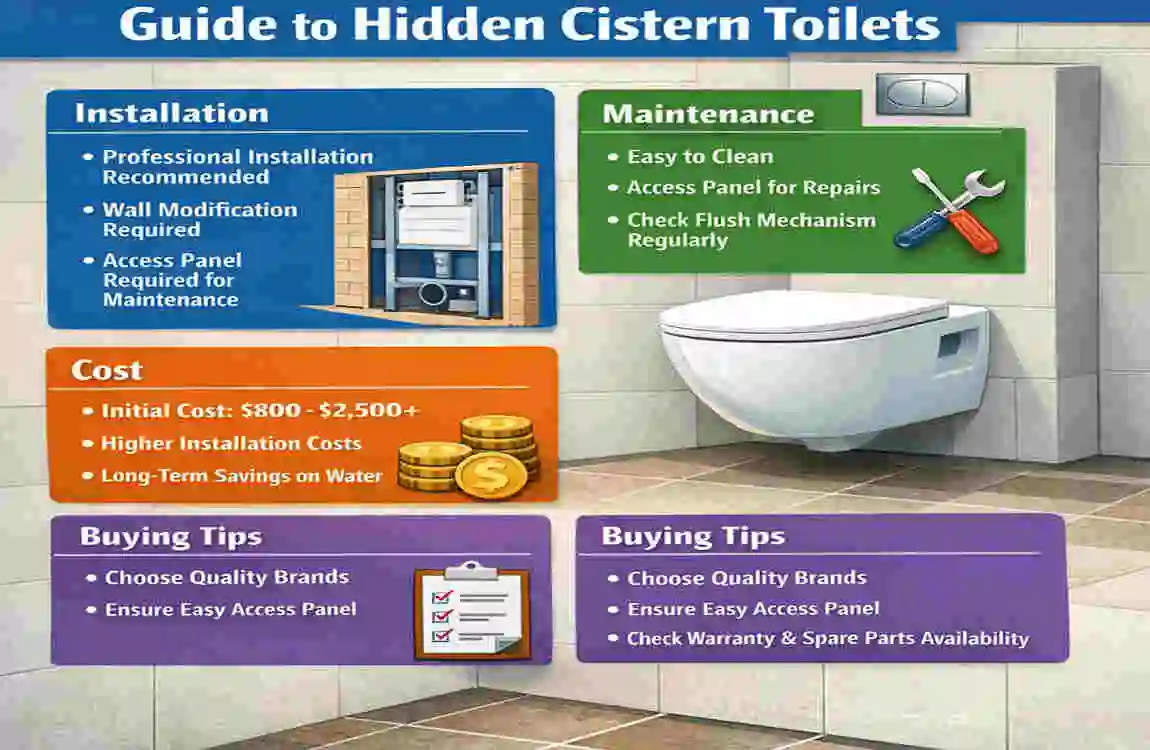
A concealed cistern toilet needs:
- Enough wall depth or cabinet space
- Proper plumbing and drainage
- A strong frame for wall-hung models
- Good waterproofing
- Easy access for future servicing
Maintenance and repairs
Even though the cistern is hidden, repairs are still possible. Technicians usually reach the parts through the flush plate. Common parts that may need attention include:
- Fill valves
- Flush valves
- Seals
- Small leaks in fittings
Cost factors
The price depends on:
- Toilet style and brand
- Cistern and frame quality
- Plumbing changes
- Wall building or finishing work
- Labor costs
Buying checklist
Before you choose one, check:
- The space available in your bathroom
- Whether you want wall-hung or floor-mounted
- The flush system and water-saving options
- Access for future repairs
- The depth needed for installation
- Whether the style matches your bathroom design
Frequently Asked Questions
What do you call a toilet with a hidden cistern?
It is usually called a concealed cistern toilet. Some people also call it a back-to-wall toilet or a wall-hung toilet, depending on the style.
Is it the same as a wall-hung toilet?
Not always. You can use a concealed cistern with wall-hung toilets, but also with some floor-mounted toilets.
Are they good for small bathrooms?
Yes, because they help the room look cleaner and less crowded.
Are they hard to repair?
Not usually. Most models have a flush plate or service opening for access.
Do they cost more?
Often, yes. The frame, installation, and wall work can increase the price.
