

Accurate plumbing estimates matter a lot. They help contractors protect profit, help homeowners understand costs, and help construction teams plan better.
If you are asking what the best estimating method for plumbing is, the short answer is this: there is no single method that works best for every job. The right approach depends on the project size, the level of detail in the plans, labor rates, material prices, and the complexity of the plumbing work.
A good plumbing estimate should include materials, labor, equipment, overhead, permits, and a contingency amount. If you leave out even one of these, the final number may be too low.
Plumbing Estimating Methods Explained
Unit Price Estimating
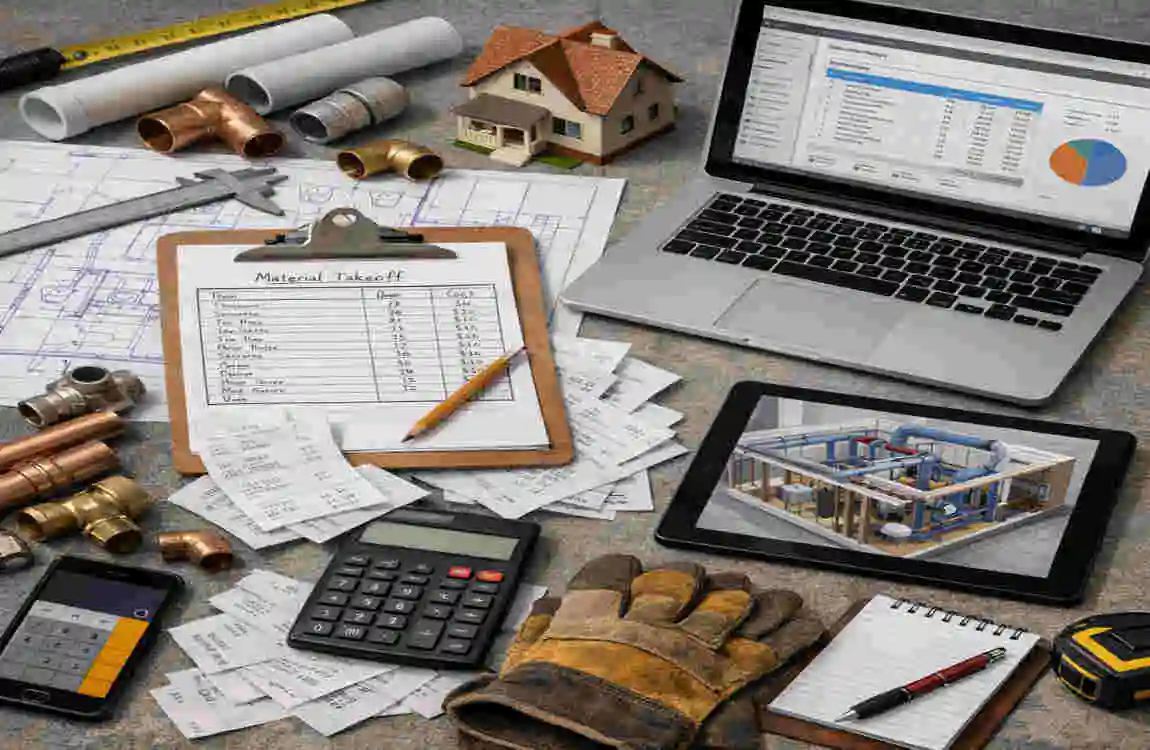
Unit price estimating means you assign a cost to each item or task. For example, you may price:
- Per fixture
- Per foot of pipe
- Per plumbing connection
This method is simple and fast. It works well for small jobs or repeat work where pricing is already familiar.
The downside is that it may miss project details. If the job has unusual conditions, unit pricing alone may not be accurate enough.
Quantity Takeoff Method
A quantity takeoff means counting and measuring everything needed for the job. That includes pipes, fittings, valves, fixtures, supports, and accessories.
This method uses drawings and specifications to build a detailed estimate. It takes more time, but it usually gives better accuracy, especially on larger projects.
Labor-Hour Estimating
This method focuses on the time needed to complete the work. You estimate how many labor hours each task will take, then multiply that by your labor rate.
That number changes based on:
- Job difficulty
- Crew skill level
- Site access
- Local wage rates
- Productivity
Labor-hour estimating is helpful because plumbing is not just about materials. The time needed to install everything can affect the final cost just as much.
Assemblies-Based Estimating
Assemblies-based estimating groups related work into packages. For example, you may price a bathroom plumbing package, a kitchen plumbing package, or a water-heater installation package.
This method is faster than a full takeoff and often works well for repetitive work. It is a practical option when many projects have similar layouts or fixture sets.
Historical Cost Estimating
Historical estimating uses prices from past projects. If you completed a similar job before, you can use that data as a starting point.
This method is useful, but old prices must be updated. Material and labor costs change over time, so past numbers should never be used without review.
What Is the Best Estimating for Plumbing?
The Most Reliable Approach
For most detailed jobs, the most accurate method is a quantity takeoff combined with current material and labor prices. This gives you a better view of both what the job needs and what it will actually cost.
That said, the best method depends on the project. A small repair does not need the same level of detail as a commercial build.
Simple Projects vs. Large Projects
For small residential repairs, unit pricing or assemblies can save time and still give a solid estimate.
For new construction, quantity takeoffs usually work better because they give more control and detail.
For large commercial jobs, estimating software, current cost databases, and detailed labor tracking often make the estimate more accurate and easier to manage.
How to Create an Accurate Plumbing Estimate
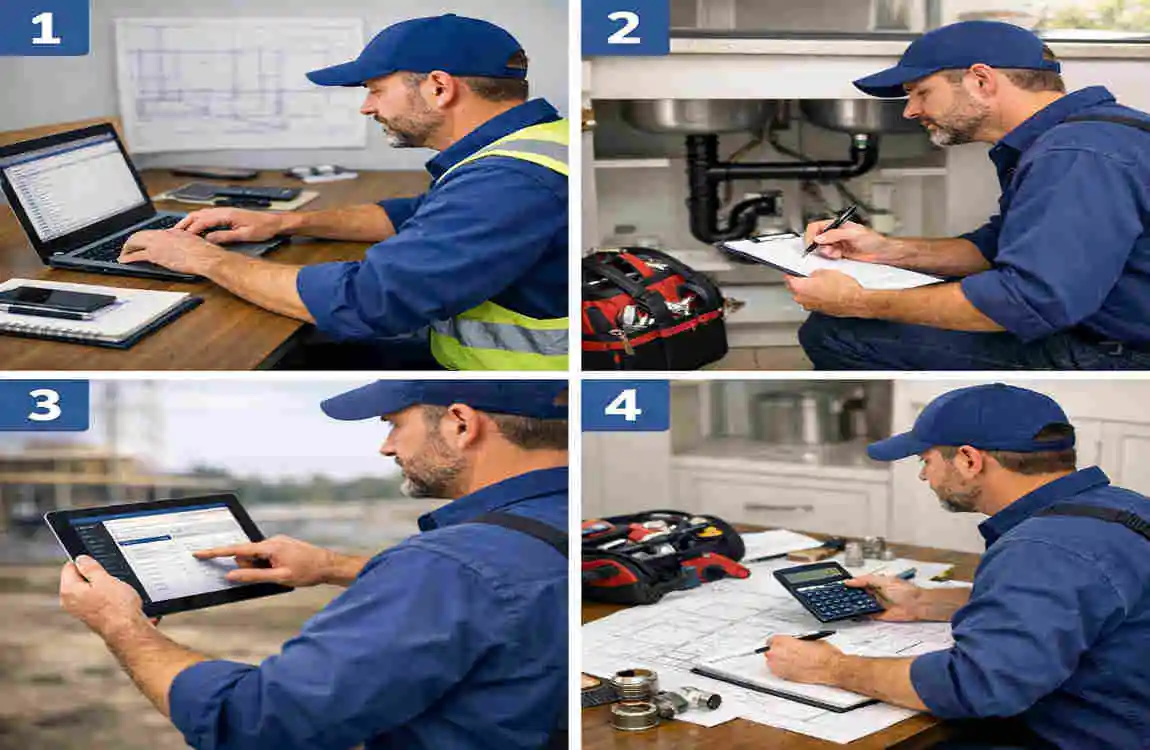
Review the Project Plans
Start by studying the drawings carefully. Look at architectural plans, plumbing drawings, and mechanical details.
You want to identify:
- Fixtures
- Pipe sizes
- Drainage lines
- Water supply lines
- Special equipment
The more you understand before pricing, the fewer surprises you will face later.
Complete a Material Takeoff
Next, list everything needed for the job. Count fixtures and fittings. Measure pipe lengths. Include valves, supports, connectors, insulation, and accessories.
Do not forget waste and small parts. Many estimates fail because they overlook these smaller items.
Calculate Labor
Material cost is only part of the story. You also need to estimate labor hours for installation.
Think about access, site conditions, and crew size. A simple open job will take less time than a tight space with heavy coordination needs.
Add Equipment and Other Costs
Some projects need special tools, equipment rental, transport, delivery, testing, inspections, or disposal fees.
These may seem small at first, but they can add up quickly.
Add Overhead and Profit
Your estimate should also cover business costs. That includes office expenses, insurance, administration, and other indirect costs.
Then add a reasonable profit margin. Without profit, the job may keep the doors open for a while but will not support the business long term.
Include a Contingency
A contingency protects you from surprises. Plumbing projects can reveal hidden problems, especially during renovation or repair work.
Use contingency carefully. It should be realistic, not excessive.
Common Plumbing Estimating Mistakes
Underestimating Material Quantities
One of the most common mistakes is forgetting extra fittings, connectors, or small accessories. Missing items can hurt profit fast.
Forgetting Labor Productivity
Two jobs may use the same materials but take very different amounts of time. Labor should never be based on material count alone.
Using Outdated Prices
Material prices can change quickly. Labor rates also shift over time. Always update your numbers before submitting a bid.
Ignoring Job Conditions
Difficult access, demolition, occupied buildings, weather, and site restrictions can all increase cost.
Leaving Out Overhead
If your estimate covers only materials and labor, it may not properly support your business.
Not Reviewing the Final Estimate
Before you send the bid, check the scope, quantities, assumptions, and exclusions. A quick review can prevent expensive mistakes.
Plumbing Estimating Software and Technology
Benefits of Estimating Software
Estimating software can save time and reduce manual errors. It helps with:
- Faster calculations
- Digital takeoffs
- Organized price databases
- Easy revisions
- Better proposal formatting
This can be especially useful for contractors who manage many jobs.
Spreadsheet Estimating
Smaller plumbing businesses may use spreadsheets instead of full software. That can work well if the sheet is organized clearly.
A simple layout can include:
- Materials
- Labor
- Equipment
- Overhead
- Contingency
- Profit
Digital Takeoff Tools
Digital tools let you measure plans more easily. They can reduce manual errors and speed up quantity counting.
Tips for Better Plumbing Estimates
Here are a few practical habits that can improve your pricing:
- Review the full scope before pricing
- Keep material costs updated
- Use realistic labor hours
- Separate direct and indirect costs
- Write down exclusions and assumptions
- Compare with similar past jobs
- Double-check calculations
- Update the estimate if the plans change
- Save actual job costs for future reference
These steps may seem simple, but they can make a big difference.
Plumbing Estimating Example
Example: Residential Bathroom Plumbing
Imagine a small bathroom project with a toilet, sink, shower, drainage lines, and water supply connections.
You would first list the materials:
- Fixtures
- Pipe
- Fittings
- Valves
- Supports
- Connectors
Then you would estimate labor based on the time needed to install everything.
After that, you would add:
- Equipment
- Permits
- Overhead
- Contingency
- Profit
The final price should reflect the real job conditions, not just average prices.
How to Choose the Right Plumbing Estimating Method
For Small Residential Jobs
Unit pricing and assemblies usually work well for quick pricing on small jobs.
For New Home Construction
Quantity takeoffs are usually better because they give more detail and control.
For Commercial Plumbing
Commercial work often needs a mix of detailed takeoffs, labor-hour estimating, current pricing, and software support.
For Repetitive Projects
Historical data and assemblies can save time for very similar projects.
Why Accurate Plumbing Estimates Matter
Accurate estimates help in several ways:
- Better bidding
- Fewer unexpected costs pipe
- Stronger profit margins
- Clearer client communication
- Better project planning
- Fewer disputes
When the estimate is solid, the whole project usually runs more smoothly.
FAQ
What is the best way to estimate plumbing?
The best approach is usually a detailed quantity takeoff that includes current material prices, labor costs, overhead, and profit.
How do plumbers calculate an estimate?
They review the plans, count materials, estimate labor, add equipment and indirect costs, then include profit.
What is a plumbing quantity takeoff?
It is the process of counting and measuring all plumbing materials needed for a project.
Is plumbing estimating software worth it?
Yes, especially for contractors who handle multiple or complex jobs and want faster, more organized estimating.
What should be included in a plumbing estimate?
Materials, labor, equipment, permits, transportation, overhead, contingency, and profit should all be included.
| Estimating Method | How It Works | Best For | Main Benefit |
|---|---|---|---|
| Unit Cost Estimating | Calculates cost per fixture, pipe, or plumbing unit | Small residential projects | Simple and fast |
| Quantity Takeoff | Measures pipes, fittings, fixtures, labor, and materials | Detailed plumbing projects | More accurate |
| Square-Foot Estimating | Uses average plumbing costs per square foot | Early project planning | Quick budget estimate |
| Labor + Materials | Separately calculates labor hours and material costs | Professional estimates | Clear cost breakdown |
| Database/Software Estimating | Uses current prices and project quantities | Contractors and large projects | Efficient and consistent |
