

If you like hands-on work, problem-solving, and skilled trades, plumbing can be a very practical career. It offers steady demand and clear paths for growth.
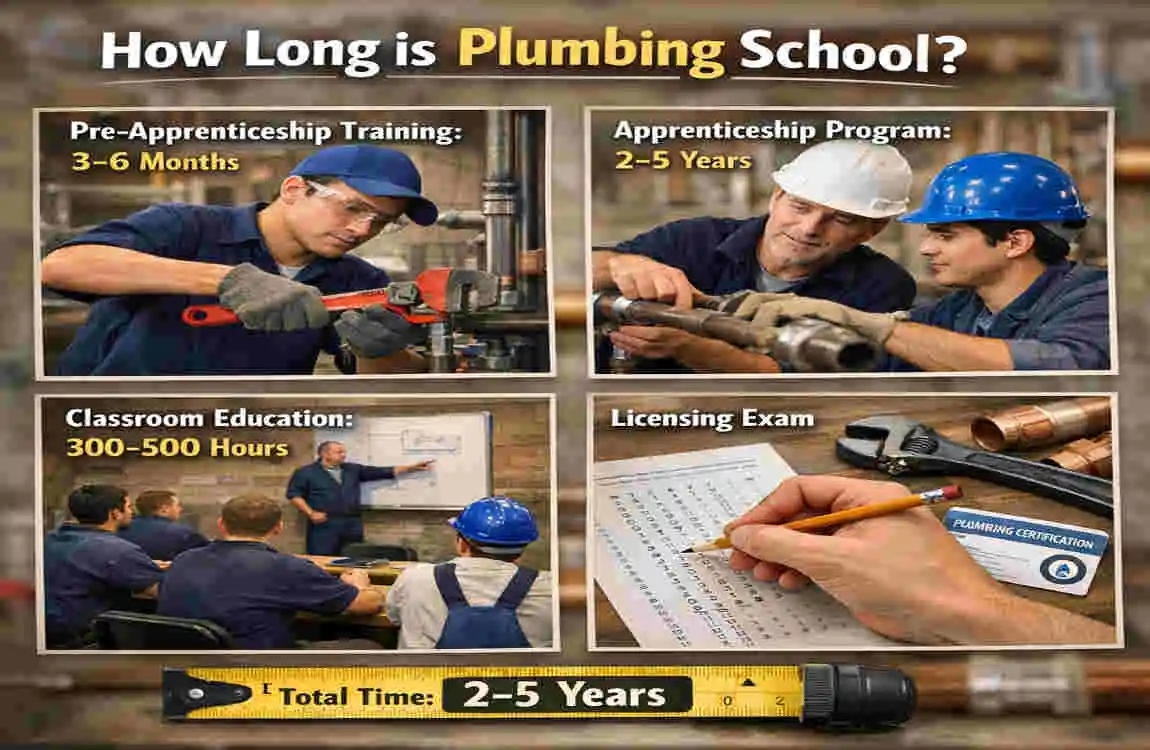
So, how long is plumbing school? The short answer is: it depends. Some training programs take only a few months, while others take one to two years. If you also need an apprenticeship and a license, the full path can take several years.
Plumbing School: How Long Does It Usually Take?
Typical Plumbing School Length
Most plumbing school programs are not as long as a traditional college degree. Many are designed to help students get into the trade faster.
Some programs can be finished in a few months, while others may take up to two years. The exact length depends on the type of program and how deep the training goes.
Short-Term Plumbing Certificate Programs
Certificate programs are usually the fastest option. They are often designed for beginners seeking basic plumbing knowledge and job-ready skills.
These programs may cover:
- Plumbing tools and equipment
- Pipe installation
- Fixtures and fittings
- Drainage systems
- Basic plumbing codes
- Workplace safety
This type of training is helpful if you want to start learning quickly and move into the trade sooner.
Plumbing Diploma and Community College Programs
Longer programs usually give you more detailed training. They often include more classroom learning, lab work, and technical instruction.
These programs may cover plumbing systems in greater depth and prepare you for entry-level work or an apprenticeship.
Factors That Affect Plumbing School Duration
Several things can change how long plumbing school takes:
- Program type
- Full-time or part-time schedule
- Previous construction experience
- Local licensing rules
- Apprenticeship requirements
If you already know some construction basics, you may move through training faster. If you attend part-time, it may take longer.
What Do You Learn in Plumbing School?
Basic Plumbing Systems
Plumbing school usually starts with the core systems every plumber needs to understand.
You learn about:
- Water supply
- Drainage
- Waste systems
- Vent systems
These are the foundation of plumbing work. Once you understand them, it becomes easier to diagnose problems and install systems correctly.
Pipes, Fittings, and Fixtures
A big part of plumbing is learning how to connect and install different parts.
Students study common pipe types, fittings, and fixtures such as sinks, toilets, showers, and tubs. This helps them understand how water moves through a building.
Plumbing Tools and Equipment
Plumbers use many tools, and training usually includes hands-on practice with them.
You may learn to use:
- Hand tools
- Power tools
- Testing equipment
- Safety gear
Knowing how to use tools safely and correctly is a major part of the job.
Plumbing Codes and Safety
Plumbing work must follow local rules and safety standards. That is why knowledge of code is so important.
Students learn about building requirements, proper installation methods, and safety procedures. This helps prevent leaks, damage, and unsafe work.
Troubleshooting and Plumbing Repairs
Plumbing school also teaches students how to find and fix common problems.
That may include:
- Leaks
- Clogs
- Low water pressure
- Damaged pipes
- Drainage issues
This is where theory meets real problem-solving.
Plumbing School vs. Plumbing Apprenticeship
What Is a Plumbing Apprenticeship?
An apprenticeship is a training program where you learn on the job while also studying plumbing theory.
It combines:
- Paid work
- Supervised training
- Classroom instruction
This is one of the most common ways people enter the trade.
How Long Does a Plumbing Apprenticeship Take?
Apprenticeships usually take several years. That is because plumbing is a skilled trade, and you need time to build real experience.
The exact timeline depends on where you live and what license level you want to reach.
Can You Become a Plumber Without Trade School?
In some places, yes. Some people enter the trade mainly through apprenticeships or employer-based training.
Still, plumbing school can be very useful because it gives you a strong base before you start working full-time.
Why Hands-On Experience Matters
Classroom learning is important, but it is not enough by itself.
You also need hands-on practice to learn how to:
- Work on job sites
- Solve real problems
- Follow safety rules
- Deal with customers
- Handle different plumbing systems
That real-world practice is what turns knowledge into skill.
How Long Does It Take to Become a Licensed Plumber?
Starting as a Plumbing Trainee
Most people begin as trainees or entry-level helpers. At this stage, you are still learning the basics.
You may help with tools, materials, and simple tasks while watching experienced plumbers do the work.
Becoming a Plumbing Apprentice
After that, you usually move into apprenticeship training. This is where your education and job experience grow together.
You work under supervision while continuing to learn technical skills.
Becoming a Journeyman Plumber
A journeyman plumber is someone who has completed the required training and passed the needed exams in their area.
At this point, the plumber can usually work with more independence. However, the exact rules vary by location.
Becoming a Master Plumber
Some plumbers go on to become master plumbers. This usually requires more experience, more testing, and more responsibility.
Master plumbers may take on bigger projects, supervise others, or even run their own business.
Why Licensing Rules Vary
Plumbing is regulated locally. That means state, county, or city rules may be different.
So when asking how long plumbing school takes, remember that the full timeline depends on your local licensing requirements.
How Much Does Plumbing School Cost?
Tuition and Training Costs
Plumbing school costs vary a lot. Short certificate programs may be less expensive, while longer diploma or college-based programs usually cost more.
The school type, location, and schedule all affect the price.
Tools and Equipment
You may also need to buy your own tools and safety gear. These costs can add up, especially if you want quality equipment.
Apprenticeship Costs and Earnings
One advantage of an apprenticeship is that you often earn while you learn. That can help reduce the financial pressure of training.
Financial Aid and Training Assistance
Some students may qualify for:
- Grants
- Scholarships
- Employer-sponsored training
- Community college aid
- Trade school financing
These options can make training more affordable.
Is Plumbing a Good Career Choice?
Job Demand
Plumbers are needed in homes, businesses, construction sites, and repair jobs. That makes plumbing a strong skilled trade with steady demand.
Earning Potential
Pay depends on experience, location, license level, and specialty. More training usually means more earning power.
Career Advancement
Plumbing can lead to many paths, including:
- Journeyman plumber
- Master plumber
- Plumbing supervisor
- Contractor
- Inspector
- Business owner
Skills That Make a Good Plumber
Good plumbers usually have:
- Problem-solving ability
- Mechanical skills
- Attention to detail
- Physical stamina
- Communication skills
- Reliability
- Safety awareness
How to Choose the Right Plumbing School
Check Accreditation and Program Quality
Look for a school with a solid reputation, good instructors, and a practical curriculum.
Compare Program Length and Schedule
Think about whether full-time, part-time, evening, or accelerated training fits your life.
Look for Hands-On Training
A good plumbing program should give you real practice with tools and equipment.
Review Licensing Preparation
Make sure the program helps prepare you for local licensing or apprenticeship requirements.
Compare Total Costs
Do not look only at tuition. Also consider tools, books, fees, transportation, and supplies.
FAQ About How Long Plumbing School Takes
How long is school for plumbing?
Plumbing school can take from a few months to about two years, depending on the program. Becoming fully licensed usually takes longer because of apprenticeship and exam requirements.
How many years does it take to become a plumber?
It often takes several years overall. The exact timeline depends on your location and the level of license you want.
Is plumbing school difficult?
It can be challenging because it combines technical learning, math, safety rules, and hands-on work. But many people do well with steady practice.
Can I become a plumber in one year?
You may finish an introductory program in one year, but becoming licensed usually takes additional experience.
Do plumbers need a college degree?
No. Most plumbers pursue trade school and apprenticeship paths rather than a four-year college degree.
Is plumbing school worth it?
For many people, yes. It can lead to a stable skilled trade, good earning potential, and long-term career growth.
Can I learn plumbing online?
Online courses can teach theory, but plumbing also requires hands-on training.
| Topic | Quick Information |
|---|---|
| Plumbing School Length | Usually 6 months to 2 years, depending on the program |
| Trade School | Often takes 6–12 months for basic plumbing training |
| Apprenticeship | Commonly lasts 4–5 years with paid on-the-job training |
| Coursework | Covers pipes, fixtures, drainage, water systems, tools, and safety |
| Licensing | Requirements vary by state or country and may include exams and work experience |
| Fastest Route | A short trade program followed by an apprenticeship can provide a practical entry path |
| Career Preparation | Most plumbers gain substantial hands-on experience during apprenticeship trainingfplu |
