

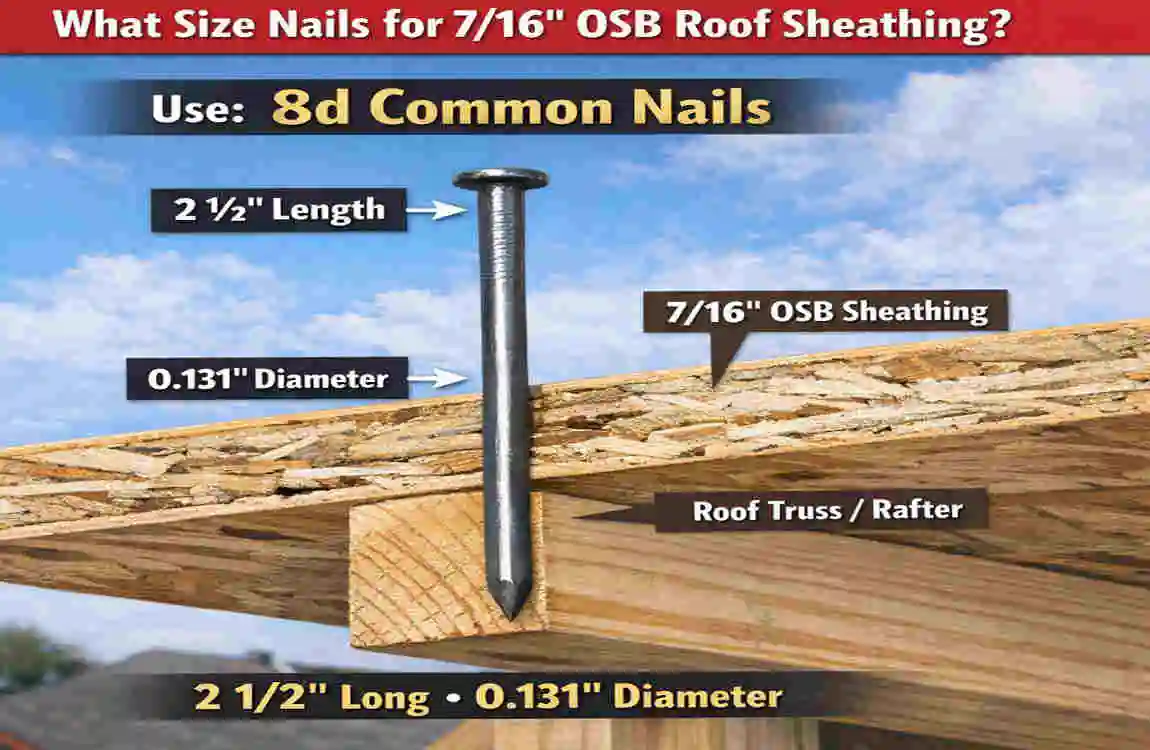
Roof sheathing is a critical component of any residential roofing project, and choosing the right nail size is essential for ensuring structural integrity and long-term durability. If you’re working with 7/16-inch OSB (Oriented Strand Board) panels, you might find yourself asking, “What size nails for 7/16 OSB roof sheathing in a house?” The short answer is: 8d common nails (2-2.5 inches) or 1.25-2 inch ring-shank galvanized nails are ideal for this purpose. But there’s much more to consider.
What is 7/16 OSB Roof Sheathing?
Understanding OSB
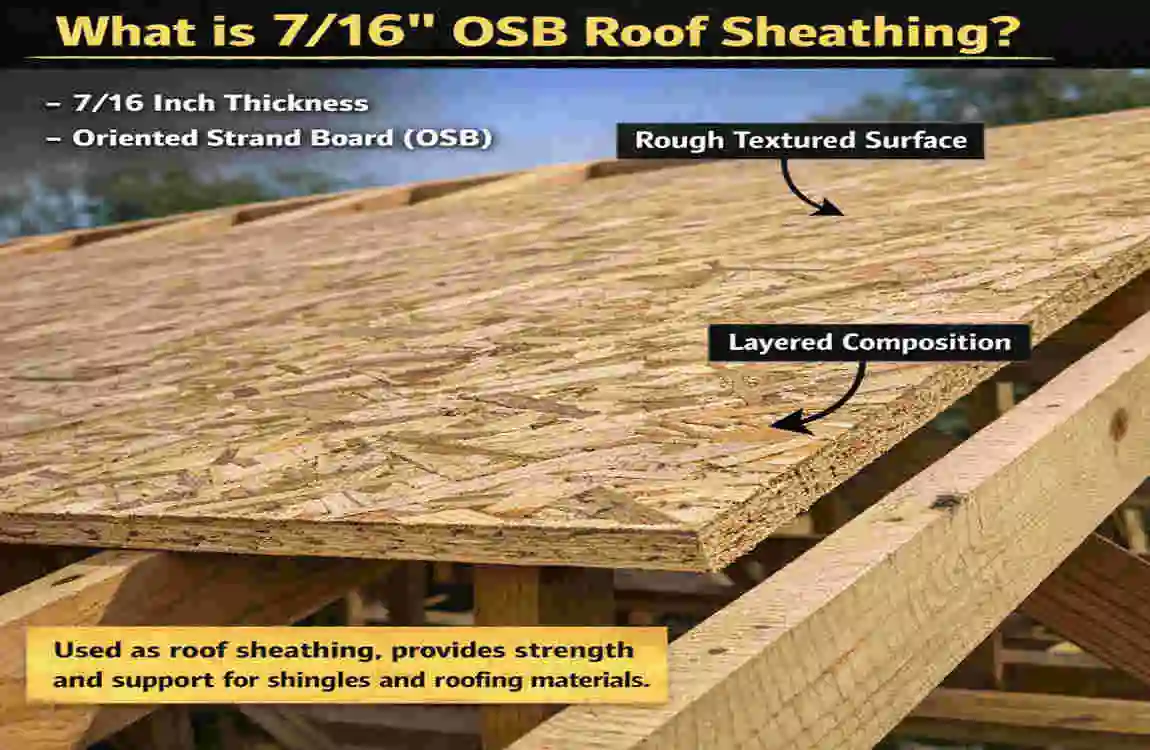
Oriented Strand Board (OSB) is an engineered wood product made by compressing layers of wood strands with adhesives. It’s a popular choice for roof sheathing due to its affordability, strength, and versatility. The 7/16-inch thickness is particularly common in residential construction because it strikes a balance between cost and performance.
Why Choose 7/16 OSB?
- Cost-Effective: OSB is generally more affordable than plywood, making it a budget-friendly option for large roofing projects.
- Strength: It offers excellent shear resistance, which is crucial for withstanding wind and other forces.
- Compatibility: The 7/16-inch thickness is suitable for rafter spacing of 16-24 inches, making it ideal for most residential roofs.
Roofing Nail Basics
Anatomy of a Nail
Before we discuss the ideal nail size, let’s break down the basic components of a nail:
- Shank: The long, cylindrical part of the nail. It can be smooth or ringed for added grip.
- Head: The flat, broad top that prevents the nail from sinking too deeply.
- Gauge: The thickness of the nail, typically measured in numbers (e.g., 11-12 gauge for roofing nails).
Types of Roofing Nails
- Common Nails (8d): These are 2-2.5 inches long and are widely used for roof sheathing.
- Cooler Nails: Slightly shorter (2-2.38 inches) and designed to reduce splitting in wood.
- Ring-Shank Nails: These have ridges along the shank for superior pullout resistance, making them ideal for high-wind areas.
Materials Matter
- Galvanized Nails: Coated to resist corrosion, these are essential for outdoor use, especially in humid or coastal climates.
- Bright Nails: These lack a protective coating and are better suited for indoor applications.
Ideal Nail Size for 7/16 OSB Roof Sheathing
Recommended Nail Sizes
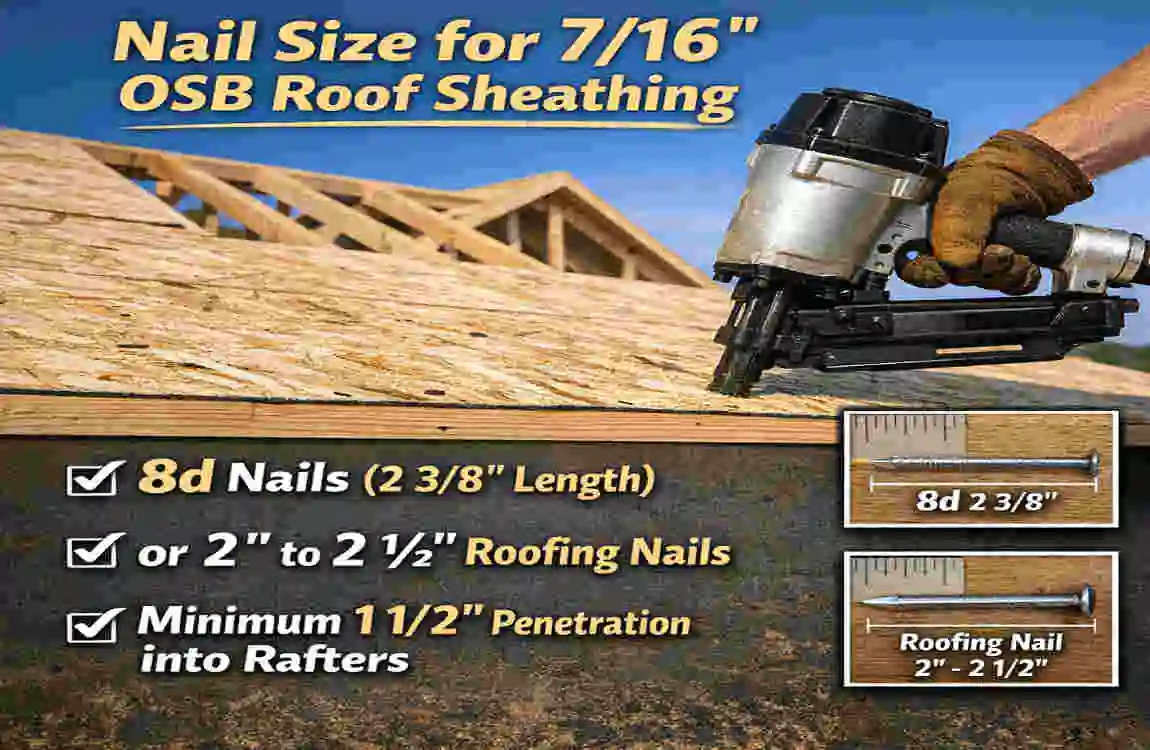
For 7/16-inch OSB roof sheathing, the following nail sizes are recommended:
- 8d Common Nails: 2-2.5 inches long with a diameter of 0.131 inches.
- Ring-Shank Nails: 1.25-2 inches long for enhanced grip and pullout resistance.
Factors to Consider
- Rafter Spacing: Wider spacing may require longer nails for better penetration.
- Wind Load: High-wind areas require stronger nails, such as ring-shank nails.
- Shingle Type: Thicker shingles may necessitate longer nails to ensure proper penetration into the framing.
Nail Size Chart
Scenario Nail Size Type Penetration
Standard House Roof 1.25-1.5″ 8d Galvanized 3/4″ into truss
High Exposure 2″ Ring-Shank Full through OSB
Thick Shingles 2-2.5″ Cooler Nail 1″ into framing
Building Code Standards
IRC and IBC Requirements
The International Residential Code (IRC) and International Building Code (IBC) provide clear guidelines for roof sheathing installation:
- Penetration: Nails must penetrate at least 3/4 inch into the framing or fully through sheathing less than 3/4 inch thick.
- Spacing: Nails should be spaced 6 inches apart along the edges and 12 inches apart in the field.
Local Code Variations
Some regions, especially those prone to seismic activity or high winds, may have stricter requirements. Always check your local building codes before starting your project.
Step-by-Step Installation Guide
Preparation
- Inspect the rafters for damage or rot.
- Snap chalk lines to ensure straight panel placement.
Cutting and Laying Panels
- Stagger the seams of the OSB panels to avoid weak points.
- Leave a 1/8-inch gap between panels to allow for expansion.
Nailing Pattern
- Use the recommended nail size for 7/16 OSB roof sheathing.
- Drive nails perpendicular to the surface to prevent splitting.
Tools and Safety
- Use a pneumatic nailer for efficiency.
- Wear safety gear, including a harness and eye protection.
Common Mistakes to Avoid
- Using Undersized Nails: Nails shorter than 1.25 inches may fail to penetrate adequately.
- Overdriving Nails: This can cause the nail head to pull through the OSB.
- Ignoring Wind Ratings: Always use ring-shank nails in high-wind areas.
- Choosing the Wrong Material: Bright nails can rust in humid conditions.
Essential Tools and Supplies
- Nail Gun: A pneumatic nailer compatible with 8d nails.
- Chalk Line: For straight panel alignment.
- Safety Gear: Harness, gloves, and goggles.
Nail Alternatives
Screws
- Pros: Stronger hold, less likely to loosen over time.
- Cons: Slower installation, higher cost.
Staples
- Note: Staples are generally not recommended or allowed for roof sheathing.
High-Wind and Special Conditions
In areas prone to high winds or extreme weather, consider the following:
- Use 2-inch ring-shank nails for added security.
- Opt for stainless steel nails in coastal regions to prevent corrosion.
Cost Analysis
- 8d Nails: Approximately $20 per 1,000 nails.
- Full Roof Coverage: For a 2,000 sq. ft. roof, expect to spend $100-200 on nails.
FAQ
What size nails for 7/16 OSB roof sheathing in a house?
Use 1.25- to 2-inch 8d galvanized nails for optimal performance.
Can I use 3-inch nails?
No, they may over-penetrate and compromise the structure.
Ring-shank vs. smooth nails?
Ring-shank nails offer better pullout resistance, especially in high-wind areas.
