

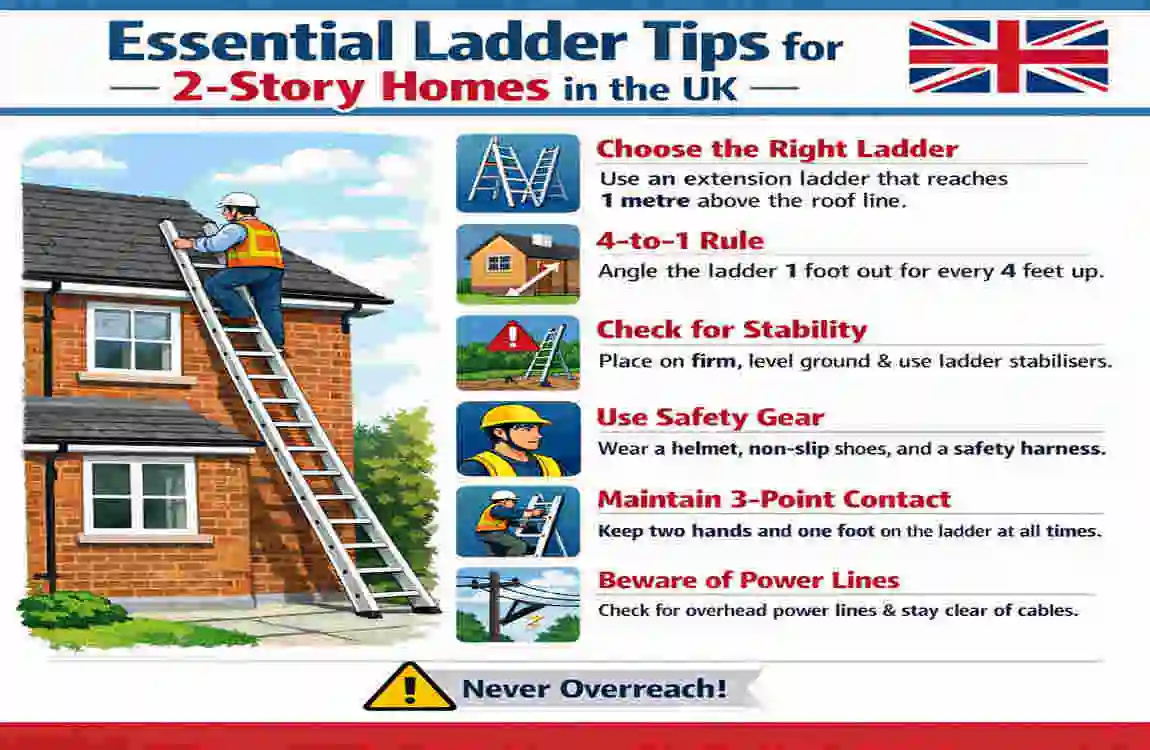
you’re at the bottom of your garden, looking up at the gutters of your semi-detached two‑storey home. You know they need clearing, but the ladder you’ve borrowed from a neighbour doesn’t feel right — it’s too short, wobbly at the base, and you’re already stretching to reach. That uncomfortable stretch is exactly where accidents happen. Knowing exactly “what size ladder do i need for a 2 story house uk” keeps you safe, saves time, and gives you the confidence to tackle common jobs like gutter cleaning, roof checks, or window washing.
| Eaves Height | Ladder Type | Length (Closed-Extended) | Max Safe Reach |
|---|---|---|---|
| 4.7m (15ft) | Double Extension | 4-6.5m | 5.5m |
| 5.5m (18ft) | Triple Extension | 3-7m | 6.5m |
| 5.8m+ (19ft) | Triple/Combination | 4-8m | 7m+ |
Understanding 2-Story Home Heights in the UK
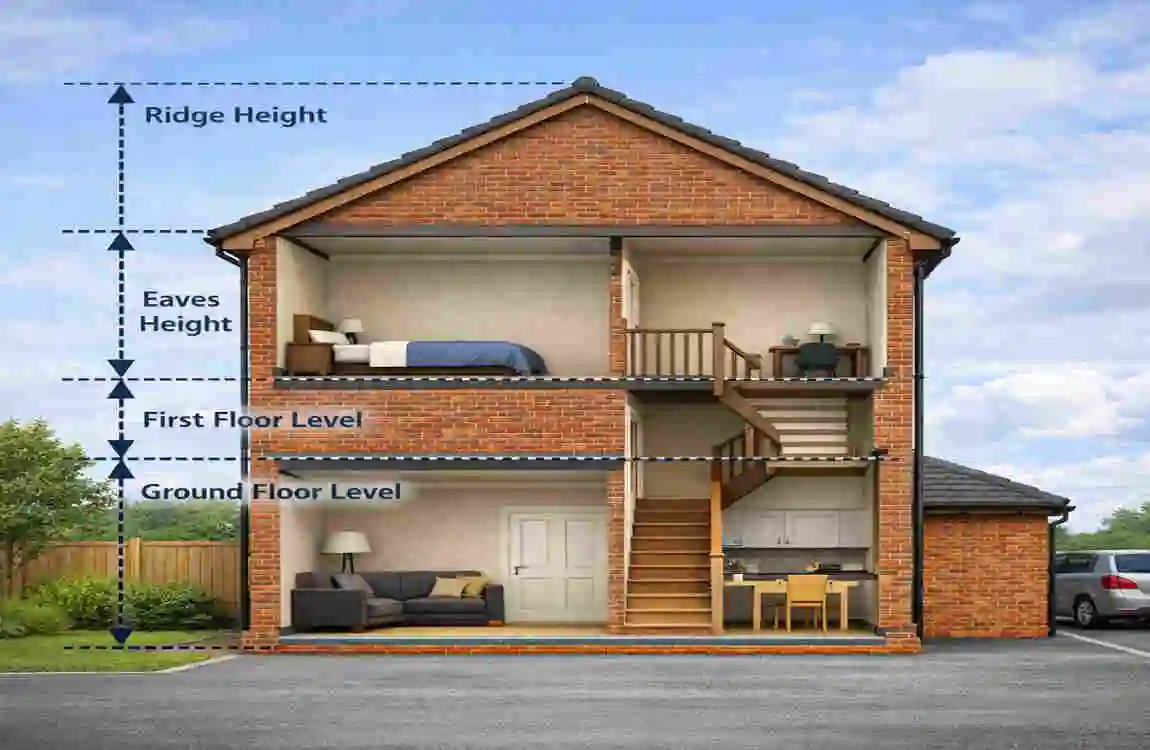
Knowing the height of your house is the very first step in choosing a ladder. Two‑storey UK homes aren’t all identical, but there are common measurements that make ladder selection straightforward.
Typical height ranges
- Eaves height (where gutters sit): Most UK two‑storey homes have eaves between 4.7m and 5.8m. This is based on standard ceiling heights (roughly 2.35m per storey) plus floor/roof structures. When measuring for ladder reach, the eaves height is your main concern. For visuals and practical examples, see the Ladders UK Direct article on ladders for two‑storey houses laddersukdirect.co.
- Ridge or gable top: If you need to access the roof ridge (the highest point), it can be up to 7.3m or more, depending on the roof pitch and attic spaces.
- Average parapet/sloped roof edges: Some older Victorian terraces have higher elevations. At the same time, modern builds may sit on the lower end of the range. Always measure your home rather than assuming.
Why eaves rather than ridge for everyday jobs Most DIY tasks — gutter cleaning, inspecting fascias, or washing upper windows — require you to reach the eaves or just above them. You don’t usually need the full ridge height unless you’re doing roofing work or ridge tile repairs.
How to measure safely
- Measure from the ground at the point you’ll place the ladder to the bottom of the gutter (eaves).
- Add 1 metre to the eaves height to allow the ladder to extend above the working point — this gives a secure handhold and complies with ladder best practice.
- Account for ground slope and obstacles: if the ground is uneven, you’ll need ladder levelers or an increased ladder length to keep the angle safe.
Example scenarios
- Semi‑detached suburban luxury home: eaves around 4.9m → ladder needs to extend to at least 6.5m–7.0m.
- Older terrace with high rooflines: eaves 5.8m or higher → consider 7.0m–8.0m extension ladders or triple extension models.
- Roof‑only access (steep pitch): consider a dedicated roof ladder (fixed length, hook/anti‑slip features).
Knowing the exact eaves height and adding that extra metre is the simple calculation that prevents overreaching — and keeps you safe.
Ladder Sizing Basics: What Size Do You Need?
Let’s answer the focus question directly and then explain why that answer works in practice.
Short core answer: For most UK two‑storey homes the safe, practical ladder choice is an extension ladder that is closed at around 3.0m–7.0m and extends to around 6.5m–8.0m (roughly 16–25 ft). This gives you a stable reach to the eaves with the recommended 1m overlap above the landing point and allows the ladder angle to meet the 4‑to‑1 rule.
You’ll see these sizes commonly recommended by ladder retailers and safety guides — they balance portability with safe reach, and they’re the models professionals use on houses of typical two‑storey height.
Why the 4-to-1 rule matters The 4‑to‑1 rule is the most basic ladder safety geometry:
- For every 4 metres of ladder height from ground to the support point, the ladder base should be 1 metre away from the wall. This roughly creates a 75° angle — stable and comfortable for climbing.
- Example: if the ladder reaches 5.0m to the support point on the wall, the base should sit 1.25m from the wall.
- This spacing changes how far the ladder needs to be extended to reach the same height. If you push the ladder base further back it must be longer.
Add 1m above the eaves You should always have the ladder extend roughly 1 metre above the eaves or landing point. This is for safety when stepping on/off, and to allow tying off if needed. A ladder that just reaches the gutter line without that overlap is unsafe.
Sizing table for clarity
Home Height to EavesRecommended Ladder (Extended Length)Example Type
4.7m (15.5ft) 6.5m–7.0m (21–23 ft) Double extension
5.8m (19ft) 7.0m–8.0m (23–26 ft) Triple extension
7.3m (ridge/gable) 8.0m–9.1m+ (26–30 ft+) Heavy‑duty extension
(Conversions: 1 metre ≈ 3.28 ft. The table gives a simple guideline; always confirm by actual measurement.)
Why not stepladders for two-storey work Stepladders are great for ground‑level and single storey jobs, but they’re usually too short and unstable for two‑storey eaves. For roof or gutter access you should use an extension ladder designed to brace against the wall and extend above the landing.
Common ladder sizes sold in the UK
- Many residential workhorses are sold as 3.0m closed/7.0m extended models or similar triple-extension models.
- If you do lighter work and have a low two‑storey eaves (around 4.7m), a double extension that reaches 6.5m–7.0m extended is often enough.
- For taller terraces or ridge access, choose a longer, heavier rated ladder and consider professional help.
Quick checklist to pick length
- Measure eaves height from ground.
- Add 1.0m to that height.
- Factor in the 4‑to‑1 base distance to ensure the ladder will fit in your available space.
- Pick the ladder with an extended length at or above your final number.
Types of Ladders for 2-Story UK Homes
Knowing which ladder style to buy is as important as the length. Different ladder types have different strengths, so choose the one best suited to the job you do most.
Extension Ladders
- Best for: Gutters, fascias, climbing against walls.
- Why: They extend long, are lighter than equivalent fixed ladders, and can be angled properly for the 4‑to‑1 rule.
- Common features: Non‑slip feet, secure rung locks, optional stabiliser bars.
- Drawbacks: Requires two hands to carry, needs a secure top rest, and sometimes a spotter when working solo.
Combination Ladders (Multi‑mode)
- Best for: Homeowners who want one ladder for multiple tasks.
- Why: Converts from stepladder to extension to stair‑adjusted modes.
- Advantages: Compact storage, multipurpose.
- Drawbacks: Generally shorter max reach than full extension ladders; heavy for one person; hinges add potential failure points.
Roof Ladders
- Best for: Roofing contractors and steep-pitch roofs.
- Why: Designed to lie on slates or tiles, often with hooks and padded sections to protect roof coverings.
- Drawbacks: Not practical for general wall-reach jobs; specialist tools.
Fibreglass vs Aluminium
- Aluminium: Light, corrosion‑resistant, ideal for most DIY tasks. Conducts electricity, so avoid near live wires.
- Fibreglass: Slightly heavier, non‑conductive — safer if working near electrical hazards.
Comparison table
Ladder TypeBest ForMax Safe Reach (2‑Storey)Typical Price (UK)
Extension Gutters/roof access Up to 8m £100–£300
Combination Multi‑task DIY Up to 7m £150–£400
Roof Ladder Sloped roof work Up to ridge heights £120–£250
Tips: For most two‑storey homeowners, an extension ladder offers the best balance of reach and safety. If you want the flexibility to tackle indoor projects too, a combination ladder might be worth the tradeoff — just ensure it reaches the height you need.
UK Ladder Safety Regulations
Safety isn’t optional when you’re working at height. There are UK rules and commonly accepted standards you should follow.
BS EN 131 certification All domestic and professional ladders sold in the UK should comply with BS EN 131 (European standard for portable ladders). This ensures rungs, stiles, locking mechanisms, and materials meet minimum safety requirements.
Work at Height Regulations 2005 If you are carrying out work that involves a risk of a fall liable to cause personal injury, the Work at Height Regulations 2005 apply. This means you should:
- Avoid working at height where reasonably practicable.
- Use the right equipment if avoidance isn’t possible.
- Ensure the equipment is properly maintained, used by competent persons, and inspected.
Load rating and use
- Ladders come with load ratings (often 150kg for many household ladders). Do not exceed this; load ratings include equipment and tools you carry.
- Check condition before every use: look for bent stiles, cracked rungs, worn feet, and loose locks.
Practical safety rules
- Always position ladders so that they extend 1 metre above the landing point.
- Use the 4‑to‑1 rule for angle.
- Secure the ladder top — tie it off or use ladder stabilisers.
- Maintain three points of contact while climbing (two feet and one hand).
- Never overreach sideways — move the ladder instead.
For detailed safety checklists and more legal detail, see official ladder safety guides and supplier advice pages (e.g., our safety resources on the blog and manufacturer instructions).
Essential Setup and Usage Tips
Buying the right ladder is only half the job — correct setup and usage determine whether it’s safe.
Site preparation
- Choose firm, level ground. If the ground slopes, use adjustable feet or ladder levelers.
- Clear debris and obstacles from where the ladder will sit and the area where you’ll step off.
- Avoid positioning the base on soft ground without a solid base plate — this can cause sinking and instability.
How to lean the ladder
- Use the 4‑to‑1 rule: base distance is one quarter of the ladder’s vertical height to the rest point.
- Fully extend the lock extension ladder before climbing.
- If you must use a ladder next to a gutter, place a ladder standoff or stabiliser to protect the gutter and provide a more stable footing.
Weather and environmental tips
- Don’t use ladders in high winds or heavy rain. Wet rungs are slippery.
- Avoid metal ladders near power lines — conductors can make an accident fatal.
- Use gloves with good grip and wear sturdy footwear.
Ten-point pre‑use safety checklist (numbered for printing)
- Confirm ladder extended length is at least 1m above the eaves or landing.
- Check the ladder’s condition: rungs, stiles, locks, feet.
- Verify the ladder load rating exceeds you + tools + materials.
- Place the base at the correct distance for the 4‑to‑1 rule.
- Secure the top to the building if possible (rope, strap, stabiliser).
- Ensure ground is firm; use levelers if needed.
- Remove loose objects from pockets and secure tools in a belt.
- Climb facing the ladder; keep three points of contact.
- Never carry heavy items while climbing — use a pulley or hoist.
- Inspect again after any unexpected movement or weather change.
Work with a partner Whenever possible, have someone hold the ladder base or at least be present as a spotter. A second person can call for help or hold the ladder steady during unforeseen slips.
Testing your ladder’s reach Before committing to a long job, do a quick test:
- Set the ladder up and mark the highest point you can safely reach while maintaining three points of contact.
- If you can’t reach the eaves without overreaching, get a longer ladder.
Top Ladder Recommendations for UK 2-Story Homes
Here are practical ladder choices depending on your budget and needs. These are examples of the types and sizes that suit typical two‑storey tasks.
Budget options (under ~£150)
- Aluminium double extension ladders that close to around 3.0m and extend to ~6.5m are common and affordable. They’re suitable for simpler eaves work if your stunning home falls in the lower height band.
Mid‑range (£150–£300)
- Combination ladders with stronger hinges and better locking features. These suit homeowners who value versatility — great for indoor decorating, loft access, and outdoor guttering when a long reach isn’t always needed.
Premium (£300+)
- Heavy‑duty triple extension or professional industrial ladders. These offer higher load ratings, sturdier feet, better stabilisers, and longer safe reaches (up to 8m+). They’re ideal if you frequently work at height or manage taller terraces.
Model attributes to look for
- Class/Rating: Look for Class 1/industrial or at least EN131 compliance for sturdiness.
- Stabilisers: A top stabiliser keeps the ladder away from gutters and improves balance.
- Slip‑resistant feet and rungs: These reduce the risk of slips, especially on wet days.
- Weight and carry design: Consider how you’ll move the ladder — heavier models need two people.
Maintenance and Storage Advice
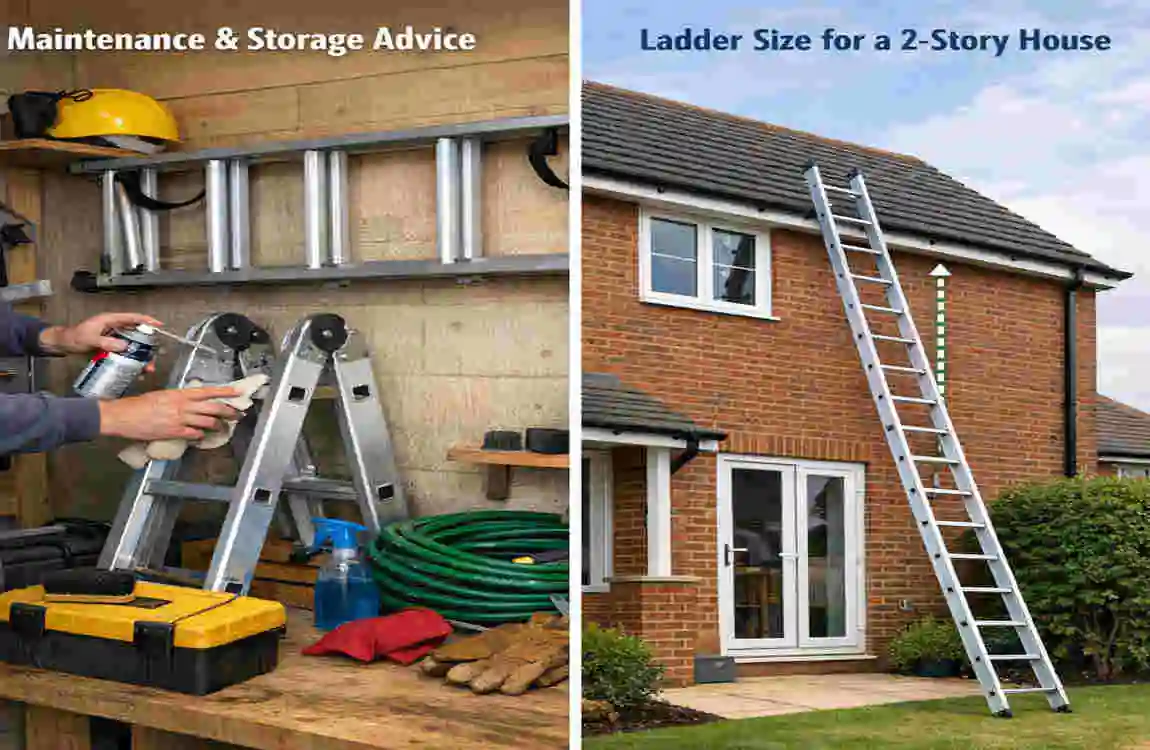
A well‑maintained ladder is a safe ladder. Follow these simple upkeep steps.
Cleaning and storage
- Rinse off mud and debris after use. Dry before storage to avoid corrosion.
- Store flat or hung on wall hooks in a dry place (garage or shed). Avoid leaning ladders vertically for long periods — stiles can warp.
- Keep fibreglass and aluminium ladders out of direct sunlight where possible to prevent material degradation.
Inspection and replacement
- Do a visual check before each use: look for bent stiles, cracked rungs, or loose locks.
- Tighten loose screws and replace worn feet promptly.
- Replace ladders that show structural damage — don’t try to repair major cracks.
- As a rule of thumb, if a ladder is used professionally, consider replacing it or having it inspected every 1–3 years. For homeowner occasional use, an annual check is sensible; replace after about 5 years if signs of wear appear.
Record keeping
- For rental or professional use, keep inspection logs. For homeowners, a simple date note after a yearly check is enough.
FAQs
What size ladder do i need for a 2 story house uk?
Direct answer: Aim for a ladder that extends to 6.5m–8.0m (approx. 21–26 ft) depending on your eaves height and whether you need ridge access. Measure your eaves, add 1m, and choose a ladder whose extended length meets or exceeds that number.
Can I use a double extension ladder for a two‑storey house?
Yes — if the double extension reaches the required extended length for your eaves plus 1m. For taller eaves, you might need a triple-extension or heavy‑duty model.
Are aluminium ladders safe in UK rain?
Aluminium ladders are safe to use in the rain if you follow precautions: ensure the rungs are dry before use, wear slip‑resistant footwear, and avoid overreaching. Avoid metal ladders near live electrical sources.
Single vs double vs triple extension — which should I pick?
- Single: good only for low-reach work.
- Double: adequate for many two‑storey homes (up to ~7.0m extended).
- Triple: best for taller eaves, terraces, or work that needs extra overlap and flexibility.
Do I need to be certified to use a ladder at home?
No formal certification is required for simple home use. Still, you must follow safety rules — and if you’re doing paid work at height you may need training and stricter compliance under the Work at Height Regulations.
Can I tie the ladder to the gutter?
Avoid tying to gutters alone. Use ladder ties to solid-fix to roof anchors, or secure the ladder to the fascia/soffit with purpose‑made straps and protectors to prevent damage to the gutter.
