

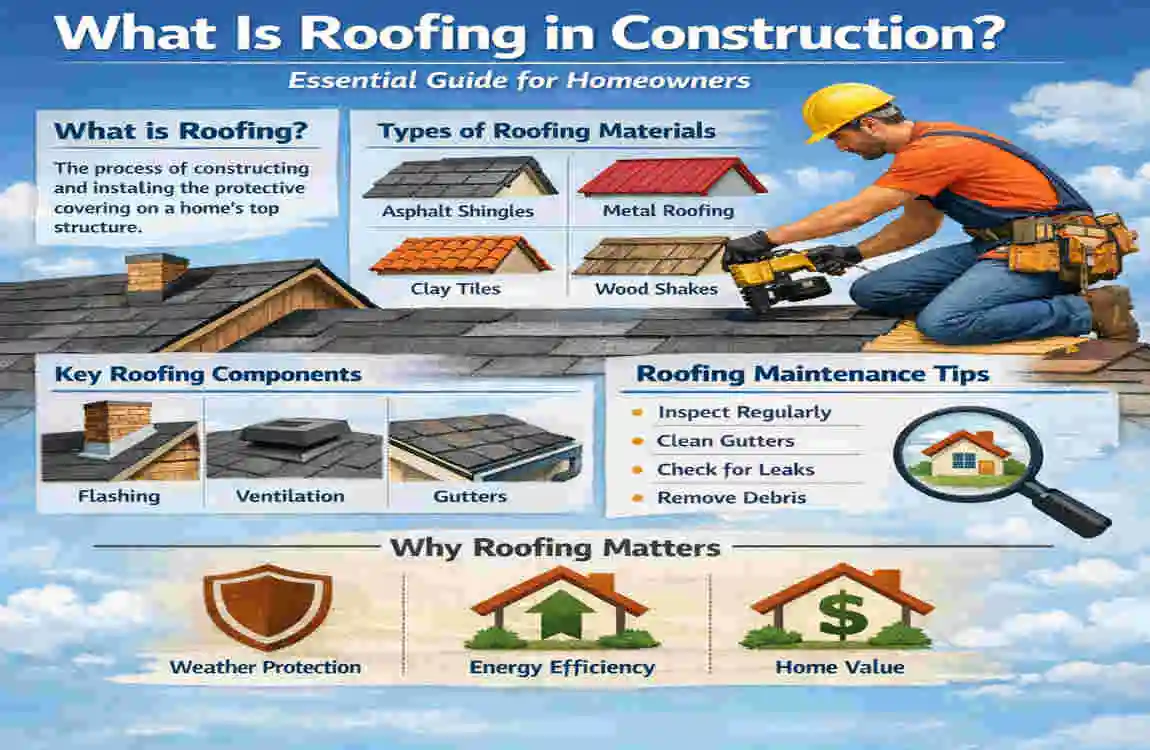
As we navigate 2026, the rising costs of home maintenance and construction materials are on the minds of property owners everywhere. Have you recently looked at your utility bills, noticed a small water stain on your ceiling, and wondered how to protect your biggest investment? Understanding the very basics of how your home is built can save you thousands of dollars in sudden, unexpected, and costly repairs.
Perhaps you are planning a massive home renovation, or maybe you want to understand the anatomy of your house better. In either case, you might find yourself asking: What is roofing in construction? In the simplest terms, roofing is the critical process of building and installing protective coverings on the very tops of buildings. This complex system completely shields your living space against harsh weather, blistering sun, and heavy rains.
| Component | Description | House Relevance | |
|---|---|---|---|
| Roof Deck | Plywood or OSB base supporting all layers; provides structural foundation. | Ensures stability for residential roofs. | |
| Underlayment | Waterproof barrier (felt or synthetic) over deck to block moisture. | Prevents leaks in monsoon-prone areas. | |
| Roofing Material | Outer layer like shingles, metal, or tiles for weather protection. | Customizable for home aesthetics/durability. | |
| Flashing | Metal strips sealing joints around vents/chimneys to direct water away. | Vital for avoiding house water damage. | |
| Ventilation | Ridge/soffit vents for airflow, reducing heat/moisture buildup. | Lowers energy bills in hot climates. |
Understanding What Roofing Is in Construction

When people ask, “What is roofing in construction?” they often picture a worker simply nailing some flat shingles onto a slanted wooden board. However, the reality is far more intricate. Roofing in construction represents an entire structural system. It is a carefully engineered layer installed atop homes and commercial buildings, combining strong roof decks, durable shingles, and waterproof underlayments. All these pieces work together in perfect harmony to ensure absolute waterproofing and top-tier thermal insulation.
Think of your roof as the ultimate helmet for your house. Without it, the walls, the foundation, and everything you own inside would quickly succumb to nature. The concept of roofing has an absolutely fascinating evolution. Thousands of years ago, ancient civilizations used basic thatch, mud, and woven branches to keep the rain off their heads. These early roofs required constant replacement and offered very little insulation.
Fast forward to today, and the construction industry has revolutionized this process. We now use advanced composite polymers, rust-proof metals, and even solar-integrated smart tiles. The primary goal, however, remains the same as in ancient times: to ensure the house’s ultimate longevity. A properly constructed roof prevents moisture from rotting your wooden beams, keeps destructive pests out, and regulates the temperature in your living room. When you truly understand the depth of this construction phase, you realize it is the single most important barrier between your family and the unpredictable outside world.
Types of Roofing for Your Home
Choosing the right roof style is one of the most exciting yet daunting decisions you will make during a construction or renovation project. The style you pick dramatically alters your home’s curb appeal and determines how much maintenance you will need over the next few decades. Let us break down the most popular types of roofing you will encounter in the modern market.
Asphalt Shingles: The Reliable Classic
Walk down almost any suburban street, and you will see asphalt shingles. They remain the undisputed king of residential construction. Builders love them because they are incredibly affordable, widely available, and relatively easy to install.
The biggest pros of asphalt shingles include their remarkable cost-effectiveness and their ability to blend seamlessly with almost any architectural style. However, you must weigh these benefits against the cons. Asphalt shingles generally have a shorter lifespan compared to harder materials. They absorb a lot of heat, and harsh winds can occasionally tear them off your roof.
Metal Roofing: The Heat Defender
If you want to talk about a massive trend in 2026, look no further than metal roofing. Homeowners are falling in love with this material because of its unmatched energy efficiency. Metal actively reflects the sun’s blinding UV rays into the atmosphere rather than absorbing them into your attic.
This makes metal roofing absolutely ideal for regions with blistering hot climates, such. A good metal roof dramatically lowers your summer air conditioning bills. Furthermore, modern metal panels are treated with specialized coatings that completely resist rust, ensuring your house looks pristine for up to fifty years.
Tile Roofing: The Luxury Statement
When you envision a sprawling Mediterranean villa or a gorgeous Spanish-style luxury house, you immediately picture tile roofing. These roofs use materials such as baked clay or concrete to create a stunning, high-end aesthetic.
Tile roofs are heavily praised for their extreme durability. They can withstand heavy storms, hail, and even fire. However, there is a catch. Because these tiles are incredibly heavy, your home requires a structurally reinforced framing system to support their immense weight safely.
Flat Roofing: The Urban Modernist
You will frequently see flat roofs in ultra-modern, minimalist house designs and in dense urban construction. Despite the name, these roofs are never perfectly flat; they have a very slight, almost invisible slope to allow rainwater to drain off safely.
Instead of traditional overlapping shingles, flat roofs rely on large, continuous waterproof membranes. These tight seals prevent water from pooling and leaking into the home. Flat roofs also offer a major bonus: you can use the space above your house for a rooftop patio or an outdoor garden!
Eco-Friendly Options: The Sustainable Future
In 2026, sustainable living is no longer just a buzzword; it is a vital part of residential construction. Eco-friendly roofing options are taking the market by storm.
You can now find spectacular green roofs featuring living plants and grass growing directly on top of a specialized waterproof membrane. This naturally insulates the house and purifies the local air. Alternatively, many homeowners are choosing solar-integrated tiles. Instead of bolting bulky, ugly solar panels onto an existing roof, these sleek, modern tiles generate electricity while seamlessly acting as the actual roof covering.
Materials Breakdown: What Goes Into Your Roof?
To truly grasp what roofing is in construction, you must look closely at the physical materials builders use. Every single component plays a highly specific role in protecting your house. Let us explore these house roofing materials in greater detail.
Shingles: Fiberglass versus Composite
When selecting traditional shingles, you generally choose between fiberglass and composite varieties. Builders create fiberglass shingles by taking a woven fiberglass base mat, coating it heavily in waterproof asphalt, and topping it with ceramic granules. These are lightweight, fire-resistant, and very wallet-friendly.
Composite shingles, on the other hand, use a mixture of recycled plastics, rubber, and polymers. Manufacturers design composite shingles to mimic the gorgeous look of natural slate or expensive cedar wood. While they cost significantly more upfront, their extreme durability makes them a fantastic long-term investment for residential construction.
The Power of Membranes: EPDM and TPO
If your house features a flat or low-slope roof, you will leave the world of shingles behind and enter the world of membranes. Two specific materials dominate this space: EPDM and TPO.
EPDM (Ethylene Propylene Diene Terpolymer) is an extremely tough, synthetic rubber. It looks like a giant inner tube stretched across your roof. It handles extreme temperature fluctuations beautifully and resists dangerous ultraviolet radiation.
TPO (Thermoplastic Polyolefin) is a bright white, single-ply membrane. Because it is white, TPO actively reflects sunlight. Builders frequently recommend TPO roofing for eco-conscious homeowners who want to reduce their home’s energy consumption.
Flashing: The Unsung Hero
You cannot talk about roofing materials without praising flashing. Flashing consists of thin, flexible pieces of galvanized steel or aluminum. Roofers strategically place these metal sheets in the most vulnerable areas of your roof—specifically in the deep valleys where two slopes meet and around objects that protrude through the roof, such as your chimney or ventilation pipes. Flashing acts as a strict director, aggressively forcing flowing rainwater away from the seams and down into your gutters.
Material Comparison Table
To help you make the best choice for your house-specific needs, review this simple comparison table of common roofing materials:
Roofing Material Initial Cost Level Expected Durability Best Residential Suitability
Asphalt Shingles Low to Medium 15 to 25 Years Standard suburban homes with sloped roofs.
Metal Panels Medium to High 40 to 70 Years Hot climates requiring high energy efficiency.
Clay/Concrete Tiles: High 50 to 100 Years. Luxury homes with heavily reinforced framing.
TPO Membrane Medium 20 to 30 Years Modern urban houses with flat or low-slope roofs.
The Step-by-Step Installation Process
Now that you know the materials, you may want to know how the actual building phase works. Residential installation requires a methodical, highly organized approach. Here is a detailed, step-by-step guide explaining exactly how professional contractors bring a roof to life.
Inspection and Preparation
Before a single nail hits the wood, professionals conduct a massive inspection. The roofing crew will climb into your attic and meticulously assess the house structure. They must confirm that your wooden trusses and rafters possess the load-bearing strength necessary to hold thousands of pounds of new materials safely. If they find rotting wood or termite damage, they must replace those structural beams first. Next, they strip away the old, failing roof and thoroughly clean the surface.
Underlayment and Decking
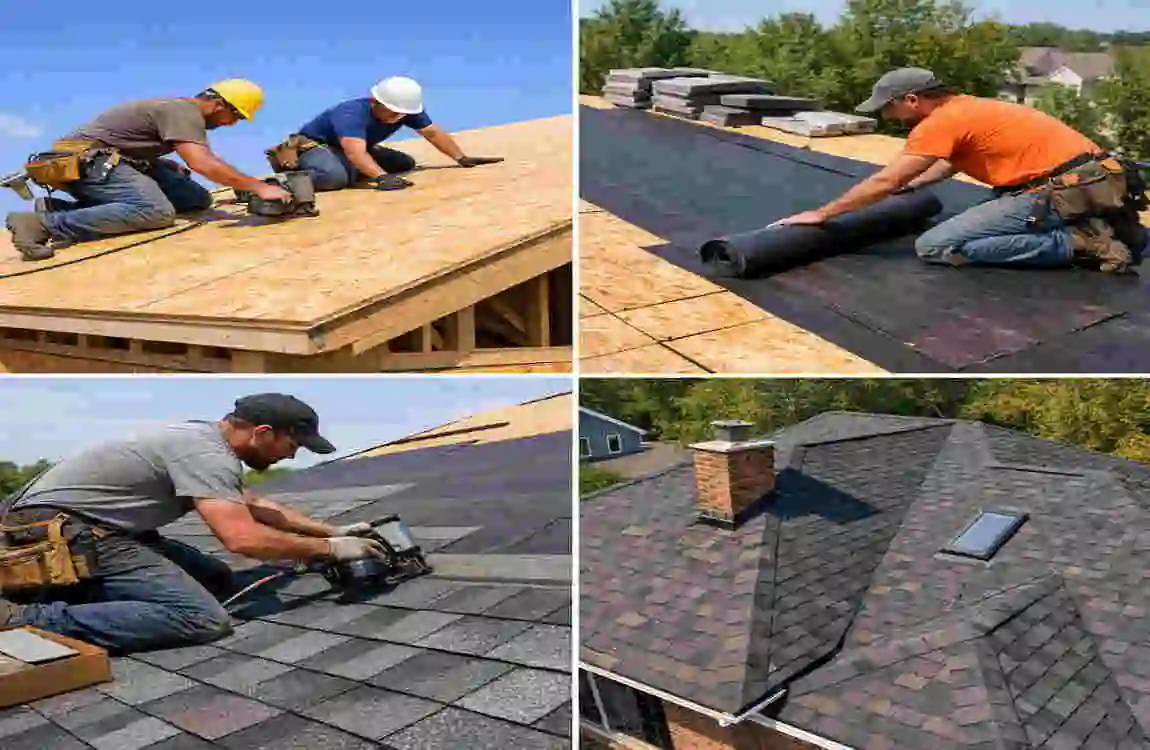
Once the roof skeleton is clean, contractors install the foundation layer, known as the decking. Usually made of thick plywood or oriented strand board (OSB), this creates a solid, flat surface.
Immediately over the decking, the crew rolls out the underlayment. This acts as a secondary, highly reliable waterproof barrier. Even if a violent storm rips a shingle off your roof, the underlayment blocks the driving rain from reaching your precious plywood decking, providing vital moisture control.
Material Laying
With the protective barriers in place, the crew begins the most visible part of the job: laying the roofing material. Starting from the absolute bottom edge of your roof and carefully working their way up to the highest peak, they secure the shingles, tiles, or metal panels.
Contractors use specialized pneumatic nail guns to drive heavily galvanized nails through the materials, locking them permanently to the wooden deck below. For certain flat roofs or metal panels, they may use heavy-duty industrial sealants and hidden clips instead of exposed nails.
Flashing and Ventilation Integration
As the crew works their way up, they meticulously install the metal flashing. They seal the flashing tightly around your skylights, your brick chimneys, and your plumbing vents. This is tedious work, but it completely prevents sneaky leaks from destroying your ceilings.
Simultaneously, the roofers cut strategic holes to install proper ventilation systems. Without ventilation, your attic traps massive amounts of boiling-hot air and humid moisture, which aggressively bake your shingles from the inside out.
Final Checks and Code Compliance
Once the last ridge cap goes on, the job is not over. The lead contractor walks the entire surface of the house, performing rigorous final checks. They ensure every single nail sits flush, clear all dangerous debris from your gutters, and confirm that the entire installation strictly meets all local building codes for supreme safety.
A Quick Warning: DIY Pitfalls versus Pro Hires
You may be tempted to watch a few online videos and tackle this installation yourself to save money. We highly advise against this. DIY roofing is incredibly dangerous. One misstep can lead to a tragic fall. Furthermore, improperly sealing a single line of flashing can slowly rot the entire frame of your house over a few years. When it comes to a construction project, you must always hire licensed, insured professionals to ensure your family’s safety.
Key Components of a Healthy Roof
When looking up from the street, you only see the very top layer. However, a healthy roof relies on a stack of hidden, vital components working tirelessly behind the scenes.
The Roof Deck
Also known as sheathing, the roof deck serves as the sturdy foundation for the entire system. Builders usually construct this from half-inch-thick sheets of exterior-grade plywood. It ties your wooden roof trusses together, providing the vital stability needed to hold the heavy shingles, the winter snow, and the roofing workers themselves.
The Underlayment
We touched on this during the installation process, but its importance cannot be overstated. The underlayment is an incredibly tough, water-resistant sheet—often made of thick felt or modern synthetic polymers—that roofers roll out directly over the wooden deck. It acts as your home’s last line of defense. It catches any rogue water drops that manage to sneak past the outer shingles.
Drip Edge and Flashing
Water is incredibly lazy; it wants to find the easiest path downward. The drip edge is a specialized metal strip installed along the very edges of your roof. It forces water to drip directly into your gutters rather than curl back and rot the wooden fascia boards behind them. As we discussed earlier, flashing serves as armored edge protection in vulnerable areas, such as valleys and around chimneys.
Ventilation Systems
You cannot build a roof like a sealed plastic bag; the house needs to breathe. Proper ventilation systems usually feature intake vents under your eaves (the part of the roof that hangs over the walls) and exhaust vents at the very top of the roof (the ridge). This continuous airflow pushes out the stale, hot, humid air. A well-ventilated roof drastically reduces your house’s energy bills. It prevents dangerous winter ice dams from forming on the edges.
Outstanding Benefits for Homeowners
Why should you care so much about upgrading or maintaining this part of your house? Understanding what roofing is in construction directly translates into massive, tangible benefits for your daily life and your wallet.
Ultimate Weather Protection
If you live in regions that experience severe weather, like the intense, flooding monsoons, a high-quality roof is non-negotiable. Modern, expertly installed roofing systems feature high wind resistance ratings and impenetrable waterproof seals. When the dark clouds roll in and the thunder claps, you can sleep peacefully knowing your family and your cherished belongings remain perfectly dry and safe.
Massive Energy Savings
Your roof acts as the primary thermal barrier for your house. If you upgrade to modern “cool roofs,” like reflective metal panels or specially coated white shingles, you bounce the sun’s harsh heat back into the atmosphere.
Studies show that a highly efficient roof, combined with excellent attic ventilation and deep insulation, can slash your monthly air conditioning bills by up to a staggering 20%. Over the roof’s lifespan, those monthly savings completely cover the cost of the initial installation!
Boosting Your Property Value
If you ever plan to sell your house, an old, sagging roof will instantly scare away potential buyers. They see an old roof and immediately calculate the thousands of dollars they will have to spend to fix it. Conversely, a brand-new, visually stunning roof can significantly boost your property’s overall value. It massively increases your home’s curb appeal and signals to buyers that you have meticulously cared for the property.
Proactive Maintenance Tips
You just spent a significant amount of money putting a beautiful new roof on your house. How do you protect that investment? By practicing consistent, proactive maintenance.
- Conduct Annual Visual Inspections: Grab a pair of binoculars and stand in your yard at least once a year. Carefully scan the entire roof surface. Look specifically for any shingles that appear cracked, severely warped, or entirely missing. Catching a small problem early prevents a massive leak later.
- Keep Your Gutters Spotless: This is arguably the most important chore. When your gutters clog with wet autumn leaves and dirt, the rainwater cannot escape. The water quickly backs up, spills over the edges, and rots the wooden edges of your roof. Clean your gutters thoroughly every single spring and fall to avoid devastating water damage.
- Trim Those Overhanging Branches: If a large oak tree hangs directly over your house, cut the branches back. In a severe windstorm, a heavy branch can snap and smash through your roof decking. Furthermore, low branches provide a very easy bridge for squirrels and raccoons to access your attic.
- Perform Post-Storm Checks: Immediately after a severe thunderstorm, hail event, or heavy windstorm, walk around your property. Look for loose metal flashing around your chimney or random shingles lying in your grass. Call a professional for an inspection if you suspect storm damage.
Common Issues and Easy Fixes
Even the best roofs occasionally suffer from wear and tear. Knowing what to look for helps you act fast.
One of the most common issues homeowners face is the dreaded ceiling leak. If you see a brown water ring forming on your bedroom ceiling, you likely have a failure in your metal flashing or a torn underlayment. The solution usually involves a professional roofer removing the shingles in that area, applying a fresh waterproof sealant, and installing brand-new flashing.
Another frequent issue is severe granule loss. As asphalt shingles age, they shed their protective ceramic granules, exposing the black asphalt underneath to the sun. If you look inside your gutters and see piles of black sand, your roof is reaching the end of its life.
You might also notice curling. If the edges of your shingles look like they are rolling upward like potato chips, your attic likely has poor ventilation, which causes the shingles to bake. While you can sometimes re-seal minor curling with specialized roofing cement, widespread curling usually dictates that you need a full, complete roof replacement.
Important Cost Factors to Consider
Budgeting for a new roof requires understanding the variables that influence the final price tag. In 2026, you can generally expect per-square-foot pricing to range from PKR 500 to PKR 2000 (or its equivalent, depending on your specific global region).
So, what pushes that price up or down? The material you choose creates the biggest price swing. Basic asphalt shingles keep your costs low, while importing Premium Spanish clay tiles or installing a highly engineered TPO membrane will push you toward the higher end of that price spectrum.
The overall size and the specific pitch (steepness) of your house also drastically alter the cost. A massive, sprawling house requires significantly more raw materials and many more hours of intense labor. Furthermore, if your roof is incredibly steep and dangerous to walk on, contractors will legally charge a Premium for the extra safety equipment and the slower working pace required. Finally, if the crew discovers rotten plywood decking during the tear-off phase, you will have to pay extra to rebuild that structural foundation.
Exciting Trends in Roofing
The construction industry never stops innovating, and the year 2026 has brought some truly spectacular advancements to the world of roofing.
The biggest breakthrough we are seeing right now is the rapid rise of “Smart Roofs.” Builders are now embedding tiny, highly advanced IoT (Internet of Things) sensors directly into the waterproof underlayment layers. These brilliant sensors monitor your roof 24/7 and instantly send an alert directly to your smartphone the exact second they detect unusual moisture or a drastic temperature change, allowing you to stop a leak before it ever reaches your drywall!
Additionally, amid a massive global push for eco-conscious building, sustainable materials are dominating the market. We are seeing a huge surge in shingles manufactured entirely from upcycled ocean plastics and durable recycled rubber tires, proving that you can protect your house while simultaneously protecting the planet.
Frequently Asked Questions: Understanding Roofing in Construction
Are you looking for quick, easy-to-understand answers about how your home’s roof is built? When you strip away the complex builder jargon, understanding what is roofing in construction becomes much easier. Here are the most common questions homeowners ask about this vital construction phase.
What exactly is roofing in construction?
In simple terms, roofing is the process of designing, building, and installing the uppermost protective boundary of a building. You might think of a roof as just a layer of shingles, but it is actually a highly complex, multi-layered structural system.
This system actively shields your entire house from harsh weather elements like heavy rain, blistering sun, and violent winds. Without a properly constructed roof, the wooden bones of your house would quickly rot, and your interior living spaces would be ruined by water damage.
What are the main layers of a modern roof?
A healthy, modern roof is built using a stack of protective layers. When contractors build a roof from scratch, they typically install three main components.
First, they lay down the roof deck (or sheathing). This is a strong wooden foundation made of thick plywood that covers the open rafters of your house. Next, they roll out the underlayment. This acts as a waterproof blanket that stretches across the wood to block sneaky moisture. Finally, they install the surface covering, which is the visible outer layer composed of shingles, metal panels, or clay tiles.
What are the most popular roofing materials used today?
You have several fantastic options to choose from, depending on your budget and your local climate.
Asphalt shingles remain the most popular choice globally because they are highly affordable, easy to install, and look great on standard suburban homes. However, as we move through 2026, metal roofing is becoming incredibly popular. Homeowners love metal because it aggressively reflects the sun’s heat, slashing summer cooling bills. Finally, clay and concrete tiles offer a stunning, luxury aesthetic, though they require a heavily reinforced house frame to support their massive weight.
How long will a brand-new roof actually last?
The lifespan of your roof depends entirely on the specific materials you choose to install and how well you maintain them.
If you install a standard asphalt shingle roof, you can generally expect it to protect your home for 15 to 25 years. If you decide to upgrade to a premium metal roof or heavy-duty clay tiles, you are making a generational investment. These incredibly tough materials can easily last anywhere from 50 to 100 years with minimal basic maintenance!
Can I install or repair my own roof to save money?
We strongly advise that you never attempt DIY roofing. While watching online tutorials makes the process look easy, roofing is incredibly dangerous and highly technical work.
