

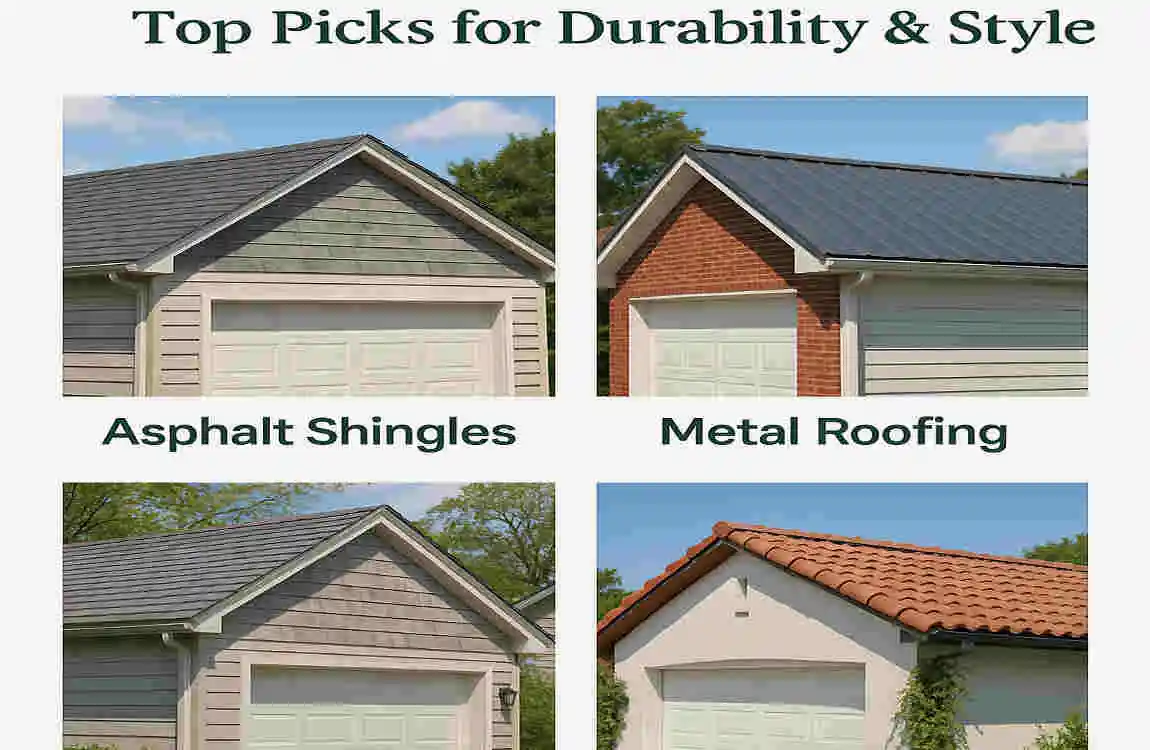
Most homeowners focus on their main roof, but your garage roof faces the same harsh weather, heavy use, and style demands. Whether you use your garage for storage, hobbies, or just parking, a leaking or unattractive roof can bring headaches and costly repairs.
Choosing the best garage roof materials is about more than price—it’s about protection, style, and value. The right choice keeps your belongings safe, boosts your home’s curb appeal, and can even save money in the long run. However, the wrong pick could mean frequent repairs, mismatched design, and unexpected expenses.
Key Factors to Consider When Choosing Garage Roof Materials
Selecting the best garage roof for style and durability isn’t just about picking the cheapest or most popular option. Your garage roof needs to handle your local climate, fit your budget, and complement your home’s look. Here’s what to keep in mind:
Climate: Weathering the Elements
- Snow, Rain, and Ice: Heavy snow load or frequent rain calls for sturdy, waterproof materials like metal or tile.
- Extreme Heat: Some materials, such as asphalt shingles, can crack or warp in high heat, while metal and clay perform better.
- Wind: High-wind areas benefit from interlocking panels or heavier materials that resist uplift.
Budget and Lifespan
- Upfront Cost vs. Long-Term Value: Asphalt shingles are affordable, but metal and tile last much longer—sometimes up to a lifetime!
- Lifespan: Investing more upfront can mean fewer repairs and replacements over decades.
Roof Pitch and Installation
- Flat or Low Slope: Materials like rubber membranes or fibre cement sheets work best.
- Steep Slope: Shingles, tiles, and metal panels are ideal.
- Ease of Installation: Some materials are DIY-friendly; others require professional help.
Aesthetics and Home Integration
- Curb Appeal: Your garage roof should match or complement your house.
- Style Options: Many materials offer colors, textures, and profiles to suit any look.
Pros & Cons of Ignoring These Factors
Pros:
- Might save time on decision-making.
- Could lower initial cost.
Cons:
- Risk of leaks, damage, and frequent repairs.
- Poor match to your home’s style.
- Reduced property value.
- Higher long-term costs.
Taking these factors into account ensures you get a garage roof that stands the test of time and enhances your home’s appearance.
Top Contenders: What Is the Best Material for a Garage Roof?
To answer what is the best material for a garage roof, let’s compare the leading options side by side. Each material offers unique benefits, styles, and price points.
Comparison Table: Best Garage Roof Materials
| Material | Lifespan | Cost/sq ft | Durability Rating | Style Options | Best For |
|---|---|---|---|---|---|
| Metal (Steel/Alum) | 40–70 yrs | $7–15 | High (wind/fire) | Modern, colors | All climates |
| Asphalt Shingles | 20–30 yrs | $3–6 | Medium | Versatile | Budget homes |
| Rubber Shingles | 50+ yrs | $6–10 | High (temp swings) | Textured, eco | Cold regions |
| Clay/Concrete Tiles | 50–100 yrs | $10–20 | Very High | Mediterranean | Warm climates |
| Fibre Cement Sheets | 50+ yrs | $5–9 | High (UV/fire) | Corrugated | Rural/heavy duty |
Your ideal garage roof material depends on your priorities—do you want long-term durability, a certain style, or the lowest cost? In the next sections, we’ll dive deep into each option to help you decide.
Metal Roofing: The Durable, Stylish Leader
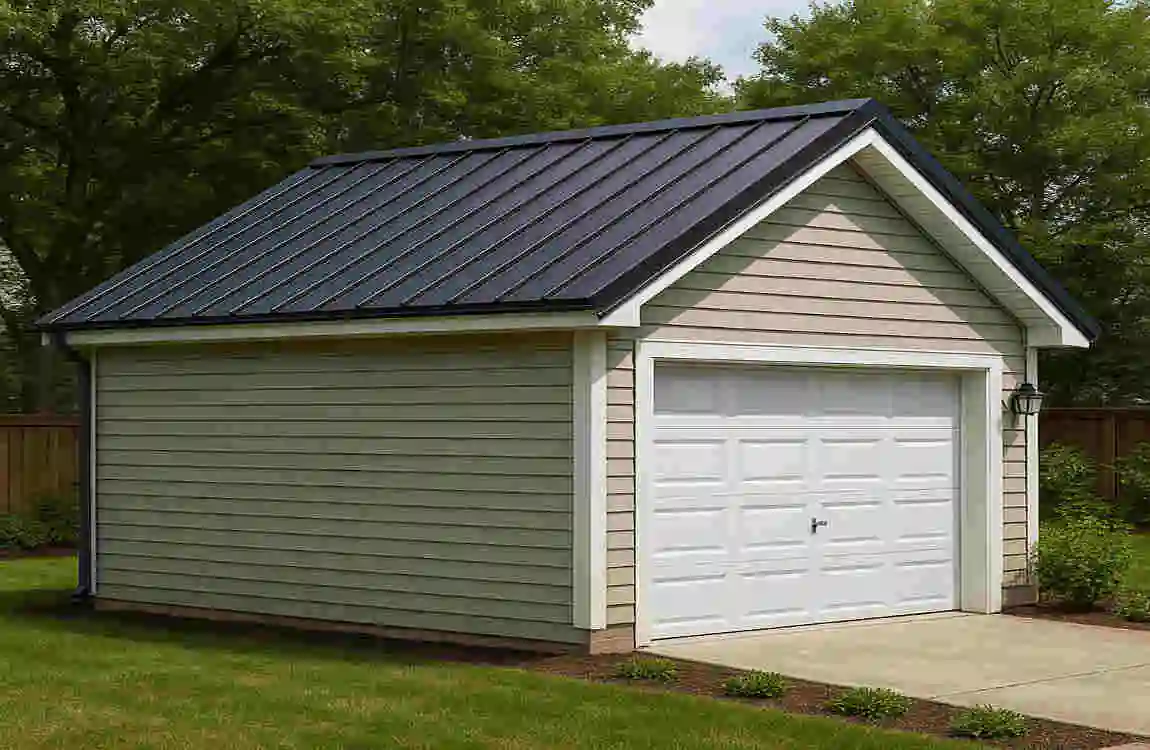
Metal roofing is often the top choice for garage roofs thanks to its unbeatable durability, modern style, and wide range of options.
Types of Metal Roofing
- Steel Panels: Most common, affordable, strong, and resists rust with coatings.
- Aluminum: Lightweight, naturally rustproof, great for coastal areas.
- Copper: Premium look, develops unique patina, lasts a lifetime (with a high price tag).
Pros of Metal Roofing
- Long Lifespan: 40–70 years or more—sometimes with a lifetime warranty.
- Low Maintenance: Occasional cleaning and checks.
- Recyclable: Eco-friendly and fully recyclable at end of life.
- Fire & Wind Resistant: Excellent in extreme climates.
- Style Choices: Dozens of colors, profiles (standing seam, corrugated), and finishes.
Cons of Metal Roofing
- Higher Upfront Cost: More expensive than shingles, but offset by longevity.
- Noise: Rain and hail can be loud, though modern underlayment reduces this.
- Professional Installation Recommended: Ensures watertightness and warranty coverage.
Style Tips: Matching Your Home
Metal can look ultra-modern or mimic traditional shingles, depending on the profile and color. Choose a matte finish for a subtle look, or a bold color to make your garage pop. Many homeowners opt to match the garage roof to their main house roof for a cohesive appearance.
Installation Guide (Summary)
- Prepare Decking: Ensure a solid, clean base.
- Install Underlayment: Adds waterproofing and sound dampening.
- Lay Metal Panels: Overlap and fasten securely.
- Seal Joints and Edges: Prevent leaks.
- Finish with Trim: Edges, ridge cap, and flashing.
Real-World Example
A homeowner in Minnesota chose steel panels with a snow-shedding profile for their detached garage. Not only did it withstand harsh winters, but it also matched the home’s contemporary style and required almost no upkeep.
In short, if you value longevity, style flexibility, and low maintenance, metal is a smart investment for your garage roof.
Asphalt Shingles: Affordable and Versatile
Asphalt shingles are the most popular roofing material in the United States—and for good reason.
Why Asphalt Shingles Are So Common
- Affordable: Lowest upfront cost per square foot.
- Easy to Install: Many homeowners tackle this as a DIY project.
- Versatile Styles: Available in many colors and textures to match your home.
Pros of Asphalt Shingles
- Budget-Friendly: Great for homeowners keeping costs low.
- Readily Available: Easy to find at local hardware stores.
- Blends In: Matches most house roofs, creating a seamless look.
Cons of Asphalt Shingles
- Shorter Lifespan: 20–30 years, less than metal or tile.
- Less Durable in Extreme Heat: Can crack, warp, or lose granules.
- More Maintenance: May need repairs after storms.
When Are Asphalt Shingles the Best Choice?
- Budget Builds: Tight budgets or rental properties.
- Matching House Roof: When you want a uniform appearance.
- Mild Climates: Areas without extreme heat or snow.
Asphalt shingles excel for price and simplicity, but may fall short on longevity and performance in harsh environments.
Rubber and Synthetic Shingles: Eco-Friendly Durability
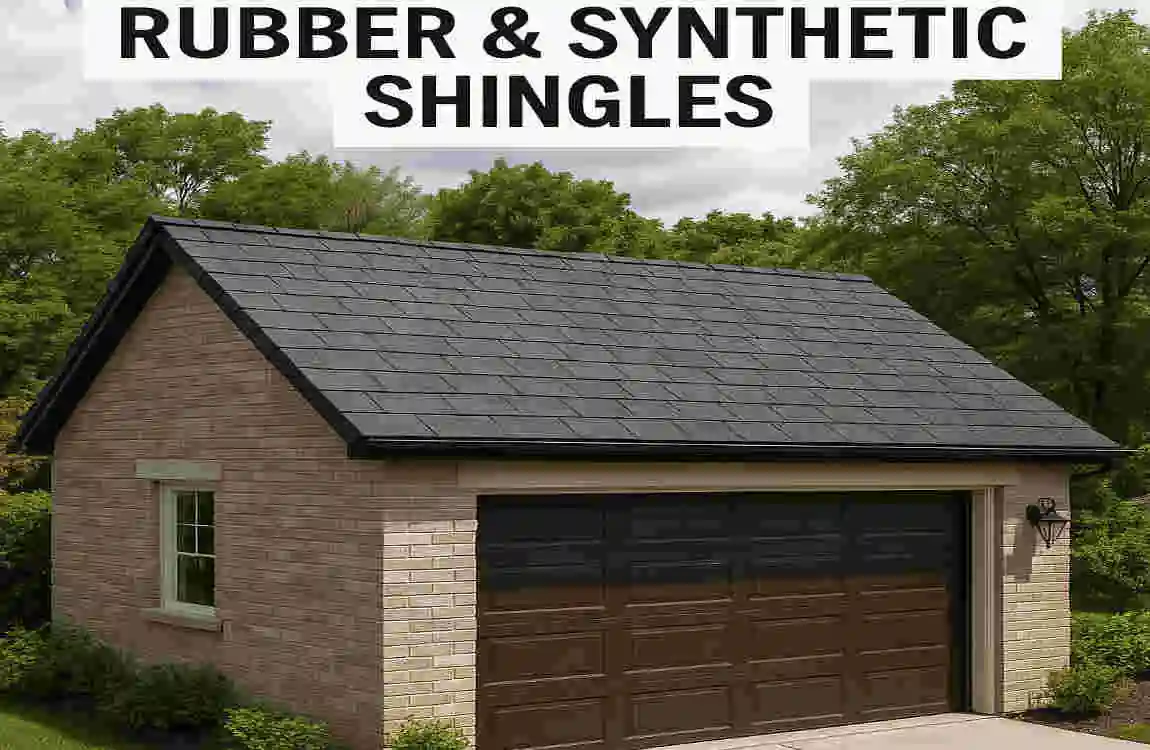
Rubber and synthetic shingles are gaining popularity for their impressive durability and green credentials.
What Are Rubber Shingles?
- Made from Recycled Tires: Diverts waste from landfills.
- Lightweight and Flexible: Easy to handle and install.
Pros of Rubber and Synthetic Roofing
- Long Lifespan: 50+ years with little maintenance.
- Impact & Weather Resistant: Handles hail, snow, and temperature swings.
- Eco-Friendly: Often made from up to 95% recycled materials.
- Textured Styles: Mimic the look of slate, wood, or tile.
Cons
- Moderate Cost: More expensive than asphalt, but cheaper than tile.
- Compatibility: Not all roofers are experienced with installation.
Best For
- Cold Climates: Doesn’t crack or split in freezing temps.
- Homeowners Seeking Green Solutions: Want sustainability without sacrificing performance.
Rubber and synthetic shingles offer a balance of durability, style, and environmental responsibility—making them a top contender for modern garage roofs.
Tile Roofing: Premium Style and Longevity
For those who want unmatched style and a roof that can last a century, tile is hard to beat.
Types of Tile Roofing
- Clay Tiles: Classic Mediterranean look; naturally fire and rot resistant.
- Concrete Tiles: Mimic clay but are more affordable and versatile.
Pros of Tile Roofing
- Exceptional Longevity: 50–100 years or more.
- Fire & Impact Resistant: Great for wildfire-prone or stormy areas.
- Distinctive Appearance: Adds character and value to your home.
Cons
- Very Heavy: May require extra roof support.
- High Cost: Both materials and labor are expensive.
- Not for Flat Roofs: Best on sloped garages.
Best For
- Warm Climates: Tiles keep garages cool and resist sun damage.
- Statement Homes: Those looking for a unique, upscale look.
Tile roofing is an investment in beauty and longevity—ideal for homeowners who want their garage to stand out.
Other Options: Fibre Cement and More
For garages with flat or low-slope roofs, or those needing extra toughness, fibre cement sheets and other alternatives shine.
Fibre Cement Sheets
- Composition: Blend of cement and cellulose fibers.
- Corrugated or Flat: Can suit various roof styles.
Pros
- Fireproof and Weather-Resistant: Handles UV rays, heavy rain, and fire.
- Long Life: 50+ years with minimal care.
- Affordable: Cost-effective for large or simple garages.
Other Alternatives
- EPDM Rubber Membrane: Ideal for flat roofs, waterproof, and easy to repair.
- Polycarbonate Panels: Allow light in—great for workshops.
Best For
- Rural or Industrial Settings: Tough, practical, and low-maintenance.
- Flat or Low-Slope Roofs: Where shingles and tiles won’t work.
Fibre cement and similar materials are practical choices where strength and fire safety are top priorities.
Cost Comparison: Investing in Your Garage Roof
Choosing the right garage roof isn’t just about the sticker price—consider the full lifetime value.
Initial vs. Lifetime Costs
- Asphalt Shingles: Lowest upfront cost ($3–6/sq ft), but may need replacing every 20–30 years.
- Metal Roofing: Higher initial cost ($7–15/sq ft), but lasts 40–70 years with fewer repairs.
- Tile: Premium cost ($10–20/sq ft), often lasts a century.
Savings Over Time
- Metal Roofs: Can pay for themselves in 10–15 years through reduced repairs and energy savings.
- Synthetic Shingles: Lower maintenance means fewer surprises down the road.
Example Calculation
If you spend $10,000 on a metal roof that lasts 50 years, that’s just $200 per year—less than the annual cost of replacing asphalt shingles every two decades.
Think of your garage roof as an investment—not just an expense.
Installation Tips for Long-Lasting Garage Roofs
Proper installation is crucial to maximizing your garage roof’s performance and lifespan.
DIY vs. Professional Installation
- DIY-Friendly: Asphalt shingles and some metal panels.
- Pro Recommended: Tile, fibre cement, and complex metal roofs need expert handling for safety and warranty.
Common Mistakes to Avoid
- Ignoring Underlayment: Skipping this step leads to leaks.
- Mismatched Materials: Using incompatible fasteners or sealants can void warranties.
- Overlooking Ventilation: Poor airflow causes moisture and mold.
Local Code Compliance
- Always check local building codes before starting.
- Permits may be required, especially for structural changes or heavy materials.
A well-installed garage roof means fewer headaches and better protection for everything you store beneath it.
Maintenance for Peak Performance
No matter what material you choose, regular maintenance keeps your garage roof in top shape.
Annual Checks
- Look for Damage: Missing shingles, loose panels, or cracked tiles.
- Clear Debris: Remove leaves and branches to prevent water pooling.
- Inspect Flashings: Check seals around edges and vents.
Cleaning Schedules by Material
- Metal: Wash with gentle soap annually.
- Asphalt Shingles: Remove moss and algae with a soft brush.
- Tile: Clean with water and inspect for cracks.
