

Imagine this: It’s Saturday evening, and a sudden downpour drums against your roof. To your dismay, water begins dripping inside—right onto your favorite reading chair. You rush to the attic and spot the culprit: a patch of damaged corrugated roof sheets. If you’re like most homeowners, you wonder: Can I fix this myself, or do I need to call a pro?
Welcome to the ultimate, step-by-step DIY guide on how to fix corrugated roof sheets. Whether your roof is metal, aluminum, or polycarbonate, this guide will empower you to tackle repairs like a pro, save hundreds—sometimes thousands—of dollars, and extend the life of your roofing for decades.
Why does this matter? Corrugated metal roofs can last over 50 years, but even the best ones face issues from leaks, rust, or loose fasteners. According to the National Roofing Contractors Association, nearly 70% of US homes with metal roofs report problems that require attention within the first 20 years. Hiring a roofer for repairs often costs between $500 and $2,000, but with the right knowledge, tools, and a careful approach, you can handle many repairs yourself for a fraction of the cost.
Why Corrugated Roof Sheets Need Fixing and When to DIY
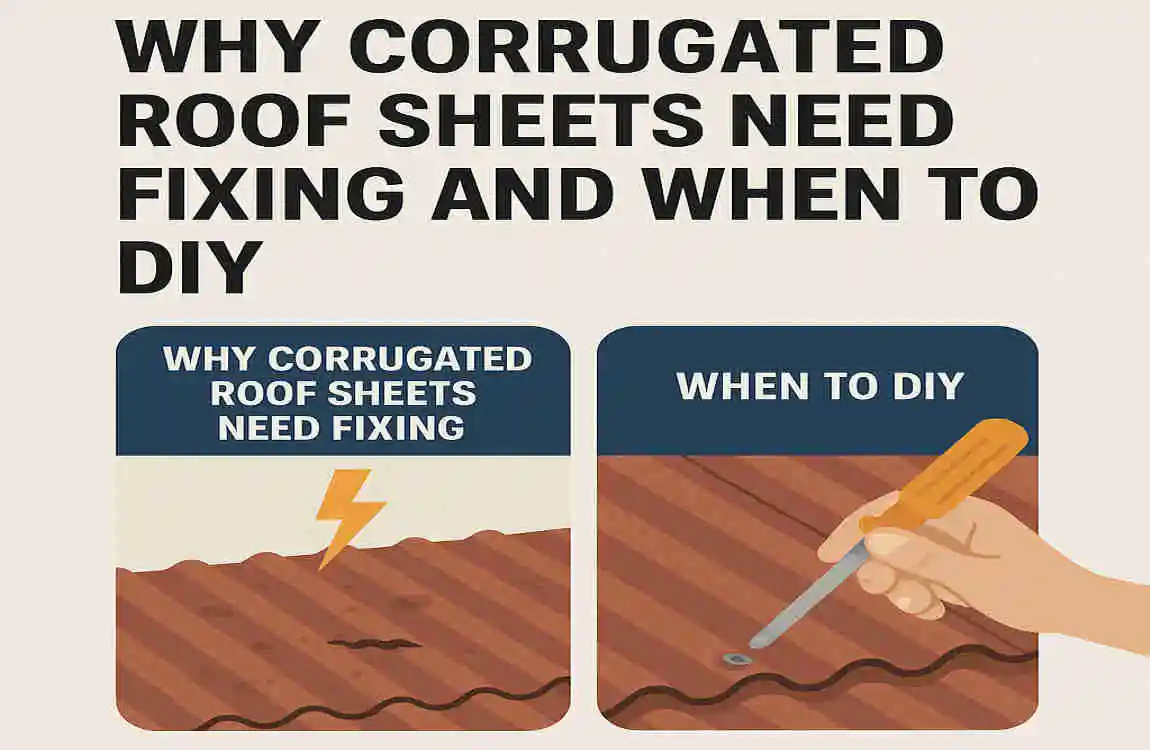
Corrugated roof sheets are strong and long-lasting, but they’re not immune to the elements. Over time, you may notice rust spots, dents, rattling in the wind, or the dreaded drip of a leak. These issues are more common than you might think and can stem from a variety of common corrugated roof sheet problems.
Common Issues and DIY Feasibility
Here’s a quick comparison of typical problems, how to spot them, and whether you can handle them yourself:
| Issue | Symptoms | DIY Feasibility |
|---|---|---|
| Leaks | Water stains inside | High (under 2 hours) |
| Loose sheets | Rattling in wind | Medium |
| Rust | Corrosion spots | High with prep |
| Cracks | Visible splits | Low—call pro |
- Leaks might show up as dark patches on your ceiling or walls. Often, these are caused by loose fasteners or aged sealant.
- Loose sheets are usually obvious on windy days, when you hear rattling from above.
- Rust appears as reddish-brown spots, especially on older galvanized steel.
- Cracks or major splits are rare but serious; these usually require professional help.
Should You DIY or Call a Pro?
- DIY is best for: Minor leaks, small patches of rust, or loose sheets (usually under 10 sheets affected).
- Call a professional for: Large sections needing replacement, structural damage, or any issue involving safety risks.
Fixing minor issues yourself not only saves money but also builds your confidence as a homeowner. But always know your limits—safety comes first!
Tools and Materials You’ll Need for Fixing Corrugated Roof Sheets
Before you start, collecting the right tools to fix corrugated roof sheets makes all the difference. Here’s what you’ll need, organized for easy scanning:
Essential Tools
- Ladder (extension type, with stabilizers)
- Drill/driver (with Phillips and hex bits)
- Tin snips (for metal sheets) or angle grinder
- Caulking gun
- Hammer
- Measuring tape
- Chalk line
Materials
- Replacement corrugated sheets (galvanized steel, aluminum, or polycarbonate)
- Roofing screws (neoprene-washered, 1-2″ long for watertight seal)
- Roof sealant (butyl rubber or silicone)
- Ridge caps and flashing (to protect seams)
- Underlayment patch (ice-and-water shield)
- Primer and paint (for rust protection)
Safety Gear
- Gloves
- Goggles
- Roof harness (especially for steep roofs)
- Non-slip shoes
Budget Breakdown
| Item | Cost Range |
|---|---|
| Tools (buy/borrow) | $50 – $150 |
| Materials (per repair) | $50 – $200 |
| Safety Gear | $20 – $50 |
| Total Estimate | $100 – $300 |
Safety Precautions Before Starting Your Corrugated Roof Repair
Did you know? Falls cause over 30% of home repair injuries, according to the CDC. That’s why safety is your first priority when tackling any safe DIY corrugated roof sheet fix. Here’s how to stay secure:
Step-by-Step Safety Checklist
- Check the Weather: Only repair your roof on a dry, calm day. Wet or windy conditions dramatically increase slip risk.
- Secure Your Ladder: Set your ladder on firm, level ground. Use a stabilizer and have someone hold it if possible.
- Wear a Harness: For any roof with a pitch steeper than 4/12 (that’s about 18.5°), always use a roof safety harness.
- Work With a Partner: Having someone nearby means help is available in case of an accident.
- Use Proper Footwear: Wear non-slip, rubber-soled shoes for maximum traction.
Remember: A few extra minutes spent on safety can save you from serious injury.
Step-by-Step Guide: How to Fix Corrugated Roof Sheets
Now for the heart of this guide: a clear, comprehensive walkthrough on how to fix corrugated roof sheets. We’ll break the process into manageable steps so you can follow along confidently.
Assessing Damage on Corrugated Roof Sheets
Start by identifying exactly where the problems are—sometimes, leaks travel, and what you see inside isn’t directly above outside.
- Inspect from the Ground: Use binoculars to scan for obvious issues like rust, holes, or loose sheets.
- Climb Safely: Once you’re on the roof (with safety gear), check seams, fasteners, and overlaps. Use painter’s tape or chalk to mark problem areas.
- Test for Leaks: Mimic rain by spraying the area with a garden hose while a partner checks inside for drips.
Removing Damaged Corrugated Roof Sheets
When you’ve found a damaged or leaking section, it’s time to remove it.
- Unscrew Fasteners: Starting at the top of the sheet, use your drill or driver to remove all screws. Place screws in a cup for reuse.
- Cut Overlaps: If your sheet is overlapped by others, use tin snips or an angle grinder to carefully cut along the seam. Always cut away from your body.
- Lift Sheet Off: Remove the sheet by lifting it gently—avoid bending neighboring sheets.
- Dispose Responsibly: Recycle metal at a local facility or follow your area’s disposal rules.
Preparing the Roof Surface for New Sheets
Preparation is key to a long-lasting repair.
- Clean the Area: Use a wire brush to remove rust, moss, or old sealant. For heavy rust, apply a rust converter and let it dry.
- Repair Underlayment: If the waterproof underlayment is damaged, patch it with new ice-and-water shield before proceeding.
- Check Roof Pitch: Ensure your roof has at least a 5° slope for water runoff—otherwise, water may pool and cause future leaks.
Installing or Fixing Corrugated Roof Sheets Properly
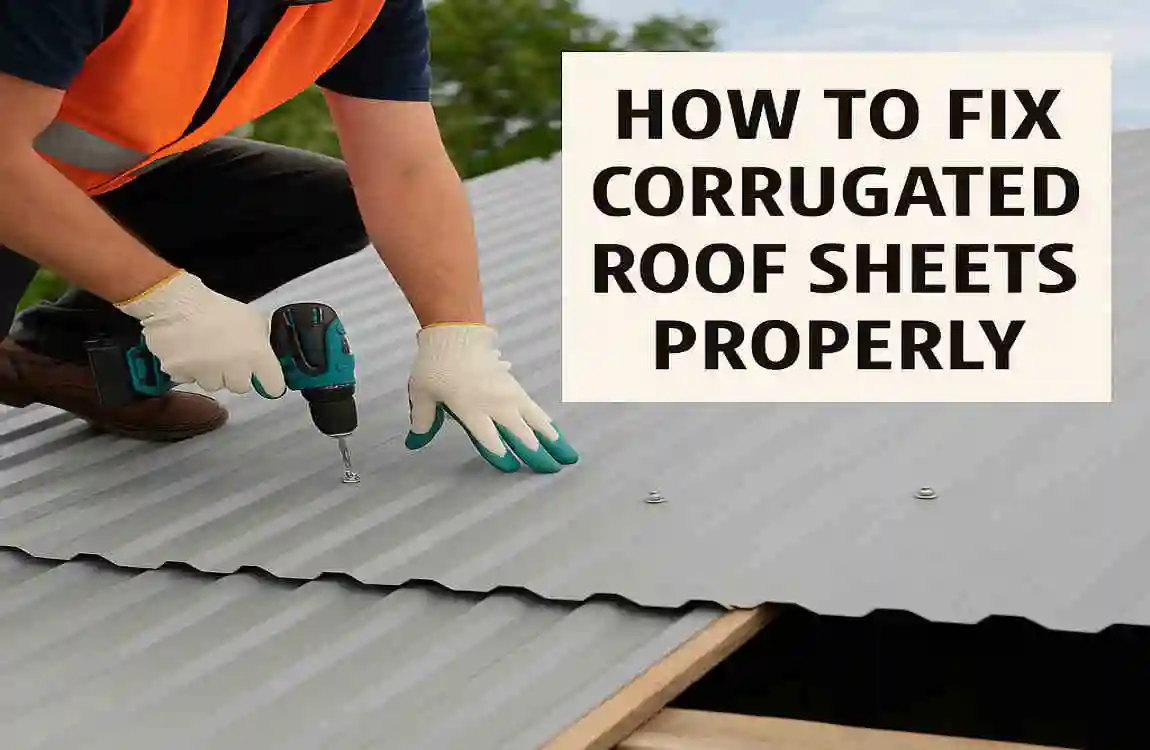
Now, let’s get those new sheets in place for a watertight, pro-grade finish.
- Measure and Cut: Measure your space and cut new sheets to allow a 1-2 corrugation overlap with adjacent panels. Use tin snips for metal, a fine-tooth saw for polycarbonate.
- Position from the Eaves Up: Always start at the bottom edge (the eaves) and work upward. Overlap each sheet by at least one corrugation on the sides and 6″ at the ends.
- Fasten to Purlins: Secure sheets at every purlin (horizontal support) using neoprene-washered roofing screws. Never use nails, as they loosen over time.
- Screw Placement: Place screws in the valleys (lower part) of the corrugation for metal, but in the ridges (high part) for plastic/polycarbonate to prevent water entry.
Fastener Placement Table:
| Position | Screw Spacing |
|---|---|
| Eaves | 6-9″ |
| Field | 12-18″ |
| Ridge | 9-12″ |
- Seal Overlaps and Valleys: Apply a bead of butyl sealant along overlaps and valleys before tightening screws. This prevents leaks in heavy rain.
- Add Ridge and Edge Flashing: Install ridge caps over the roof’s peak and flashing along edges to direct water away from seams.
Metal vs. Polycarbonate Sheets:
- Metal: More durable, but sharp edges—wear gloves.
- Polycarbonate: Lightweight and easy to cut, but needs UV protection; use special screws with plastic washers..
Finishing Touches and Sealing Leaks in Corrugated Roofs
- Prime and Paint: For metal sheets, apply a rust-inhibiting primer and paint to exposed metal edges or screw heads.
- Test With Water: Run a gentle hose test over the new panel to ensure there are no leaks.
- Clean Up: Collect all tools and leftover materials.
Common Mistakes to Avoid When Fixing Corrugated Roof Sheets
Even seasoned DIYers can slip up. Here are some frequent pitfalls and how you can steer clear:
- Using the Wrong Fasteners: Regular screws or nails can rust or work loose. Always use neoprene-washered roofing screws.
- Poor Overlapping: If sheets don’t overlap enough, wind and water can get underneath, causing leaks or even blowing panels off.
- Ignoring Pitch: Flat or low-slope roofs encourage pooling and leaks. Always check your roof’s pitch before starting.
- Skipping Safety Steps: Rushing or forgetting a harness can lead to falls and injuries.
Case Study:
“I once tried to fix my leaking corrugated roof with regular wood screws and just a dab of caulk. The next storm, water poured in. I learned the hard way that using correct fasteners and overlapping properly makes all the difference!”
—James, DIY Homeowner
Maintenance Tips to Prevent Future Corrugated Roof Sheet Repairs
Taking care of your roof means fewer repairs in the long run. Here’s how to prevent corrugated metal roof repairs:
- Annual Inspections: Check for loose screws, rust, or damaged panels every spring and fall.
- Clean Gutters: Blocked gutters cause water backup and roof leaks.
- Trim Overhanging Branches: Tree limbs can rub and puncture panels in storms.
- Touch Up Paint: Keep rust at bay by priming and painting any exposed metal.
Cost Breakdown: DIY vs. Professional Corrugated Roof Fixes
How much can you actually save by tackling this job yourself? Here’s a side-by-side comparison:
| Option | Cost per Sheet |
|---|---|
| DIY | $20 – $50 |
| Pro | $100 – $200 |
A typical 5-sheet repair could cost you $100-250 DIY, versus $500-1,000 for professional help.
