

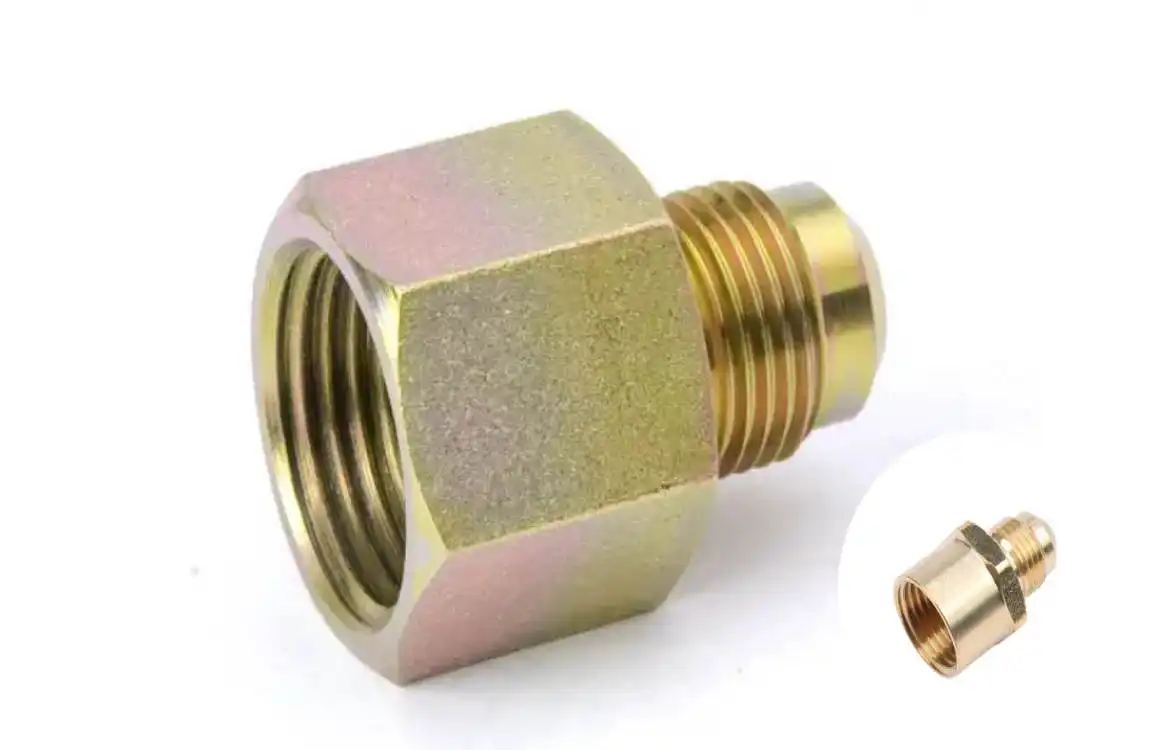
If you have ever looked at a plumbing fitting and wondered what FIP stands for in plumbing, you are not alone. Plumbing products often use abbreviations that can be confusing at first.
FIP generally means Female Iron Pipe or Female International Pipe, depending on the terminology used by a manufacturer or supplier. In practical terms, it describes a fitting with internal female threads that are designed to connect to a male-threaded fitting.
You may find FIP connections on adapters, valves, elbows, tees, water heaters, pumps, faucets, and other plumbing components. Understanding this simple term can make it much easier to choose the correct replacement fitting.
What Does FIP Stand for in Plumbing?
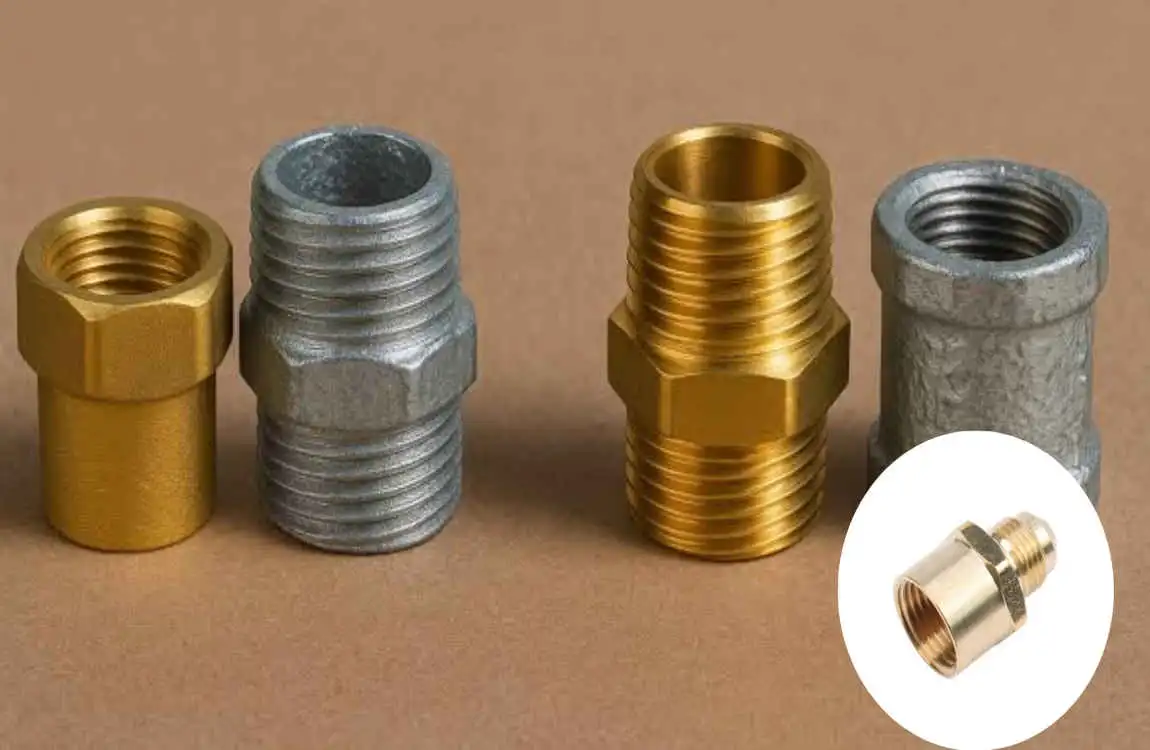
FIP refers to a female-threaded pipe connection. The threads are located inside the fitting rather than on the outside.
The female connection is designed to receive a male-threaded fitting, often called MIP or Male Iron Pipe. When the two matching threaded parts are joined, they create a mechanical connection between the components.
The term “iron pipe” does not necessarily mean the fitting is made from iron. FIP fittings can be manufactured from materials such as brass, PVC, stainless steel, and other approved materials.
The important part is the thread configuration, not simply the material.
Why FIP Connections Matter
Knowing whether a fitting is FIP or MIP helps you avoid buying the wrong component. A fitting with internal threads needs a compatible male-threaded connection.
Before purchasing a fitting, check:
- Size
- Thread type
- Material
- Pressure rating
- Temperature rating
- Intended application
A small mismatch can lead to poor connections, leaks, or damaged threads.
How FIP Plumbing Fittings Work
FIP fittings work by receiving a male-threaded component inside their opening.
Female Threads Explained
The threads inside an FIP fitting are cut into the inner wall of the opening. When you insert a compatible male-threaded fitting, its external threads engage with the internal threads.
As you tighten the fitting, the threaded surfaces create a strong mechanical connection.
For many pipe-threaded connections, you may also use an appropriate thread sealant or plumber’s tape. The correct sealing method depends on the thread type, materials, application, and manufacturer’s instructions.
FIP and MIP Connection
The easiest way to understand FIP and MIP is to think of them as matching partners.
FIP has internal threads, while MIP has external threads.
For example, an FIP valve may accept a male-threaded pipe fitting. Similarly, an MIP adapter can screw into an FIP fitting.
The important point is that the threads must be compatible. Don’t assume two fittings will work together just because they have the same nominal size.
Common Types of FIP Plumbing Fittings
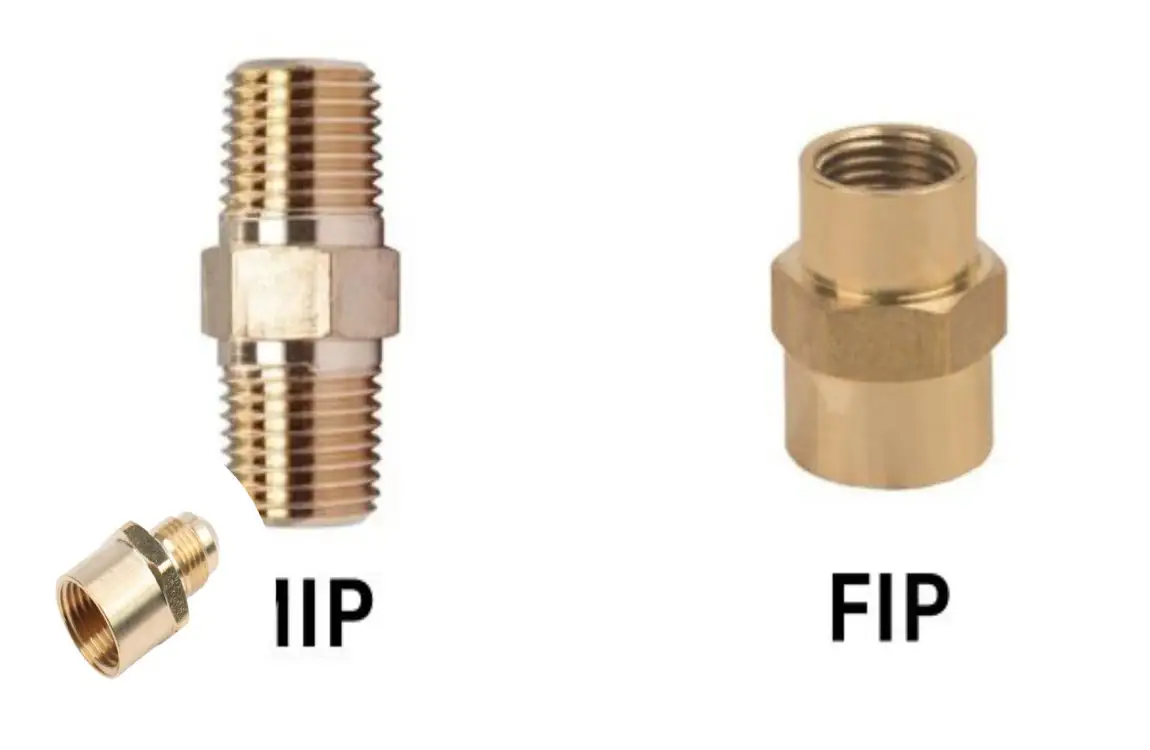
FIP is not one particular fitting shape. It can describe the threaded end of many different plumbing components.
FIP Adapters
An FIP adapter connects different types of plumbing components.
For example, an adapter may have an FIP threaded end on one side and another connection type on the other. This makes it useful when transitioning between threaded and non-threaded plumbing systems.
FIP Elbows and Tees
An FIP elbow changes the direction of a pipe. Use it when a plumbing line needs to turn a corner.
An FIP tee creates a branch connection. It lets one plumbing line connect to another at an angle.
These fittings are especially useful when designing or modifying water supply systems.
FIP Couplings and Unions
A coupling joins two compatible pipes or fittings.
An FIP coupling may have female threads designed to accept male-threaded components on one or both sides.
A union serves a different purpose. It lets you disconnect a section of plumbing more easily for maintenance or replacement.
FIP Valves
Many plumbing valves are available with female-threaded connections. These can help control water flow when connected to compatible male-threaded fittings.
Common examples include shutoff valves and other types of service valves.
Where Are FIP Fittings Used?
FIP fittings are used in many residential, commercial, and outdoor plumbing applications.
Water Supply Lines
FIP connections are used in water supply systems that require threaded fittings.
They may connect pipes, valves, adapters, pumps, or other components.
Faucets and Fixtures
Some plumbing fixtures use threaded connections that require a compatible male or female fitting.
Always check the fixture specifications before selecting an adapter.
Water Heaters
Water heater connections can include threaded fittings and adapters. Because water heaters operate under specific temperature and pressure conditions, the fitting must be rated for the application.
Pumps and Valves
Pumps often use threaded connections to connect to supply or discharge piping. FIP fittings can provide a convenient connection when compatible components are being used.
Outdoor Plumbing
FIP fittings can also appear in outdoor water systems, irrigation-related connections, hose systems, and other plumbing applications.
However, outdoor conditions may require materials that can handle temperature changes, moisture, and other environmental factors.
Gas-Related Applications
FIP-style threaded fittings may also be available for gas applications, but not every FIP fitting is suitable for gas.
Gas systems require components that are specifically approved and rated for the intended fuel and service. If you are working on a gas line, use the required local standards and qualified professional assistance where applicable.
FIP vs Other Plumbing Thread Types
Plumbing terminology can become confusing because manufacturers may use different abbreviations for similar connections.
Here is a simple comparison:
Thread TypeMeaningThread LocationCommon Use
FIP Female Iron Pipe Internal Connects to male-threaded fittings
MIP Male Iron Pipe External Connects to female-threaded fittings
NPT National Pipe Thread Tapered thread standard Pipes and fittings
FPT Female Pipe Thread Internal Common threaded pipe connection
IPS Iron Pipe Size Size designation Pipe and fitting sizing
FIP vs. FPT
FIP and FPT often describe a female pipe-threaded connection.
However, terminology can vary by manufacturer and supplier. That is why it is always wise to check the product description instead of relying only on an abbreviation.
FIP vs. MIP
The basic difference is simple:
FIP = female/internal threads
MIP = male/external threads
An FIP fitting is generally designed to receive a compatible MIP connection.
FIP and NPT
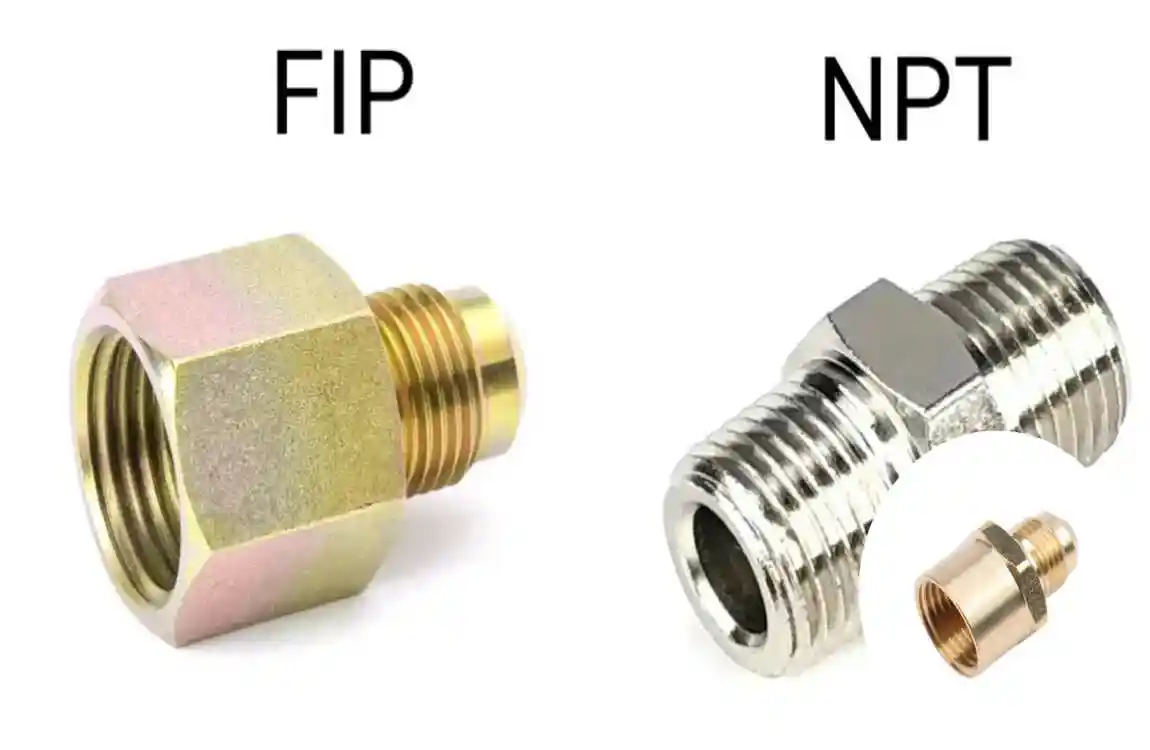
NPT refers to a specific pipe-thread standard. FIP describes the female configuration of a fitting.
Many products described as FIP use female NPT-style threads, but you should verify the product specifications before making a connection.
How to Choose and Install an FIP Fitting
Choosing the right fitting is just as important as installing it correctly.
Choosing the Right FIP Fitting
Start by confirming the pipe and fitting size. A fitting that looks similar may have a different thread size.
Next, check the thread type. Make sure the male and female components are designed to work together.
Also select a suitable material. Common options include brass, PVC, stainless steel, and other approved materials.
Finally, check the fitting’s pressure and temperature ratings. These specifications are particularly important for hot water, high-pressure, and specialised systems.
Basic Installation Tips
A basic threaded installation usually involves these steps:
- Clean and inspect the threads for dirt or damage.
- Confirm compatibility between the male and female threads.
- Apply the correct sealant if the connection requires it.
- Hand-tighten the fitting first to reduce the risk of cross-threading.
- Tighten carefully using the appropriate tools.
- Check for leaks after installation.
Avoid using excessive force. Over-tightening can damage threads or crack certain fittings.
Common Mistakes to Avoid
One of the most common mistakes is mixing incompatible thread standards. Similar-looking threads do not always fit correctly.
Other mistakes include:
- Choosing the wrong fitting size
- Cross-threading the connection
- Over-tightening
- Using an unsuitable sealant
- Using a fitting that is not rated for the application
If the connection doesn’t screw together smoothly by hand, stop and check the threads instead of forcing it.
Why Understanding FIP Matters in Plumbing
Learning what FIP means can make basic plumbing projects much easier.
For homeowners, it helps when identifying fittings under a sink, near a water heater, or around other plumbing equipment.
For DIYers, understanding terms such as FIP, MIP, FPT, and NPT makes it easier to read product descriptions and select compatible components.
It can also reduce the risk of leaks caused by incorrect fittings or damaged connections.
Most importantly, knowing the terminology helps you communicate more clearly with plumbing professionals and hardware suppliers.
For simple, low-risk repairs, a homeowner may be able to replace a compatible threaded fitting. However, a qualified professional should handle gas lines, high-pressure systems, major water connections, and complicated plumbing repairs when appropriate.
Frequently Asked Questions
What does FIP stand for in plumbing?
FIP generally stands for Female Iron Pipe or Female International Pipe. It describes a fitting with internal female threads designed to receive a compatible male-threaded connection.
Is FIP the same as female pipe thread?
Often, yes. FIP and FPT are commonly used to describe female pipe-threaded connections. However, terminology varies by manufacturer, so check the product specifications.
What is the difference between FIP and MIP?
FIP has internal threads, while MIP has external threads. They are commonly used together when their size and thread standard match.
Can FIP connect to NPT?
FIP fittings are commonly associated with female NPT-style pipe threads. Still, you should verify the manufacturer’s specifications before connecting components.
Do FIP fittings need Teflon tape?
Not always. Whether you need plumber’s tape or another sealant depends on the thread type, materials, application, and the manufacturer’s instructions. Use only a sealant that is suitable for the specific plumbing service.
How do I identify an FIP fitting?
Look inside the fitting opening. An FIP fitting has internal threads designed to accept a compatible male-threaded connection.
Can FIP fittings be used for water and gas?
They can be used for both types of applications. Still, the fitting must be specifically rated and approved for the intended service. A fitting suitable for water should not automatically be assumed to be suitable for gas.
Can I install an FIP fitting myself?
Simple, accessible threaded connections may suit some DIY projects if you understand the components and follow the manufacturer’s instructions. For gas systems, high-pressure plumbing, or complex repairs, professional assistance is the safer choice.
| Term | Information |
|---|---|
| FIP Meaning | Female Iron Pipe |
| Also Called | Female Pipe Thread (FPT) |
| Thread Type | Internal threads |
| Connection | Connects to a male-threaded fitting (MIP/MPT) |
| Common Materials | Brass, PVC, CPVC, galvanized steel |
| Common Uses | Water lines, faucets, valves, pipes, and plumbing fittings |
| Main Benefit | Creates a secure threaded connection |
| Sealing Method | PTFE tape or approved pipe-thread sealant |
