

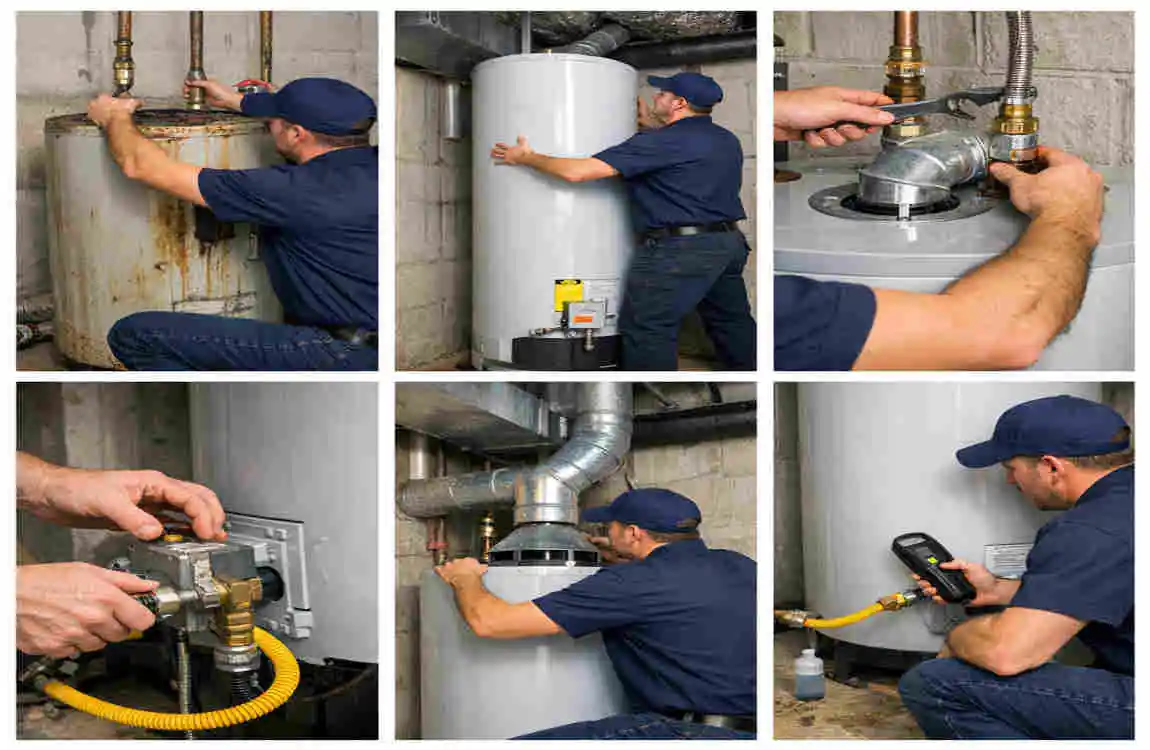
Yes, a qualified plumber can usually install a natural gas water heater. In many homes, plumbers handle both the water-side and gas-side work, depending on local rules and their training.
But this kind of job is more involved than a basic appliance swap. A natural gas water heater must be connected correctly to heat water safely and vent combustion gases outside the home. If something is done wrong, the result can be gas leaks, poor heating, water damage, or even carbon monoxide risks.
That is why many homeowners prefer to hire a professional. It reduces stress, improves safety, and helps ensure the unit works as it should from day one.
What Does a Plumber Do When Installing a Natural Gas Water Heater?
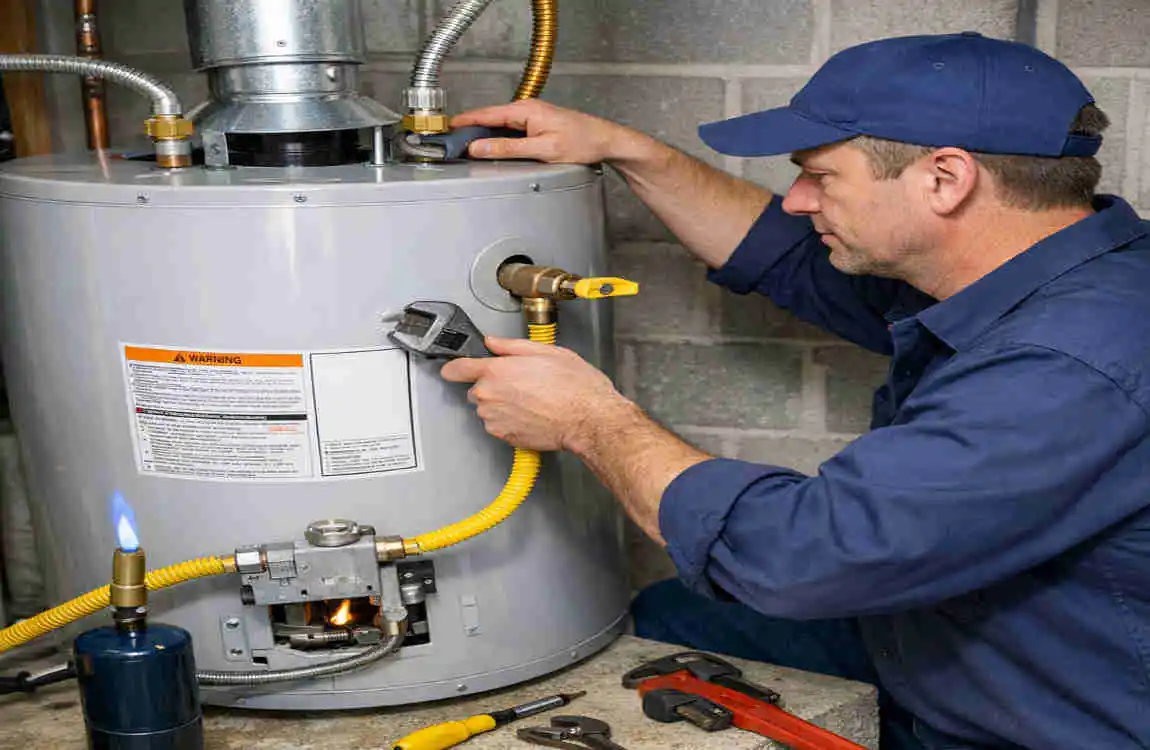
Inspect the Existing Water Heater
Before installing a new unit, the plumber usually checks the existing water heater and the surrounding area. This helps them see which replacement will work best.
They will often look at:
- The current unit condition
- The water lines
- The gas supply
- The venting system
- The installation area and clearances
This step matters because not every replacement is a simple one-for-one swap. The new heater must fit the space, match the system requirements, and comply with local code.
Connect the Water Lines
A big part of the job is reconnecting the hot and cold water lines. The plumber checks that the fittings, shutoff valves, and connections are in good shape before turning the system back on.
They also make sure the water pressure and plumbing layout work properly with the new heater. If the old parts are worn out, they may need to be replaced to avoid future leaks.
Connect the Natural Gas Supply
This is one of the most important parts of the installation. The plumber must verify that the gas line is suitable for the new appliance and connect it using approved fittings and connectors.
Because gas work can be dangerous, it should only be handled by someone properly qualified. A loose connection or poor seal can create serious safety problems.
Install and Check the Venting System
Gas water heaters emit combustion gases that must be safely vented from the home. That is why venting is so important.
If the venting is wrong, dangerous gases can build up indoors. A plumber checks that the vent system is installed correctly and that exhaust gases can escape as intended.
Natural Gas Water Heater Installation: Step-by-Step Overview
Prepare the Installation Area
The first step is to shut off the necessary utilities and safely drain the old tank. This makes the work area safer and easier to manage.
The plumber then removes the old water heater and prepares the space for the new one. A stable, clean, and properly sized location helps the installation go smoothly.
Position the New Heater
The new heater must be placed according to the manufacturer’s instructions and any required spacing rules. Good placement also helps with access for future maintenance.
The plumber will check for proper ventilation, adequate drainage, and sufficient clearance around the unit. These details may seem small, but they matter a lot for long-term performance.
Make Water, Gas, and Vent Connections
Once the heater is in place, the plumber connects the water lines, gas supply, and venting system. In some cases, safety parts such as drain pans, relief lines, or shutoff accessories may also be installed.
This stage must be handled carefully. Each connection must be secure and compliant with the appropriate standards.
Test the System
After installation, the plumber tests everything. This usually includes:
- Checking for gas leaks
- Inspecting water connections
- Confirming proper ignition
- Testing burner operation
- Verifying venting performance
- Checking temperature and safety controls
This final step helps catch problems before they become serious. It also confirms that the heater is ready for use.
Why Professional Plumber Installation Matters
Gas Safety
Gas safety is the biggest reason to hire a professional. A natural gas water heater must be connected properly, or it may leak gas into the home.
A qualified plumber can inspect the system, make correct connections, and perform leak testing. That added protection is worth a lot.
Proper Ventilation
Venting is just as important as the gas hookup. The heater must send exhaust gases outside, not into your living space.
If venting fails, carbon monoxide can become a major concern. This is one of the clearest reasons not to take shortcuts.
Building Codes and Permits
Local rules can vary a lot. Some areas require permits, inspections, or special installation standards for gas appliances.
A professional plumber is more likely to understand those requirements and follow them correctly. That helps reduce delays and avoids code problems later.
Warranty and Manufacturer Requirements
Some manufacturers require professional installation for the warranty to stay valid. Others may want proof that the unit was installed according to the manual.
If you skip those steps, you may lose warranty protection. That can become expensive if the heater has problems later.
Long-Term Performance
A good installation helps the heater run efficiently and safely. Correct gas flow, proper venting, and secure water connections all support better performance.
In other words, professional work often means fewer future repairs and a longer-lasting system.
Natural Gas Water Heater Installation Cost and Maintenance
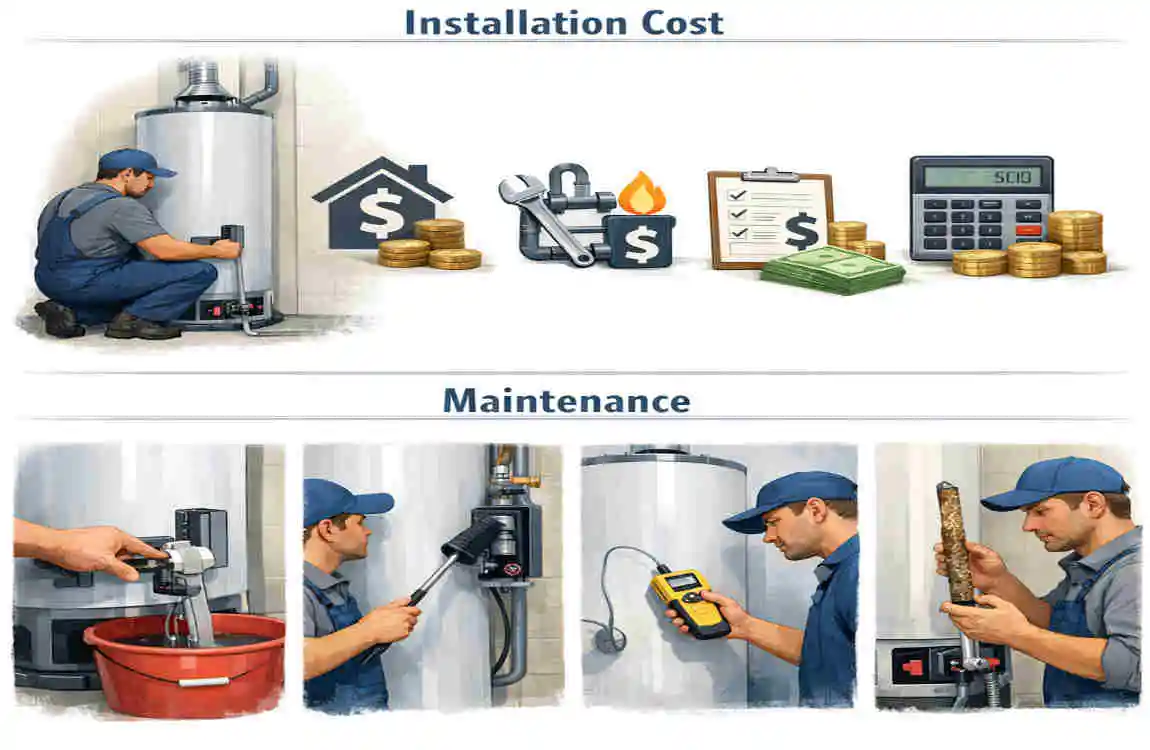
What Affects Installation Cost?
The total cost can change depending on several things. Here is a simple table to show the biggest cost factors:
Cost Factor Why It Matters
Heater type and size Larger or higher-efficiency units may cost more
Labour rates Prices vary by area and contractor
Old unit removal Disposal adds time and cost
Gas-line changes New or upgraded gas work increases the total
Venting changes New vent parts or rerouting may be needed
Plumbing upgrades Old pipes or valves may need replacement
Permits and inspections Local rules can add fees
Safety/code upgrades Extra parts may be required for compliance
If the replacement is straightforward, the cost may stay lower. If the home needs upgrades, the total can rise quickly.
When Should You Replace a Natural Gas Water Heater?
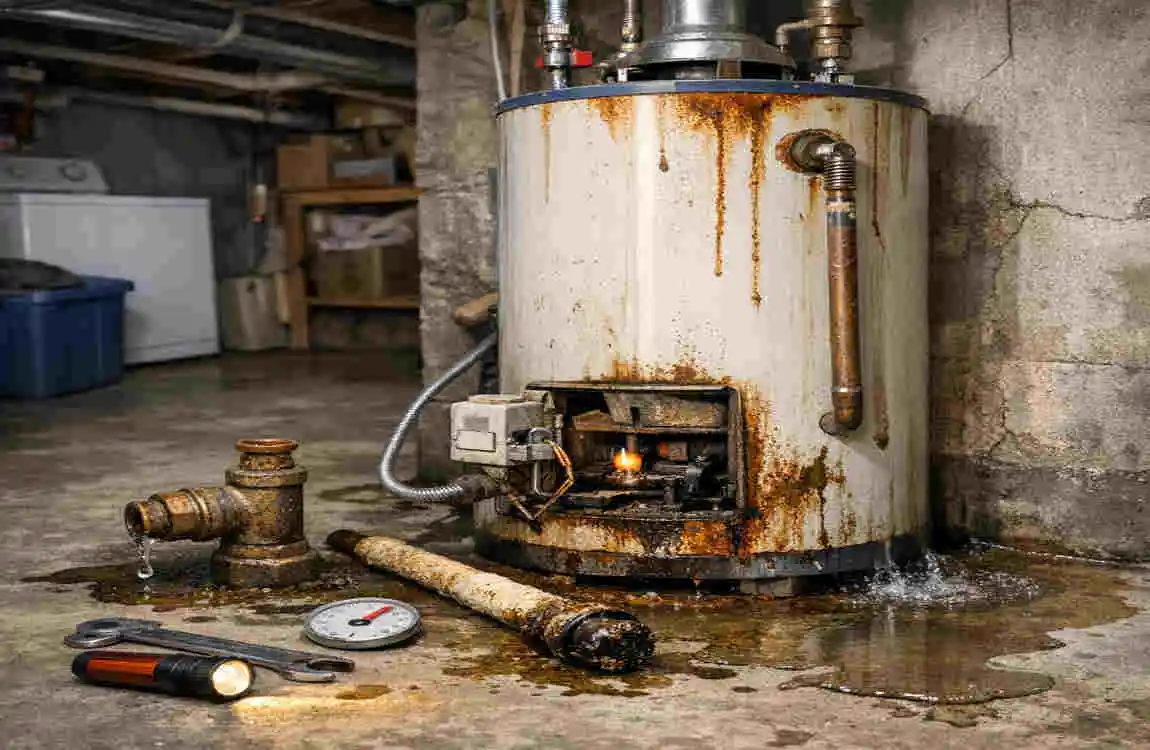
You may need a new heater if you notice:
- Frequent loss of hot water
- Visible corrosion
- Leaks around the tank
- Unusual noises
- Poor heating performance
- Growing repair problems
- Old age
If the unit is aging and repairs are becoming more frequent, replacement is often the smarter long-term choice.
Basic Maintenance Tips
A natural gas water heater does not need constant attention, but it should not be ignored either. Basic care can help it last longer and work better.
Here are a few simple habits:
- Follow the manufacturer’s maintenance guide
- Look for visible leaks or corrosion
- Keep the area around the heater clear
- Schedule a professional inspection when needed
- Never ignore a gas smell or combustion problem
If something seems wrong, do not wait. Gas-related problems should always be taken seriously.
FAQ: Natural Gas Water Heater Installation
Can a plumber install a natural gas water heater?
Yes. A qualified and properly licensed plumber can generally install a natural gas water heater, depending on local laws, permits, and their training.
Do plumbers connect the gas line to a water heater?
In many places, yes — if they are properly qualified and local rules allow it. Always check the plumber’s credentials and your local requirements.
How long does natural gas water heater installation take?
A simple replacement may take several hours. More complicated jobs can take longer if gas, venting, plumbing, or code upgrades are needed.
Is a permit required to install a gas water heater?
Permit requirements depend on your location. It is best to check with your local building or plumbing authority before the work begins.
Can I install a natural gas water heater myself?
It is not a good idea for most homeowners. The work involves gas, venting, and safety concerns, so professional installation is usually the safer choice.
How do I know if my gas water heater is installed correctly?
A professional should confirm that the water, gas, and venting systems are secure, leak-free, and functioning properly in accordance with the manual and local code.
| Topic | Key Information |
|---|---|
| Natural Gas Water Heater | Uses natural gas to heat household water efficiently. |
| Plumber Installation | A qualified plumber connects the gas, water, venting, and safety components. |
| Main Connections | Includes cold-water supply, hot-water outlet, gas line, and drainage where required. |
| Ventilation | Proper venting safely removes combustion gases from the home. |
| Safety Checks | The plumber checks gas leaks, pressure, venting, and connections before operation. |
