


If your faucet is leaking, loose, outdated, or just not working as it should, replacing it can be a smart next step. A new faucet can improve water flow, appearance, and everyday convenience. It can also help reduce water waste and prevent bigger plumbing issues later.
If you are asking how much a plumber charges to replace a faucet, the short answer is that the price depends on the faucet type, labour rates, location, and the difficulty of the installation. Some replacements are quick and simple. Others need more time, more parts, or extra plumbing work.
The final cost can also increase if the old faucet is corroded, the sink setup is unusual, or the shutoff valves and supply lines require attention. In some cases, replacing the faucet is actually easier and cheaper than trying to keep repairing an old one.
Faucet Replacement Cost: What Homeowners Should Expect
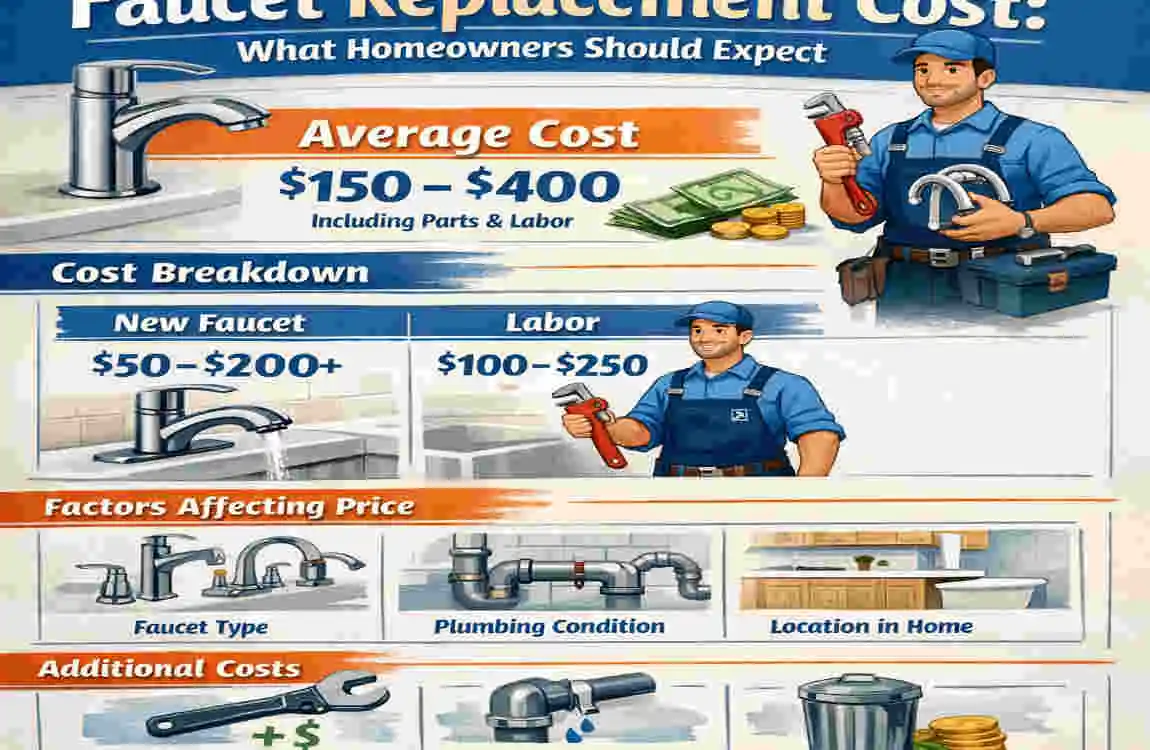
General Cost Breakdown
Faucet replacement usually involves several expenses. The total is not just the faucet itself. You also pay for the plumber’s time, small parts, removal work, and sometimes extra repairs.
Most homeowners should think about these main costs:
- Faucet purchase price
- Plumber labor
- Supplies and fittings
- Removal of the old faucet
- Disposal
- Additional plumbing repairs
A basic faucet replacement may stay fairly affordable if the sink setup is standard and everything comes apart easily. A premium faucet or a complicated installation can cost much more.
Basic, Mid-Range, and Premium Faucets
Basic faucets are usually the least expensive. They often have standard designs and fewer features. These are common in simple bathroom sinks, utility rooms, or budget-friendly updates.
Mid-range faucets usually offer better design, higher-quality finishes, and greater durability. Premium faucets may include touchless controls, pull-down sprayers, or designer finishes. Those features can raise both the product cost and the installation cost.
How Sink Configuration Affects Price
Not every faucet fits every sink. Some sinks have one hole, while others have two, three, or more. The number of holes and the sink’s style can affect how easy the job is.
If the new faucet matches the existing setup, installation is usually faster. If the plumber has to make changes, the labour cost may rise.
What Factors Affect the Cost to Replace a Faucet?
Faucet Type
The type of faucet matters because some fixtures are easier to install than others. A simple bathroom faucet usually takes less time than a shower valve or a kitchen faucet with extra features.
More complex fixtures often need more adjustments, more parts, and more care during installation. That usually means a higher labour charge.
Labor Rates
Plumber labour rates vary by location. A plumber in one city may charge much more than a plumber in another area.
Rates can also vary based on experience, job complexity, and whether the plumber charges hourly or by project. Always ask how the estimate is calculated.
Installation Difficulty
A faucet that is easy to reach and easy to disconnect is usually less expensive to replace. On the other hand, rusted fittings, tight spaces, and corroded hardware can slow the job down.
If the plumber has to spend extra time removing the old fixture or cleaning up the connections, the total cost can go up.
Existing Plumbing Condition
Sometimes the faucet is not the only problem. Old supply lines, damaged shutoff valves, or worn pipe connections may also need work.
If those parts are failing, the plumber may need to replace them during the same visit. That adds to the bill, but it can prevent future leaks and frustration.
Faucet Quality
The faucet itself can change the total cost more than many homeowners expect. A basic faucet may be affordable, while a high-end model with special features can cost much more.
Even if the plumber’s labour stays the same, the overall project cost rises when the faucet is more expensive.
Emergency Service
If you need a faucet replaced on a weekend, after hours, or in an emergency, expect to pay more. Emergency service usually comes with a higher rate.
If the problem is not urgent, it is usually cheaper to schedule the work during normal business hours.
Additional Repairs
Sometimes the plumber finds hidden issues during the job. For example, there may be a leak behind the sink, a damaged valve, or corroded pipe threads.
These extra repairs are not always part of the original estimate. That is why it helps to ask what is included before the work starts.
How Much Do Plumbers Charge to Replace a Faucet by Type?
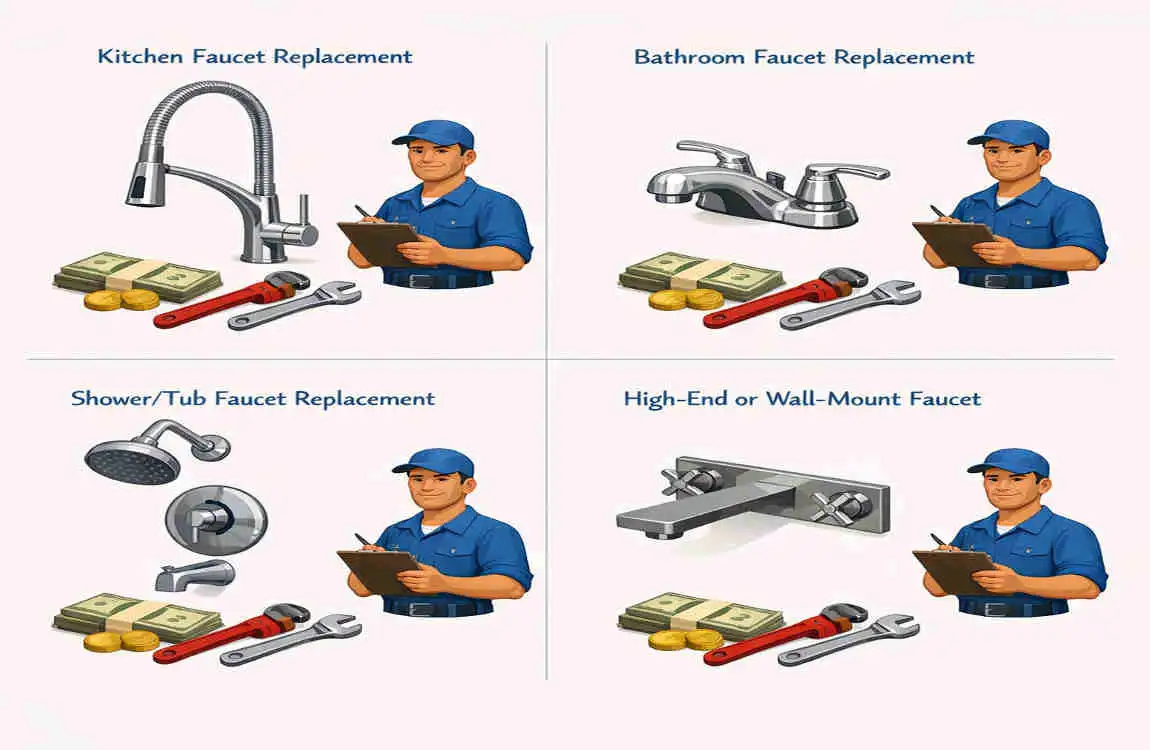
Kitchen Faucet Replacement
Kitchen faucet replacement is often more involved than bathroom faucet replacement. Kitchen faucets may have sprayers, pull-down hoses, or extra connections, which can take more time to install.
A standard kitchen faucet may be fairly straightforward. But a pull-down, pull-out, touchless, or commercial-style faucet can cost more because it has more parts and more setup steps.
Bathroom Faucet Replacement
Bathroom faucets are often easier than kitchen faucets, especially if the sink holes match the new fixture. Centerset, single-handle, and widespread faucets each have different installation needs.
A centerset faucet is usually simpler. A widespread faucet may take more effort because the handles and spout are separate. If the sink cutout does not match the new faucet, the installation can become more complicated.
Shower and Bathtub Faucet Replacement
Shower and bathtub faucets can be more difficult to work with because the plumbing may be behind the wall. That means the job may involve access panels, valve replacement, or more careful sealing.
Sometimes the visible trim is easy to replace, but the internal valve is the real issue. If the valve is damaged, the work becomes more involved and more expensive.
Outdoor Faucet Replacement
Outdoor faucets, also called hose bibs or spigots, can be affected by freezing, corrosion, and weather damage. These issues can make replacement harder.
If the outdoor pipe is damaged or leaking inside the wall, the job may need extra repair work. That can increase both labour and material costs.
DIY Faucet Replacement vs. Hiring a Plumber
When DIY May Be Possible
If you are experienced with basic home repairs and the faucet setup is simple, you may be able to replace it yourself. A careful homeowner can sometimes manage a basic sink faucet with easy access to it.
Still, you need to be comfortable working with plumbing connections and checking for leaks.
Basic DIY Steps
A faucet replacement usually involves these steps:
- Shut off the water
- Disconnect supply lines
- Remove the old faucet
- Clean the mounting area
- Install the new faucet
- Reconnect water lines
- Check for leaks
Each step sounds simple, but small mistakes can lead to leaks or loose fittings.
Risks of DIY
The biggest risk with DIY faucet replacement is water damage. If a connection is not sealed properly, even a small leak can cause trouble under the sink or inside the wall.
DIY work can also lead to damaged threads, broken fittings, or a faucet that does not sit correctly. If that happens, you may end up paying a plumber to fix the mistake anyway.
Why Hiring a Plumber Can Be Worth It
A plumber can usually finish the work faster and with less risk. That can save time and reduce the chance of expensive damage.
Professional installation is often the safer choice when the job involves old plumbing, tight spaces, unusual faucet types, or any sign of corrosion.
How to Save Money on Faucet Replacement
You do not always have to spend more than needed. A few smart choices can help keep the project affordable.
Smart Money-Saving Tips
- Choose a faucet that matches the existing sink holes.
- This reduces labour and avoids extra adjustments.
- Compare several plumber estimates.
- Different plumbers may charge very different rates.
- Buy a quality faucet within your budget.
- A cheap faucet may save money now but cost more later.
- Replace old supply lines if needed.
- Doing this during the same job can prevent future service calls.
- Schedule non-emergency work during regular hours.
- Avoid after-hours charges when possible.
- Ask what the estimate includes.
- Labour, removal, supplies, and disposal may be billed differently.
Why Value Matters More Than the Lowest Price
The cheapest option is not always the best one. A slightly better faucet or a more experienced plumber can reduce the need for repairs later.
If you focus only on the upfront price, you may pay more over time through leaks, poor performance, or repeated service calls.
When Should You Replace a Faucet Instead of Repairing It?
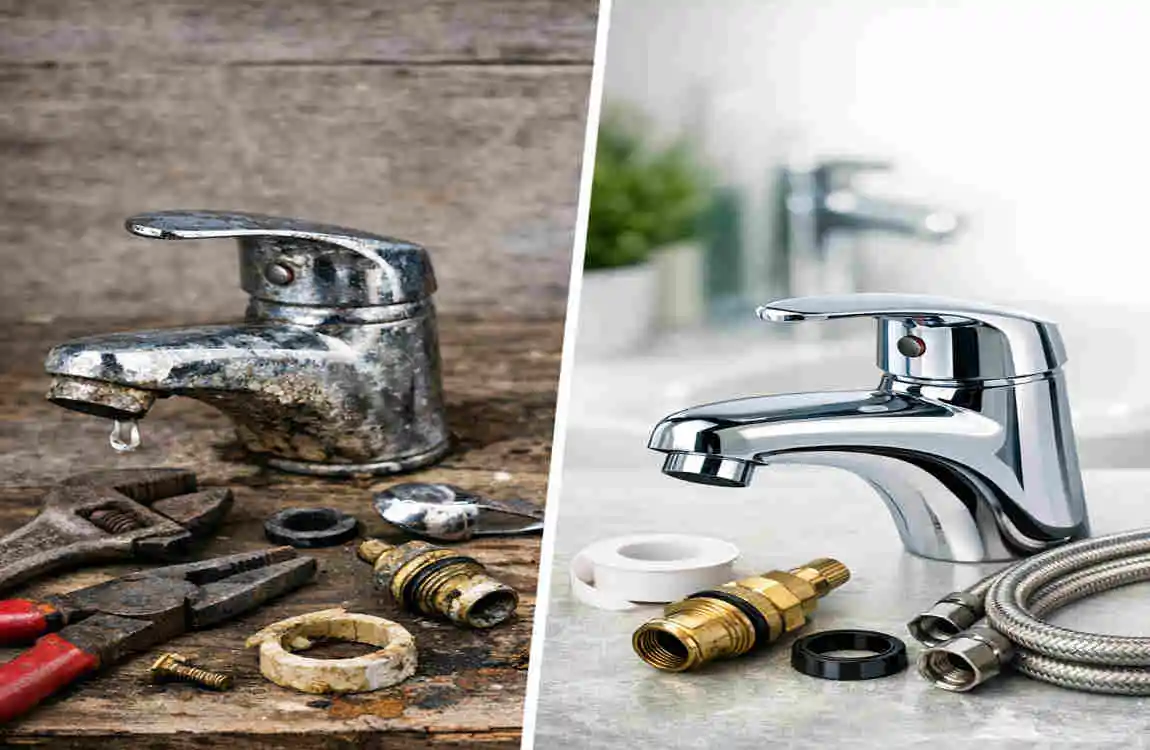
Sometimes repair makes sense. Other times, replacement is the better choice. The decision often depends on the age and condition of the faucet.
Signs Replacement May Be Better
Look for these warning signs:
- Persistent leaks
- Corrosion
- Cracks
- Low water flow
- Loose handles
- Frequent cartridge problems
- Outdated or damaged parts
If several of these are happening at once, replacement is often the more practical solution.
Repair vs. Replacement Cost
If the repair is small and inexpensive, fixing the faucet may be enough. But if the faucet is old, worn, and likely to fail again soon, replacement may save money in the long run.
This is especially true if the fixture is inefficient or difficult to clean.
When Upgrading Makes Sense
A new faucet may also be worth it if you want water-saving features, better style, or easier use. Modern faucets can improve both comfort and appearance.
That means replacement is not just about fixing a problem. It can also be a smart upgrade.
FAQ: Faucet Replacement Costs
How much does a plumber charge to replace a faucet?
The price depends on faucet type, labour rates, location, and installation difficulty. A simple faucet replacement usually costs less than a more complex one.
How long does it take a plumber to replace a faucet?
A straightforward replacement may take only a short time. Complicated jobs can take longer if the plumber has to deal with corrosion, tight spaces, or extra repairs.
Is replacing a faucet difficult?
It can be simple in some cases, but not always. If the plumbing is old, hard to reach, or damaged, it is usually better to hire a plumber.
Do plumbers charge extra to remove an old faucet?
Sometimes removal is included in the labour price. Other plumbers may list it as a separate charge, so it is best to ask in advance.
Should I replace the supply lines when replacing a faucet?
If the supply lines are old, worn, or corroded, replacing them is often a good idea. Doing it now can help prevent leaks later.
Is it cheaper to repair or replace a faucet?
Repair is usually cheaper for small problems. Replacement is often better when the faucet is old, damaged, or too costly to keep repairing.
How can I get an accurate faucet replacement estimate?
Ask for a clear quote that includes the cost of the faucet, labour, parts, removal, and any additional plumbing work. That makes it easier to compare plumbers fairly.
| Faucet Type | Typical Replacement Cost | Plumber Labor | Key Cost Factor |
|---|---|---|---|
| Bathroom Faucet | $150–$400 | $100–$250 | Faucet style |
| Kitchen Faucet | $200–$500 | $100–$250 | Features & connections |
| Bathtub Faucet | $200–$600 | $150–$350 | Plumbing access |
| Outdoor Faucet | $150–$350 | $100–$250 | Pipe condition |
| High-End Faucet | $400–$1,000+ | $150–$350 | Premium materials |
