

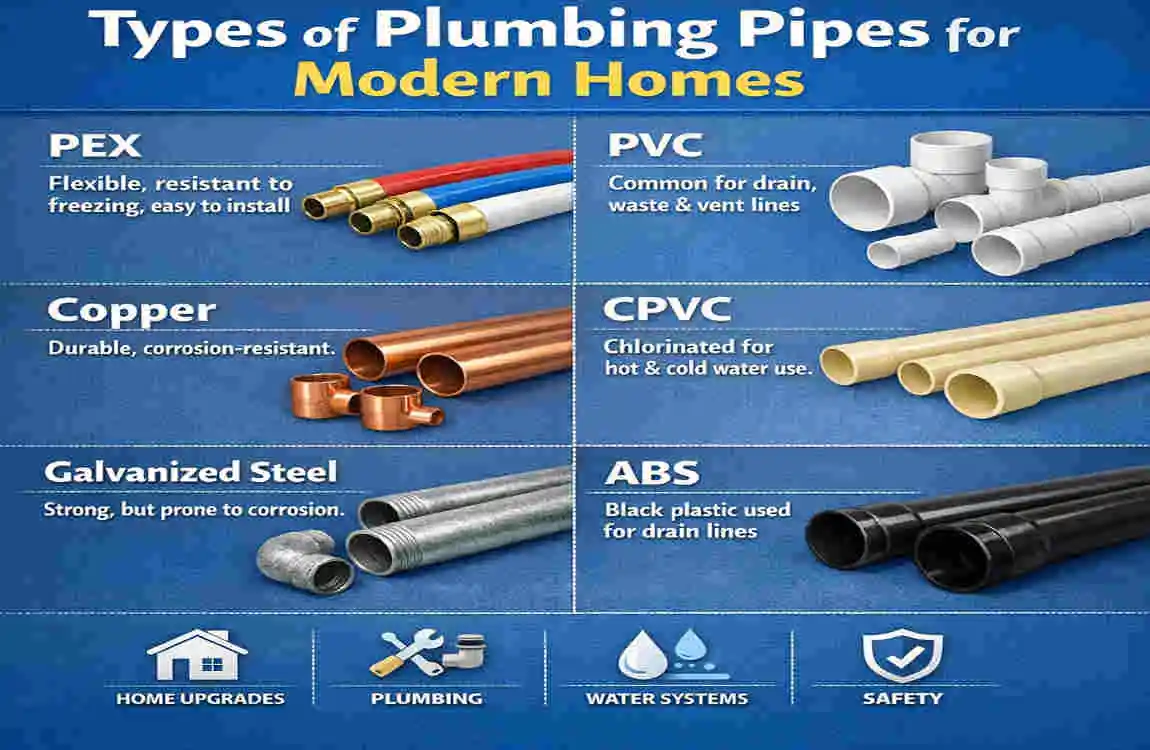
Choosing the right types of plumbing pipes matters more than many homeowners realize. The pipe material affects water flow, durability, repair needs, cost, and long-term performance. Some pipes work better for hot water. Others are better for drainage. And some are easier to install or replace.
Understanding the Main Types of Plumbing Pipes
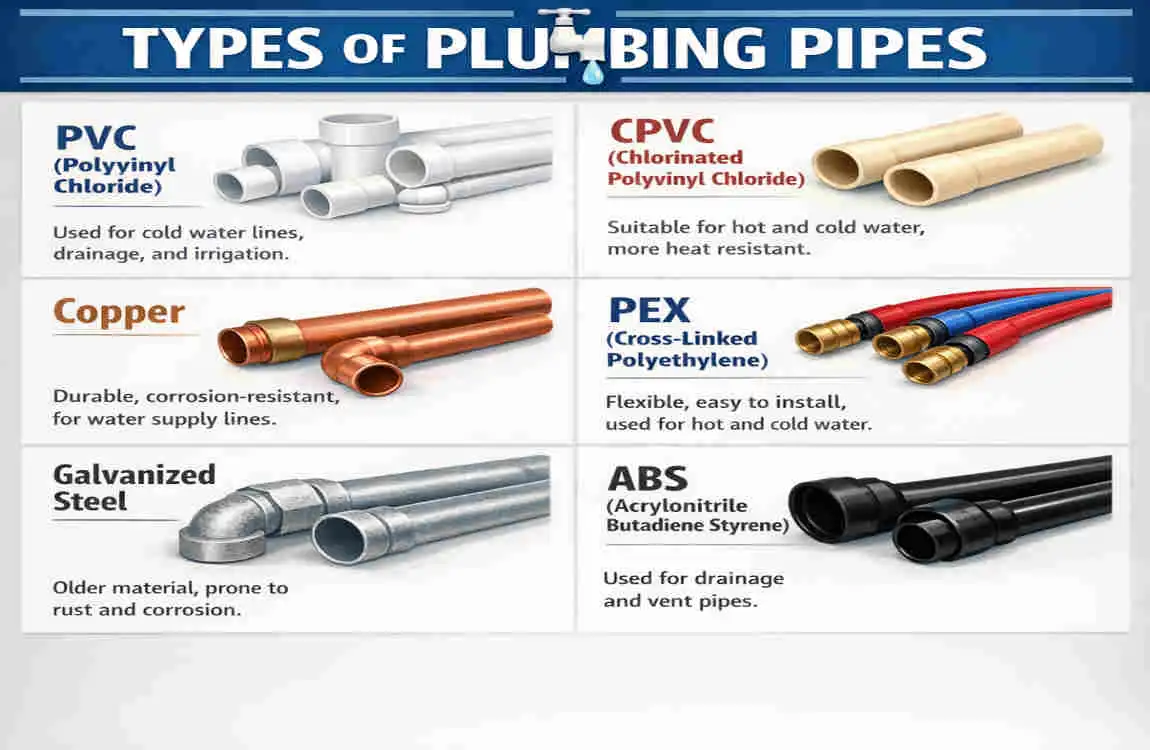
Plumbing pipes are usually grouped by material and purpose. Some pipes carry fresh water into the home. Others remove wastewater. That is why no single type of pipe works for every job.
Water-supply pipes vs. drain pipes
Water-supply pipes bring clean water to sinks, showers, toilets, and appliances. These pipes must handle pressure and, in some cases, hot water.
Drain, waste, and vent pipes carry used water away from the home. These pipes do not usually carry pressure, but they must resist clogs, leaks, and corrosion.
Common residential pipe materials
The most common plumbing pipe materials in modern homes include:
- Copper
- PEX
- PVC
- CPVC
- ABS
- Galvanized steel
- Cast iron
Each one has strengths and limits. The best choice depends on the job, your budget, and your local plumbing rules.
PEX, PVC, and CPVC Pipes Explained
These three pipe types are very common in modern homes. They are popular because they are often easier to install than metal piping.
PEX pipes
PEX is a flexible plastic piping system. It is widely used for residential water supply because it bends around corners and reduces the need for many fittings.
Why people like PEX
- Flexible and easy to install
- Good for water supply
- Often lower labor cost
- Less chance of leaks from many joints
Limits of PEX
PEX is not right for every application. It can be damaged by UV exposure, and not every plumbing setup or code allows it everywhere.
PVC pipes
PVC is lightweight, affordable, and corrosion-resistant. It is commonly used for drainage and some cold-water applications.
Main benefits of PVC
- Low cost
- Easy to handle
- Corrosion-resistant
Main limitation of PVC
PVC is usually not used for hot water unless it is specifically rated for that purpose. Heat can weaken it over time.
CPVC pipes
CPVC is similar to PVC but made to handle higher temperatures. That makes it more suitable for both hot and cold water in many homes.
CPVC advantages
- Handles hot and cold water
- More heat-resistant than PVC
- Lightweight and fairly easy to install
CPVC limitations
CPVC can become brittle as it ages, especially in certain conditions. It also needs proper installation to perform well.
PVC vs. CPVC
The simple difference is this: PVC is mainly for cooler water and drainage, while CPVC is designed for hotter water systems. If your project includes hot water lines, CPVC may be the better fit.
ABS, Galvanized Steel, and Cast Iron Pipes
Some pipe materials are more common in older homes or for drainage systems.
ABS pipes
ABS is a black plastic pipe often used in drainage and waste lines. It is lightweight, strong, and fairly easy to install.
Why ABS is useful
- Tough and lightweight
- Good for drainage
- Simple to work with
ABS is usually chosen for waste systems rather than water supply.
Galvanized steel pipes
Galvanized steel was once widely used in older homes. These pipes are coated to help resist rust, but over time that protection wears down.
Common problems with galvanized pipes
- Rust and corrosion
- Mineral buildup inside the pipe
- Reduced water pressure
- Aging connections and leaks
If your home still has galvanized plumbing, it may be time for a professional inspection.
Cast iron pipes
Cast iron is strong and often used in drainage systems. It is also known for being quieter than many plastic pipe systems.
Cast iron strengths
- Very strong
- Quiet during drainage
- Good for some older and modern buildings
Cast iron weaknesses
- Heavy
- Harder to install
- Can corrode over time
How to Choose the Best Plumbing Pipes for Your Home
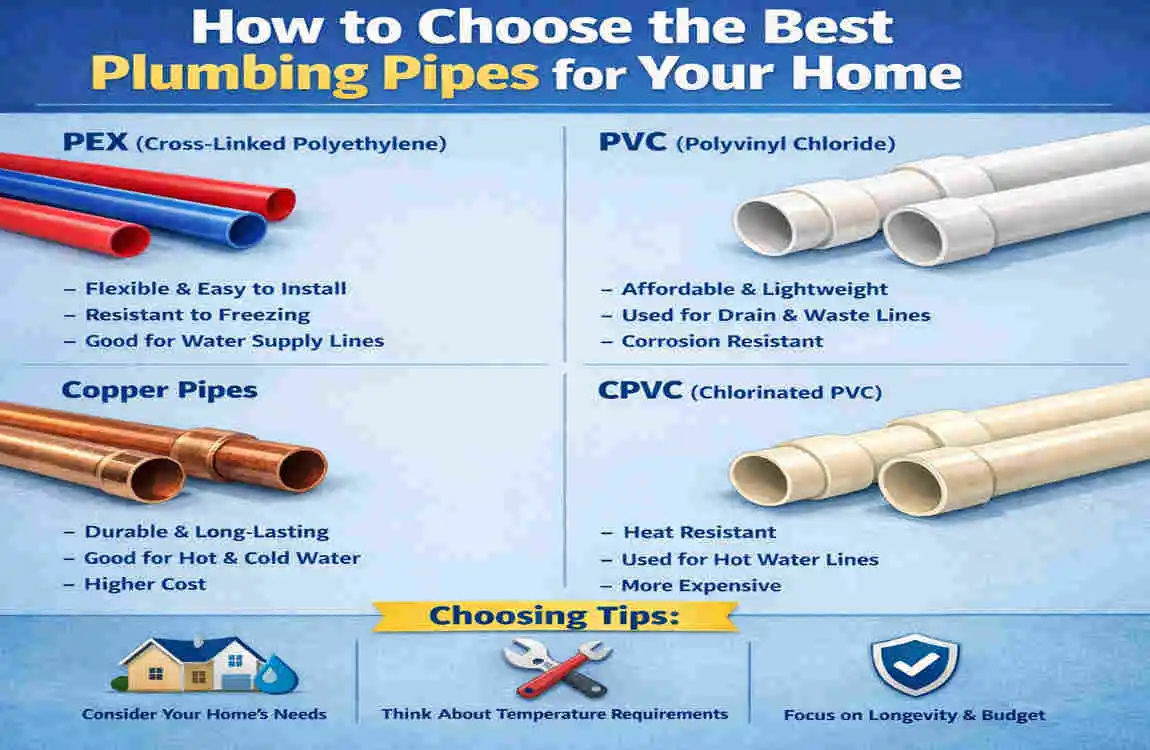
The best pipe is not always the most expensive one. It is the one that fits the job properly.
Think about the pipe’s purpose.
Ask yourself:
- Is it for hot water?
- Is it for cold water?
- Is it for drainage?
- Is it part of a new system or a replacement?
That first question usually narrows down your options fast.
Other things to consider
- Durability
- Installation cost
- Heat resistance
- Corrosion resistance
- Maintenance needs
- Expected lifespan
- Local plumbing codes
Climate and water quality also matter. For example, hard water or coastal conditions may affect some materials more than others.
Common Plumbing Pipe Problems and Maintenance Tips
Even good pipes can develop issues over time. Catching problems early can save money and stress.
Common warning signs
Look out for:
- Leaks
- Low water pressure
- Rust-colored water
- Strange noises in pipes
- Damp walls or ceilings
- Slow drains
- Cracks or brittle pipe sections
Simple maintenance habits
A few small steps can help your plumbing last longer:
- Check visible pipes for leaks
- Keep an eye on water pressure
- Avoid harsh chemicals in drains
- Insulate exposed pipes in cold weather
- Have old pipes inspected when needed
If you suspect serious damage, replacement may be smarter than repair.
PEX vs. Copper vs. PVC: Which Plumbing Pipe Is Right?
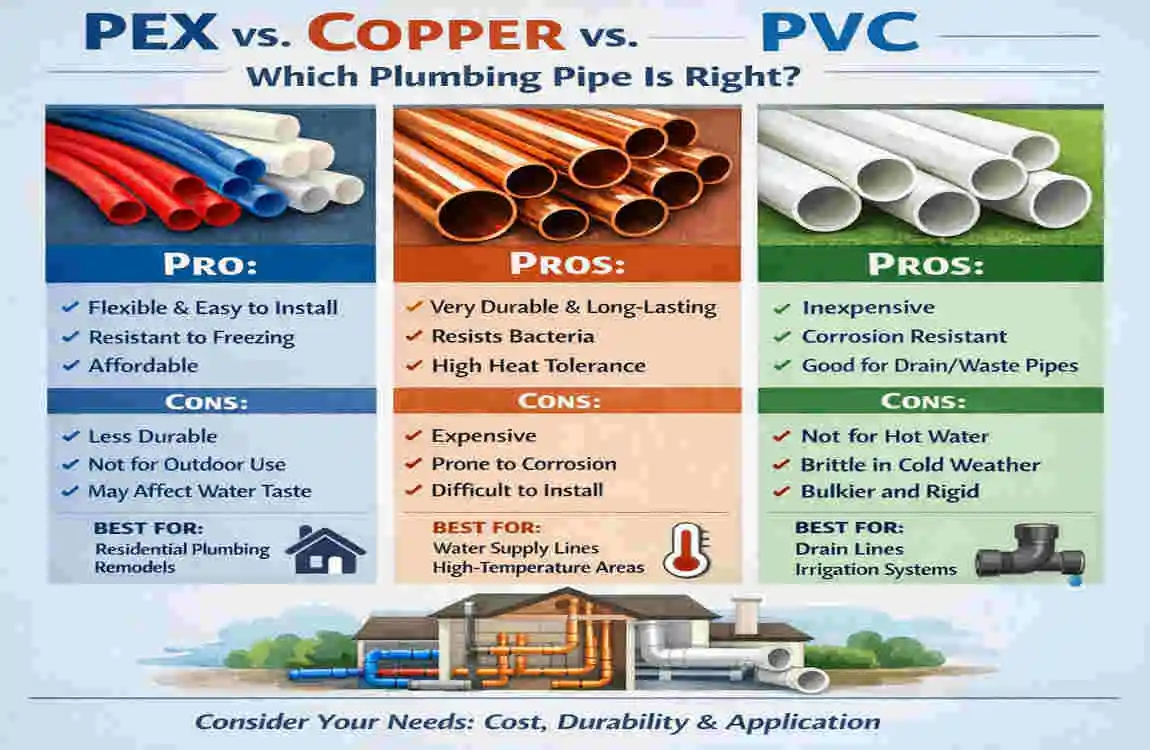
This is one of the most common questions homeowners ask.
PEX
PEX is often best for flexibility, fast installation, and lower labor cost. It is a very popular choice for modern residential plumbing.
Copper
Copper is a strong option when you want long-term durability and a trusted material. It costs more, but many homeowners still value it.
PVC
PVC is best for drainage and certain cold-water uses. It is affordable and simple, but it is not the right choice for most hot-water lines.
Frequently Asked Questions About Types of Plumbing Pipes
What are the most common types of plumbing pipes?
The most common types are PEX, copper, PVC, CPVC, ABS, galvanized steel, and cast iron.
Which type of plumbing pipe is best for a house?
There is no single best pipe for every home. The right choice depends on whether the pipe is for water supply, drainage, hot water, or cold water.
Is PEX better than copper plumbing?
PEX vs copper depends on what you want. PEX is flexible and easier to install, while copper is durable and long-lasting.
What is the difference between PVC and CPVC?
PVC is mainly used for drainage and cold-water uses. CPVC handles hotter water and is better for some supply lines.
How long do residential plumbing pipes last?
It depends on the material, water quality, installation, and maintenance. Some pipes last decades, while older galvanized systems may need replacement sooner.
Should old galvanized plumbing pipes be replaced?
In many homes, yes. If you see rust, low pressure, or frequent leaks, a professional inspection can help you decide.
Can different types of plumbing pipes be used in the same house?
Yes. Many homes use more than one pipe type because different parts of the plumbing system have different needs.
| Pipe Type | Best For | Key Benefit |
|---|---|---|
| PEX | Hot & cold water lines | Flexible and easy to install |
| PVC | Drain and cold-water systems | Affordable and corrosion-resistant |
| CPVC | Hot and cold water | Handles higher temperatures |
| Copper | Water supply lines | Durable and long-lasting |
| ABS | Drainage and waste pipes | Strong and lightweight |
| HDPE | Main water lines | Flexible and highly durable |
| Cast Iron | Drainage systems | Excellent sound reduction and durability |
