

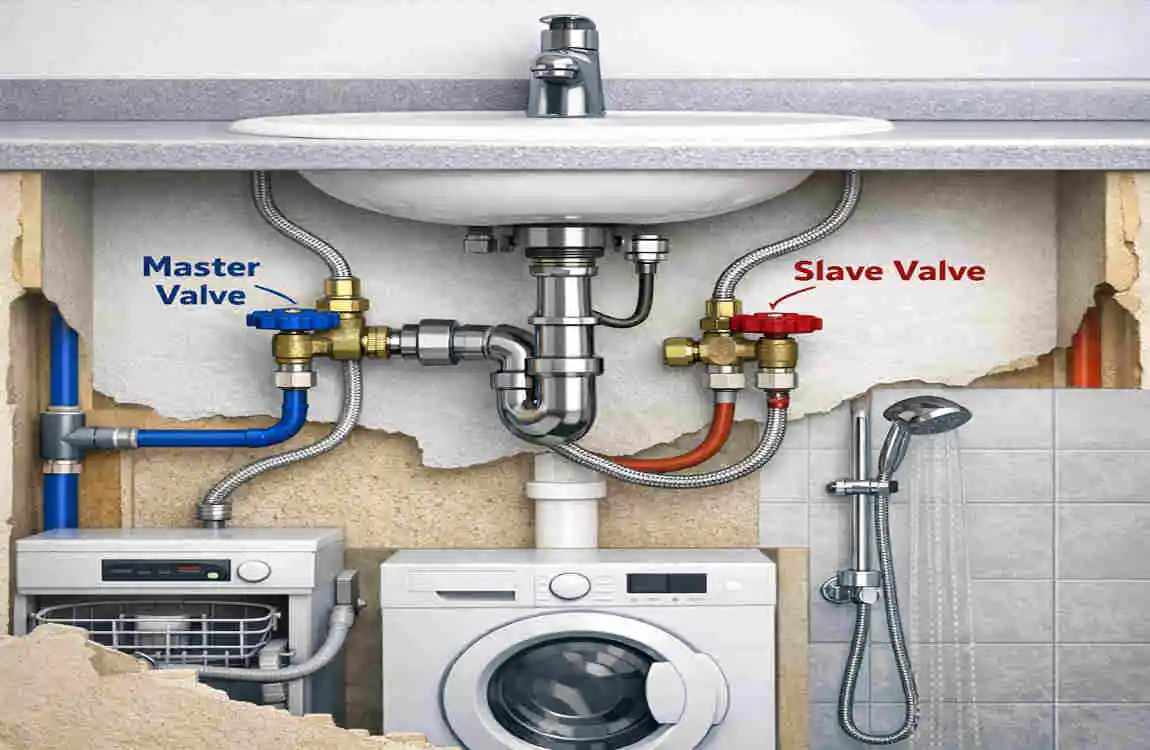
If you are asking what an enslaved person in plumbing is, the short answer is this: it usually refers to a secondary component that follows or responds to a main controlling component in a plumbing or mechanical system.
This is often older technical language, and in many modern manuals you may see clearer words like secondary, controlled, auxiliary, or main unit instead. The exact meaning depends on the system, the manufacturer, and sometimes the equipment’s age.
For homeowners, understanding this term can be helpful when reading an old manual, looking at a system diagram, or talking with a plumber. For professionals, it can help avoid confusion when working with older equipment or specialized systems.
What Does “Slave” Mean in Plumbing?
Basic meaning
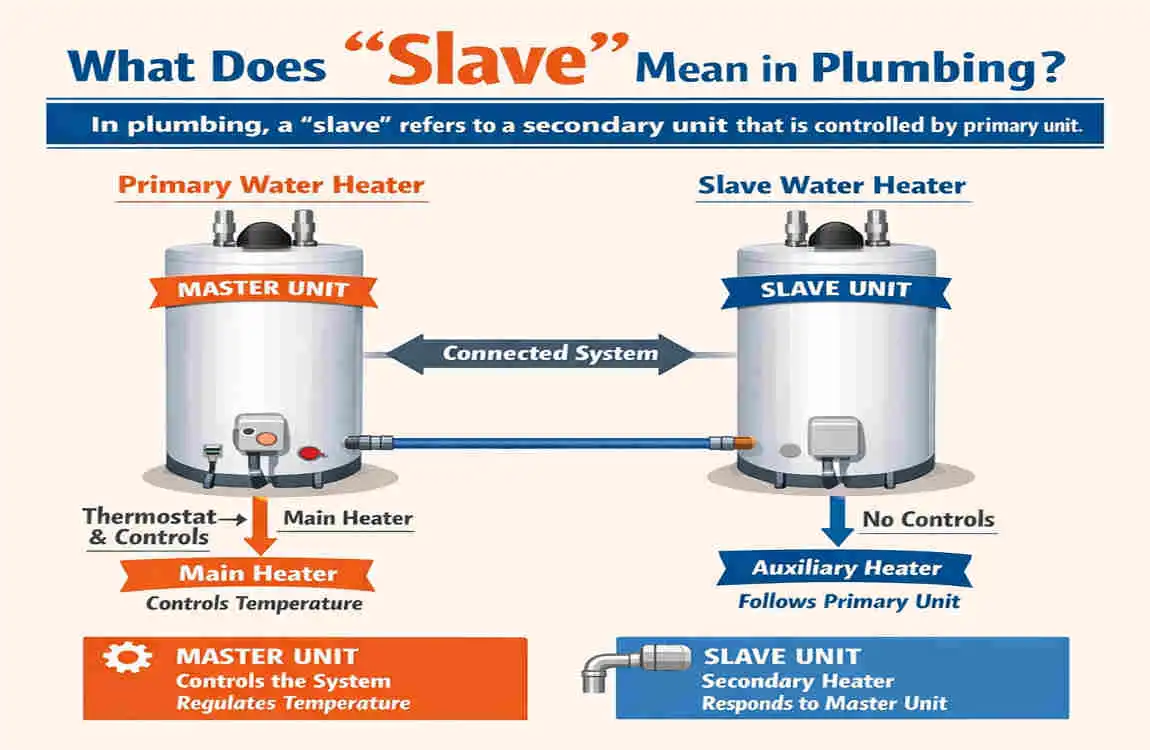
In plumbing and related mechanical systems, the term “enslaved person” usually refers to a part that does not control the process itself. Instead, it works because another part tells it what to do.
Think of it as a follower component. The main unit starts the action, and the slave unit responds.
This can show up in water systems, heating systems, or equipment that uses valves, pumps, sensors, or control devices.
Enslaver vs. enslaved person components
The idea of master and enslaved person comes from older technical language. The master is the primary part. It makes the decision or sends the signal.
The enslaved person is the secondary part. It reacts to that signal and performs the matching action.
For example, one valve may control another valve. One pump may trigger another pump. One controller may tell a second device when to run.
The exact setup changes from system to system, so the term should always be understood in context.
Why the term can be confusing
The word “slave” can mean different things depending on who uses it.
- A plumber may use it one way
- An engineer may use it another way
- A manufacturer may use it in old documentation
- A homeowner may read it and not know what it means at all
That is why it is better to look at the full description, diagram, or model number instead of relying on the word alone.
Where Is the Term Used in Plumbing Systems?
Water and pressure systems
In some water systems, one part controls the pressure or flow, while another part responds to it. In older language, the responding part may be called a slave component.
This can happen with pumps, pressure controls, valves, or linked devices that need to work together.
The key idea is simple: one part leads, the other follows.
Heating and hot-water systems
The term may also appear in heating or hot-water equipment, especially in older systems. For example, one boiler, pump, or valve may act as the main unit, while another acts as the supporting unit.
In these systems, the “slave” part often manages heat, water flow, or temperature control.
Modern manuals usually describe these parts more clearly, but older systems may still use the older wording.
Commercial and industrial plumbing
You are more likely to find this term in commercial or industrial settings than in a typical home.
That is because larger systems often have more control devices, more zones, and more complex setups. Older technical documents may use terms that are less common in modern residential plumbing.
So if you see the word in a manual, the best move is to look at the function, not just the label.
How Does a Slave Plumbing Component Work?
The primary component
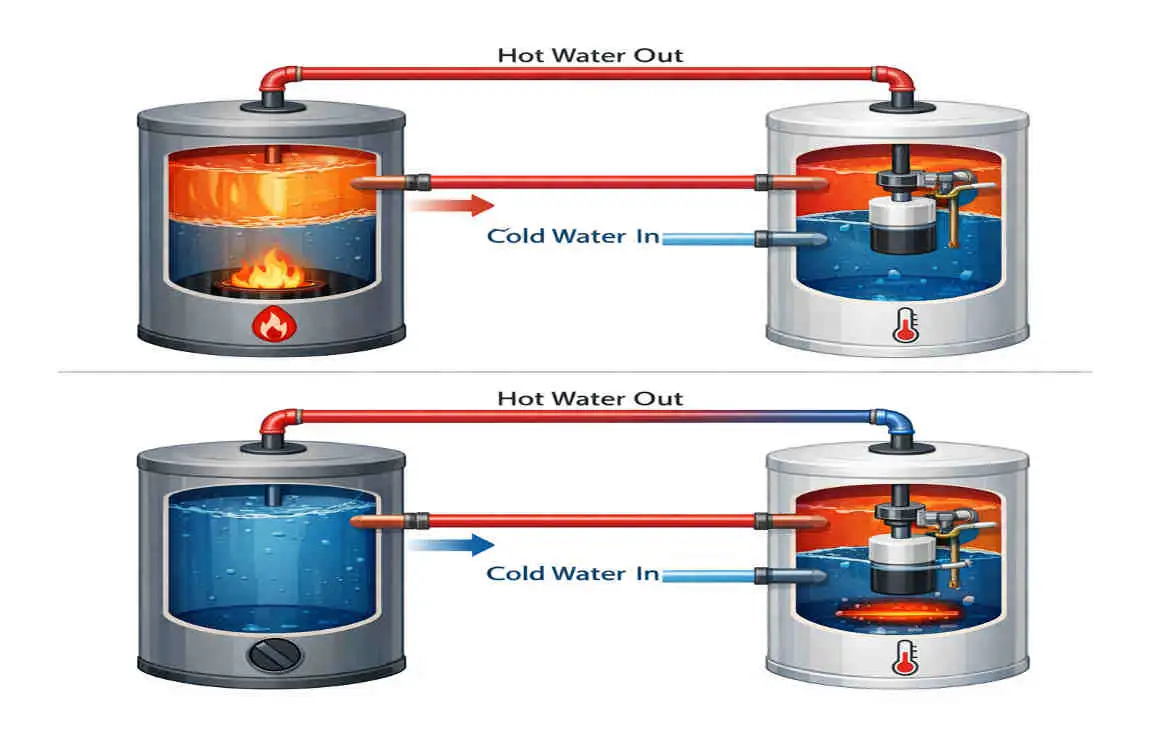
The primary component is the part that starts or controls the action. It may send a signal, open a valve, turn on a pump, or tell another part to respond.
It acts like the leader in the system.
The secondary component
The secondary component responds to the primary one. It may open, close, run, stop, shift, or adjust depending on what the main unit tells it to do.
This response can involve:
- Flow
- Pressure
- Temperature
- Mechanical movement
- Electrical control
You do not need to be an engineer to understand the basic idea. The secondary part works in connection with the main part.
Simple example for homeowners
Imagine a basic water-heating setup.
- The main control detects that hot water is needed.
- It sends a signal or command.
- The secondary unit responds by activating or adjusting.
That is the general idea behind a slave-type component in plumbing. It is not acting alone. It is following the main system’s lead.
Enslaved person vs. Other Common Plumbing Terms
Here is a simple comparison of common terms you may see.
TermGeneral MeaningTypical Role
Master Primary controlling component Starts or regulates an operation
Enslaved person Secondary component controlled by another Responds to the primary component
Primary Main system component Provides the main function
Secondary Supporting component Works with the primary part
Control valve Device that regulates fluid flow Controls water or another fluid
Actuator Device that moves a valve or mechanism Converts a signal into movement
Modern terminology
In many cases, modern language is clearer and easier to understand. Instead of saying enslaved person, a manual may say:
- Secondary component
- Controlled unit
- Auxiliary part
- Follower device
- Main and secondary system
This is often preferred because it avoids confusion and sounds more precise.
If you are reading current product instructions, follow the terminology used by the manufacturer.
Common Problems and Troubleshooting Considerations
Incorrect identification
One of the biggest problems is assuming a part does one job when it actually does another.
If a plumbing component is described only by an outdated term, you may misread the system. That can lead to poor repairs or wrong replacement parts.
To avoid this, check:
- Labels
- Manuals
- Diagrams
- Model numbers
- Manufacturer notes
Control or communication problems
If a primary and secondary component are not working together properly, the system may behave strangely.
You might notice:
- Inconsistent operation
- Poor temperature control
- Slow response
- Unexpected cycling
- No response at all
These issues can happen for many reasons, such as wiring problems, pressure issues, faulty valves, or worn-out parts.
When to call a professional
Some plumbing systems are not safe to troubleshoot on your own.
Call a professional if the system involves:
- Pressurized equipment
- Gas-fired appliances
- Electrical controls
- Boilers
- Complex pump systems
Safety matters. If you are unsure, it is better to stop and ask for expert help.
FAQ: What Is an enslaved person in Plumbing?
What is an enslaved person in plumbing?
It usually refers to a secondary component controlled by a main component in a plumbing or mechanical system.
Is “slave” still commonly used by plumbers?
Sometimes, but many modern manuals prefer clearer terms such as secondary, auxiliary, or controlled.
What is the difference between a master and an enslaved person in plumbing?
The master is the main controlling part. The enslaved person responds to it.
Is a slave component the same as a secondary component?
Sometimes the terms overlap, but they are not always exact synonyms.
Can a homeowner identify a slave component?
Sometimes yes, but not always. It depends on the system, and professional help may be needed.
Should I replace an old plumbing component called an enslaved person?
Not based on the name alone. Condition, compatibility, and performance matter more.
Why do older plumbing manuals use the term slave?
Because older technical language often used it to describe a controlled or dependent component.
What terms can be used instead of enslaved person in plumbing?
You may see a secondary component, a controlled unit, an auxiliary component, or a secondary device.
| Aspect | Simple Explanation |
|---|---|
| Meaning | A “slave” in plumbing can refer to a secondary or supporting component connected to a main plumbing system. |
| Main Purpose | It typically works alongside a primary system or component to support water flow or drainage. |
| Where Used | The term may appear in older plumbing terminology, equipment descriptions, or specific regional trade usage. |
| How It Works | It generally depends on a primary component rather than operating as the main controlling unit. |
| Modern Terminology | The term is outdated in many contexts, so modern plumbing documentation may use terms such as secondary, auxiliary, follower, or controlled unit instead. |
| Important Note | The exact meaning can vary by plumbing system, country, manufacturer, and context. |
