

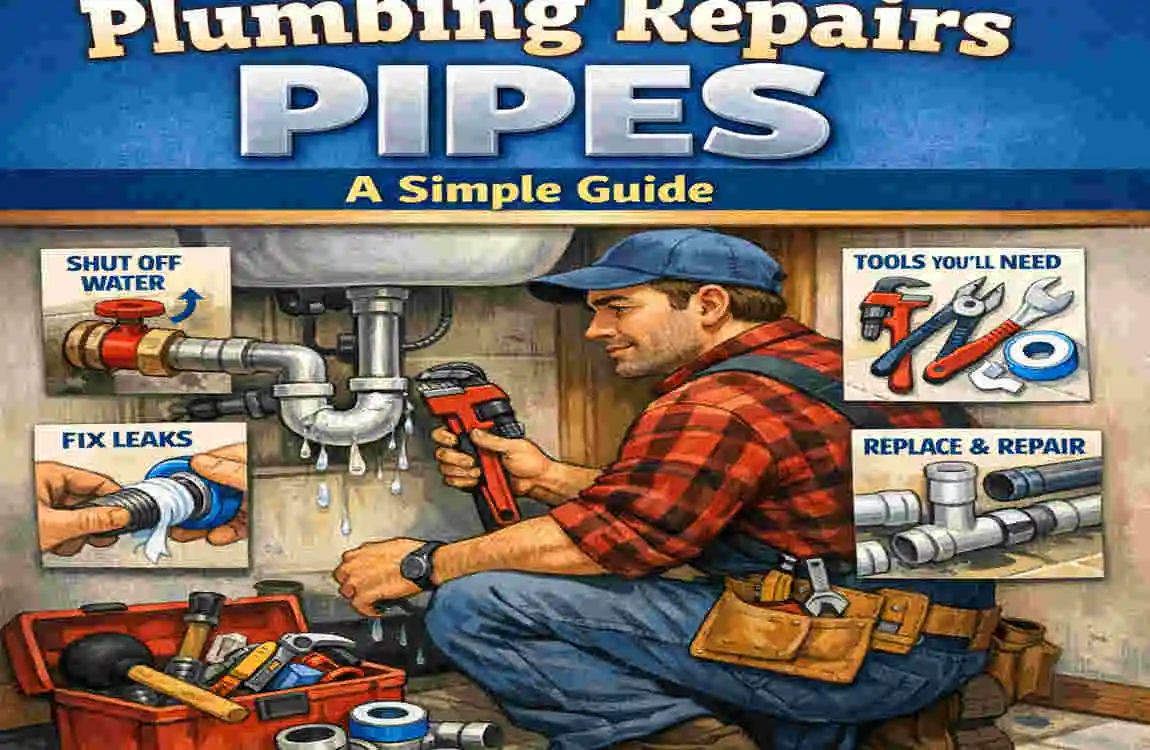
Home plumbing problems can start small, but they rarely stay small for long. A tiny drip, a slow drain, or a weak trickle of water may seem harmless at first. But if you leave it alone, it can turn into a bigger repair that will take more time and cost more money.
You do not need to be a plumber to learn the basics. In many homes, simple attention can prevent water damage, mould, and expensive breakdowns. If you know what to look for, you can act early and protect your home.
Common Home Plumbing Problems
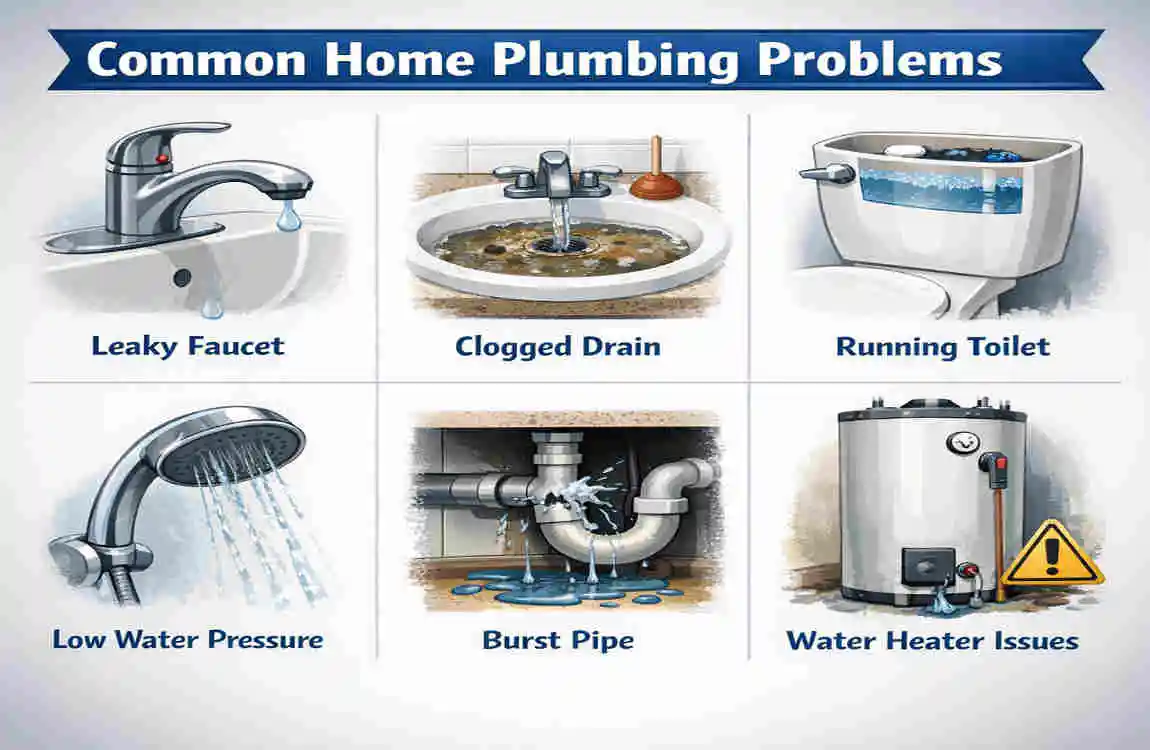
Plumbing systems work quietly in the background until something goes wrong. Then the problem becomes hard to ignore. The good news is that many common plumbing issues follow patterns, which means you can often spot them early.
Leaking Pipes
A leaking pipe can waste water and damage walls, floors, and cabinets. Some leaks are easy to notice because water drips into a sink or bucket. Others hide behind walls, under floors, or inside cabinets.
Common causes include loose fittings, old seals, corrosion, and damaged pipe sections. Sometimes freezing weather can also crack a pipe. If you see damp spots, peeling paint, or a musty smell, a hidden leak may be the cause.
Clogged Drains
Clogged drains are one of the most common plumbing problems in kitchens and bathrooms. Hair, grease, soap, food scraps, and other debris can slow or block water flow.
Kitchen drains often clog because of grease and food buildup. Bathroom drains usually clog due to soap scum and hair. You can help prevent blockages by being careful about what goes down the drain in the first place.
Dripping Faucets
A dripping faucet is easy to ignore, but it can waste a surprising amount of water over time. Worn washers, damaged cartridges, or loose parts inside the fixture cause most dripping faucets.
The sound may seem small, but it often means the faucet needs attention. Fixing it early can save water and stop the annoyance of constant dripping.
Low Water Pressure
Low water pressure makes daily tasks harder. Showers feel weak, sinks fill slowly, and washing becomes frustrating. This problem can come from clogged aerators, pipe buildup, hidden leaks, or problems with the water supply.
Sometimes the issue is only in one fixture. Other times it affects the whole house. That difference helps you narrow down the cause.
Common plumbing warning signs
- Water stains on walls or ceilings
- Slow-draining sinks or tubs
- Unusual pipe noises
- Musty smells near cabinets or floors
- A sudden rise in the water bill
Essential Tools for Home Plumbing Repairs Pips
Before you try any repair, it helps to gather the right tools. Having everything nearby makes the job faster and safer.
Basic Tools You May Need
Some plumbing tasks only need a few simple hand tools. These are the most useful ones for basic home repairs:
Tool What It Helps With
Adjustable wrench Tightening or loosening fittings
Pipe wrench Gripping larger pipe parts
Plunger Clearing simple drain blockages
Screwdrivers Removing covers and fixture parts
Plumbing tape Sealing threaded connections
Bucket and towels Catching drips and cleaning spills
Pipe cutter Cutting damaged pipe sections
Replacement washers and fittings Fixing leaks in faucets and joints
Which Tools Are for Simple Repairs?
An adjustable wrench, screwdriver, plunger, and plumbing tape are especially useful for beginners. These tools often help with faucet leaks, loose fittings, and small drain clogs.
Which Jobs Need More Than Basic Tools?
If you need to cut pipe, replace sections, or work on hidden plumbing lines, the repair may require more advanced equipment. That is often a sign a professional may better handle the job.
The right tools do not solve every problem, but they make small repairs easier and safer.
Simple DIY Plumbing Repair Tips
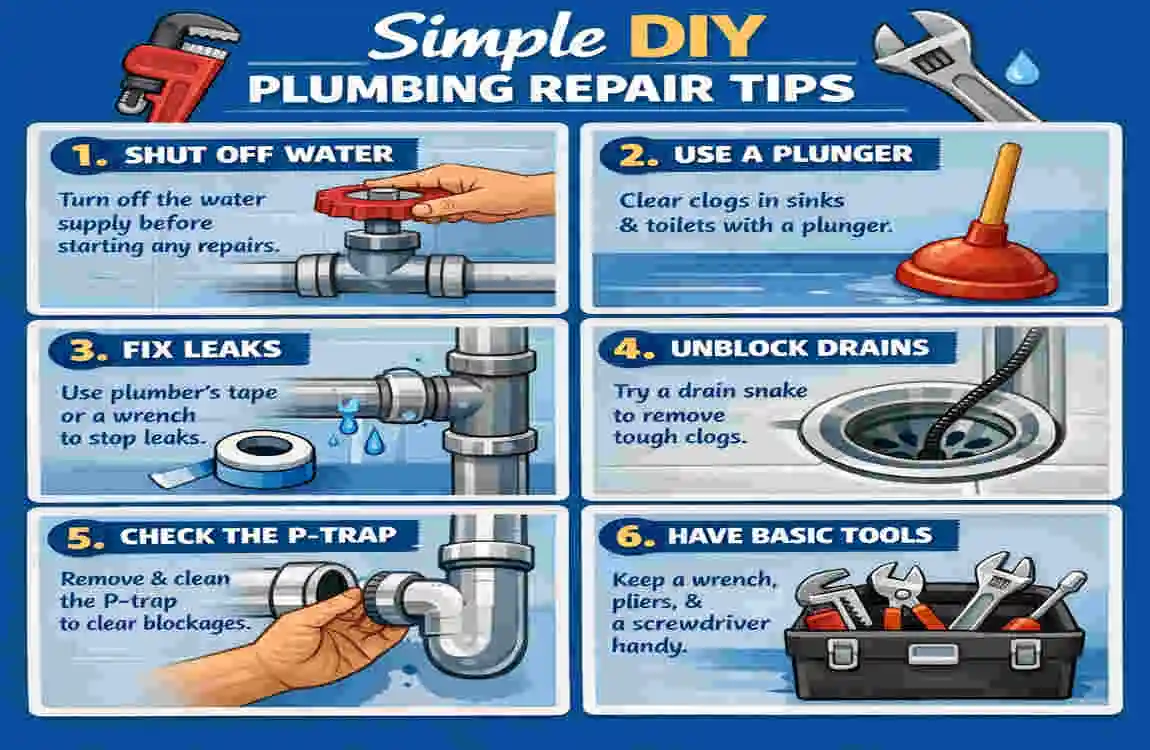
Some plumbing repairs are simple enough for a homeowner to try. The key is to stay calm, work slowly, and know your limits.
Fixing a Minor Faucet Leak
A minor faucet leak is one of the easiest plumbing issues to start with. First, turn off the water supply to that fixture. This stops water from flowing while you work.
Next, take apart the faucet carefully and inspect the washer, cartridge, or other internal parts. If a part looks worn or damaged, replace it with the correct one.
After the repair, turn the water back on and test the faucet. Watch closely for leaks and listen for unusual sounds. If it still drips, you may need to check the fit again.
Unclogging a Drain
A plunger is often the first tool to try on a slow or blocked drain. It can loosen a basic clog without damaging the pipes.
If that does not work, remove the drain cover and clean the opening. Sometimes hair or food debris is sitting right near the top and is easy to remove by hand or with a small tool.
Use drain-cleaning methods carefully. Harsh chemical cleaners can damage pipes and fixtures, especially if they are used too often. A safer approach is usually better for long-term plumbing health.
Repairing a Small Pipe Leak
If you find a small pipe leak, shut off the water right away. Then look at the leaking section to see whether the problem is a loose joint, a crack, or a damaged fitting.
In some cases, a temporary repair may stop the leak temporarily. But a temporary fix should never replace a real repair when the pipe is badly damaged. If the pipe is cracked or worn out, replacement is usually the better choice.
Keep Safety First
Some repairs are not safe for DIY work. Never attempt repairs involving major leaks, gas lines, sewage contamination, or complex plumbing systems without professional help.
That one rule can protect both your home and your health.
When to Call a Professional Plumber
Some plumbing problems are too big, too hidden, or too risky to handle alone. Knowing when to call a plumber can prevent a small issue from becoming a major disaster.
Water Leaking Inside Walls or Ceilings
If water is coming through walls or ceiling areas, the leak may be hidden and more serious than it appears. The damage can spread fast, especially if the leak continues for a long time.
A plumber can identify the source and fix it before it causes structural damage or mould.
Burst or Severely Damaged Pipes
A burst pipe is an emergency. Even a badly cracked pipe can release a large amount of water quickly. This is not the time for trial and error.
A professional can isolate the problem, repair the line, and help you prevent further damage to your home.
Persistent Low Water Pressure
If low water pressure keeps happening after basic checks, the problem may be deeper in the system. It could involve mineral buildup, hidden leaks, or issues with the main supply line.
A plumber can test the system and determine where the pressure loss is occurring.
Sewer or Wastewater Problems
Sewer issues are not safe to handle casually. Bad odours, slow drains throughout the house, or wastewater backing up are signs of a more serious problem.
These issues require immediate professional attention because they can affect both safety and cleanliness.
Major Drainage Blockages
If more than one drain is blocked, the issue may be in the main drain line rather than in a single sink or tub. A plunger will not fix that kind of problem.
A plumber has the equipment to inspect and clear deeper blockages.
Work That Requires Permits or Code Compliance
Some plumbing repairs must follow local rules and building codes. That often includes larger pipe changes, major fixture work, or renovations that affect the plumbing layout.
If permits are needed, a licensed professional is usually the safest choice.
Repairs That Keep Failing
If you keep fixing the same issue and it returns, there may be an underlying problem you cannot see. Repeated temporary fixes can waste time and money.
A plumber can diagnose the root cause instead of treating the same symptom over and over.
How to Prevent Future Plumbing Repairs
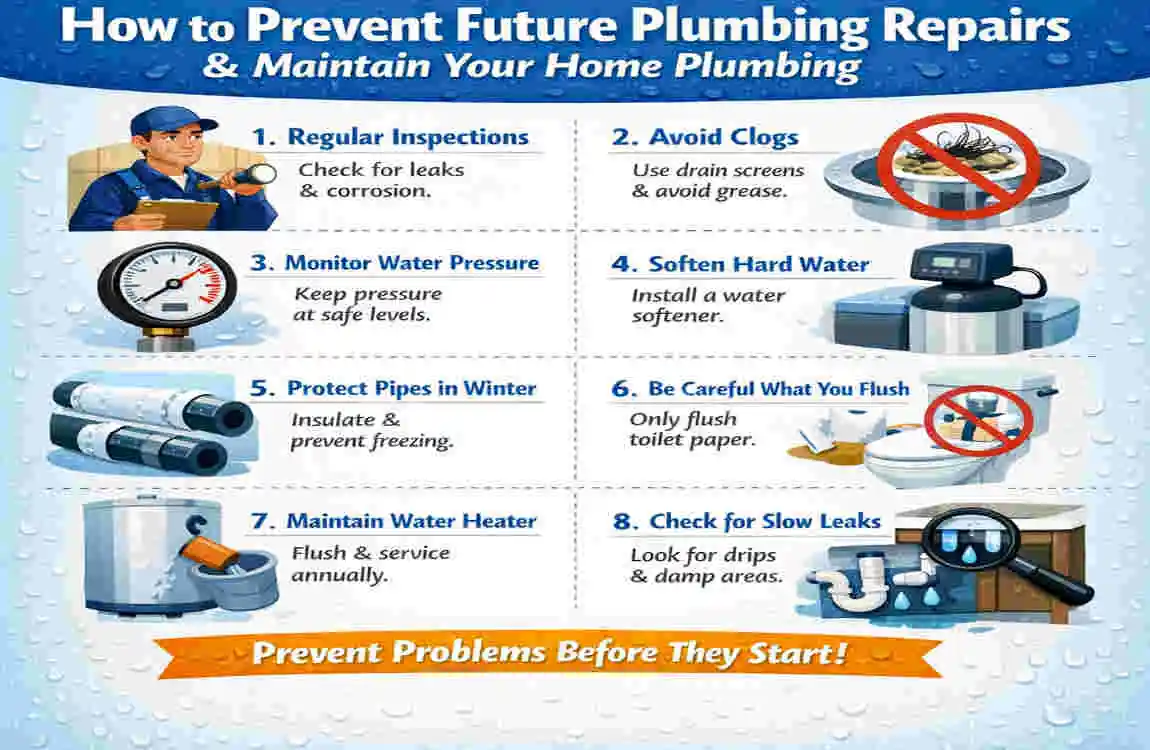
A little prevention goes a long way. Many plumbing repairs happen because small issues were ignored for too long.
Check Pipes and Fittings Regularly
Look under sinks, around toilets, and near exposed pipes from time to time. You do not need to do a full inspection every day. Just a quick check now and then can help you spot trouble early.
Fix Dripping Faucets Quickly
A drip may seem small, but it often gets worse. Fixing it early saves water and helps protect the faucet from more wear.
Keep Grease and Debris Out of Drains
Do not pour grease into the sink. It can harden and stick inside the pipes. Also, try not to wash food scraps, hair, or other debris down the drain.
Good drain habits can prevent many clogs before they start.
Protect Pipes in Freezing Weather
When temperatures drop, pipes can freeze and crack. Insulating exposed pipes and keeping cold areas protected can reduce that risk.
This is especially important in garages, basements, and outdoor walls.
Watch Your Water Bill
A water bill that suddenly rises may point to a hidden leak. If your habits have not changed but your bill jumps, check your plumbing carefully.
Keep Fixtures Clean
Clean faucets, drains, toilets, and shower parts regularly. Dirt and buildup can make plumbing work harder than it should.
Schedule Inspections When Needed
If your home is older or has recurring plumbing issues, a professional inspection can help. It is often easier to catch a problem early than wait for a failure.
Frequently Asked Questions About Home Plumbing Repairs Pipes
What are the most common home plumbing repairs?
The most common issues are leaking pipes, clogged drains, dripping faucets, running toilets, and low water pressure.
Can I do home plumbing repairs myself?
Yes, some minor repairs can be handled with basic tools. But major leaks, pipe replacement, and complicated plumbing problems usually need a licensed professional.
How can I find a water leak at home?
Look for damp spots, water stains, mould, dripping sounds, or a sudden increase in your water bill. These are all warning signs.
How often should home plumbing be inspected?
A simple annual inspection is a good habit. It can help catch small issues before they become expensive repairs.
When should I replace a damaged pipe rather than repair it?
Replacement is often preferable when a pipe is severely corroded, repeatedly leaking, cracked, or nearing the end of its useful life.
How can I prevent expensive plumbing repairs?
Regular checks, fast leak repairs, good drain care, and proper use of plumbing fixtures can help you avoid bigger problems later.
Home Plumbing Repairs Pipes: A Simple Guide
| Plumbing Repair | Common Problem | Simple Solution |
|---|---|---|
| Leaky Pipe | Dripping or wet areas | Tighten fittings or replace damaged sections |
| Burst Pipe | Sudden water flow | Shut off the main valve and replace the pipe |
| Clogged Pipe | Slow or blocked drainage | Use a plunger or suitable drain cleaner |
| Corroded Pipe | Rust or discoloration | Replace the affected pipe |
| Loose Joint | Water leaking at connections | Tighten the fitting or use plumber’s tape |
| Low Water Pressure | Weak water flow | Check for leaks, blockages, or faulty valves |
| Frozen Pipe | Little or no water flow | Warm the pipe slowly and check for cracks |
| Noisy Pipes | Banging or vibrating sounds | Secure loose pipes and check water pressure |
