

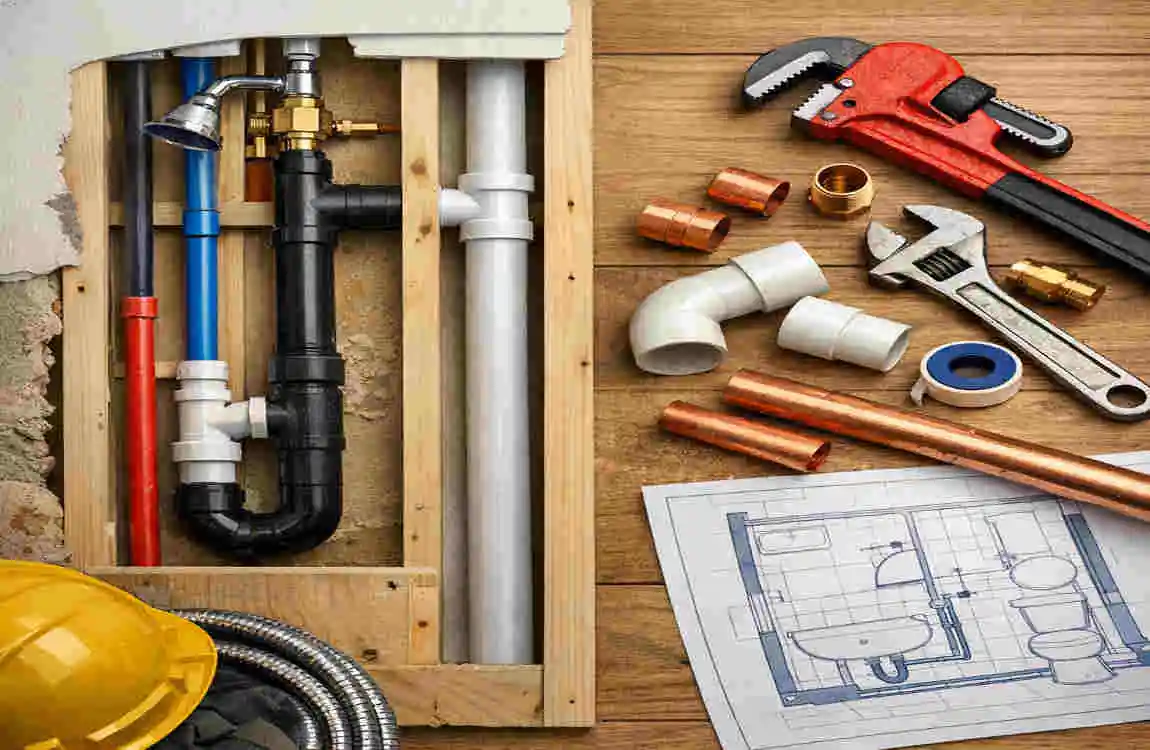
If you have ever wondered what a chase in plumbing is, you are not alone. Many homes and buildings hide pipes inside special enclosed spaces so the plumbing stays neat, protected, and easier to manage.
A plumbing chase is one of those hidden spaces. It helps carry water lines, drain pipes, and vent pipes through a building without fully exposing them. That matters because plumbing systems need room to run safely and efficiently, but they should also stay out of the way.
What Is a Chase in Plumbing?
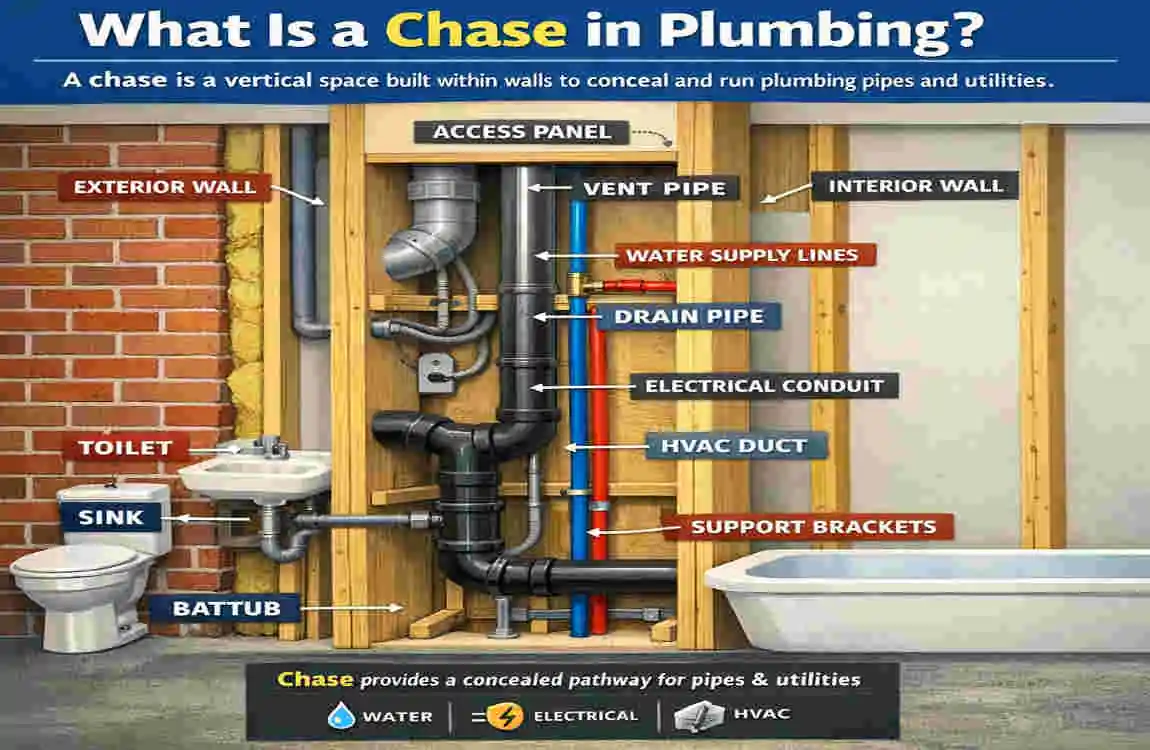
A plumbing chase is a hidden, vertical, enclosed space within a building that houses plumbing pipes and related components. Think of it as a protected pathway for pipes. It keeps them tucked away while still allowing access for repair work or maintenance.
In simple words, a chase gives pipes a place to run through a wall, corner, or shaft without being fully visible in the room. This is especially useful in homes and commercial buildings where appearance, safety, and easy access all matter.
A plumbing chase is not the same as a normal wall cavity. A wall cavity is the space inside a wall frame. A chase is usually a more intentional, planned space made specifically for pipes and other mechanical lines. It is built to handle plumbing needs, not just regular wall construction.
This difference matters because plumbing systems need enough space for pipe size, fittings, insulation, and sometimes future repairs. A regular wall cavity may be too small or too limited for that purpose.
Where Are Plumbing Chases Commonly Located?
Plumbing chases can appear in many parts of a building. They are usually placed where pipes need to move between floors, reach fixtures, or stay close to kitchens and bathrooms.
Bathrooms
Bathrooms are one of the most common places to find a plumbing chase. That is because bathrooms usually need several water and drain lines for toilets, sinks, showers, and tubs.
A chase in a bathroom often runs behind a toilet wall, next to a shower, or inside a boxed-in corner. It keeps the plumbing hidden while still allowing access to important pipe connections later.
Kitchens
Kitchens also use plumbing chases often because they need water lines and drain pipes for sinks, dishwashers, and sometimes refrigerators with water dispensers or ice makers.
In many homes, the chase is located behind cabinets, inside a wall near the sink, or in a corner where pipes can move discreetly. This keeps the kitchen looking cleaner and more organized.
Laundry Rooms
Laundry rooms often need plumbing chases for washing machine water supply lines, drain hoses, and venting in some setups. These spaces may also have utility connections that need to be hidden but still accessible.
A chase helps keep all that plumbing in one place rather than spreading it across the room. That makes repairs easier and the room more functional.
Multi-Story Buildings
In multi-story homes and buildings, plumbing chases are especially important. They often run vertically between floors so pipes can connect bathrooms, kitchens, and utility areas above and below.
These chases help carry waste lines and water supply lines through the building in an orderly way. Without them, pipe routing would be messier and harder to manage.
What Is Inside a Plumbing Chase?
A plumbing chase may hold more than just one pipe. It is often a grouped space for several plumbing-related parts.
Here are the most common things you might find inside:
- Water supply pipes
- Drain and waste pipes
- Vent pipes
- Pipe insulation
- Shutoff valves or service points
- Other mechanical or access components
Water Supply Pipes
These pipes bring clean water to sinks, toilets, showers, and appliances. They are usually smaller than drain pipes but still need protection and proper support.
Drain and Waste Pipes
Drain and waste pipes carry used water away from fixtures. These are usually larger because they must move more volume and allow waste to flow safely.
Vent Pipes
Vent pipes help balance air pressure in the plumbing system. Without proper venting, drains can gurgle, slow down, or trap odours.
Pipe Insulation
Some plumbing chases include insulation around pipes. This helps reduce noise, prevent freezing in colder areas, and improve energy efficiency in some systems.
Why Is a Plumbing Chase Important?
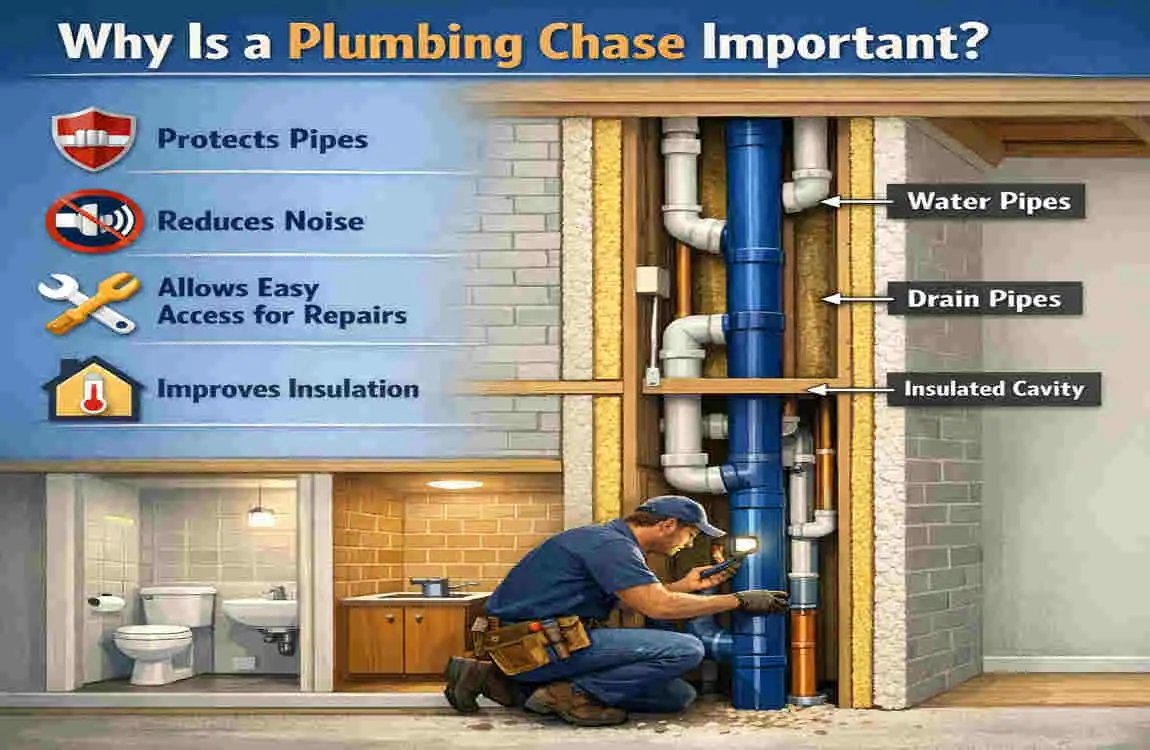
A plumbing chase does more than hide pipes. It plays a major role in how the whole plumbing system works and how easy it is to maintain.
Keeps Pipes Organized and Concealed
One of the biggest benefits is simple: pipes stay in a single planned area rather than running everywhere. This makes the building look neater and helps the plumbing layout stay organized.
When pipes are concealed, rooms also feel cleaner and more finished. That is one reason chases are so common in bathrooms and kitchens.
Provides Access for Maintenance and Repairs
A well-designed chase makes plumbing easier to service. If a pipe leaks or a valve needs replacement, a plumber can often reach the area faster if there is an access panel or removable cover.
That can save time, reduce damage, and make repairs less stressful.
Helps Protect Plumbing Systems
Pipes inside a chase are less exposed to bumps, accidental damage, and some temperature changes. That protection can help pipes last longer and work more reliably.
This is especially helpful in busy buildings where pipes would otherwise be at risk from daily use or wall movement.
Supports Proper Building Design and Safety
A chase helps builders create a safer and more practical structure. It gives plumbing systems room to function properly without interfering with living spaces.
It also helps keep plumbing details away from public view, which is important in both homes and commercial buildings.
Common Problems Found in Plumbing Chases
Even though chases are useful, they can also create problems if they are not properly built or maintained.
Water Leaks
Leaks are one of the most serious issues in a plumbing chase. Because the space is hidden, a leak may go unnoticed for some time before it causes visible damage.
That can lead to stained walls, damaged framing, or expensive repairs if the leak is not found early.
Mould and Moisture
If water escapes inside a chase, moisture can build up. That may cause mould, mildew, or a damp smell.
Since chases are enclosed, trapped moisture can become a bigger problem than in open areas. Good ventilation and quick leak repair help reduce this risk.
Damaged Pipes
Pipes inside a chase can be damaged by poor installation, shifting building materials, or long-term wear. If the chase is too tight, pipes may rub against framing or be hard to inspect.
Poor Insulation
If pipes are not insulated well, they may make noise, lose heat, or even freeze in cold weather. This is a common issue in exposed or poorly protected chases.
Pest Entry
Sometimes small gaps in or around a chase allow pests to enter. Rodents and insects may use these openings to move through walls and utility spaces.
Limited Access for Repairs
If a chase is built without proper access, even a small plumbing issue can become a major job. A plumber may need to cut into the wall to inspect the pipes.
That is why access planning matters so much during construction.
How Are Plumbing Chases Built and Maintained?
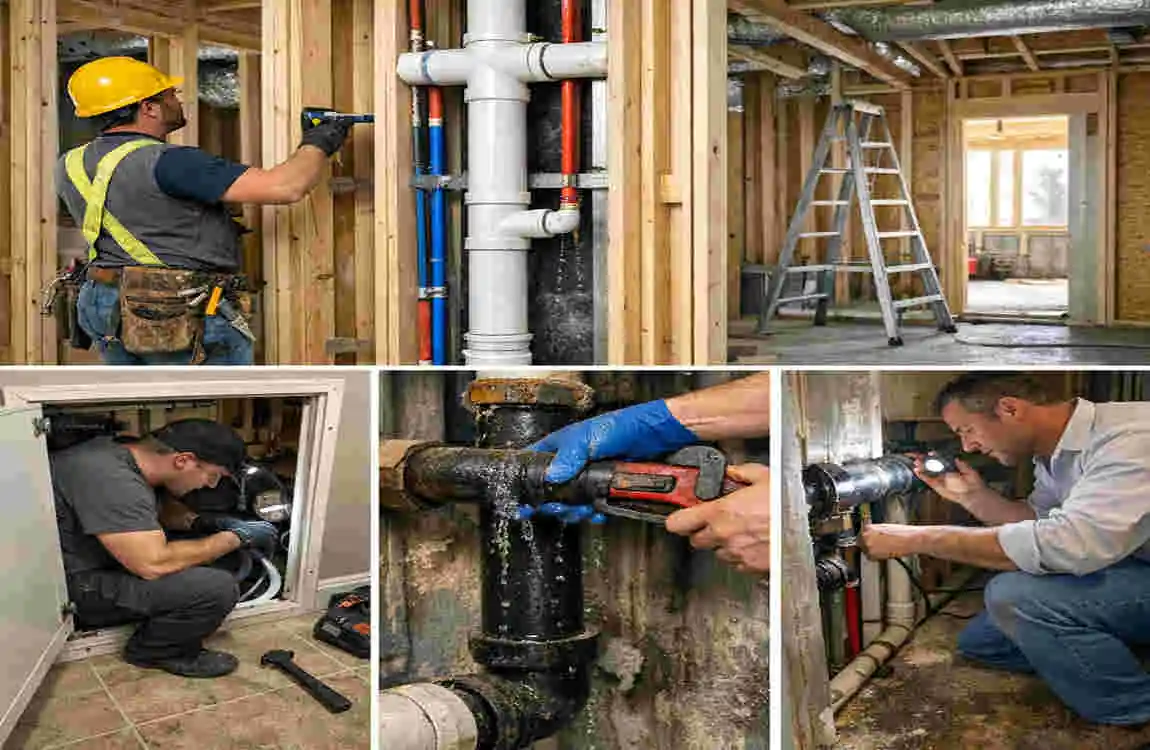
A plumbing chase should be planned carefully from the start. It is not just an empty box around pipes. It needs enough space, strong framing, and access for future service.
Basic Construction Considerations
The chase must be sized properly for the pipes it will hold. It should allow enough room for pipe diameter, fittings, insulation, and safe movement if needed.
It also needs to be built to fit the building’s structure. A chase in a bathroom wall may be smaller and more local, while a multi-story chase may be a much larger vertical shaft.
Proper Sizing for Plumbing Pipes
If a chase is too small, plumbers may struggle to install or repair pipes. Tight spaces can lead to awkward bends, poor support, or hidden problems.
A good chase gives the plumbing enough breathing room while remaining efficient within the building layout.
Access Panels and Removable Covers
Access panels are very important. They let people inspect valves, joints, and connections without tearing open the wall.
A chase with a well-placed panel is much easier to maintain. In many cases, this one feature can save time and money later.
Fire and Sound Protection
In some buildings, plumbing chases need fire-rated construction or sound-reducing materials. This helps keep noise from moving through walls and improves safety between rooms or floors.
This matters most in apartments, multi-story homes, and commercial buildings.
When to Call a Professional Plumber
You should call a professional plumber when the chase has a leak, an odour, hidden damage, or a major pipe issue. You should also get professional help if you plan to modify or open a chase wall.
Plumbing chases are part of a system that can affect the whole building. If you are unsure, it is safer to ask an expert.
Simple Ways to Think About a Plumbing Chase
- It hides and protects plumbing lines.
- It gives repair access when built correctly.
- It is more intentional than a normal wall cavity.
- It often appears in bathrooms, kitchens, and utility areas.
FAQ: What Is a Chase in Plumbing?
What is a chase in plumbing?
A chase in plumbing is a hidden space in a building that holds pipes and plumbing components. It keeps them organized, protected, and easily accessible when needed.
What is the difference between a plumbing chase and a wall cavity?
A wall cavity is the open space inside a wall frame. A plumbing chase is usually a planned space built specifically for pipes and service access.
Why are plumbing chases used in bathrooms?
Bathrooms need many water and drain connections, so chases help hide and organize the pipes while keeping them accessible for repairs.
Can a plumbing chase contain drain and vent pipes?
Yes. A plumbing chase can hold drain pipes, vent pipes, and supply lines depending on the layout and building design.
Does a plumbing chase need an access panel?
In many cases, yes. An access panel makes maintenance and repairs much easier and can prevent larger wall damage later.
Can you open or remove a plumbing chase wall?
Sometimes, but you should be careful. If the wall contains active plumbing, it should be opened only with proper planning and professional guidance.
How do you find a plumbing chase in a house?
Look near bathrooms, kitchens, laundry areas, and utility walls. Chases are often boxed-in sections, corners, or vertical shafts that align with plumbing fixtures.
What Is a Chase in Plumbing? A Simple Guide
| Aspect | Simple Explanation |
|---|---|
| What Is a Plumbing Chase? | A vertical or horizontal enclosed space that hides plumbing pipes. |
| Main Purpose | Keeps pipes organized, protected, and out of sight. |
| Common Location | Found inside walls, between floors, or behind fixtures. |
| What It Can Contain | Water supply pipes, drain pipes, vent pipes, and electrical lines. |
| Benefits | Improves appearance and allows easier access for maintenance. |
| Materials Used | Often framed with wood or metal and covered with drywall. |
| Important Tip | Leave enough space for pipe repairs and proper insulation. |
