

If you are wondering how long copper pipe plumbing usually lasts, the simple answer is this: often several decades. In many homes, copper pipes can perform well for a very long time when they are installed correctly and kept in good condition.
Copper has been a popular plumbing material for years because it is strong, dependable, and long-lasting. Still, no plumbing system lasts forever. Water quality, water pressure, installation quality, and the surrounding environment all affect how long the pipes stay in good shape.
How Long Does Copper Pipe Plumbing Usually Last?
Average Lifespan of Copper Plumbing
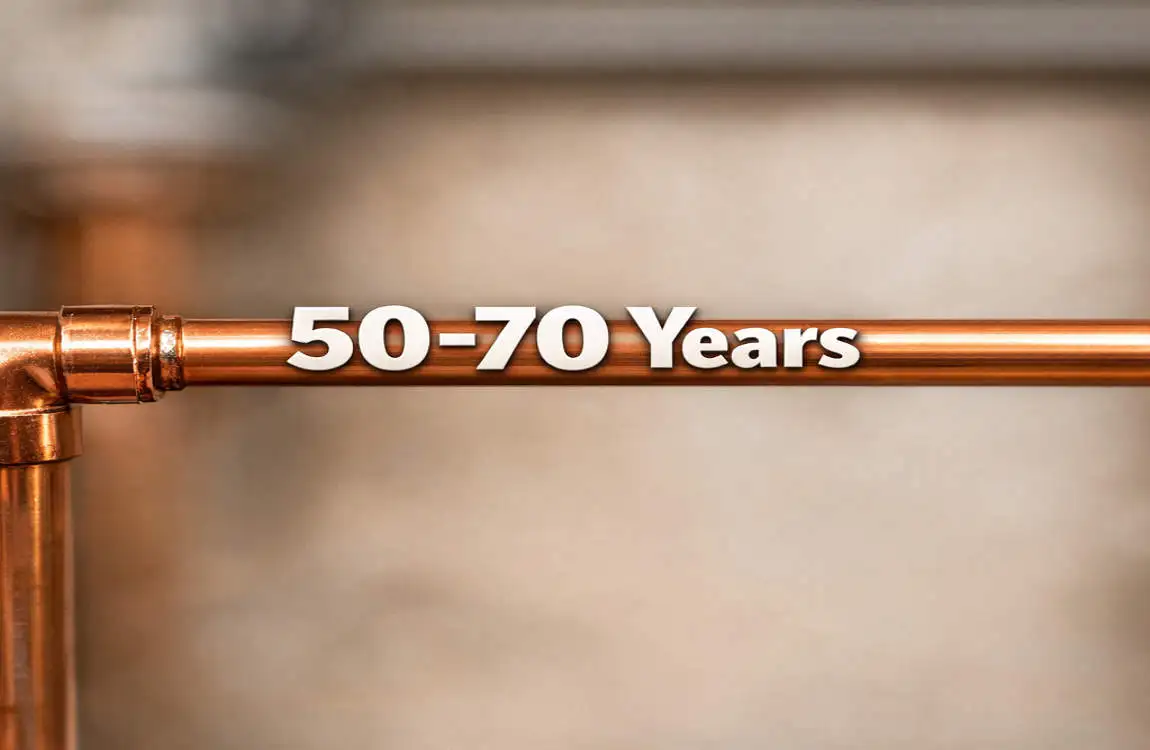
Copper plumbing is known for its long service life. In many homes, properly installed copper pipes can last for decades and often stay reliable for a very long time.
That said, the expected lifespan is not the same as the actual service life in every house. Some copper systems last far longer than others because of better water conditions, stronger installation, and regular maintenance.
What Affects Copper Pipe Lifespan?
Several things affect copper pipe lifespan and overall performance:
- Water chemistry and acidity
- Water pressure
- Temperature
- Pipe thickness and type
- Installation quality
- Soil and environmental conditions
- Maintenance and repairs
A home with balanced water and good plumbing care will usually get more years out of copper pipes than a home with hard water or poor support.
Does Copper Plumbing Last Longer Than Other Pipes?
Compared with galvanised steel, copper usually lasts longer and performs better. Compared with PEX or CPVC, copper can still be very durable, but the best choice depends on the house and its conditions.
No one material wins in every situation. The real question is which one fits your home, your budget, and your local water conditions.
Signs That Your Copper Pipes Are Getting Old
Copper pipes do not usually fail all at once. They often give warning signs first. If you notice these signs early, you may avoid a bigger problem later.
Green or Blue Discolouration
Green or blue discolouration can occur due to oxidation or corrosion. A light surface change does not always mean the pipe is failing, but it should not be ignored.
If the discolouration is growing or spreading, or is paired with leaks, that may point to a plumbing issue.
Frequent Leaks
One leak may be a one-time issue. But repeated leaks, especially small pinhole leaks, often suggest that the pipes are weakening.
Leaks near joints and fittings are also important to watch. If the same pipe keeps leaking, it may be time for a deeper inspection.
Low Water Pressure
If water pressure drops around the house, corrosion or mineral buildup may be narrowing the pipes. That can limit flow and make everyday use less comfortable.
Low pressure does not always mean pipe damage, but it is a warning sign worth checking.
Discoloured or Metallic-Tasting Water
If the water starts looking cloudy or rusty, or tastes metallic, the plumbing may need attention. Copper plumbing should not normally change the water in this way.
When water changes in appearance or taste, it is smart to have the system checked.
Visible Corrosion or Damaged Pipes
Look for:
- Pitting
- Flaking
- Stains
- Swelling
- Surface damage
These signs can point to pipe wear or corrosion. Even if the pipe is still working, these problems may mean the plumbing is aging.
What Causes Copper Plumbing to Wear Out?
Corrosion and Water Chemistry
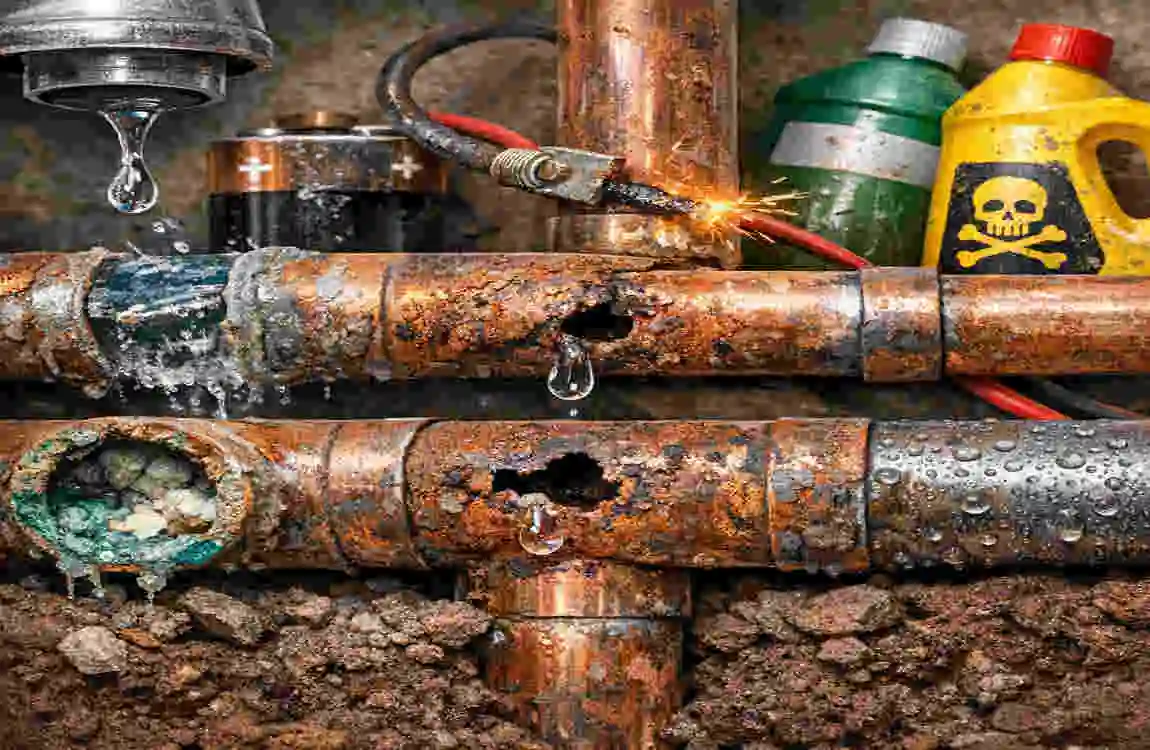
Water that is too acidic or chemically aggressive can slowly attack copper. Over time, that can wear down the pipe surface and create weak spots.
The pH level and mineral content of the water matter a lot. In some homes, the water itself is the main reason copper ages faster.
Hard Water and Mineral Deposits
Hard water contains more minerals. Those minerals can build up inside the pipes and reduce water flow.
This does not always destroy the pipe, but it can make the plumbing less efficient and contribute to long-term wear.
High Water Pressure
Too much pressure puts extra stress on plumbing connections and pipe walls. Over time, that pressure can increase the chance of leaks.
A home with excessively high pressure may experience more wear, even if the pipes are otherwise in good shape.
Poor Installation and Connections
Even a good material can fail early if the installation is poor. Problems such as poor soldering, loose support, or incompatible materials can weaken the system.
Sometimes the issue is not the copper itself, but how it was installed.
Extreme Heat and Environmental Conditions
Temperature changes can also affect plumbing. Extreme heat, freezing conditions, and outdoor exposure can all create stress on copper pipes.
Pipes that sit in crawl spaces, attics, exterior walls, or exposed areas often need extra care.
How to Make Copper Pipes Last Longer
The good news is that there are several simple ways to extend the life of your plumbing.
Monitor Water Pressure
Check that household water pressure stays within a safe range. Pressure that is too high can wear out pipes faster.
If you are unsure, a plumber can test it for you.
Test Your Water Quality
If you suspect corrosion, it helps to test the water. This can show whether the water is too acidic or has minerals that may affect the plumbing.
Knowing the water quality can help you choose the right solution.
Inspect Plumbing Regularly
Look under sinks, around visible pipe areas, and near water heaters. Watch for stains, damp spots, corrosion, or slow leaks.
A small visual check now and then can help you catch trouble early.
Fix Small Leaks Early
A tiny leak may not seem urgent, but waiting can make it worse. Water damage, corrosion, and mould problems can grow quickly.
A fast repair often costs less than a major one later.
Protect Pipes From Freezing
If you have pipes in colder spaces, insulation helps. Exposed pipes in winter need protection to prevent them from cracking or weakening.
This is especially important in older homes.
Avoid Unnecessary Chemical Drain Cleaners
Some harsh drain cleaners can be rough on plumbing over time. If used too often, they may contribute to pipe damage.
Safer drain care is usually better for the long run.
Should You Repair or Replace Old Copper Plumbing?
When Repairing Copper Pipes Makes Sense
Repair is often the right choice when the problem is small and isolated.
This may include:
- One small leak
- A damaged fitting
- Localized corrosion
- A single reachable section
In these cases, a plumber may be able to fix the issue without major work.
When Pipe Replacement May Be Better
Replacement may be the better option if the system has:
- Multiple pinhole leaks
- Widespread corrosion
- Repeated failures
- Poor water flow
- Age throughout the whole home
If the pipe system is failing in many places, patching one spot at a time may not solve the larger problem.
Partial Replacement vs. Whole-House Repiping
OptionBest ForMain Benefit
Repair Small isolated problems Lower immediate cost
Partial replacement Damaged sections Targets problem areas
Whole-house repiping Widespread deterioration Long-term solution
When to Call a Professional Plumber
If the leak is hidden, the corrosion is widespread, or the house may need repiping, call a professional. DIY repairs are not always safe or effective for older plumbing systems.
A plumber can help you decide whether repair or replacement is the smarter move.
Copper Plumbing vs. Modern Plumbing Materials
Copper vs. PEX
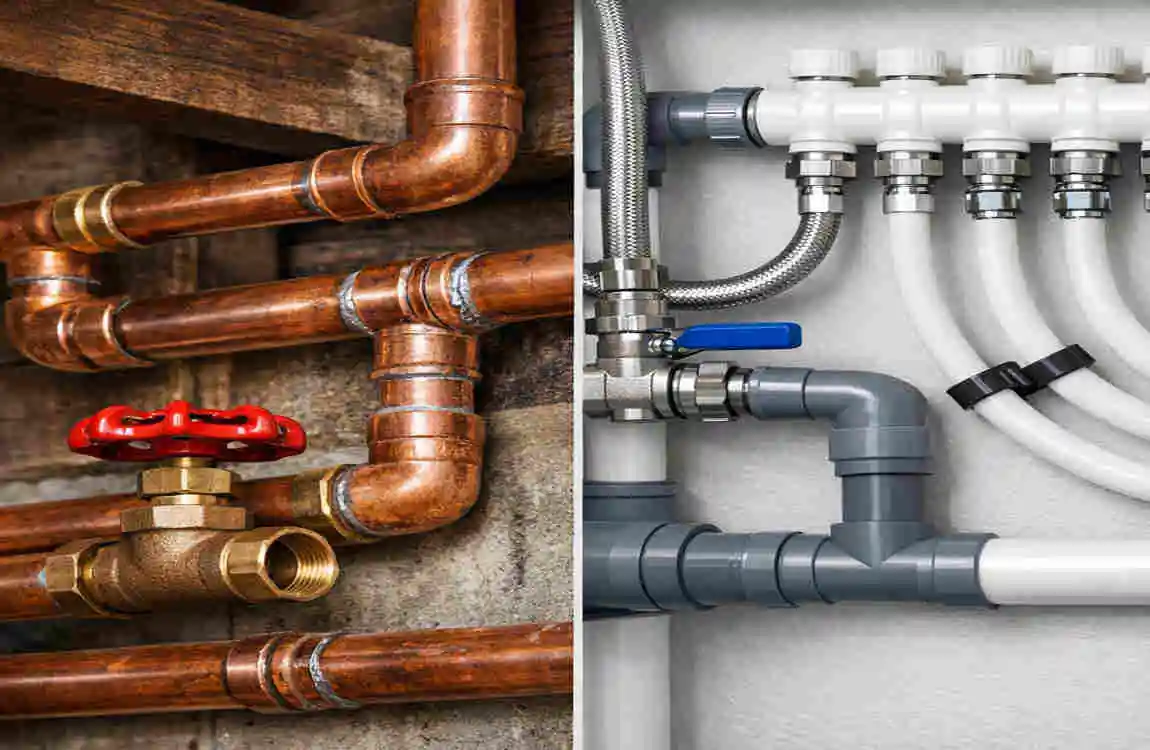
PEX is flexible, easy to install, and often less expensive. It does not corrode in the same way copper can, which is one reason many homeowners choose it.
Copper, however, is still known for strength and long-term performance. The better choice depends on the home and the conditions.
Copper vs. CPVC
CPVC is another modern option that is lighter and easier to install. It is often used where cost and simplicity matter.
Copper tends to be more traditional and durable in certain settings, but CPVC can work well in the right home.
Is Copper Still a Good Choice for New Homes?
Yes, copper is still a good plumbing material in many cases. It remains a reliable choice when installed properly.
But some homes may benefit more from modern plastic piping, especially if the project calls for lower cost, faster installation, or better flexibility.
Which Plumbing Material Lasts the Longest?
There is no single answer that applies to every home. The lifespan of any plumbing system depends on:
- Installation quality
- Local water conditions
- Maintenance
- Environmental stress
Material matters, but care and conditions matter too.
Frequently Asked Questions About Copper Pipe Plumbing
How long does copper pipe plumbing last?
Copper plumbing often lasts for many decades when it is properly installed and well maintained. The real lifespan depends on water quality, pressure, environment, and maintenance.
Can copper pipes last 100 years?
Some copper pipes may stay functional for extremely long periods, but not every system will reach that age. Conditions vary too much to promise a specific number.
How do I know if my copper pipes need replacing?
Look for leaks, corrosion, discolouration, low pressure, and repeated repairs. If several of these problems appear, it is time for a professional inspection.
Is green corrosion on copper pipes bad?
Green buildup can mean the pipe is oxidising or corroding. Light surface change may not be serious, but heavy or spreading corrosion should be checked.
Are old copper pipes safe?
Age alone does not always make pipes unsafe. But if the pipes are badly corroded, leaking, or failing often, they should be evaluated.
Should I replace copper pipes with PEX?
That depends on the home, the budget, and the plumbing condition. PEX may be a good option in some repiping projects, but copper can still be a strong choice in many homes.
How often should copper plumbing be inspected?
Homeowners should perform regular visual inspections and call a plumber if warning signs appear. If the home is older, more frequent inspection is a good idea.
| Factor | Typical Lifespan / Impact |
|---|---|
| Copper pipe lifespan | About 50–70 years, with some systems lasting longer |
| Water quality | Acidic or corrosive water can shorten pipe life |
| Installation quality | Proper installation helps prevent leaks and premature corrosion |
| Pipe location | Indoor pipes generally last longer than exposed outdoor plumbing |
| Maintenance | Regular inspections can identify small leaks before major damage occurs |
| Warning signs | Green stains, pinhole leaks, discoloration, or reduced water pressure |
| When to replace | Consider replacement when pipes develop repeated leaks or significant corrosion |
