

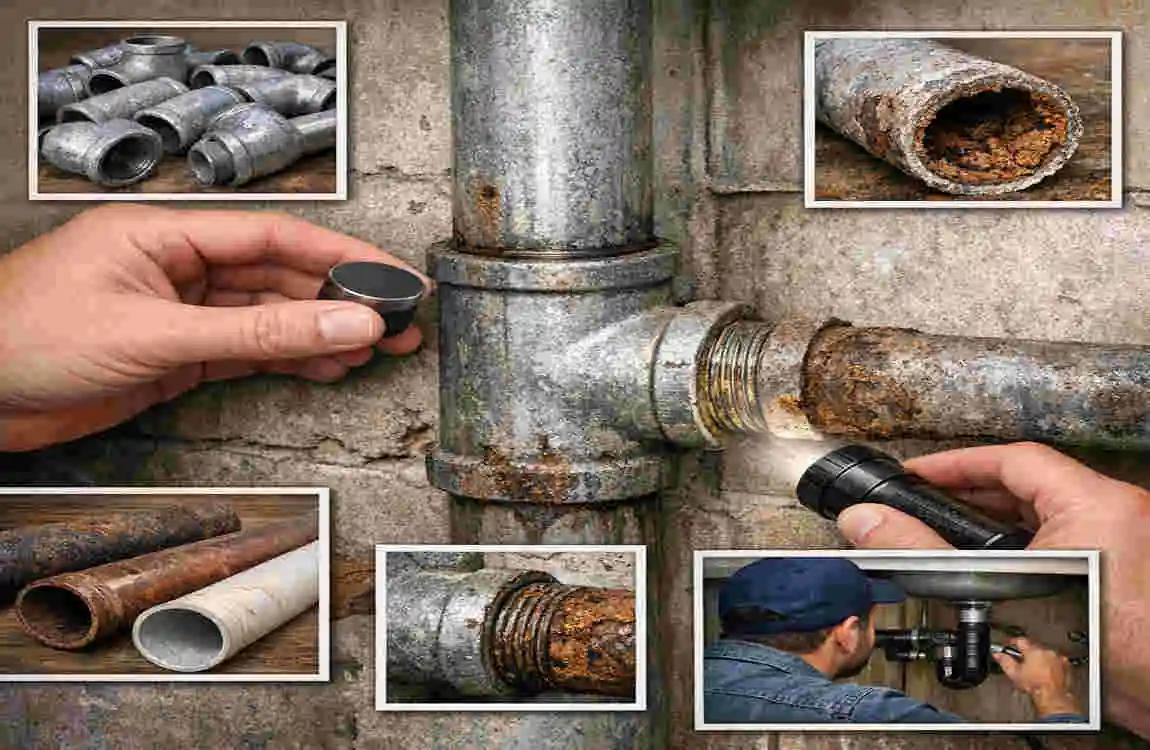
Galvanized plumbing is older metal plumbing that was once common in many homes. If you live in an older house, knowing what kind of pipes you have can help you spot possible problems early. Some galvanized pipes still work for a while, but they can also rust, clog, and cause low water pressure over time.
What Is Galvanized Plumbing?
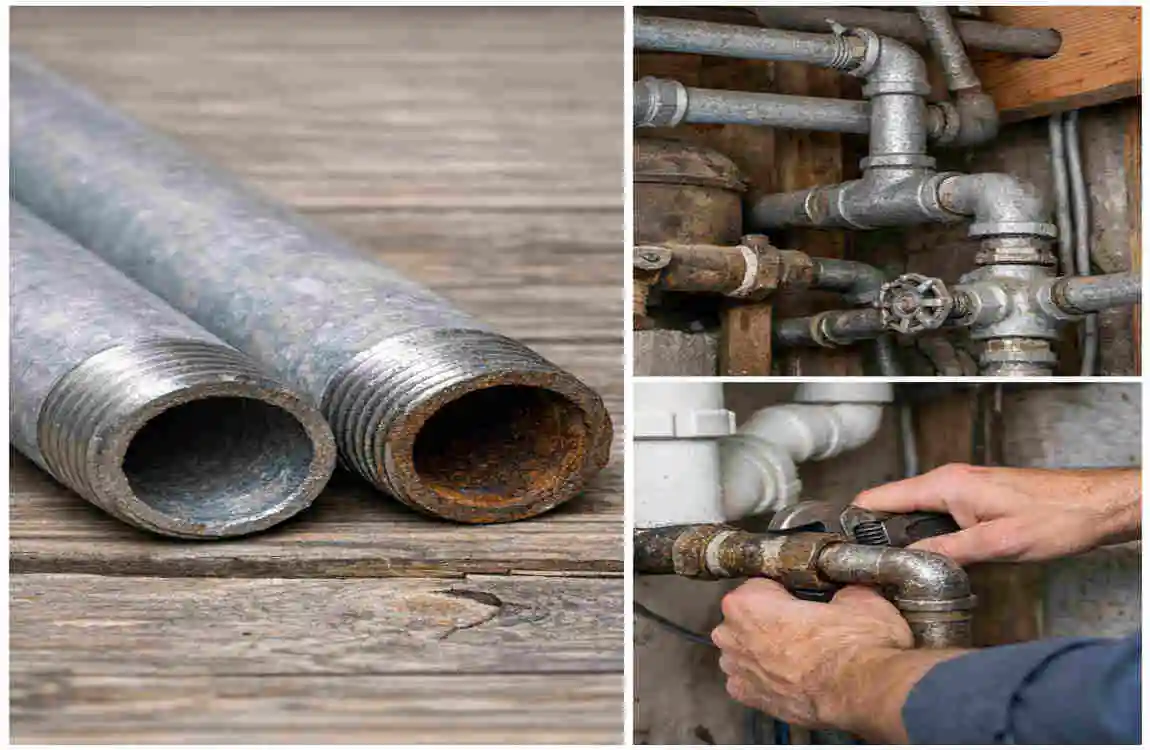
Galvanized plumbing is made from steel pipes coated with zinc. The zinc layer helps slow down rust and corrosion.
These pipes were widely used in older homes because they were considered a strong and practical option at the time. Today, they are much less common because newer materials like PEX, copper, and PVC are easier to work with and usually hold up better in modern plumbing systems.
How to Identify Galvanized Plumbing in a Home
Check the Pipe Color
Galvanized pipes usually look dull gray, silver, or metallic. They do not have the reddish tone of copper, and they do not look like plastic pipes.
If the pipe looks older and has a faded metal finish, that is often a clue. You may also notice rough spots, rust stains, or areas where the surface looks worn.
Test With a Magnet
A simple magnet test can help. Galvanized steel is magnetic, so a magnet will usually stick to it.
This is one of the easiest ways to safely check exposed pipes. Just hold the magnet against the pipe. If it sticks, the pipe may be galvanized steel. If it does not, it could be copper, plastic, or another material.
Look at Threaded Connections
Galvanized pipes often have threaded joints and fittings. These connections look like the pipe sections screw together.
You may notice these joints in visible places such as basements, crawl spaces, utility rooms, or under sinks. Threaded fittings are common in older plumbing systems.
Inspect Exposed Plumbing
Look in places where pipes are easy to see:
- basements
- crawl spaces
- utility rooms
- garages
- under sinks
Check for rust, corrosion, or buildup around pipe joints and fittings. Heavy corrosion often makes galvanized plumbing easier to recognize.
Check the Pipe Surface
Older galvanized pipes may develop a rough, flaky, or rusty surface. Sometimes the metal looks darkened or uneven.
If the pipe surface is badly corroded, that is often a sign of aging galvanized steel.
Galvanized vs. Other Common Plumbing Pipes
Pipe TypeTypical AppearanceMagnetic?Common Use
Galvanized Steel Gray or silver metal Yes Older water systems
Copper Reddish-brown No Water supply lines
PVC White plastic No Water and drainage
PEX Flexible plastic No Modern water supply
Cast Iron Dark gray/black Usually not Drain and waste lines
This table can help you compare what you see in your home.
Signs Your Home May Have Galvanized Pipes
Even if you cannot see every pipe, certain signs may suggest galvanized plumbing is present.
Common Warning Signs
- Low water pressure
- Brown or rusty-looking water
- Frequent leaks
- Visible rust around fittings
- Reduced water flow
- Discolored pipes
- Recurring plumbing repairs
These signs do not prove the pipes are galvanized, but they can point to older plumbing that needs attention.
Where to Look for Galvanized Pipes
Basement or Crawl Space
These areas often have exposed supply lines, making them one of the best places to inspect. Look near the main water entry point and follow the visible piping.
Under Sinks
Open the cabinet and check the supply lines leading to the faucet. Older metal pipes with threaded joints may indicate galvanized plumbing.
Utility Room
Water heaters and other plumbing equipment often have visible connections. These areas may show pipe material more clearly than the rest of the house.
Exterior or Garage Areas
In older homes, some exposed sections may still be visible in garages or on exterior walls. These spots can make identification easier.
Why Galvanized Pipes Can Become a Problem
Internal Corrosion
The biggest issue with galvanized plumbing is that corrosion can build up inside the pipe. That buildup can make the opening smaller and restrict water flow.
Leaks and Weak Spots
As galvanized steel ages, it can weaken and begin to leak. Corrosion may also first affect joints and fittings.
Water Discoloration
Rust inside the pipe can sometimes affect water color. If the water looks brown or yellow after not being used for a while, old pipes may be part of the cause.
If you notice these issues often, it may be time for a plumbing inspection.
Galvanized Plumbing vs. Lead Pipes
Galvanized steel and lead are different materials, but both can be found in older plumbing systems. In some homes, galvanized pipes may have replaced older lead sections, which is why appearance alone should not be the only test.
If you are unsure about water safety, do not guess. A professional inspection or water test is the safer choice.
Galvanized Plumbing Replacement Options
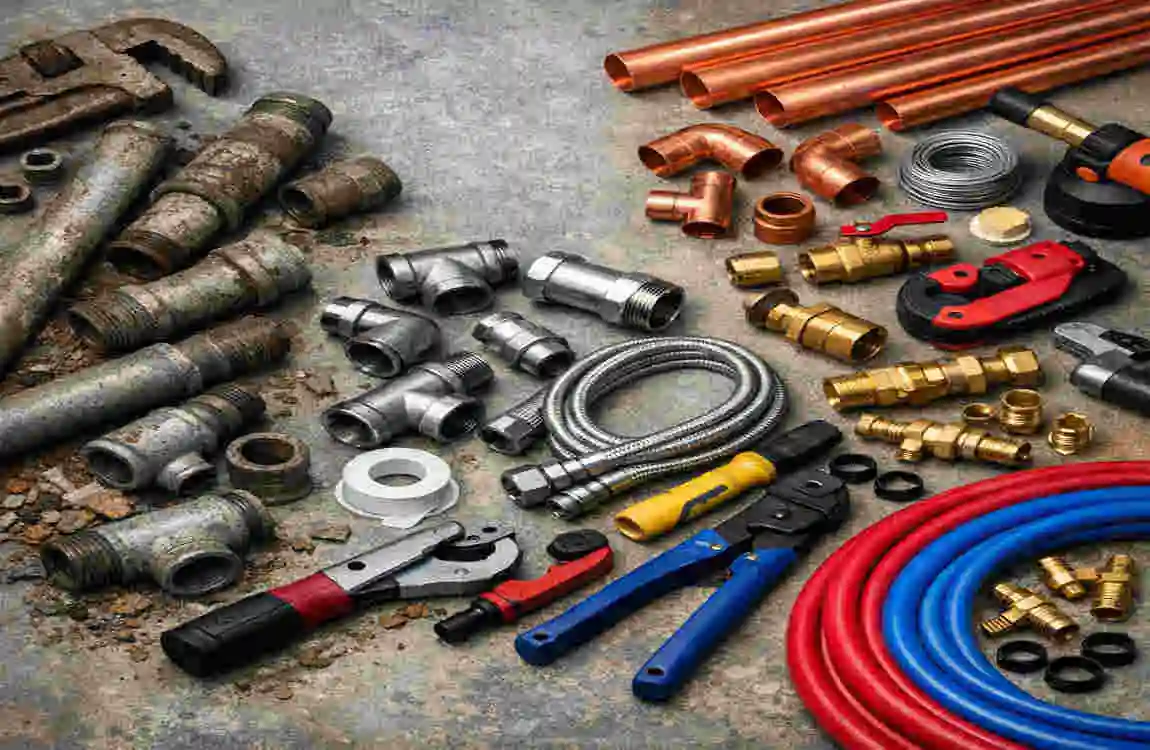
Replacement may be worth considering if you have:
- repeated leaks
- low water pressure
- heavy corrosion
- rusty water
- frequent repair needs
Some homes only need partial replacement, while others may benefit from full repiping. A licensed plumber can help you decide what makes sense for your home and budget.
How to Inspect Galvanized Plumbing Safely
Keep the inspection simple and safe.
Safe Inspection Tips
- Only check visible, exposed pipes
- Use a flashlight for better viewing
- Use a magnet for a basic test
- Do not cut, loosen, or remove pipes
- Stop if the pipe looks badly damaged
- Call a plumber if you are unsure
This protects both you and your plumbing system.
When to Call a Professional Plumber
You should call a plumber if you notice:
- persistent low water pressure
- repeated leaks
- major rust or corrosion
- uncertain pipe material
- concerns about drinking-water quality
- plans for renovation or repiping
A plumber can confirm the pipe type and tell you whether repair or replacement is needed.
Frequently Asked Questions
How can I tell if my home has galvanized plumbing?
Look for exposed gray or silver metal pipes with threaded connections. A magnet usually sticks to galvanized steel.
What does galvanized plumbing look like?
It usually looks like dull gray or silver metal. Older pipes may also appear rusty, rough, or discolored.
Are galvanized pipes magnetic?
Yes, galvanized steel is generally magnetic.
How long do galvanized pipes last?
It depends on age, water conditions, and corrosion. Many older systems develop buildup and leaks over time.
Should I replace galvanized plumbing?
If the pipes are corroded, leaking, or causing water pressure issues, replacement may be a good idea.
| Key Point | Simple Information |
|---|---|
| What Is Galvanized Plumbing? | Steel pipes coated with zinc to help prevent rust and corrosion. |
| Common Appearance | Usually dull gray or silver, with threaded joints. |
| Where Found? | Common in older homes, especially those built before the 1960s. |
| How to Identify It | Look for gray metal pipes that attract a magnet and have threaded connections. |
| Signs of Aging | Low water pressure, rusty water, leaks, or clogged pipes. |
| Main Problem | Interior corrosion can gradually restrict water flow. |
| Replacement Option | Modern homes commonly use copper, PEX, or other approved plumbing materials. |
