

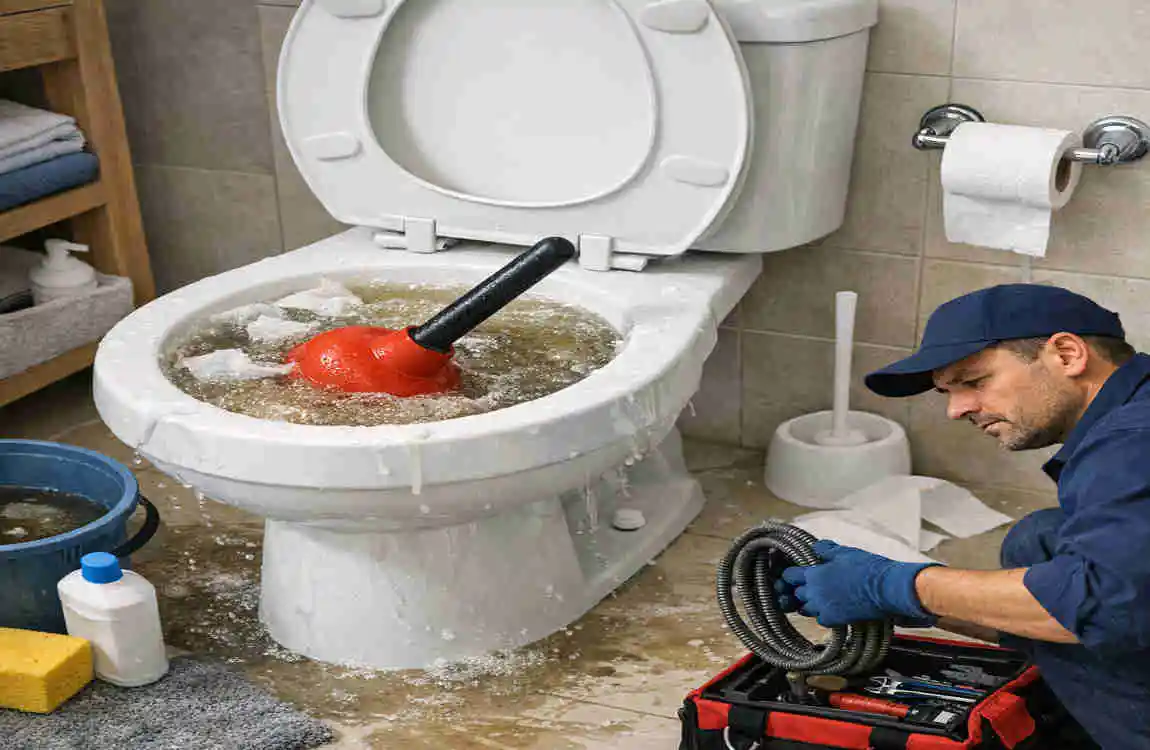
A toilet clog is frustrating enough the first time. But when it keeps coming back, that usually means there is more going on than a simple blockage.
A one-time clog often comes from too much toilet paper or something that should not have been flushed. A recurring clog, on the other hand, may point to a deeper plumbing issue. That is why knowing when to call a plumber for a toilet clog matters.
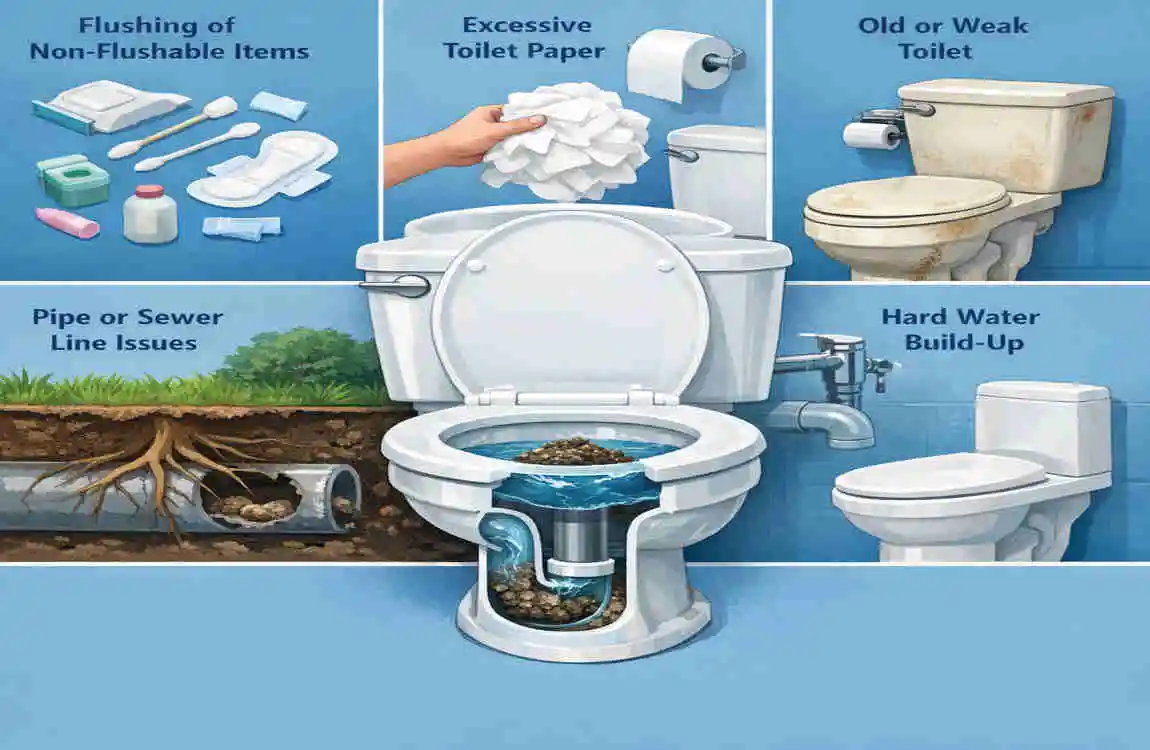
Sometimes the problem is in the toilet itself. Other times, it is inside the drain line, the sewer line, or even in the vent system. In some homes, tree roots or damaged pipes are the real reason the clog will not stay gone.
Common Reasons Your Toilet Clog Keeps Coming Back
Partial Blockage in the Drain
A partial blockage is one of the most common reasons a toilet keeps clogging. Water may still pass through, but not well enough to fully clear waste.
That means plunging can seem to work at first, but the clog returns later. If this keeps happening, the problem is probably deeper in the pipe than you can reach with a basic plunger.
Too Much Toilet Paper or Non-Flushable Items
Toilets are only made for human waste and toilet paper. Even “flushable” wipes can cause trouble because they do not break down as quickly as toilet paper.
Other common items that should not go down the toilet include:
- Paper towels
- Feminine hygiene products
- Cotton swabs
- Dental floss
- Tissues
- Small trash items
When these items build up, they can create repeated blockages that seem to come and go.
Problems With the Toilet Itself
Sometimes the toilet is the real issue. A weak flush, low tank water level, or a worn-out flapper can keep the toilet from flushing strongly enough.
Older toilets may also use less efficient flushing systems. If the flush is weak from the start, waste may not move through the drain properly, leading to recurring clogs.
Main Sewer or Drain Line Problems
If the clog is not in the toilet, it may be farther down in the main drain or sewer line. That is a bigger problem because it can affect more than one fixture in the home.
You may notice:
- Slow-draining sinks
- A tub that drains poorly
- Gurgling sounds
- Multiple toilets acting up
When this happens, the clog is likely not just a toilet issue anymore.
Tree Roots or Damaged Pipes
Tree roots can grow into underground pipes and block the line over time. This is a common problem in older homes with ageing sewer pipes.
Cracked, shifted, or collapsed pipes can also cause recurring toilet clogs. In these cases, the issue is structural, and it usually will not go away with plunging.
What to Try Before Calling a Plumber
Use a Toilet Plunger Correctly
A flange-style toilet plunger works better than a flat sink plunger because it creates a tighter seal in the toilet bowl.
Use firm, controlled plunging. Do not force it too hard. The goal is to create pressure and movement, not splash water everywhere.
Try a Toilet Auger
A toilet auger can help break up a stubborn clog that a plunger cannot clear. It is designed to reach deeper into the toilet trap.
Use it gently. Forcing the auger can scratch the porcelain or damage the toilet if you push too hard.
Check Your Flushing Habits
If the toilet keeps clogging, take a close look at what is being flushed.
Make sure everyone in the home knows the toilet is not a trash can. Even small amounts of the wrong item can lead to repeated problems.
Avoid Harsh Chemical Drain Cleaners
Chemical drain cleaners can damage plumbing parts and create safety risks. They are especially risky if the clog does not clear and a plumber later needs to work on the line.
If simple methods keep failing, it is better to stop there and get professional help.
When to Call a Plumber for a Recurring Toilet Clog
The Clog Returns After Plunging
If the toilet clogs again soon after you clear it, the blockage is probably not fully gone. That is one of the clearest signs that you should call a plumber.
Temporary fixes are not enough when the same clog keeps returning.
Multiple Drains Are Backing Up
This is a bigger warning sign. If the toilet, sink, shower, or tub are all draining slowly at the same time, the problem may be in the main line.
At that point, a plumber should inspect the system before the issue gets worse.
The Toilet Overflows Frequently
One overflow may be enough to call a plumber if it happens often. Repeated overflow can damage floors, walls, and nearby fixtures.
It also creates sanitation problems, which is why this should not be ignored.
You Hear Gurgling Sounds
Gurgling or bubbling noises often mean air is trapped in the plumbing system. This can happen due to a blockage or a vent issue.
If your toilet often makes strange sounds, it is worth having a plumber take a look.
Sewage Smells, or Wastewater Appears
If you smell sewage or see dirty water coming back up, do not wait. That could mean a serious sewer issue.
This is not just inconvenient. It is a health and property problem that needs fast attention.
You Suspect a Sewer Line Problem
If you have tried basic fixes and the issue keeps coming back, the sewer line may need to be inspected. A plumber may use a camera to look inside the pipe.
Household tools cannot repair a damaged underground line, so this is the right time to call a professional.
How a Plumber Diagnoses a Recurring Toilet Clog
Inspecting the Toilet and Drain
A plumber usually starts by checking the toilet itself and the nearby drain. This helps them determine whether the issue is within the toilet or deeper in the plumbing.
That first check often points them in the right direction quickly.
Using a Drain Snake or Auger
Professional tools are stronger than basic home tools. A plumber may use a drain snake to reach farther into the line and clear a deeper clog.
This is helpful when the blockage is beyond the toilet trap and out of reach for a regular plunger.
Sewer Camera Inspection
If the problem keeps returning, a camera inspection may be needed. This lets the plumber see roots, cracks, buildup, or broken pipe sections.
It is one of the best ways to find the real cause of recurring clogs.
Checking the Plumbing Vent
Plumbing vents help air move through the drain system. If they are blocked or not working right, water may not drain well.
That can lead to slow flushing, gurgling, and repeated toilet issues.
How to Prevent Recurring Toilet Clogs
Simple habits can save you a lot of trouble later.
- Flush only toilet paper and human waste
- Keep wipes and paper towels out of the toilet
- Maintain the toilet tank and flush parts
- Fix slow drains early
- Watch for warning signs in other fixtures
- Get older plumbing checked before small issues grow
If you take care of small problems early, you can avoid bigger repairs later.
Recurring Toilet Clog vs Emergency Plumbing Problem
ProblemPossible CauseRecommended Action
One-time clog Excess paper or waste Try a plunger
Clog keeps returning Partial blockage Consider a plumber
Multiple drains backing up Main drain blockage Call a plumber promptly
Sewage coming back up Sewer-line issue Seek professional help
Toilet overflowing repeatedly Serious blockage or plumbing fault Stop using it and call a plumber
Gurgling toilet Drain or vent problem Schedule an inspection
How Much Can a Recurring Toilet Clog Cost?
The cost depends on what is causing the problem. A simple clog is usually much cheaper to handle than a sewer line repair.
Basic service might only involve clearing a blockage. But if the plumber finds roots, damaged pipes, or a main line issue, the repair can cost more.
Even so, it is often smarter to fix the real problem once instead of paying again and again for temporary fixes.
FAQ
When should I call a plumber for a toilet clog?
Call a plumber when the clog keeps returning, the toilet overflows often, or other drains are also slowing down.
Why does my toilet keep clogging after I plunge it?
The plunger may only clear part of the clog. The real issue could be deeper in the drain line, in the vent system, or inside the toilet.
Is a recurring toilet clog an emergency?
Not always, but it can become urgent if wastewater backs up, the toilet overflows repeatedly, or multiple fixtures stop draining.
Can I use chemical drain cleaner in a toilet?
It is better to avoid chemical drain cleaners. They can damage plumbing parts and create safety risks.
How do I know if my sewer line is clogged?
Common signs include repeated toilet clogs, slow drains in several rooms, gurgling noises, and sewage odours.
Can a plumber permanently fix a recurring toilet clog?
Often, yes. A plumber can find the cause and fix the deeper problem instead of just clearing the symptom.
| Key Point | Short Information |
|---|---|
| Common Cause | Repeated toilet clogs may result from excess paper, blocked pipes, or poor drainage. |
| Try First | Use a toilet plunger and avoid flushing repeatedly. |
| Warning Sign | If the clog returns soon after clearing, there may be a deeper plumbing issue. |
| Call a Plumber When | Multiple fixtures are backing up, water rises frequently, or plunging does not solve the problem. |
| Possible Serious Issue | A blocked drain line, damaged pipe, or sewer-line problem may be causing recurring clogs. |
| Prevention | Flush only toilet-safe waste and avoid flushing wipes, paper towels, or other bulky items. |
