

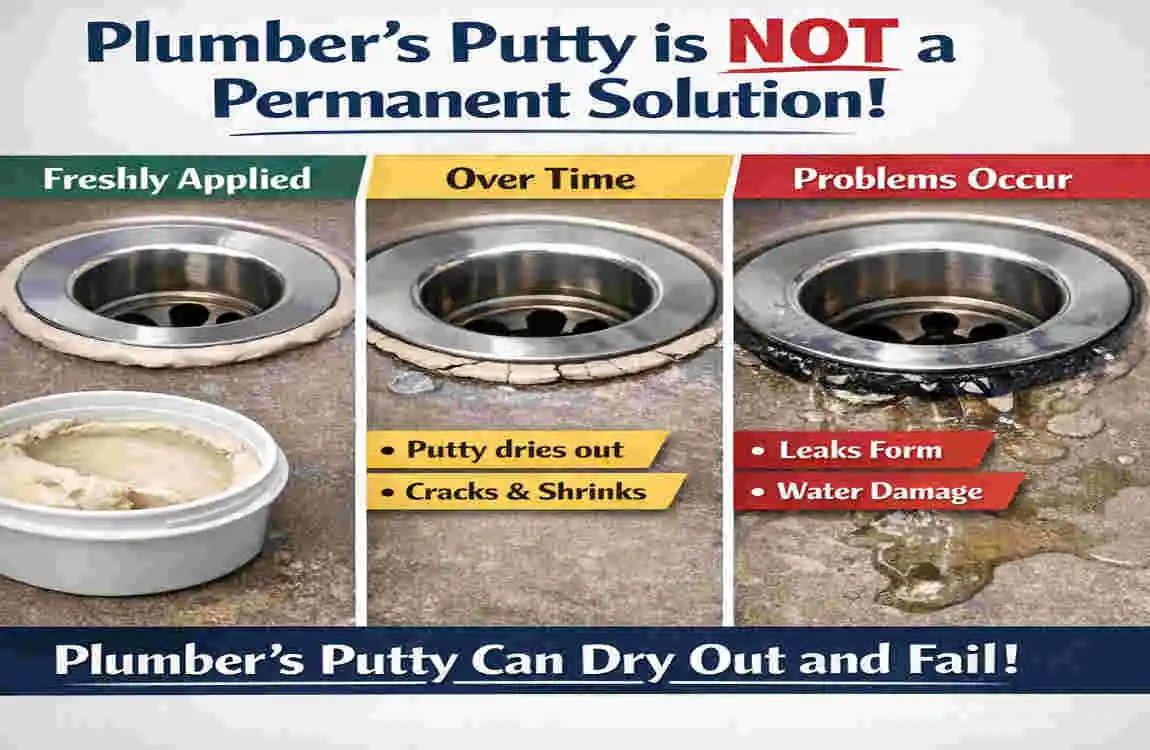
Plumber’s putty is a soft sealing material that many homeowners use around sinks, drains, faucet bases, and similar plumbing parts. It is easy to shape, easy to apply, and useful for stopping small water leaks around fixture edges.
So, is plumbers putty a permanent fix? The short answer is no, not for every plumbing problem. It can create a long-lasting seal when used correctly, but it is not a substitute for repairing damaged pipes, cracked parts, or loose plumbing connections.
What Is Plumber’s Putty and How Does It Work?
What Is Plumber’s Putty Made Of?
Plumber’s putty is a soft, moldable compound. You can roll it in your hands and shape it easily before placing it on a fixture.
Its job is simple: it fills tiny gaps between plumbing surfaces and helps create a watertight seal.
Where Is Plumber’s Putty Commonly Used?
You will often find plumber’s putty used around:
- Sink drains
- Basket strainers
- Faucet bases
- Flanges and similar fixtures
These are places where a tight seal is needed, but not a heavy structural repair.
How Does Plumber’s Putty Create a Seal?
Plumber’s putty works by pressing into small uneven spaces between two surfaces. That pressure helps block water from slipping through.
Unlike some sealants, it does not usually harden into a rock-solid material. It stays somewhat soft, which helps it seal well in the right type of connection.
Is Plumber’s Putty a Permanent Fix?
How Long Can Plumber’s Putty Last?
When applied correctly, plumber’s putty can last for many years. In some cases, it stays effective for a long time without needing attention.
But its lifespan depends on a few things:
- How clean the surface was before installation
- Whether the fixture was tightened properly
- How much water exposure it gets
- Whether the fixture moves over time
- Whether the material is compatible with the putty
So, it can be long-lasting, but not always permanent.
Why Plumber’s Putty Is Not Always a Permanent Solution
Plumber’s putty is a sealing material, not a repair tool for broken plumbing. It cannot fix cracked pipes, damaged fittings, or loose parts.
If a fixture shifts, loosens, or was installed badly, the seal may fail later. In that case, adding more putty usually does not solve the real issue.
When Can Plumber’s Putty Be Considered Long-Lasting?
Plumber’s putty can perform very well when:
- The fixture is meant for it
- The surface is clean and dry
- The right amount is used
- The part is tightened correctly
- The connection does not move much
When these steps are followed, the seal can last a long time.
Plumber’s Putty vs. Other Plumbing Sealants
Plumber’s Putty vs. Silicone Caulk
Plumber’s putty and silicone are not the same.
Plumber’s putty stays soft and is often used on drain and faucet fittings. Silicone caulk cures into a flexible, rubber-like seal and is often better suited to areas that require stronger water resistance.
Silicone is sometimes the better choice for certain sinks, countertops, or materials where plumber’s putty is not recommended.
Plumber’s Putty vs. Pipe Thread Sealant
Pipe thread sealant is made for threaded pipe connections. It helps seal the threads so water does not escape.
Plumber’s putty should not be used as a replacement for thread sealant. It is designed for a different kind of connection.
Plumber’s Putty vs. Teflon Tape
Teflon tape is also used on threaded pipe connections. It wraps around the threads to help reduce leaks.
That makes it useful for pipes, but not for every drain or sink part. Again, the right product depends on the connection type.
Which Sealant Should You Choose?
A simple rule helps here:
- Use plumber’s putty for many sink and drain seals
- Use silicone where a stronger cured seal is needed
- Use thread sealant or Teflon tape for threaded pipe connections
When in doubt, check the fixture instructions first.
How to Apply Plumber’s Putty Correctly
Clean the Plumbing Surface
Before using putty, remove old material, dirt, grease, and debris. A clean surface helps the seal hold better.
If the surface is very dirty, the putty may not stick or seal properly.
Roll and Shape the Putty
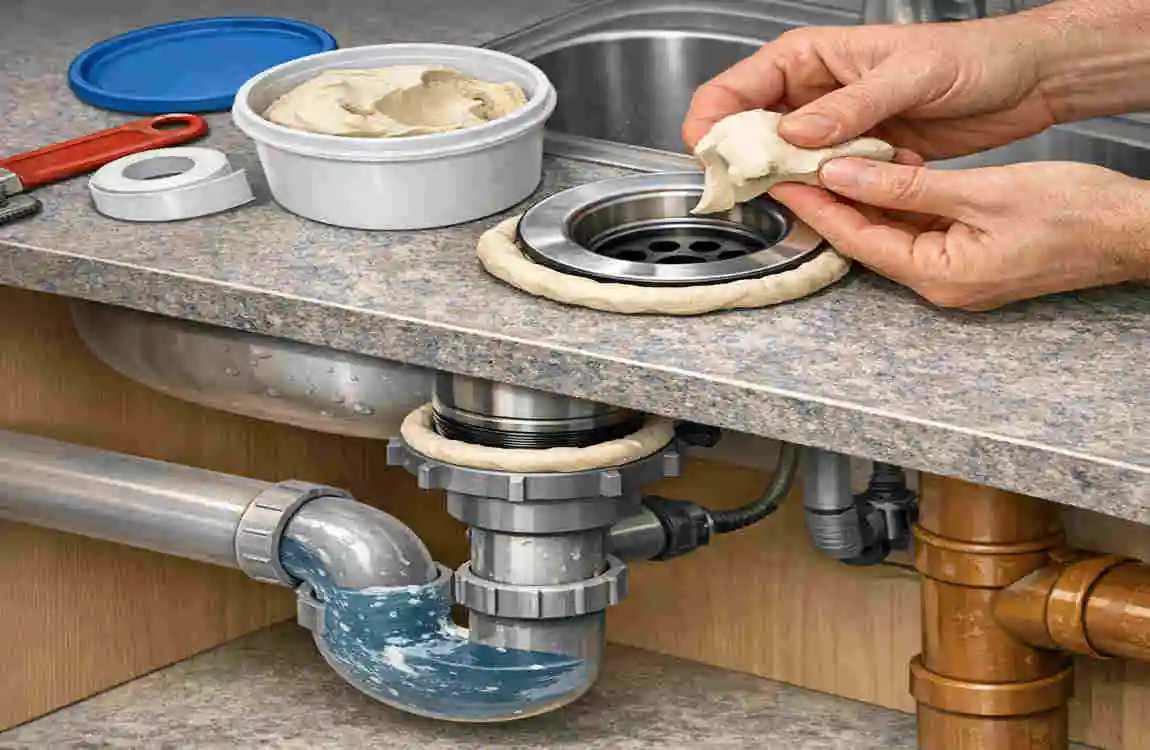
Take a small amount and roll it into a rope-like shape with your hands.
It should be thick enough to seal the gap, but not so much that it squeezes out everywhere.
Place the Putty Around the Fixture
Put the rope evenly around the drain flange or fixture base. Try not to leave gaps or clumps.
A smooth, even layer usually gives the best result.
Install and Tighten the Fixture
Set the part in place and tighten it according to the manufacturer’s instructions.
Do not overtighten. Too much force can damage the fixture or cause the seal to shift.
Remove Excess Putty
After tightening, wipe away any putty that squeezes out. Then check the seal for open spots or uneven areas.
A neat finish usually means the seal was applied correctly.
Common Problems With Plumber’s Putty and How to Fix Them
Leaking Around a Sink Drain
A leak may happen if there was not enough putty, the surface was uneven, or the drain was not tightened correctly.
In that case, removing the drain and resealing it may be the best fix.
Putty Has Deteriorated
Old putty can dry out, break down, or stop sealing well. This can happen if the wrong material was used or the seal was exposed to poor conditions.
If the putty looks worn or damaged, it should usually be replaced.
The Fixture Keeps Moving
If the part keeps moving, the seal will likely fail again. More putty will not fix that.
Instead, check the fixture’s hardware, fit, and alignment.
The Plumbing Component Is Cracked
If the sink part, drain, or fitting is cracked, plumber’s putty will not repair it.
A broken part usually needs replacement, not just resealing.
Leak Continues After Resealing
If the leak does not stop, the problem may be somewhere else. It could involve a gasket, washer, loose fitting, or nearby plumbing.
If the source is hard to find, calling a plumber is a smart next step.
How to Know When Plumber’s Putty Is the Wrong Choice
Avoid Using It on Pressurized Pipe Threads
Plumber’s putty is not meant to seal pressurized threaded pipe joints. Those need products made for that job.
Be Careful With Certain Materials
Some sinks, countertops, and fixtures may not work well with traditional plumber’s putty. Always check the product instructions before use.
Don’t Use It to Repair Cracks or Holes
Putty can seal edges, but it cannot fix broken plumbing parts. A crack or hole usually needs proper repair or replacement.
Don’t Rely on Putty to Stop Every Leak
If a leak is coming from deeper inside the plumbing, putty will not solve it. It may hide the symptom for a while, but the real issue will remain.
Maintenance, Lifespan, and When to Call a Plumber

How to Maintain a Plumber’s Putty Seal
To help the seal last, watch for:
- Moisture around the fixture
- Loose parts
- Recurring drips
- Movement in the drain or faucet base
Try to avoid disturbing the fixture unless needed.
Signs the Seal Needs Attention
Look for signs like:
- Water pooling around the drain
- Dampness under the sink
- Visible wear in the seal
- Loose fixture parts
- Repeated leaks
These are signs the seal may need repair or replacement.
When a Professional Plumber Is Needed
Call a plumber if:
- The leak keeps coming back
- A pipe or fitting is cracked
- Water damage is already present
- You cannot find the leak source
- The part needs replacement
A pro can tell whether the issue is the seal, the fixture, or something deeper.
FAQ About Plumber’s Putty
Is plumber’s putty a permanent fix?
No, it is not a universal permanent fix. It can create a long-lasting seal when used correctly, but it is not a repair for damaged plumbing.
How long does plumber’s putty usually last?
It can last for many years, depending on the fixture, water exposure, installation quality, and material compatibility.
Can plumber’s putty stop a leaking drain?
Yes, sometimes. It works well for drain seals, but if the drain is damaged or loose, the real problem may need repair.
Should I use plumber’s putty or silicone?
It depends on the fixture and material. Silicone is often better for certain water-exposed areas, while putty is common for drains and sink fittings.
Can plumber’s putty be used on pipe threads?
Generally, no. Threaded pipe joints usually need thread sealant or Teflon tape instead.
Can I put new plumber’s putty over old putty?
It is usually better to remove the old putty first and clean the surface before applying new material.
Does plumber’s putty harden over time?
Traditional plumber’s putty stays relatively soft. It is designed to remain workable rather than cure into a hard seal.
Is plumber’s putty safe for all sinks and drains?
No, not always. Compatibility can vary, so check the fixture instructions before using it.
What should I do if plumber’s putty keeps leaking?
Check the drain assembly, gasket, tightening, and fixture alignment. If the leak continues, the part may need repair or replacement.
Can plumber’s putty fix a cracked pipe?
No. A cracked pipe needs a real plumbing repair, not just putty.
| Key Point | Short Information |
|---|---|
| Is plumber’s putty permanent? | No, it is generally not considered a permanent repair solution. |
| Main purpose | Creates a watertight seal around sinks, drains, and similar fixtures. |
| How long does it last? | It can last for years when properly applied, but it may eventually dry out or deteriorate. |
| Where to use it | Best for sealing drain flanges, sink strainers, and some faucet bases. |
| Where not to use it | Avoid using it on pressurized pipe joints or surfaces where the manufacturer recommends silicone instead. |
| Permanent alternative | For many applications, the correct gasket or plumber-approved silicone sealant may provide a more durable seal. |
| Bottom line | Plumber’s putty is excellent for sealing fixtures, but it should not be treated as a permanent fix for plumbing leaks. |
