

The short answer is that most homeowners spend $12,000 to $30,000 for a full siding replacement on a two-story home. But the final price can be higher or lower depending on the house’s size, siding material, labor costs, and whether the old siding must be removed first.
This matters because siding does more than change how your home looks. It also helps protect your house from rain, wind, heat, and moisture. If your siding is damaged or worn out, waiting too long can lead to bigger repair costs later.
How Much Is New Siding on a 2 Story House?
Average Cost Range
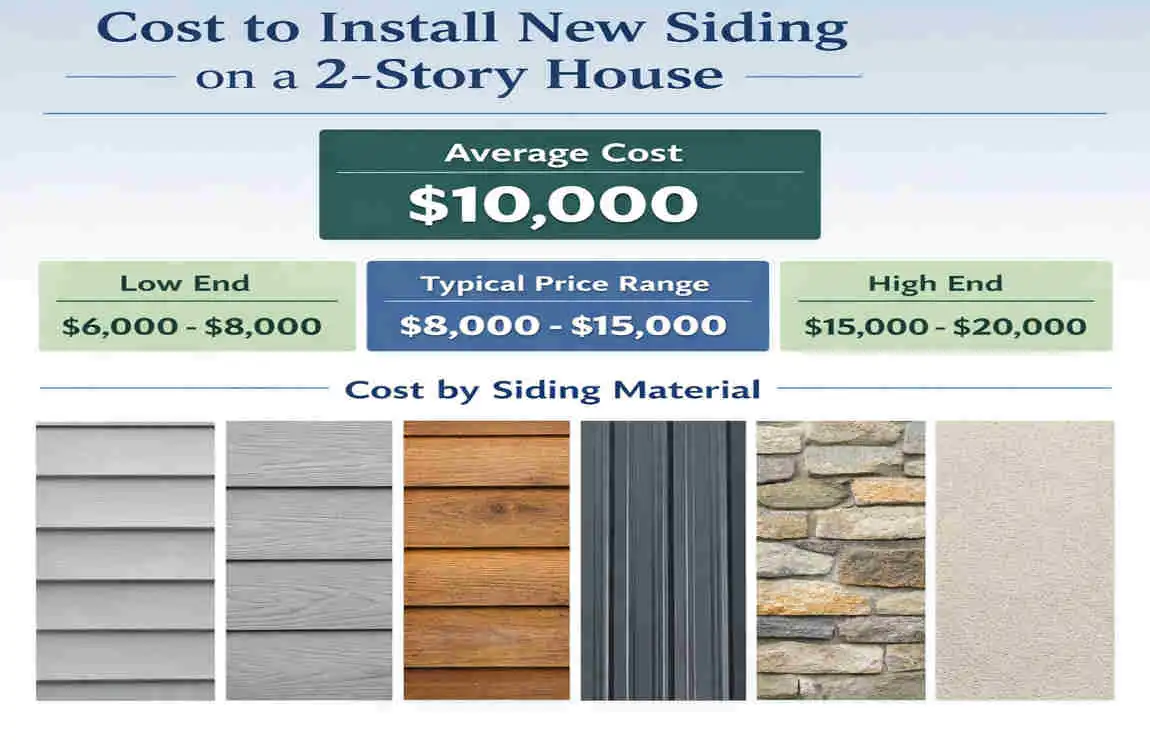
When people ask how much new siding on a 2-story house costs, the most useful answer is to look at the average range first.
For a typical two-story home, siding replacement usually costs between $6 and $20 per square foot installed, depending on the material and project complexity. That means the total price can rise quickly if the home is large or you choose a premium product.
A smaller two-story home may fall on the lower end of the range. A larger home with complex rooflines, lots of windows, or difficult access will usually cost more.
Estimated Total Cost by House Size
House Size Estimated Cost
1,500 sq. ft. $9,000–$18,000
2,000 sq. ft. $12,000–$24,000
2,500 sq. ft. $15,000–$30,000
3,000 sq. ft. $18,000–$40,000
These numbers are estimates, not fixed prices. Your actual cost may change based on material choice, local labor rates, and whether any repairs are needed under the old siding.
Factors That Affect New Siding Costs
Home Size
The larger the home, the more siding you need. That means more material, more labor, and usually more time.
A two-story home also has more wall area than a single-story house of the same footprint, so the total siding cost tends to be higher than many people expect.
Number of Stories
A two-story house usually costs more to side than a one-story home because workers must go higher, use ladders or scaffolding, and take extra safety steps.
That extra height adds time and labor. It also makes the job more complex.
Siding Material
The material you choose has one of the biggest effects on price. Vinyl is usually the cheapest. Fiber cement, wood, metal, brick veneer, and stone veneer usually cost more.
Some materials last longer, look more premium, or need less upkeep. Others are cheaper upfront but may need more care later.
Labor Costs
Labor can take up a large part of the bill. In some areas, labor is affordable. In others, especially in cities with higher living costs, it can significantly raise the project price.
Experienced crews may cost more, but they often do the job better and faster.
Removal of Old Siding
If your current siding must be removed first, that adds time and cost. Old siding removal may also reveal hidden damage, such as rotted wood or moisture issues.
That is why it is smart to leave room in your budget for surprises.
Insulation Upgrades
Some homeowners choose to upgrade insulation while replacing siding. This can improve comfort and energy efficiency, but it also increases the total cost.
If your home already loses heat or feels drafty, this may be worth considering.
Geographic Location
Where you live matters; labor rates, permit fees, and material prices can vary from one area to another.
A siding project in a high-cost region will often cost more than the same job in a smaller town.
Cost by Siding Material
Vinyl Siding
Vinyl siding is the most budget-friendly choice for many homeowners. It is popular because it offers a clean look at a lower price.
It also needs very little maintenance, which makes it appealing for busy households.
Fiber Cement Siding
Fiber cement is more expensive than vinyl, but it is known for durability and a strong, attractive finish. It works well in many climates and often lasts a long time.
Engineered Wood Siding
Engineered wood gives you a natural wood look with better resistance than traditional wood. It usually costs more than vinyl but less than premium wood siding.
Natural Wood Siding
Natural wood siding has a classic, warm appearance, but it usually costs more and needs more care. It can be beautiful, but maintenance is part of the deal.
Metal Siding
Metal siding is durable and low maintenance. It is often used on modern homes or homes that need extra weather protection.
Brick Veneer
Brick veneer gives a timeless, strong appearance. It is usually one of the more expensive options, but it can last many decades.
Stone Veneer
Stone veneer creates a high-end look and can boost curb appeal. Like brick, it usually costs more than basic siding types.
Labor Costs for a Two-Story House
Why Two-Story Homes Cost More
Two-story homes are harder to work on because the crew must cover more height. That means more setup time, more safety equipment, and often more labor hours.
A taller home may also take longer to inspect, measure, and finish properly.
Scaffolding and Safety Equipment
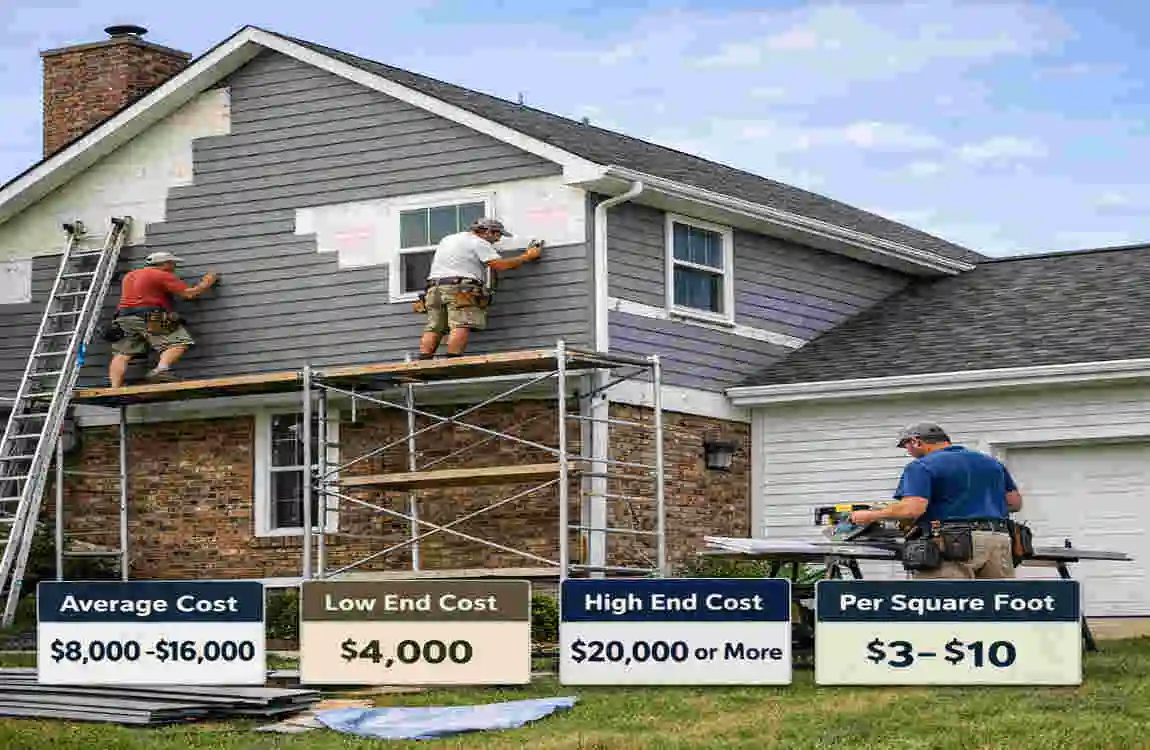
Scaffolding is often needed for a two-story siding job. It helps workers reach higher walls safely and work more accurately.
That equipment is part of the overall labor cost, and it is one reason two-story homes usually cost more than one-story homes.
Average Installation Charges
Labor charges vary by region and material, but in many cases, labor can represent a large share of the total bill.
A basic siding job may have lower labor costs, whereas premium materials or complex designs can raise them.
Additional Costs to Consider
Old Siding Removal
Removing old siding can add a meaningful amount to the project. If the old material is damaged or difficult to take off, the cost may rise.
House Wrap
A house wrap helps protect against moisture. It is a smart layer to include when replacing siding, especially if the old barrier is worn out.
Insulation
Adding insulation can improve comfort and reduce energy waste. It costs more upfront, but it may help lower utility bills later.
Trim Replacement
If the trim around your windows, doors, or corners is damaged, you may need to replace it too. That can increase the final price.
Window Flashing
Flashing helps keep water out around windows and other openings. If this needs to be replaced, it adds to the project total.
Permit Fees
Some local areas require permits for siding work. These fees are not usually the biggest expense, but they should still be included in your budget.
Signs Your Home Needs New Siding
Cracks and Holes
Small damage can become a larger problem over time. Cracks and holes let in water and pests.
Warping
If siding is bending, buckling, or pulling away from the wall, it may no longer be protecting your home properly.
Mold Growth
Mold on or under siding can signal moisture problems. That should be checked quickly.
Water Damage
Stains, soft spots, or rot may mean water has already gotten behind the siding.
High Energy Bills
If your heating and cooling bills are rising, failing siding may be part of the problem. Damaged siding can make it harder to keep your home comfortable.
Ways to Save Money on New Siding
If you want to reduce costs, try these practical steps:
- Compare multiple contractor quotes
- Choose cost-effective materials
- Schedule during the off-season
- Replace damaged sections when appropriate
- Look for manufacturer warranties
- Check financing options
A smart buyer looks at value, not just the lowest price. A cheap siding job that fails early can cost more in the long run.
Is New Siding Worth the Investment?
Improved Curb Appeal
New siding can make an older home look clean, fresh, and more attractive right away.
Better Energy Efficiency
If you add insulation or replace damaged siding, your home may hold temperature better and feel more comfortable.
Increased Home Value
A nice exterior often helps with resale. Buyers notice first impressions, and siding is a big part of that.
Reduced Maintenance Costs
Old siding often needs frequent repairs. New siding can reduce that stress and save time later.
For many homeowners, the real answer to how much new siding costs for a 2-story house is not just the price. It is also the long-term value.
Choosing the Right Siding for Your Home
Budget
Start with what you can comfortably spend. Then narrow the choices based on value and lifespan.
Climate
Some materials handle wet weather better. Others do well in hot, dry, or cold areas. Your local climate matters more than many people think.
Maintenance Requirements
Ask yourself how much work you want to do later. Wood looks beautiful, but it usually needs more care than vinyl or fiber cement.
Appearance
Pick a style that fits your home. A material should improve the look of the house, not fight with it.
Expected Lifespan
If you want a long-term solution, consider materials that last longer, even if they cost more upfront.
Common Mistakes to Avoid
Choosing the Cheapest Material Only
Low price is tempting, but it should not be the only factor. Better home materials often save money over time.
Ignoring Labor Quality
Good installation matters as much as good materials. Poor labor can cause problems fast.
Skipping Moisture Protection
Without proper moisture barriers, siding may fail sooner than expected.
Not Checking Warranties
A solid warranty can protect your investment. Always read the details.
Hiring Unlicensed Contractors
This is one of the biggest mistakes homeowners make. A cheap quote can turn expensive if the work is done badly.
Frequently Asked Questions
How much is new siding on a 2-story house?
Most homeowners spend between $12,000 and $30,000, depending on size, labor, and material.
What is the cheapest siding option?
Vinyl siding is usually the most affordable choice.
Which siding lasts the longest?
Brick veneer and fiber cement are among the longest-lasting siding options.
Does replacing siding increase home value?
Yes. New siding can improve curb appeal, energy efficiency, and resale value.
How long does siding installation take?
Most two-story homes take 1–3 weeks, depending on weather, home size, and material.
| Category | Details |
|---|---|
| Average Cost | $10,000–$35,000 for a typical 2-story house, depending on size and material. |
| Cost Per Square Foot | $5–$20 per square foot (installed). |
| Vinyl Siding | $5–$12/sq. ft. – Affordable, durable, and low maintenance. |
| Fiber Cement Siding | $8–$15/sq. ft. – Long-lasting, fire-resistant, and weather-resistant. |
| Engineered Wood Siding | $7–$13/sq. ft. – Natural wood appearance with lower maintenance. |
| Natural Wood Siding | $8–$18/sq. ft. – Attractive but requires regular maintenance. |
| Brick Veneer Siding | $10–$20/sq. ft. – Premium look with excellent durability. |
| Labor Costs | Usually 40–60% of the total project cost due to extra height and installation complexity. |
