

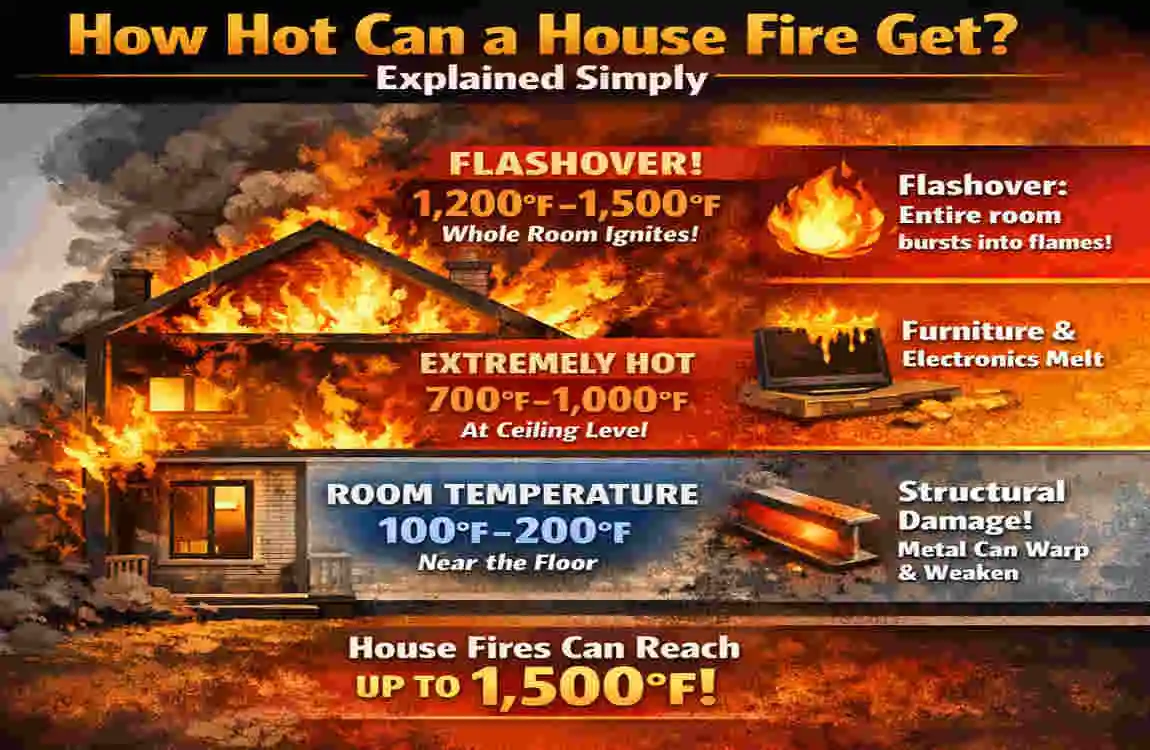
A house fire can turn dangerous very fast, and the heat is one of the biggest reasons why. Many people think flames are the main problem, but the real danger often comes from extreme heat, thick smoke, and the rapid spread of heat through a home.
So, how hot can a house fire get? In many cases, the temperature can rise high enough to damage walls, break windows, melt certain materials, and make escape nearly impossible within minutes. That is why understanding fire heat matters so much.
How Hot Can a House Fire Get?
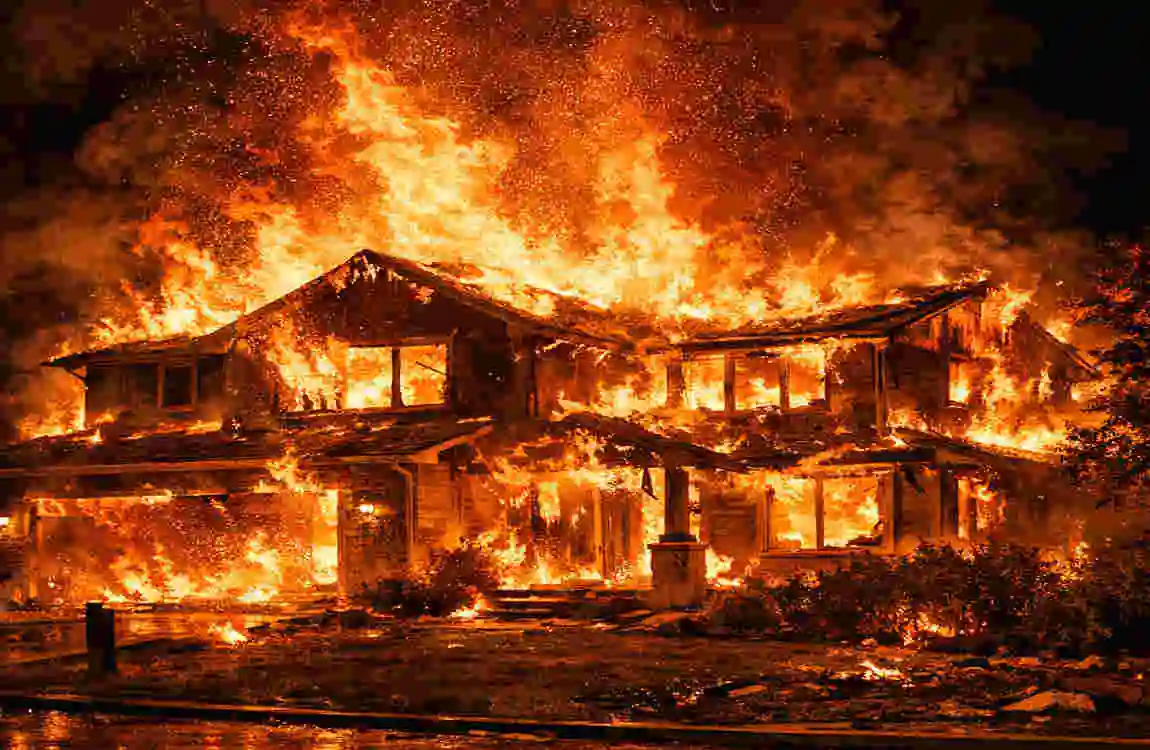
Average Temperature of a House Fire
A typical luxury house fire can reach around 1,100°F to 2,000°F. That is extremely hot. At these temperatures, many common household materials burn quickly and release even more heat.
The exact temperature depends on what is burning, how much air is available, and how open the space is. A small fire in one room may stay lower at first, while a larger fire with plenty of oxygen can become much hotter.
Maximum Temperature During Flashover
One of the most dangerous moments in a house fire is called flashover.
Flashover happens when nearly everything in a room reaches ignition temperature at the same time. When that occurs, the fire suddenly spreads across the whole room. During this stage, temperatures can rise above 2,000°F very quickly.
This is why firefighters and safety experts treat flashover as a critical warning sign. Once it happens, conditions can become deadly in seconds.
What Determines the Temperature of a House Fire?
Type of Materials Burning
The things inside your home make a big difference.
Natural materials like wood and paper burn, but synthetic items like foam furniture, plastics, and some fabrics often burn hotter and faster. Modern homes usually contain more of these materials, which helps the fire grow more quickly.
Oxygen Supply
Fire needs oxygen to keep burning.
If a room has plenty of air flowing in, the fire can grow stronger and hotter. If oxygen is limited, the fire may slow down, but that does not make it safe. In many cases, a low-oxygen fire can suddenly become worse when fresh air enters.
Room Size and Ventilation
The size of the room matters too.
Small enclosed rooms can trap heat, while larger spaces may let the fire spread more widely. Open doors, broken windows, and vents can all change the way heat moves through the house. More airflow usually means faster fire growth.
Weather and Wind Conditions
Outside weather can also affect a house fire.
Strong winds can push flames, feed the fire with oxygen, and help heat spread to other parts of the home. This is one reason fires can spread differently from one house to another, even when they start the same way.
How Fast Does a House Fire Heat Up?
The First Minute
The first minute may not look dramatic, but the danger is already there.
A small flame from a candle, stove, or electrical issue can begin heating nearby materials right away. In just a short time, smoke and hot gases start to build up.
Within 3–5 Minutes
This is when things can become life-threatening.
A fire can grow quickly if it has fuel and oxygen. In many cases, rooms become filled with thick smoke, extreme heat, and low visibility within just a few minutes. This is why early action matters so much.
Flashover Stage
If the fire continues to grow, flashover may occur.
At this point, heat rises so quickly that most items in the room can catch fire almost at once. The temperature climbs sharply, and the room becomes nearly unbearable without protection.
Fully Developed Fire
A fully developed fire is the most intense stage.
The entire room or structure may be burning strongly, and the heat can spread to nearby rooms or even nearby homes. At this stage, the fire is no longer small or manageable. It is a major emergency.
Temperature of Common Household Materials
Different household materials burn at different temperatures. Here is a simple comparison:
Material Approximate Burning Temperature
Wood 575°F–1,100°F
Paper Around 451°F
Plastic 600°F–1,500°F
Furniture Foam Up to 1,800°F
Gasoline Over 2,000°F
This table shows why some items are more dangerous than others. Foam furniture, plastic, and flammable liquids can create very hot fires very quickly.
Why Modern House Fires Burn Hotter
Synthetic Furniture
Many modern sofas, chairs, and mattresses contain synthetic materials.
These materials often ignite faster than older natural materials and can burn at much higher temperatures. That means a fire can grow more intense in less time.
Open Floor Plans
Many newer homes have open layouts.
This can make homes feel bigger and brighter, but it also gives fire and heat more room to move. Once a fire starts, it can spread more easily across open spaces.
Plastic Household Items
Homes today also contain a lot more plastic.
You find it in electronics, storage bins, toys, appliances, and decor. Plastic can melt, drip, and spread flames, which makes the fire worse.
Better Home Insulation
Modern homes are often better sealed for energy savings.
That can be helpful for heating and cooling, but it may also trap heat and smoke during a fire. Trapped heat can make the situation more dangerous very quickly.
What Happens to a House During Extreme Heat?
Structural Damage
Heat can weaken a house’s structure.
Wood can char, walls can crack, and supports can become unstable. Even if parts of the house do not burn completely, the heat alone can cause serious damage.
Window Failure
Windows often fail early in a fire.
The glass can crack or break from high heat, which lets more oxygen into the fire. That extra air can make the flames grow even stronger.
Roof Collapse
If the fire becomes severe, the roof may collapse.
This usually happens when the underlying structure is weakened by prolonged heat exposure. Roof collapse is one of the most dangerous outcomes in a major house fire.
Electrical System Damage
Fire can also destroy wiring and electrical systems.
This creates additional hazards, including power loss, sparks, and the risk of fire spreading through hidden spaces such as walls and ceilings.
Can You Survive the Heat of a House Fire?
Dangerous Air Temperatures
Yes, the air itself becomes dangerous very fast.
Even if flames are not touching you, the heat in a burning room can be enough to cause severe injury. Hot air can burn your lungs, skin, and eyes.
Smoke Is Often More Dangerous Than Flames
Many people think flames are the main threat, but smoke is often worse.
Smoke can block your vision, make breathing difficult, and overwhelm you before you realize how bad the fire is. In many house fires, smoke is the first danger.
Why Early Escape Saves Lives
The safest choice is to leave quickly.
The longer you stay inside, the more the heat builds up around you. Early escape gives you the best chance of getting out safely before conditions turn deadly.
How Firefighters Handle High Temperatures
Protective Clothing
Firefighters wear special gear to protect themselves from heat and flames.
This includes heat-resistant clothing, helmets, gloves, and breathing equipment. Their gear helps them work in conditions that would be deadly for most people.
Water Cooling Techniques
Water helps cool the fire and lower the temperature.
Firefighters spray water in specific ways to reduce heat, slow the flames, and protect nearby areas. This makes the fire easier to control.
Ventilation Methods
Firefighters also use ventilation.
By carefully opening or clearing certain areas, they can control where smoke and heat go. This must be done carefully because the wrong move can feed the fire more oxygen.
Fire Prevention Tips Every Homeowner Should Know
Here are a few simple steps that can help keep your modern home safer:
- Install smoke alarms in key areas.
- Test alarms monthly to make sure they work.
- Keep fire extinguishers accessible.
- Avoid overloaded outlets and damaged cords.
- Never leave cooking unattended.
- Create a family escape plan.
- Keep exits clear of clutter.
- Practice fire drills so everyone knows what to do.
Small habits can make a huge difference in an emergency.
Common Myths About House Fire Temperatures
Myth: Small Fires Stay Small
Not always. A small fire can grow fast if it has fuel and oxygen.
Myth: Closing Your Eyes Protects You
Closing your eyes does not protect you from heat or smoke. You still need to get out quickly.
Myth: Concrete Never Gets Damaged by Fire
Concrete can crack and weaken under extreme heat. It is not fire-proof forever.
Myth: Smoke Is Less Dangerous Than Flames
This is false. Smoke can injure or kill very quickly, sometimes before flames reach you.
What Should You Do During a House Fire?
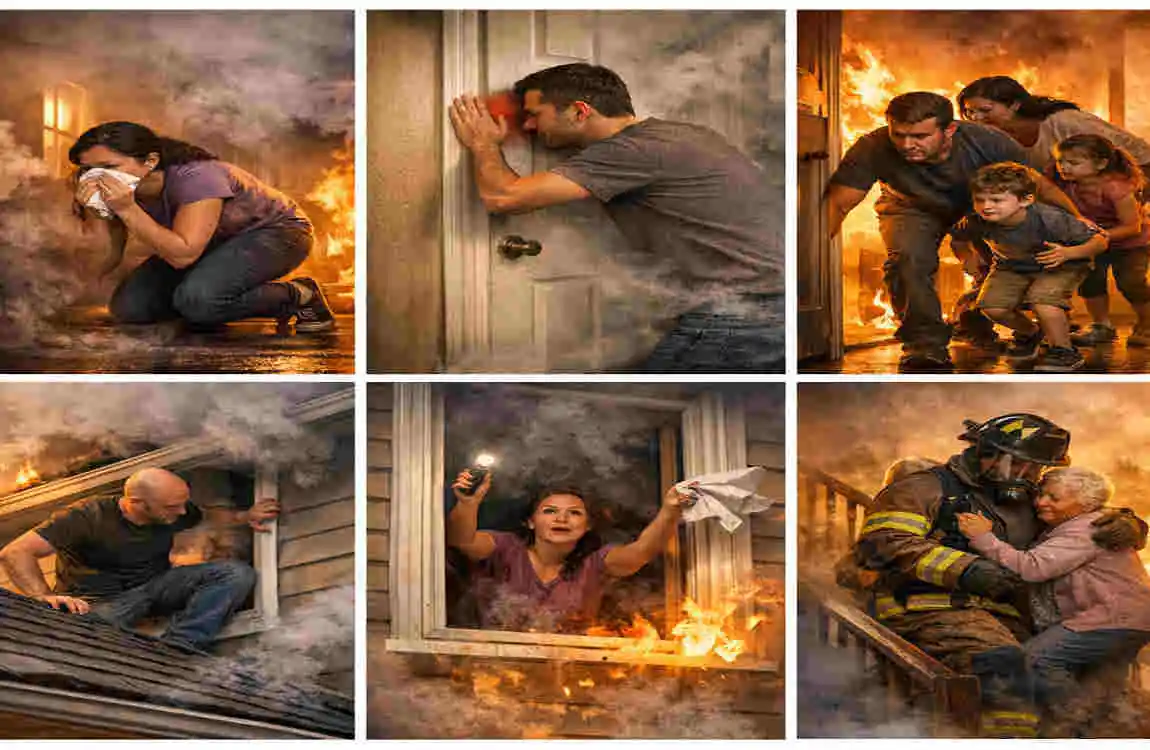
Stay Low to Avoid Smoke
Smoke rises, so staying low can help you breathe a little better as you leave.
Call Emergency Services Immediately
As soon as you are safe, call emergency services—every second matters.
Never Go Back Inside
Do not return inside for people, pets, or belongings. Fire conditions can change fast, and going back in is extremely dangerous.
Meet at a Safe Location
Have a family meeting spot outside the luxury home.
That way, everyone knows where to go, and you can quickly check that everyone made it out.
Frequently Asked Questions
How hot can a house fire get?
A fully developed house fire can reach temperatures between 1,100°F and over 2,000°F, depending on fuel, oxygen, and ventilation.
How quickly does a house fire become dangerous?
Many house fires become life-threatening in 3–5 minutes.
What is the hottest part of a house fire?
The ceiling area is usually the hottest because heat and flames rise.
Can steel melt in a house fire?
Most house fires are not hot enough to melt steel, but they can weaken it a lot.
What burns the hottest inside a home?
Synthetic materials, plastics, foam furniture, and flammable liquids often produce the highest heat.
Why are modern house fires hotter than older ones?
Modern homes contain more synthetic materials that ignite faster and burn hotter than natural materials.
| Topic | Information |
|---|---|
| Average House Fire Temperature | Typically 1,100°F–1,500°F (593°C–815°C). |
| Maximum Temperature | Can exceed 2,000°F (1,093°C) during intense flashover conditions. |
| Flashover Temperature | Usually occurs around 1,100°F (593°C), when nearly all combustible materials ignite. |
| Room Hottest Areas | Ceiling and upper parts of a room are much hotter than the floor. |
| Common Fuel Sources | Furniture, wood, plastics, fabrics, paper, and household chemicals. |
| How Fast It Spreads | A house fire can spread throughout a room in 3–5 minutes under the right conditions. |
