

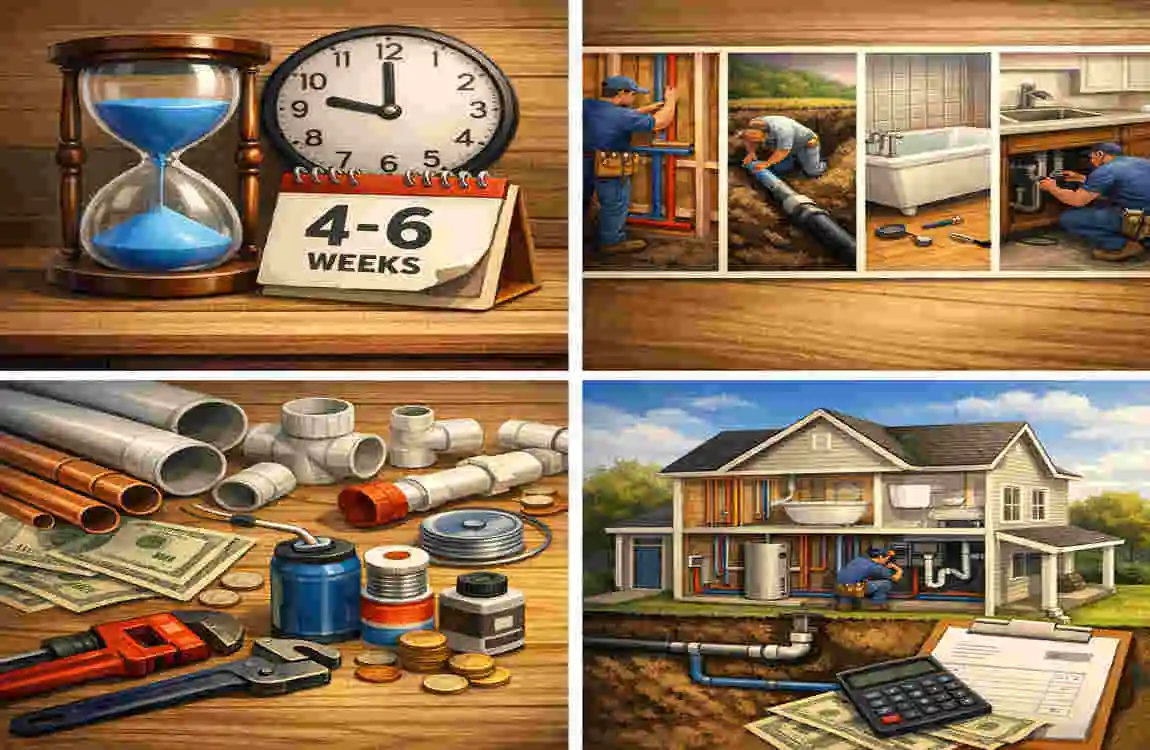
If you are asking how long it takes to plumb a home, the short answer is: it depends on the size of the house, the type of work, and the complexity of the plumbing system. A small project may take only a day or two, while a full new-house plumbing job can take several days to several weeks.
How Long Does Plumbing a House Take?
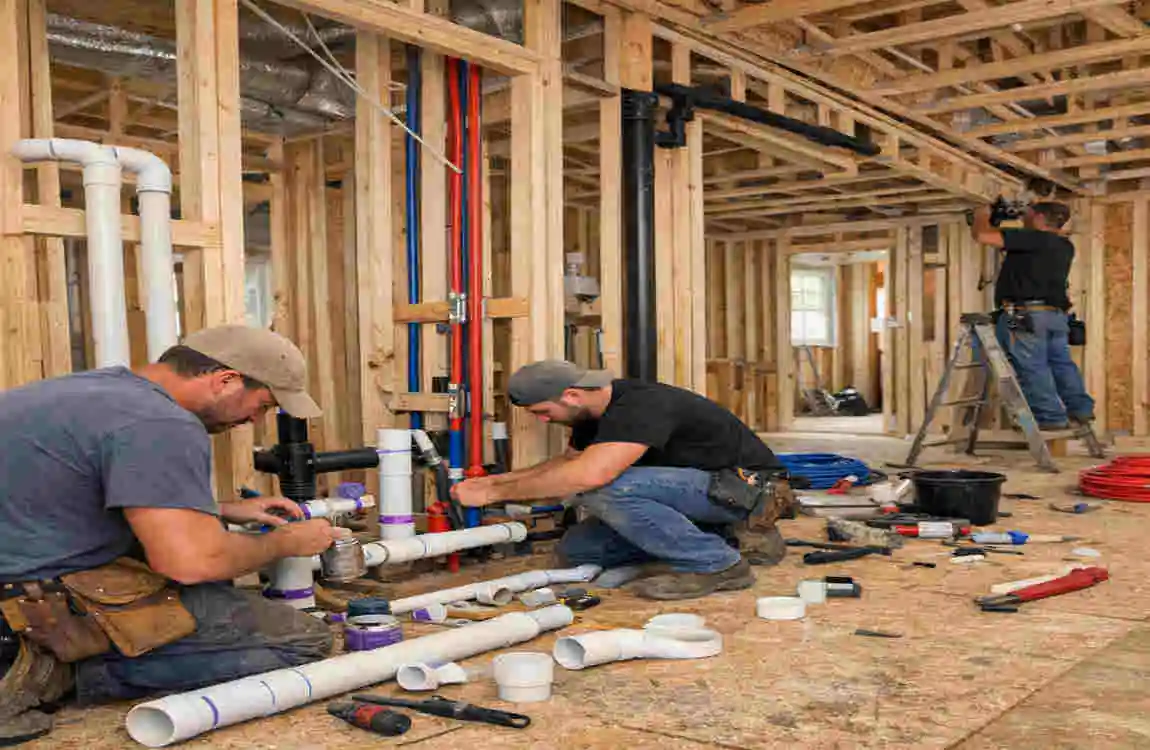
When people ask how long it takes to plumb a home, they usually want a realistic range. The truth is that plumbing work can be quick or fairly time-consuming, depending on the job.
Typical Time Ranges
Here is a general idea:
- New construction plumbing: several days to several weeks
- Bathroom renovation: 1 to 5 days, sometimes longer
- Kitchen plumbing: a few hours to 2 days
- Whole-house repiping: several days to over a week
- Minor repairs: often same day
A simple repair may take very little time, but a full plumbing installation in a new house takes much more planning. The bigger the home, the more pipes, fixtures, and inspections are usually involved.
Why Timelines Vary
Every project is different. A straightforward single-story home is usually easier to plumb than a large two-story house with multiple bathrooms. Older homes can also slow things down because workers may need to deal with hidden damage, old pipes, or tight access areas.
If you are budgeting time for a plumbing project, it is smart to plan for some flexibility.
What Factors Affect the Plumbing Timeline?
Several things can change how long a house plumbing job takes. Some are simple, while others can add a lot of extra work.
Home Size and Layout
A larger home usually needs more pipe runs, more fixtures, and more labour. The number of bathrooms, kitchens, floors, and laundry areas all affect the timeline.
A compact home may be faster to plumb, while a home with multiple levels and several bathrooms may take longer.
Plumbing System Complexity
The more parts a system has, the more time it usually takes to install. A plumbing system may include:
- Water supply lines
- Drain and waste pipes
- Vent pipes
- Water heater connections
If the layout is simple, the job often moves faster. If the pipes must travel through tight spaces or around other systems, the work can take longer.
Building Stage
The stage of the project matters a lot.
Rough-In Plumbing
This is the stage where plumbers run pipes before walls are closed. It usually requires the most careful planning because the pipes must be properly positioned before drywall or flooring goes in.
Fixture Installation
Once the rough-in is complete, fixtures such as sinks, faucets, toilets, and showers are installed. This step is usually faster than rough-in, but it still needs accuracy.
Final Inspection
The final stage includes checking for leaks, water pressure, drainage, and code compliance. If something needs to be corrected, that can add time.
Permits and Inspections
Many areas require permits and inspections for plumbing work. That is a good thing because it helps keep the work safe and legal. But it can also slow the project if inspections are delayed or if corrections are needed.
Steps Involved in Plumbing a New House
A new home plumbing project follows a clear path. Knowing the steps makes it easier to understand where the time goes.
Planning and Plumbing Design
Before any pipe is installed, the plumber reviews the floor plan and decides where the fixtures will go. This step includes planning:
- Pipe routes
- Bathroom and kitchen locations
- Drain connections
- Water heater placement
Good planning helps prevent costly changes later.
Rough-In Plumbing
Rough-in plumbing happens before walls, ceilings, and floors are fully closed. During this step, plumbers install the main water supply lines, drain pipes, and vent lines.
This is one of the most important parts of the project because these pipes form the base of the whole system.
Pressure and Leak Testing
Before covering the pipes, the system is tested. This helps catch problems early. If a leak is found now, it is much easier to fix than after the walls are finished.
Fixture Installation
After the rough work is complete, plumbers install the final fixtures. These may include:
- Sinks
- Toilets
- Showers
- Tubs
- Faucets
- Dishwashers
- Washing machine hookups
This step brings the system to life and makes the home ready for daily use.
Final Inspection and Testing
The last step is making sure everything works properly. The plumber checks drainage, water pressure, leak points, and code requirements.
If the home passes inspection, the plumbing project can move forward without delay.
How Much Does It Cost to Plumb a House?
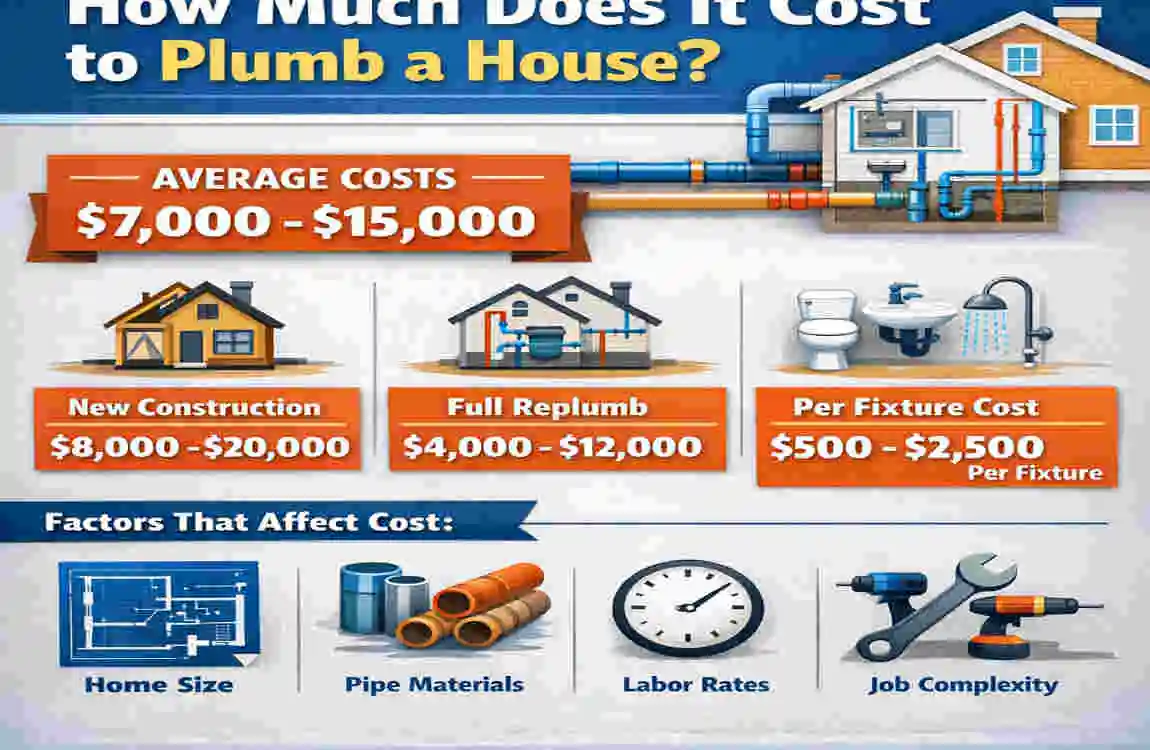
The cost of plumbing installation depends on several factors, so there is no single price that fits every home.
Main Cost Factors
The biggest cost drivers usually include:
- Labor costs
- Pipe materials
- Number of fixtures
- Home size
- Accessibility
- Local labour rates
- Permit and inspection fees
A simple project may cost much less than a large or complicated one. If the plumber has to work in tight spaces, open walls, or deal with old, damaged piping, the cost can increase.
Common Pricing Methods
Plumbers usually price jobs in one of these ways:
- Hourly labour for smaller or unclear jobs
- Per-fixture pricing for specific items like sinks or toilets
- Whole-project estimates for full house plumbing
A full-house quote is often the easiest way to plan a large project because it gives a clearer total.
Important Note
Actual costs vary by property and location. A small house in one area may cost less than a similar house in another area because labour costs and permit fees vary by location.
If you want a realistic number, ask for a property-specific quote.
How Long Do Different Home Plumbing Projects Take?
Different plumbing jobs have different timelines. Here is a simple comparison.
Project Type Usual Time Range Notes
New bathroom plumbing 1–5 days Can take longer if walls or floors must be opened.
Kitchen plumbing A few hours to 2 days Depends on sink, dishwasher, and layout.
Water heater installation 2–6 hours May take longer if venting or gas lines need work.
Whole-house repiping: Several days to over a week. Older homes may need extra prep.
New construction plumbing: Several days to several weeks, depending on the home’s size and the inspection schedule.
Emergency plumbing repairs Same day to 1 day. Hidden damage can extend the work.
Why Small Jobs Sometimes Take Longer
A job that looks simple at first can become more complicated if the plumber finds:
- Hidden leaks
- Damaged pipes
- Poor access
- Old materials
- Permit requirements
That is why it is better to plan for a little extra time than to expect everything to go perfectly fast.
How to Make House Plumbing Faster and More Efficient
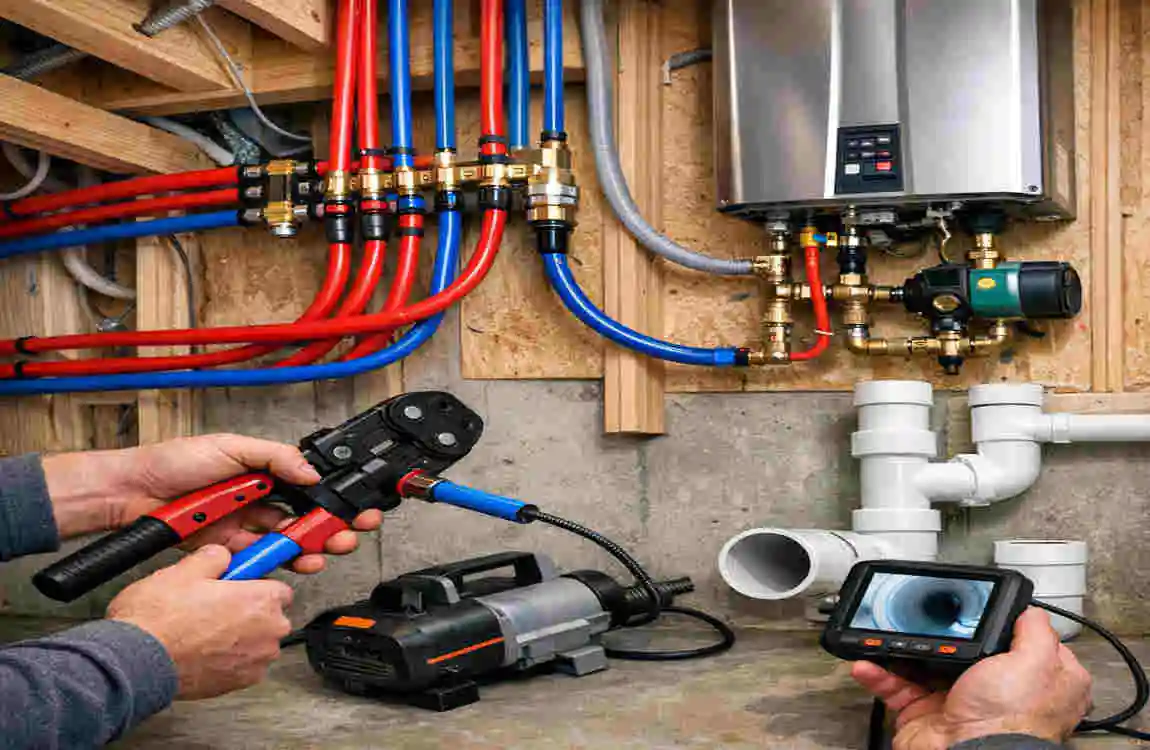
If you want the project to move smoothly, a little planning goes a long way.
Helpful Ways to Save Time
- Finalise the plumbing layout early
- Choose fixtures before work starts
- Hire an experienced, licensed plumber
- Keep work areas open and easy to reach
- Get permits in advance
- Coordinate with electrical and HVAC teams
- Schedule inspections quickly
- Avoid changing the layout mid-project
Why Good Planning Matters
When plumbing work is planned well, crews can move from one step to the next without delays. If you change your mind halfway through, the schedule can shift quickly.
Key Takeaway
Faster is not always better. Proper testing, safe installation, and code compliance should always come first.
FAQ: Plumbing a House Time & Cost
How long does plumbing a whole house take?
A whole house can take several days to several weeks, depending on size, floor plan, fixture count, and whether it is new construction or a remodel.
How long does it take to rough-in plumbing?
Rough-in plumbing usually happens before walls are closed. It can take a few days in a smaller home and longer in a large or complex house.
How long does it take to plumb a new bathroom?
A new bathroom may take 1 to 5 days or more if the plumber must open walls, move pipes, or wait for inspections.
Can a house be completely replumbed in one day?
Usually no, not for a full repiping job. Small sections may be done in a day, but a full house often takes much longer.
What is the most time-consuming part of plumbing a house?
Pipe routing, drain installation, difficult access, testing, and inspections often take the most time.
Does plumbing take longer in a two-story house?
Yes, it often does. Two-story homes usually need more pipe routing and more planning, which can add time.
How can I estimate the cost of plumbing a house?
Look at home size, number of fixtures, pipe materials, labour rates, and permit fees. The best way to know the real cost is to request a detailed quote.
| Plumbing Stage | What’s Involved | Typical Time | Cost Level |
|---|---|---|---|
| Planning & Layout | Design pipe routes and fixture locations | 1–2 days | Low |
| Rough-In Plumbing | Install water supply and drain pipes | 3–7 days | Medium–High |
| Fixture Installation | Fit sinks, toilets, showers, and faucets | 1–3 days | Medium |
| Testing | Check for leaks, pressure, and drainage | 1 day | Low |
| Final Connections | Connect appliances and finish plumbing | 1–2 days | Medium |
| Total | Complete plumbing for a typical house | 1–3 weeks | Varies by home size & materials |
