

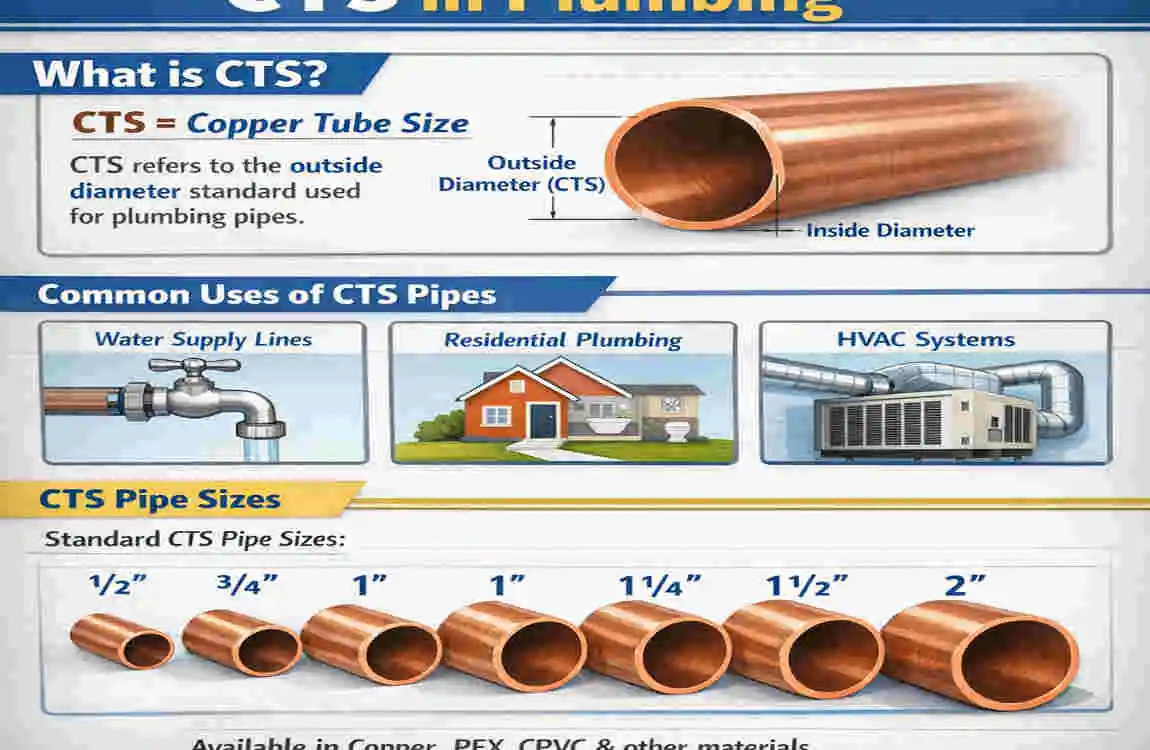
That may sound technical at first, but the idea is pretty straightforward. CTS is a pipe and tubing sizing system used to identify plumbing tubing by standard size, especially for copper tubing and other products with matching dimensions.
This matters because plumbing parts need to fit together correctly. If you choose the wrong pipe size or the wrong fitting, the connection may leak, fail, or not fit at all. That is why understanding CTS can save you time, money, and frustration.
What Does CTS Stand for in Plumbing?
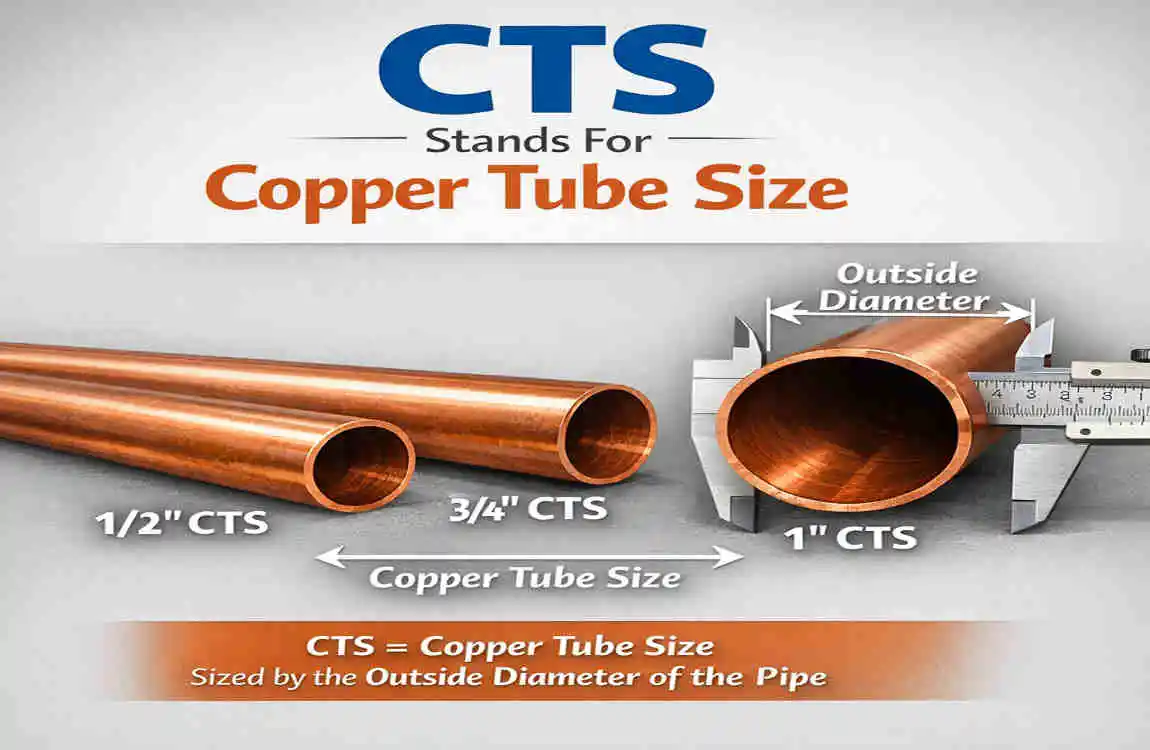
In simple language, CTS is a standard way to describe the size of tubing used in plumbing. It does not always mean the pipe is made of copper. It means the tubing follows a sizing system originally associated with copper tubing.
That is an important point. The size label indicates the tubing’s nominal size, not necessarily its exact physical size. So when you hear “1/2-inch CTS,” that does not mean the tube measures exactly 1/2 inch across, as many people expect.
Instead, CTS is a standardised naming system that helps manufacturers, plumbers, and suppliers identify compatible tubing and fittings.
Why Is CTS Used in Plumbing?
CTS exists to make plumbing work more consistent. If all tubing and fittings were randomly sized, every repair or installation would become harder.
With CTS, the outside diameter is standardised. That means the right fitting should match the right tubing more easily. This makes installation simpler and helps reduce mistakes.
CTS sizing is commonly used in both residential and commercial plumbing. You will often see it in water lines, fixture connections, and other plumbing setups where accurate fitting size matters.
The biggest benefit is compatibility. When you know the CTS size, you can usually narrow down the right connector, valve, or adapter much faster.
CTS vs Actual Pipe Dimensions
This is where many people get confused. A pipe labelled CTS does not always have the exact measurement shown in its name.
For example, a tube called 1-inch CTS does not mean it measures exactly 1 inch on the outside. The nominal size and the actual measurement are different.
To understand this better, you need to know three terms:
- Outside diameter (OD): the full measurement across the outside of the tube
- Inside diameter (ID): the open space inside the tube where water flows
- Wall thickness: how thick the tube material is
CTS sizing is mostly tied to the outside diameter, not the inside diameter. That is why the same nominal size can still have different internal flow capacities depending on the material and wall thickness.
How Does CTS Pipe Sizing Work?
Understanding CTS Nominal Sizes
CTS uses a standard set of nominal sizes. These are the sizes you will most often hear in plumbing discussions.
Common CTS sizes include:
- 1/2-inch
- 3/4-inch
- 1-inch
- 1 1/4-inch
- 1 1/2-inch
- 2-inch
These labels are used to help identify the tubing and fittings. But again, the actual outside diameter is usually a little different from the name.
This is why the label alone is not enough. You still need to check the exact standard and the product specifications before buying parts.
CTS Outside Diameter Explained
The outside diameter is one of the most important parts of CTS sizing. Most CTS-compatible fittings are designed to match this outside measurement.
That is why a 1/2-inch CTS tube, for example, has a standardised outside diameter that is not actually 1/2 inch. The same idea applies to the other sizes too.
Here is a simple way to think about it:
- The nominal size is the name
- The outside diameter is the real outer measurement
- The inside diameter depends on the wall thickness
Because of that, it is best to measure and verify rather than guess. Even a small difference can stop a fitting from sealing correctly.
CTS Size Chart
Below is a simple chart to help you understand typical CTS sizes and uses.
CTS Nominal Size Typical CTS Outside Diameter Common Use
1/2 inch 0.625 inch Fixture supply lines
3/4 inch 0.875 inch Residential water lines
1 inch 1.125 inches Larger water runs
1 1/4 inch 1.375 inches Larger plumbing systems
1 1/2 inch 1.625 inches Commercial applications
2 inch 2.125 inches Higher-flow applications
Note: Always verify the exact dimensions against the tubing standard and the manufacturer before buying fittings.
Where Is CTS Pipe Used in Plumbing?

Residential Water Supply
CTS pipe is very common in homes. It is often used in hot- and cold-water supply lines that connect to sinks, showers, tubs, toilets, dishwashers, and washing machines.
Because the sizes are standardised, it is easier to connect tubing to valves, tees, elbows, and fixture connections. That is one reason CTS plumbing is so practical in residential work.
If you are replacing a section of pipe in your home, knowing the CTS size can help you find the correct match much faster.
Commercial Plumbing Systems
CTS also appears in commercial plumbing systems, especially where water distribution needs to be dependable and standardised.
Larger buildings may require more careful planning because water demand is higher. In those cases, CTS sizing helps contractors choose pipes and fittings that work together without confusion.
Commercial plumbing often involves more complex layouts, so a standard sizing system saves time and reduces installation errors.
Other CTS Applications
CTS tubing can also appear in other plumbing-related systems, including water service lines and certain speciality tubing products.
In some cases, CTS-sized tubing may be made from materials other than copper. The key point is that the size standard remains CTS, even if the material changes.
That is why you should always check both the size and the material before buying or installing anything.
CTS vs IPS: What Is the Difference?
What Is IPS?
IPS means Iron Pipe Size.
This is another common pipe-sizing system, but it is different from CTS. IPS is often used for pipe products that are designed around pipe-style dimensions rather than tube-style dimensions.
That means CTS and IPS are not the same system, even if the nominal size names look similar.
CTS vs IPS Dimensions
This is one of the biggest mistakes people make. A CTS fitting and an IPS fitting can have the same-looking size label but still not fit each other.
That is because the sizing systems use different standards. The outside diameter, threading, and compatibility with fittings may all differ.
So if you see a pipe marked 1 inch, do not assume every 1-inch fitting will work. You need to know whether the system is CTS or IPS.
How to Choose Between CTS and IPS
To choose correctly, follow a few simple steps:
- Identify the existing pipe system
- Measure the outside diameter
- Check the fitting standard
- Read the manufacturer’s specifications
- Match material type and connection style
This is the safest way to avoid expensive mistakes. When in doubt, it is better to confirm twice than buy the wrong part once.
CTS Pipe Materials and Fittings
Copper CTS Tubing
Traditionally, CTS is closely linked to copper tubing. Copper has long been used in plumbing because it is durable, reliable, and heat-resistant.
Copper CTS tubing is still common in many homes and buildings. It is especially valued for water supply lines and long-term performance.
Copper can last a long time when installed correctly. Still, it is not the only material used in CTS sizing today.
Plastic and Other CTS-Sized Tubing
Some non-copper products are also made to CTS dimensions. This is useful because it allows different materials to connect through similar sizing standards.
For example, certain plastic tubing products may use CTS-based sizing to work with compatible fittings and adapters.
Even so, you should never assume all CTS-sized products are interchangeable. The material, pressure rating, and connection method must all match the job.
CTS Fittings and Connectors
CTS systems use many common fittings, including:
- Couplings
- Adapters
- Valves
- Tees
- Elbows
- Connectors
These parts must match the tubing’s size and standard. A fitting that is close but not exact may not seal properly.
That is why plumbers pay close attention to the tubing standard before making a connection. The right fit helps prevent leaks and future repairs.
Choosing the Right CTS Fitting
Before you buy a fitting, check these four things:
- Nominal size
- Actual outside diameter
- Material compatibility
- Manufacturer specifications
If all four line up, you are much more likely to get a proper fit. This is especially important for pressurised water lines.
How to Identify CTS Pipe in Your Plumbing System
Check the Pipe Markings
Many pipes and tubes have markings printed or stamped on them. These can tell you the size, material, pressure rating, and standard.
If you can see the markings clearly, they may help you identify whether the pipe is CTS. This is often the easiest first step.
Measure the Outside Diameter
If the markings are missing or hard to read, measure the outside diameter with a tape measure or calliper.
This is one of the most useful ways to identify CTS tubing. Since CTS is based on standardised outside diameter, this measurement gives you a strong clue about the pipe size.
Do not rely only on the pipe’s appearance. Two pipes can look similar and still be different sizes.
Check Existing Fittings
Sometimes the fittings already in the system can help you figure out the pipe size. If you are replacing a valve, coupling, or adapter, the old part may give you a clue about the standard.
Still, it is best to confirm the size before buying a replacement. A close guess is not enough when you need a tight seal.
When to Ask a Plumber
If the system is hidden, old, damaged, or complicated, calling a plumber can save time and trouble.
This is especially true for commercial systems or older homes with mixed plumbing materials. A plumber can identify the correct standard more quickly and safely.
Common CTS Plumbing Mistakes to Avoid
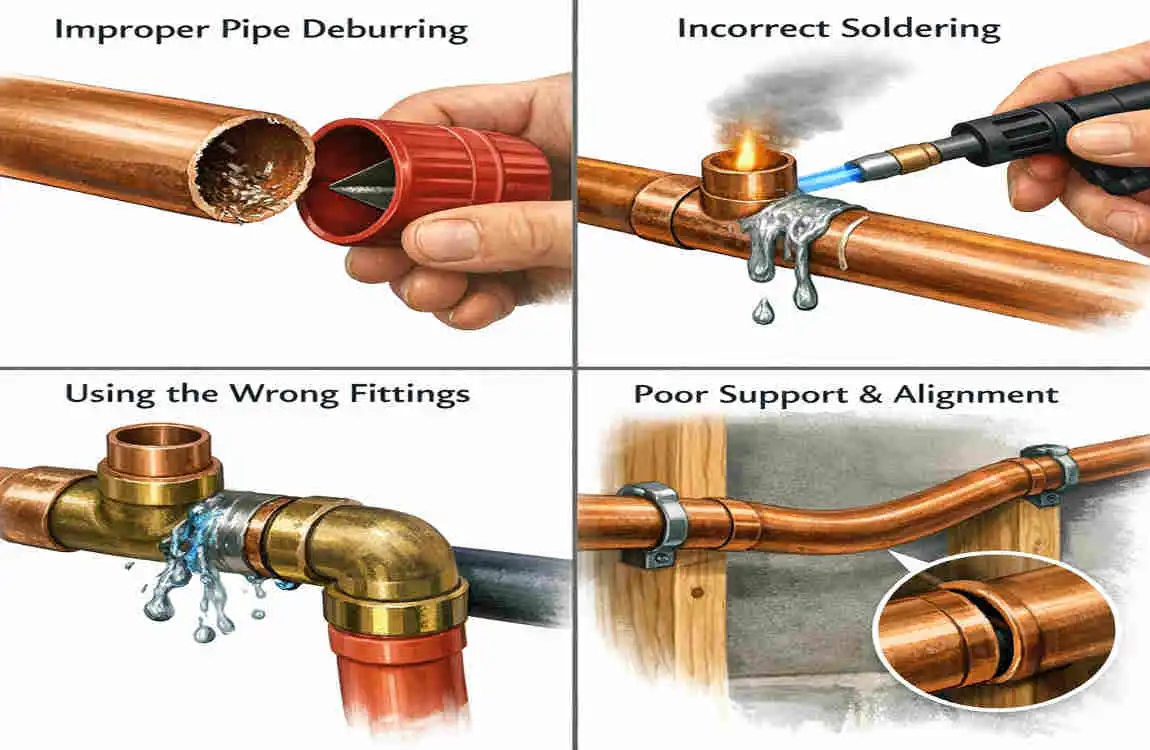
Assuming Nominal Size Equals Actual Size
This is probably the most common mistake. People see a label like “1 inch” and assume that is the true outside measurement.
In reality, nominal size and actual size are not the same. That is why measuring matters.
Mixing CTS and IPS Fittings
Another common error is using CTS and IPS parts together just because the labels look similar.
Even if the sizes sound close, the systems may not match. Always verify the standard before connecting parts.
Ignoring Pipe Material
A fitting may match in size but still not work well with the pipe material. Copper, plastic, and other materials can have different connection needs.
If the material is wrong, the joint may fail even if the size seems correct.
Choosing Fittings by Size Alone
Size matters, but it is not the only thing that matters. You also need to know the standard, material, and intended use.
A good plumbing connection depends on all of these details working together.
Skipping Local Plumbing Requirements
Plumbing work should follow the right code and manufacturer instructions. Local rules may affect what materials and fittings you can use.
If you are unsure, check the requirements before starting the job.
Frequently Asked Questions About CTS Plumbing
What does CTS stand for in plumbing?
CTS stands for Copper Tube Size, a standardised sizing system used for tubing and compatible plumbing components.
Is CTS the same as copper pipe?
Not exactly. CTS is a sizing system, while copper is a material. CTS-sized tubing does not always have to be copper.
What is the difference between CTS and IPS?
CTS and IPS are different sizing systems. Their dimensions and compatible fittings can differ, even when the nominal size looks similar.
How do I measure CTS pipe size?
Measuring the outside diameter is one helpful way. You should also check pipe markings and product specifications.
Is PEX CTS size?
Many PEX products use CTS-based dimensions, but you should always confirm the exact product standard before buying fittings.
Can CTS fittings be used with any CTS pipe?
Not always. Size alone is not enough. You must also check the material, connection type, and manufacturer requirements.
Why is CTS sizing important?
It helps you identify compatible tubing and fittings, which reduces installation errors and leaking connections.
| Topic | Quick Information |
|---|---|
| CTS Meaning | CTS stands for Copper Tube Size. |
| What It Refers To | A standardized pipe sizing system used for plumbing and piping. |
| Common Materials | Copper, PEX, CPVC, and some other plastic piping systems may use CTS dimensions. |
| Typical Uses | Drinking-water lines, hot and cold water supply, residential plumbing, and some commercial systems. |
| Common CTS Sizes | ½”, ¾”, 1″, 1¼”, 1½”, and 2″ are commonly encountered sizes. |
| CTS vs. IPS | CTS is based on copper-tube dimensions, while IPS (Iron Pipe Size) follows a different sizing standard. |
