
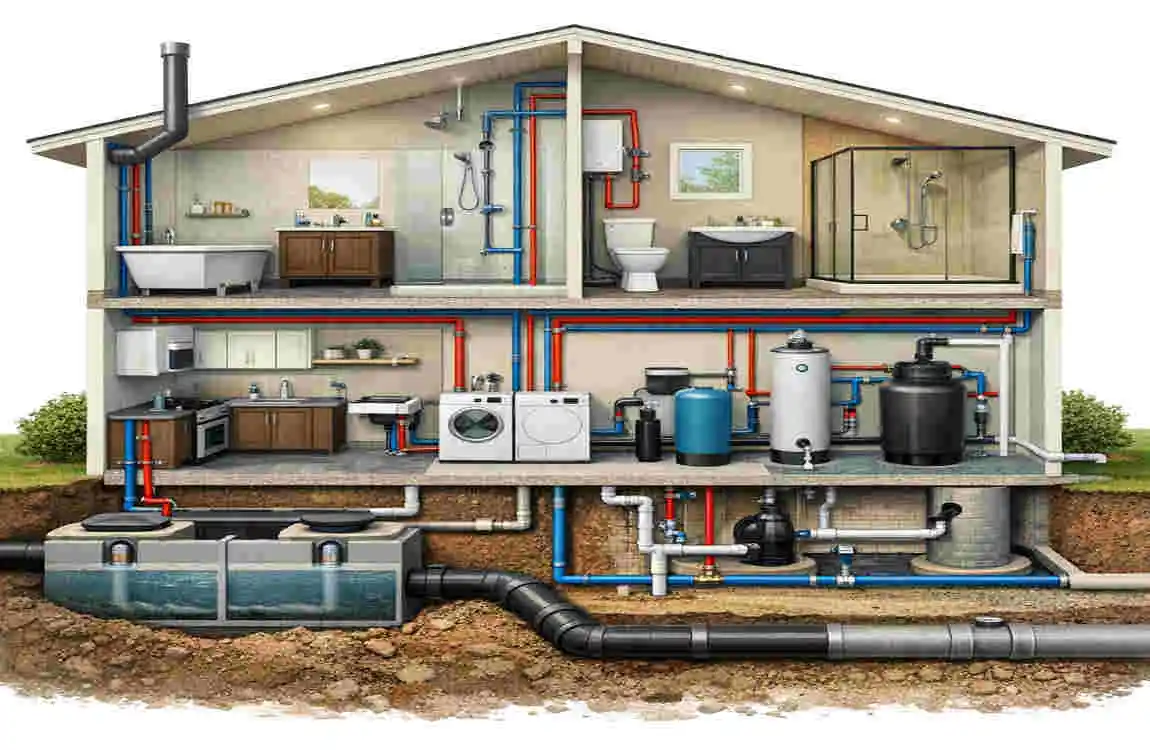
A home plumbing system does two main jobs. It supplies clean water for sinks, showers, toilets, and appliances, and it removes wastewater safely from the house.
That makes plumbing essential for modern living. It supports daily cooking, cleaning, bathing, and sanitation.
A good plumbing setup also protects your property. With the right design and care, you can avoid leaks, water damage, and costly repairs.
How a Residential Plumbing System Works
Clean Water Supply
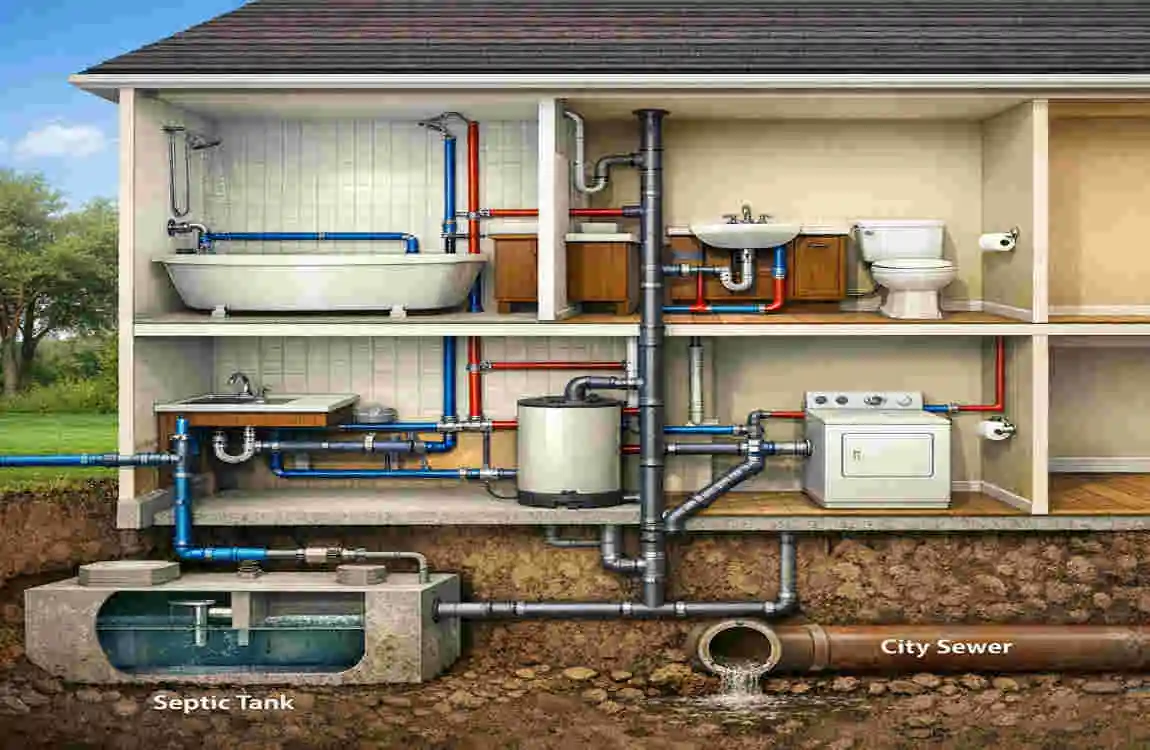
Fresh water usually enters the home through the main water supply line. A main shut-off valve controls the entire system, so it is important to know where it is located.
Water pressure matters too. If pressure is too low, fixtures may work poorly. If it is too high, it can stress pipes and fittings.
Some homes connect to a municipal water supply, while others use a private well.
Hot and Cold Water Distribution
After water enters the home, it is split into hot and cold lines. Cold water goes directly to fixtures, while a water heater heats hot water before use.
Modern homes use different pipe layouts, but the goal is always the same: deliver water safely and efficiently. Proper pipe sizing is important because undersized pipes can reduce flow.
Drainage and Wastewater Removal
Once water is used, it leaves through drainpipes and waste lines. Gravity helps move wastewater toward the sewer system or septic tank.
Cleanouts also play an important role. They give plumbers access points for clearing blockages.
Plumbing Vent System
Plumbing vents allow air to move through the drain system. This helps keep pressure balanced in the pipes.
Without vents, drains can become slow, and sewer odors may enter the home. Vent pipes usually extend to the roof.
Major Components of a Modern Residential Plumbing System
Water Supply Pipes
Common pipe materials include PEX, copper, CPVC, and PVC. Each has strengths and limits.
PEX is flexible and popular in many homes. Copper is durable but often more expensive. CPVC and PVC are also used in specific applications depending on codes and project needs.
Fixtures and Faucets
Fixtures include sinks, faucets, showers, bathtubs, toilets, and outdoor taps. Quality fixtures improve both function and appearance.
Many homeowners also choose water-saving models. These can lower utility costs and reduce waste.
Water Heater
Water heaters provide hot water for daily use. Some homes use tank-style heaters, while others use tankless systems.
Performance depends on proper sizing, installation, and maintenance. It is smart to check for leaks and sediment buildup regularly.
Drain Traps
A P-trap holds a small amount of water that prevents sewer gases from returning to the home. Every sink and many fixtures use one.
If a trap dries out or gets clogged, odors and drainage issues can appear.
Shut-Off Valves
Every homeowner should know where the main shut-off valve is located. Fixture-level shut-off valves are also useful for sinks, toilets, and appliances.
These valves make repairs much easier and help limit water damage during emergencies.
Common Residential Plumbing Problems and Their Causes
Leaking Pipes and Faucets
Leaks often occur due to worn seals, loose connections, corrosion, or aging pipes. Even a small drip should not be ignored.
A small leak can waste water and slowly damage walls, floors, or cabinets.
Clogged Drains
Kitchen drains often clog from grease and food scraps. Bathroom drains usually clog from hair and soap buildup.
Toilets may clog from too much paper or foreign objects. For minor blockages, a plunger or drain trap cleaning may help.
Low Water Pressure
Low pressure can come from clogged aerators, pipe restrictions, leaks, or pressure-control problems.
If the issue affects multiple fixtures, the problem may be deeper in the system.
Running or Clogged Toilets
A toilet may run because of a faulty flapper, a fill valve, or a water-level issue. This can waste a lot of water over time.
Toilet clogs usually indicate a blockage in the bowl or the drain line.
Sewer Line Problems
Common signs include slow drains, bad smells, frequent backups, and gurgling sounds. These problems are usually more serious and often need professional help.
Water Hammer and Noisy Pipes
If pipes bang or shake when water shuts off, that may be water hammer. It often happens because of sudden pressure changes.
Loose pipe supports or pressure problems can make the noise worse.
Common Problem Guide
ProblemCommon CauseBest First Step
Leaking faucet Worn washer or seal Shut off water and inspect fixture
Slow drain Hair, grease, soap buildup Use plunger or clean trap
Low pressure Clogged aerator or leak Check fixture and visible lines
Running toilet Faulty flapper Inspect tank parts
Sewer backup Main line issue Call a plumber
Residential Plumbing Maintenance for Better Performance
Regular Plumbing Inspections
Take a few minutes to check under sinks, around toilets, near appliances, and around the water heater. Look for moisture, stains, corrosion, or odd smells.
Catching problems early can save time and money.
Preventing Drain Clogs
Use drain strainers and avoid putting grease, coffee grounds, and food waste down the sink. Also, avoid overusing harsh chemical drain cleaners.
Gentler routine care is usually better for long-term pipe health.
Protecting Pipes
In colder climates, pipe insulation is important. Exposed plumbing can freeze and burst.
You should also watch for aging pipes and signs of corrosion.
Maintaining the Water Heater
Sediment can build up inside the tank, reducing efficiency. Follow the manufacturer’s care instructions and check for leaks or strange noises.
Checking Water Pressure
Very high pressure can strain the whole plumbing system. If your home has pressure problems, a professional can test and adjust the system if needed.
Modern Plumbing Systems, Efficiency, and Smart Home Features
Water-Saving Plumbing Fixtures
Low-flow faucets, showerheads, and efficient toilets can reduce water use without hurting comfort. This is good for both the environment and your bills.
Smart Leak Detection
Smart sensors can alert you to leaks early. Some systems can even shut off water automatically.
This is especially helpful if you travel often or own a second home.
Tankless and Efficient Water Heating
Tankless heaters warm water only when needed. They can save space and may improve efficiency.
Still, the best choice depends on household size and usage patterns.
Modern Pipe Materials
PEX has become popular because it is flexible and easier to install in many homes. Still, all pipework should comply with local codes.
Water Filtration and Treatment
Some homes benefit from filtration or water treatment systems. It is best to test your water first, so you know what you actually need.
Plumbing Installation, Repairs, and Safety Considerations
When DIY Plumbing Is Appropriate
Homeowners can often do simple jobs like replacing a faucet aerator or cleaning a trap. But always shut off the water first.
Know your limits before starting a repair.
When to Call a Professional Plumber
Call a pro for hidden leaks, burst pipes, sewer problems, major water damage, or complex installations. Licensed help is also important when permits or plumbing codes apply.
Plumbing Safety Tips
- Know the location of the main shut-off valve
- Keep plumbing access areas clear
- Avoid mixing chemical drain cleaners
- Keep electrical items away from standing water
- Fix leaks quickly
Plumbing Codes and Proper Installation
Plumbing work must follow local codes. Proper pipe sizing, drainage, venting, and fixture installation all matter.
Rules can vary by location, so code compliance is important.
How to Plan and Upgrade a Residential Plumbing System
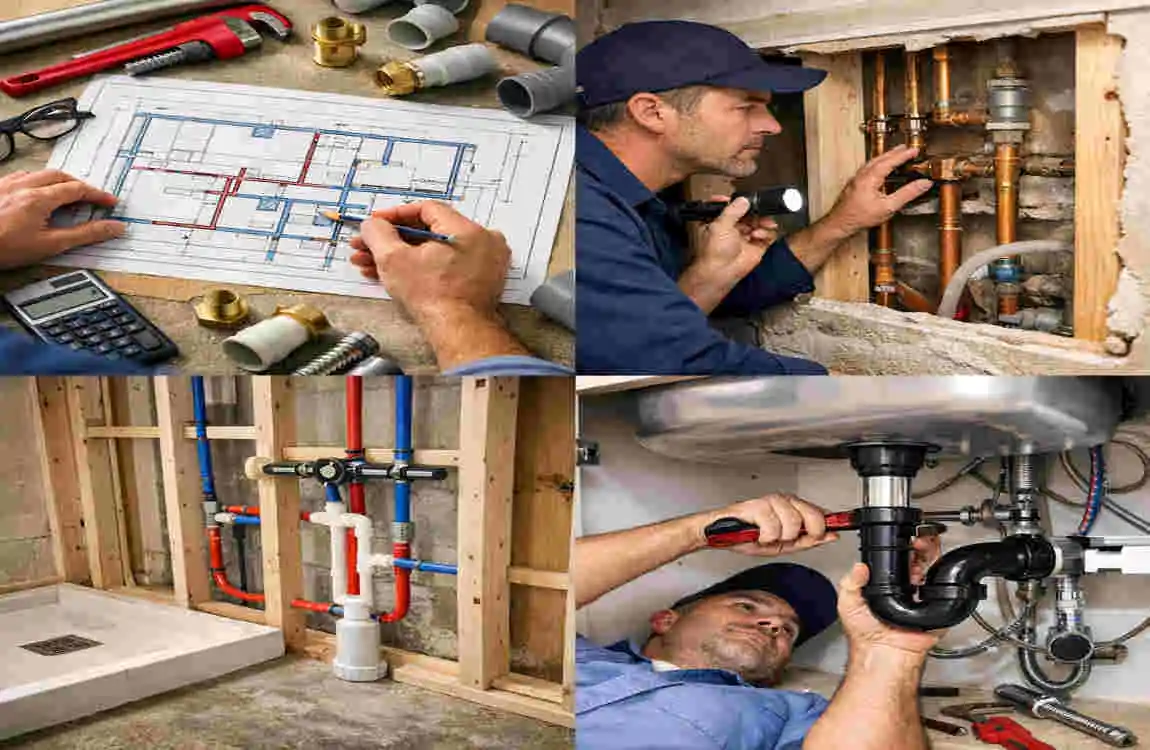
Assessing an Existing Plumbing System
Check pipe age, water pressure, recurring leaks, drain performance, and the condition of your water heater. This helps you see what needs attention first.
Planning Plumbing for New Construction
In new homes, plumbing should be planned before walls and floors are finished. Fixture placement affects routing, cost, and convenience.
Remodeling and Plumbing Upgrades
If you are remodeling a kitchen or bathroom, you may need to move pipes or replace old lines. Renovation is often a good time to upgrade older plumbing.
Budgeting for Plumbing Work
Costs depend on labor, materials, access, and project size. Detailed estimates are smart before major work begins.
Creating a Long-Term Plumbing Maintenance Plan
Keep records of repairs, replacements, and appliance ages. Regular checks help you catch small issues before they turn into bigger ones.
Frequently Asked Questions About Residential Plumbing Systems
What is a residential plumbing system?
It is the network of pipes, fixtures, valves, drains, vents, and water-heating equipment that brings water into the home and removes wastewater.
What are the main parts of a residential plumbing system?
Main parts include supply pipes, drainpipes, vents, fixtures, faucets, toilets, traps, shut-off valves, and water heaters.
How often should residential plumbing be inspected?
Basic checks can be done regularly, and professional inspections are helpful when problems recur or during major remodeling.
What type of pipe is best for residential plumbing?
There is no single best choice. PEX, copper, CPVC, PVC, and other approved materials all have different uses.
How can I prevent plumbing problems at home?
Avoid clogging drains, fix leaks quickly, protect pipes, maintain the water heater, and check visible plumbing often.
Why does my home have low water pressure?
A clog, a leak, a restriction, or a pressure issue may cause it. If it keeps happening, a plumber should inspect it.
When should I replace old residential plumbing pipes?
Repeated leaks, corrosion, age, and poor water quality can all indicate the need for replacement.
| Residential Plumbing System Component | Purpose | Common Examples |
|---|---|---|
| Water Supply Lines | Deliver clean water throughout the home | PEX, copper, PVC |
| Drainage System | Carries wastewater away from fixtures | Drain pipes, waste lines |
| Plumbing Fixtures | Provide access to water and drainage | Sinks, toilets, showers |
| Water Heater | Supplies hot water for daily use | Tank, tankless heater |
| Vent System | Balances air pressure and removes sewer gases | Vent pipes |
| Main Shut-Off Valve | Stops water flow during emergencies or repairs | Main water valve |
| Sewer Line | Transports wastewater from the home | PVC, cast iron |
| Traps | Prevent sewer gases from entering rooms | P-traps |
| Water Pressure Regulator | Controls excessive incoming water pressure | Pressure-reducing valve |
| Maintenance | Helps prevent leaks, clogs, and costly repairs | Inspections, drain cleaning, leak checks |
