


Bathrooms are unique spaces. They’re often smaller than other rooms, face constant humidity, and usually have limited natural light. That means every design detail—including ceiling color—can have a big impact.
According to the 2025 Houzz Bathroom Trends Report, over 70% of modern bathrooms now feature a monochromatic color scheme. Why? Because a unified look can make even the tiniest bathroom feel open, calm, and spa-like.
But before you grab a paint roller, it’s important to ask: should bathroom ceiling be same color as walls in your specific space? Here’s a quick rule of thumb:
- Small, dark bathrooms: Matching colors can expand and brighten.
- Large, well-lit baths: Contrasts can add personality and coziness.
Pros and Cons of Matching Bathroom Ceiling to Walls
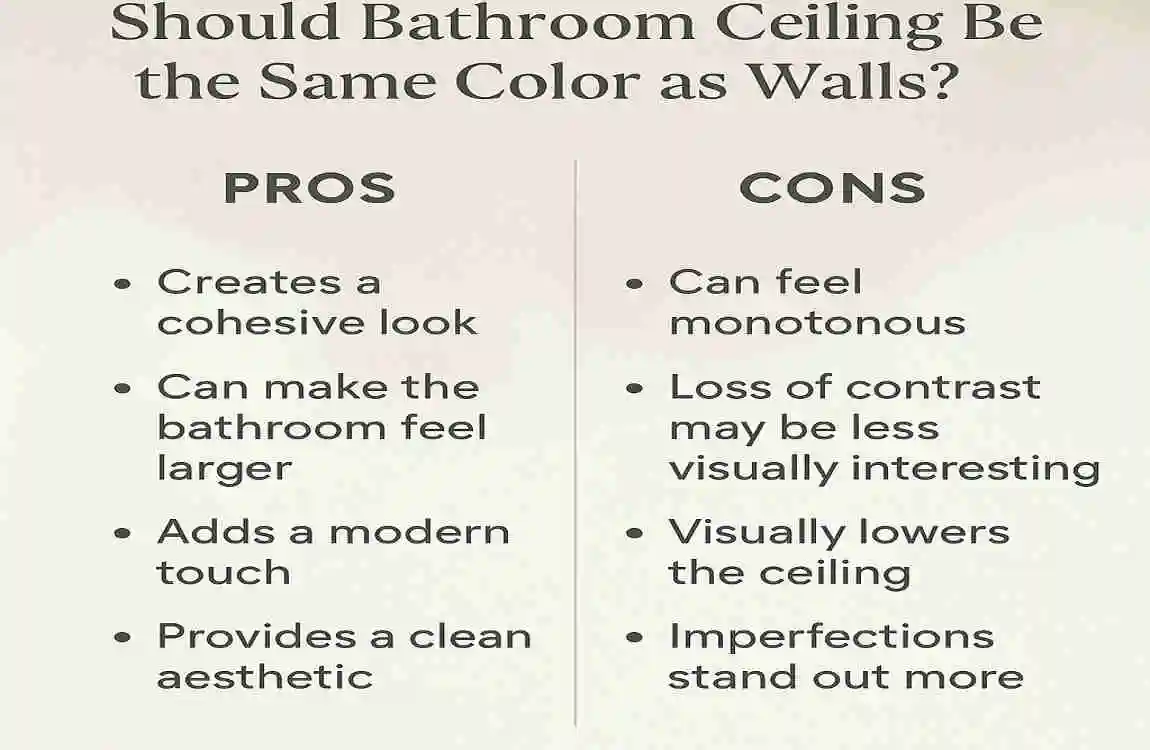
Choosing one color for both your bathroom walls and ceiling isn’t just a trend—it’s a design trick with real benefits!
Here’s why homeowners (and designers!) love this approach:
Seamless Spaciousness
When you use the same paint color on ceilings and walls, your eye doesn’t stop at the corners. This creates a sense of vertical flow, making ceilings seem higher and rooms feel larger. For example, a 5×7-foot bath painted all-white can appear twice as airy!
Effortless Coordination
Matching colors simplify decisions about tiles, fixtures, and decor. No more stressing over which shade goes where—all your surfaces work together seamlessly.
Modern Minimalist Vibe
A monochromatic look gives your bathroom a clean, updated feel. It’s a favorite among fans of Scandinavian or contemporary style.
Hides Imperfections
Bathrooms are prone to water stains, cracks, and uneven surfaces. Using one color on ceiling and walls can help camouflage these flaws—especially in older homes.
Budget-Friendly
You’ll save money and time by buying only one paint color and completing the job in fewer steps.
Case Study: Before & After
A recent client came to us with a cramped, dim guest bath. We painted both the ceiling and walls a soft, high-gloss gray. The results? The space felt instantly brighter and more spacious. Plus, the unified color reflected light from the new LED fixtures, creating a spa-like retreat.
Summary Table: Pros of Matching Ceiling and Walls
| Benefit | Description |
|---|---|
| Illusion of height | Visually lifts the ceiling for a bigger feel |
| Easy coordination | Harmonizes with tiles and fixtures |
| Modern look | Achieves a sleek, minimalist interior |
| Hides flaws | Camouflages water stains and patches |
| Saves money | Streamlines paint choices and reduces labor |
Cons: Reasons to Avoid Matching Walls and Ceiling
Of course, matching isn’t always the best choice. Sometimes, using the same color on the ceiling and walls can have drawbacks—especially in certain bathrooms.
Here are a few reasons to think twice:
- Claustrophobic Feel
In bathrooms with low ceilings (under 8 feet), using one color everywhere can actually make the space feel boxy and closed-in, not bigger. - Lack of Depth or Interest
Flat color may feel bland or monotonous, especially in larger or character-rich spaces. - Amplifies Flaws in Poor Lighting
Without plenty of light, a single color can highlight every bump, ripple, or uneven patch. - Less Flexibility for Accents
It’s harder to add pops of color, dramatic lighting, or bold tile if everything is the same shade. - High-Maintenance in Humid Baths
Bathrooms with poor ventilation can show water marks or mildew evenly across all surfaces, making regular touch-ups a must.
Expert House Design Tips for Spacious, Stylish Bathrooms
Color isn’t just about looks—it’s about mood. Picking the right shades for your bathroom can transform how the space feels.
- Neutrals (think whites, soft grays) are perfect for creating a sense of openness and calm. They maximize light, which is ideal for small or dark baths.
- Warm tones like beiges or taupes can make a chilly bathroom feel inviting.
- Bold colors (navy, deep green) add drama and personality but may shrink the room visually—unless used carefully.
Table: Popular Wall & Ceiling Color Combos
| Wall Color | Ceiling Match? | Effect |
|---|---|---|
| Soft Gray | Yes | Airy, spa-like, cohesive |
| Pale Blue | Yes | Calming, bright, open |
| White | Yes | Expansive, clean, modern |
| Light Beige | Yes | Warm, welcoming, natural |
| Navy | No (White) | Dramatic, grounded, designer-style |
| Sage Green | Yes | Zen, fresh, biophilic |
| Charcoal | No (Light) | Cozy, intimate, luxurious |
Should Bathroom Ceiling Be Same Color as Walls in Small vs. Large Baths?
This is one of the top questions we hear from clients. The answer often depends on the size and lighting of your bathroom light
Small Bathrooms
- Yes, match the ceiling and walls.
Using the same color—especially a light, glossy shade—helps blur the lines between surfaces. The result? The room feels taller, brighter, and less cramped.
Large Bathrooms
- Experiment with contrasts.
You have more flexibility in a bigger space. Try painting the ceiling a few shades lighter or darker than the walls for a cozy, designer effect.
Practical Stylish Bathroom Ceiling Ideas
Ready to get creative? Here are 10 stylish bathroom ceiling ideas—from classic to bold—to inspire your next makeover:
- All-White Monochromatic
Always a winner for a clean, airy spa vibe.
Alt: all white bathroom with matching ceiling and walls - Soft Pastel Match
Try a pale blue or blush for a gentle, refreshing effect.
Alt: pastel blue bathroom ceiling and walls - Two-Tone Scheme
Paint the walls light and the ceiling one shade darker. Adds subtle depth without shrinking the space.
Alt: two-tone bathroom with light walls and darker ceiling - Textured Paint
Use a subtle texture on both ceiling and walls for extra dimension and interest.
Alt: textured bathroom ceiling matching walls - Wallpapered Ceiling
Pick a moisture-resistant wallpaper for drama above.
Alt: bathroom with wallpapered ceiling and painted walls - Beamed Contrasts
Exposed beams or faux beams add rustic charm—paint in a contrasting color for impact.
Alt: bathroom ceiling with white beams and gray walls - Metallic Accents
Add a touch of gold or silver on the ceiling for glam appeal.
Alt: bathroom ceiling with metallic paint effect - Bold Navy for Drama
Go bold with a navy blue ceiling and crisp white walls for a designer look.
Alt: bathroom with navy blue ceiling and white walls - Earthy Greens for Zen
Matching sage or olive green tones on ceiling and walls evoke nature and calm.
Alt: bathroom with sage green ceiling and matching walls - Custom Mural
Commission a hand-painted mural or use a printed panel for a truly unique ceiling (ask us about our mural design service!).
Alt: bathroom with custom mural on ceiling
Trending Bathroom Ceiling Designs for 2026
Designers are pushing boundaries in 2026, with both matching and contrasting bathroom ceilings making waves.
Trending Now:
- Monochromatic Surge
After years of chaos, homeowners crave spa-like calm. Matching ceilings and walls—especially in soft neutrals—are everywhere. - Sustainable Paints
Low-VOC and moisture-resistant paints are a must for healthy, eco-friendly bathrooms. - Biophilic Color Palettes
Earthy greens, deep blues, and stone-inspired shades are trending for their calming, nature-inspired vibes. - Matte vs. Gloss Finishes
Matte paint feels luxurious but is harder to clean. High-gloss adds shine and reflects light. - Smart Lighting Integration
LED strips and color-changing fixtures highlight ceiling details and add ambiance.
Bullet Trends for 2026:
- Biophilic matching (greens, blues for nature-inspired spa feel)
- Matte finishes for a soft, modern look
- Smart lighting to highlight ceiling features
- Contrasting trims for bold outlines
Real-Life Examples and Inspiration

Need proof these ideas work? Check out these inspiring case studies:
Urban Spa Retreat
We transformed a dull city bath with matching sage green walls and ceiling, plus matte black fixtures. The result: a serene, nature-inspired oasis.
Bold Contrast Beauty
A client’s large master bath got a navy blue ceiling and ice-gray walls. Accented with gold lighting, the space feels like a luxury hotel.
Step-by-Step Guide to Painting Your Bathroom Ceiling
Painting a bathroom ceiling is trickier than it looks. Here are a few things to consider before you start:
- Skill Level:
Tight spaces, moisture, and tricky corners make bathroom ceilings tough for beginners. - Moisture Issues:
If your bath has mildew or water stains, a pro can properly treat and seal the surfaces before painting.
Process for Perfect Results
Want a flawless finish? Follow this simple step-by-step guide:
- Prep the Space
Open a window, set up a fan, and tape off all edges (tiles, mirrors, fixtures). - Choose the Right Paint
Use a high-quality, mold-resistant bathroom paint—preferably semi-gloss or satin. - Prime (If Contrasting)
If you’re switching from a dark to light color or vice versa, always start with primer for even coverage. - Apply Base Coat
Paint the walls first if they’re darker than the ceiling, or vice versa. Use a brush for corners and roller for larger areas. - Ceiling Technique
Use a long-handled roller for smooth, even application. Don’t overload the roller—drips are the enemy! - Dry Time + Second Coat
Let everything dry completely before adding a second coat. Bathrooms take longer due to humidity. - Seal and Style
Once dry, remove tape, touch up edges, and add your finishing touches.
Tools Table: What You’ll Need
| Tool | Purpose | Estimated Cost |
|---|---|---|
| Painter’s Tape | Protects trims and edges | $5-$10 |
| Roller & Extension | Smooth, even paint application | $15-$30 |
| Angled Brush | Cutting in corners and details | $7-$15 |
| Mold-Resistant Paint | Long-lasting, moisture-proof color | $25-$50/gallon |
| Drop Cloths | Protects floors and fixtures | $5-$10 |
| Primer (optional) | Better coverage, color accuracy | $10-$20 |
Common Mistakes and How to Fix Them
Everyone makes mistakes—especially with bathroom paint! Here are six common errors to avoid when deciding should bathroom ceiling be same color as walls:
- Overly Bright Whites
Can feel harsh and clinical. Fix: Use a white with warm undertones. - Ignoring Lighting
Colors look different in artificial vs. natural light. Always test paint samples at different times of day. - Skipping Humidity Prep
Paint won’t stick on damp or mildewed surfaces. Always clean and prime first. - Mismatched Sheens
Using different finishes on walls and ceiling can highlight imperfections. - Forgetting Trim or Moldings
Unpainted trim looks unfinished. Paint it to match or contrast intentionally. - Rushing Dry Time
Humid bathrooms need extra drying time between coats—be patient for best results!
